Fischer am Chiemseeufer — History & Analysis
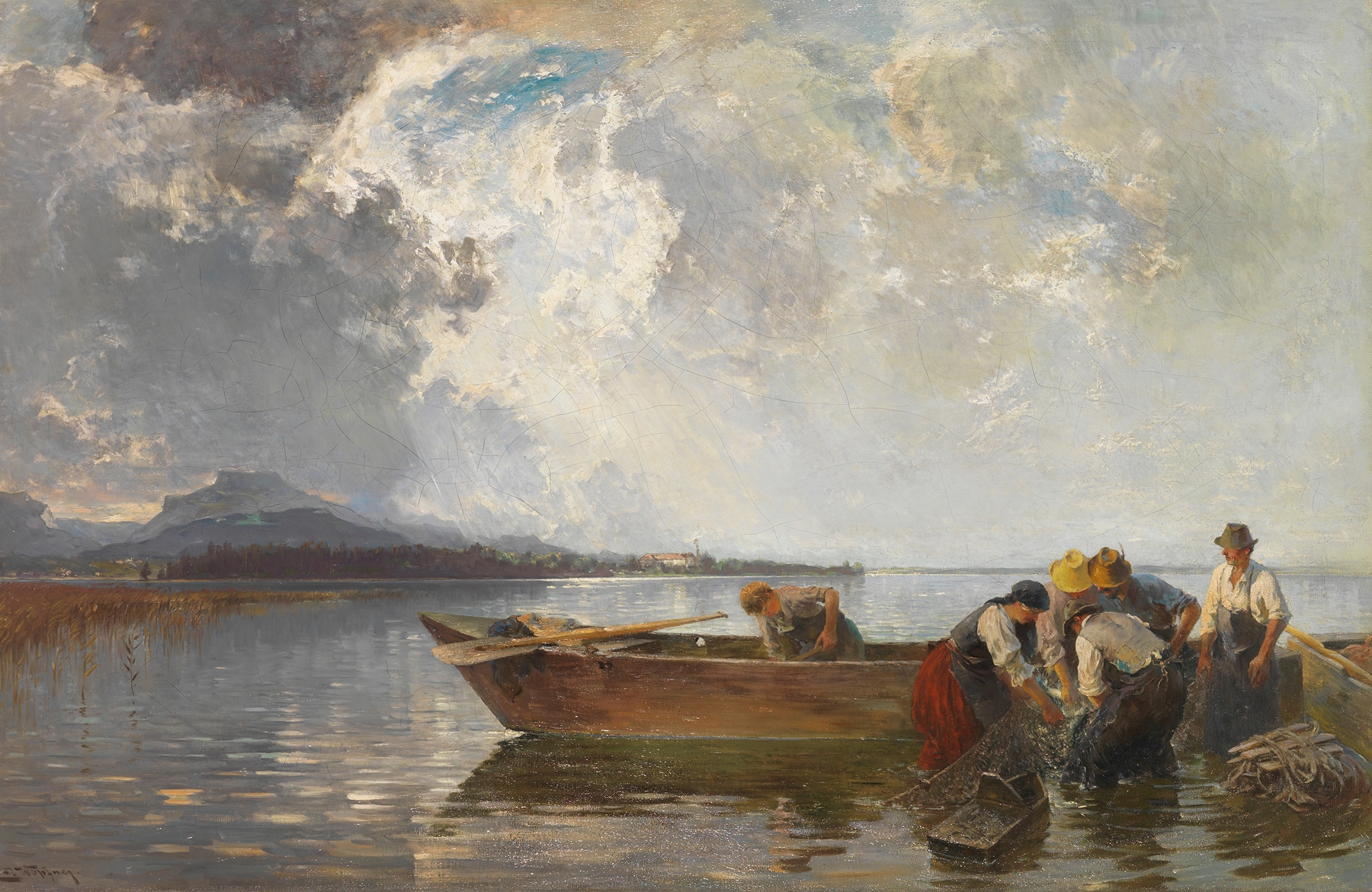
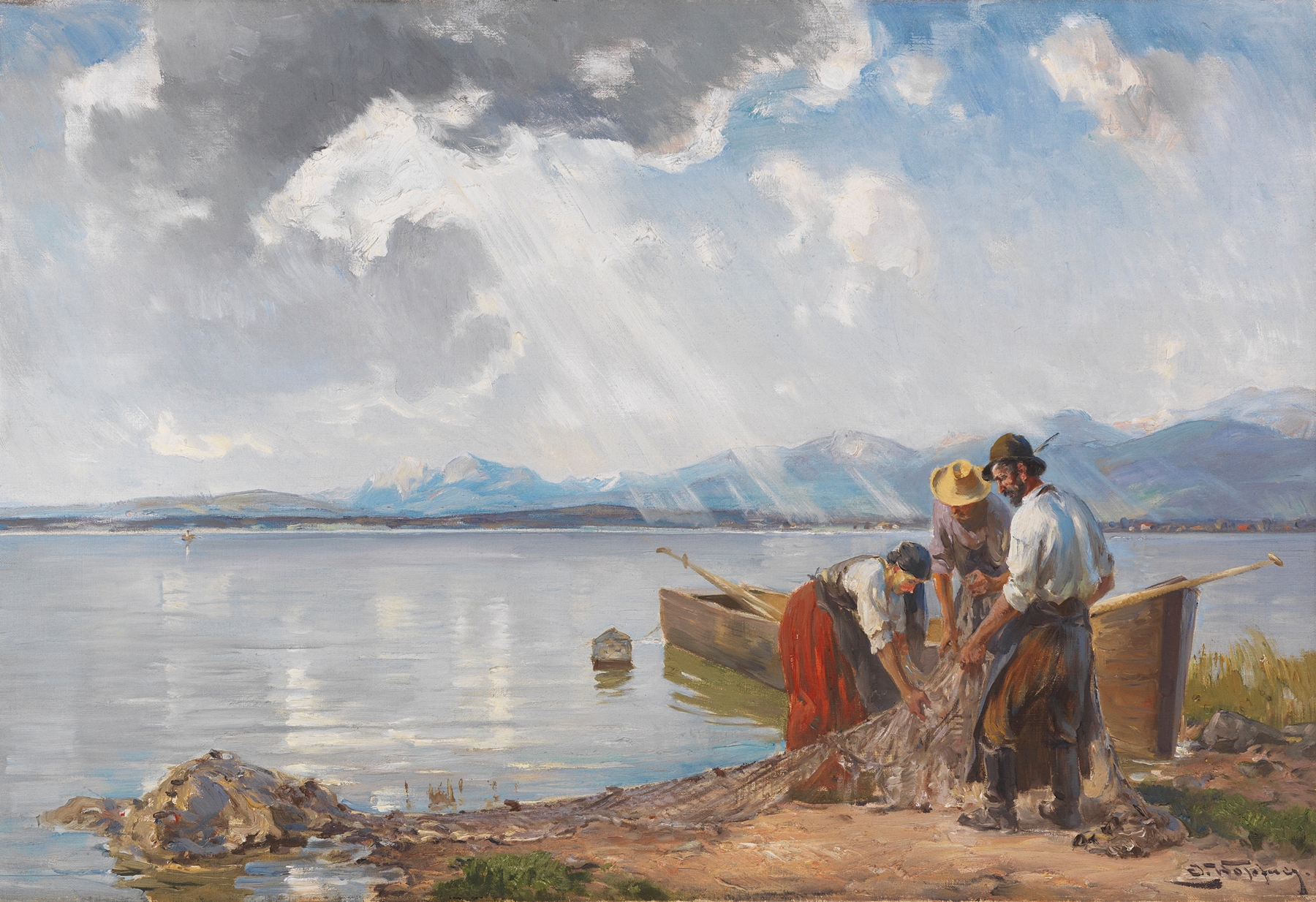
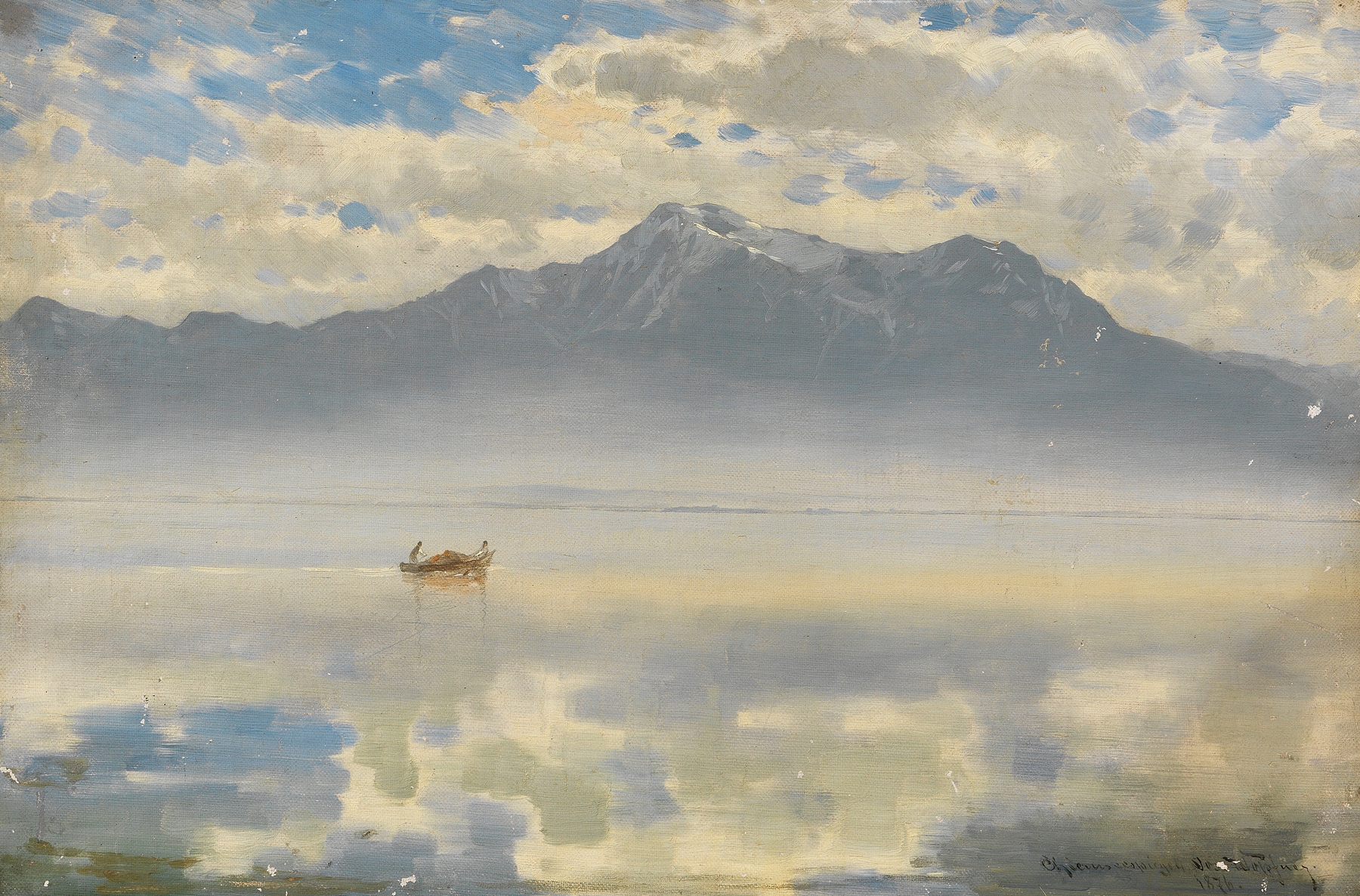
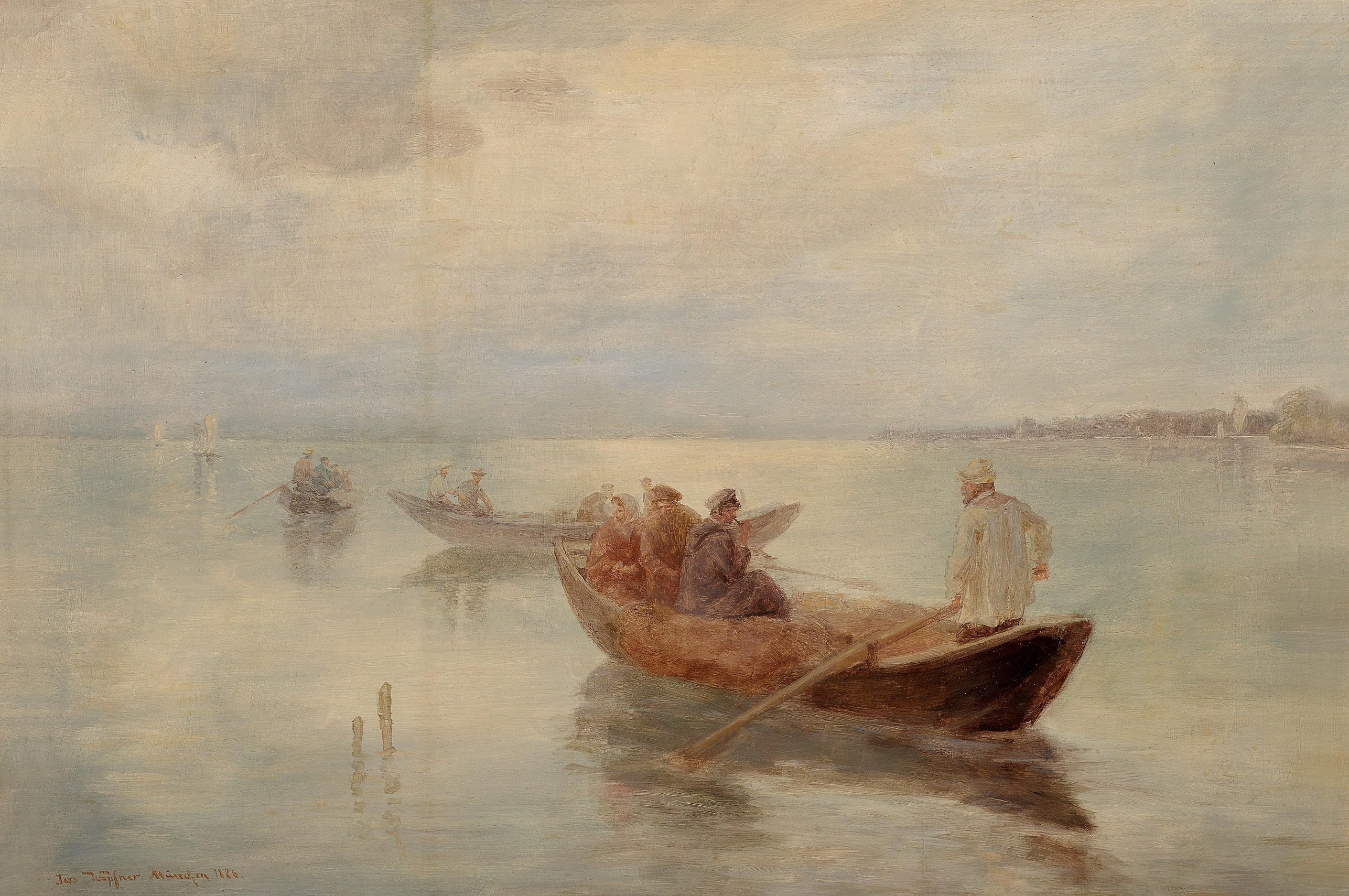
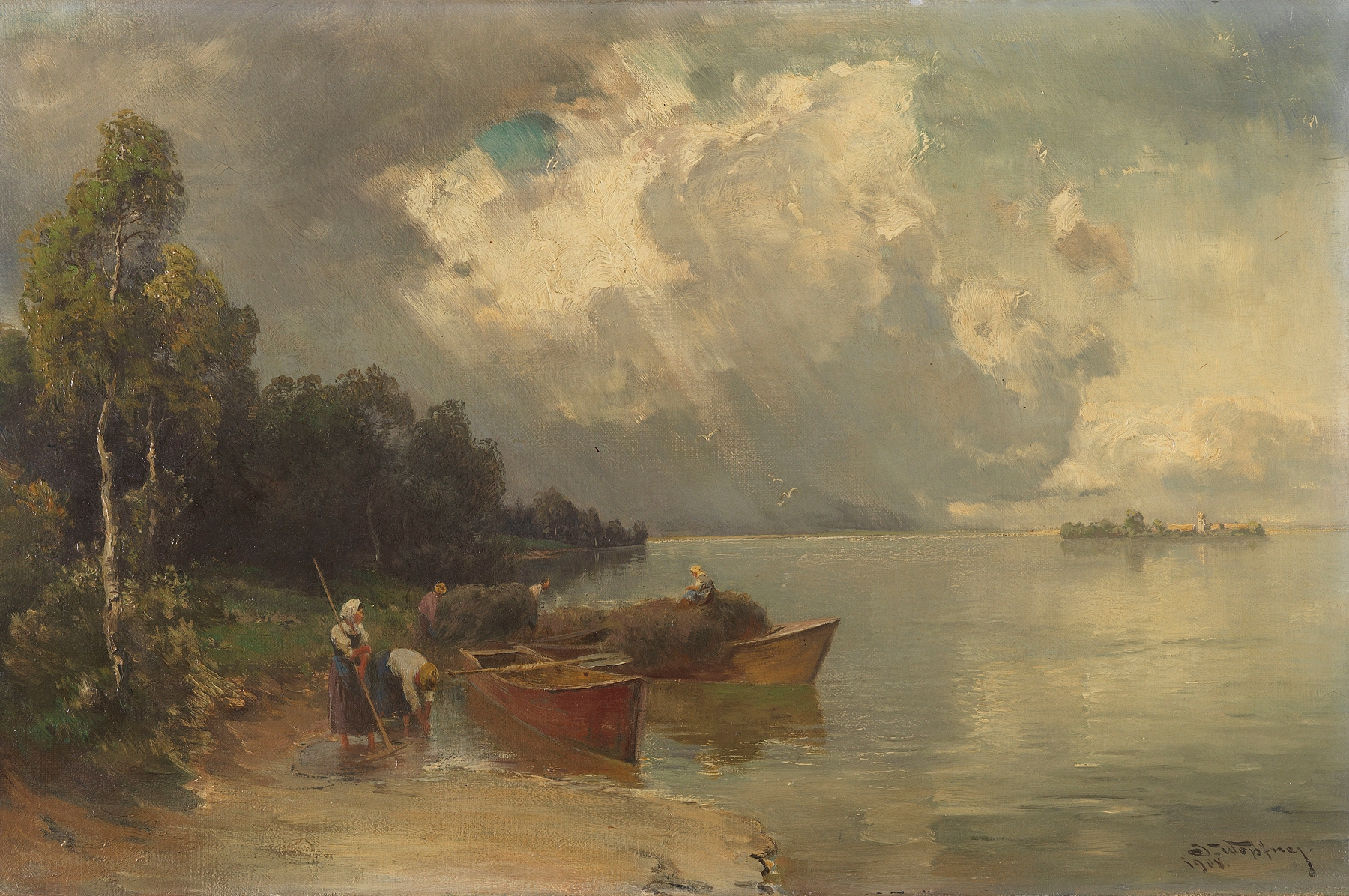
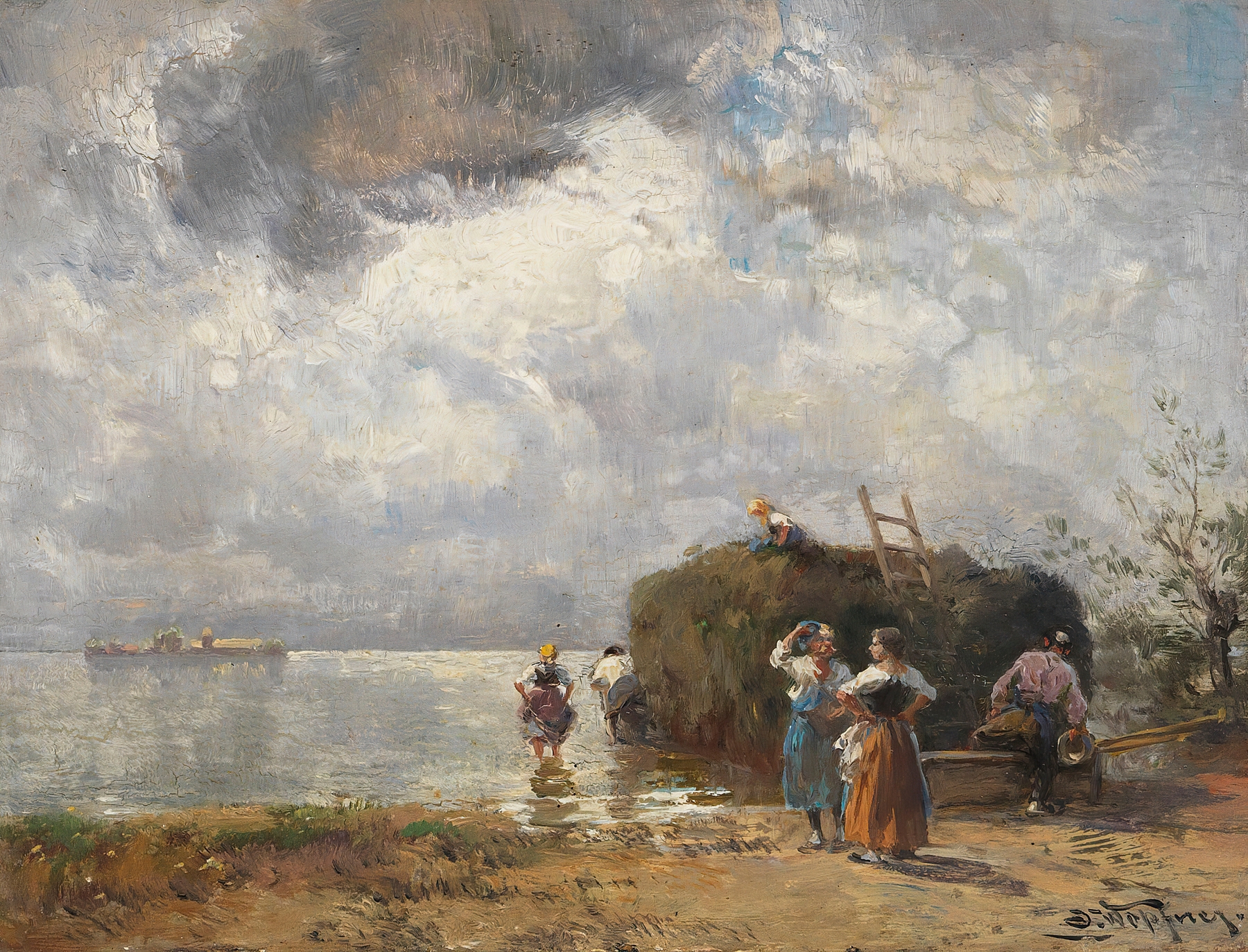
Can beauty exist without sorrow? In the serene embrace of Fischer am Chiemseeufer, this question reverberates through the tranquil waters and weathered figures of fishermen, hinting at a deeper yearning that lingers beneath the surface. Look closely at the foreground, where the fishermen stand in their modest boats, their silhouettes stark against the shimmering blue of the lake. Notice how the gentle ripples of the water mirror the soft hues of the setting sun, casting an ethereal glow on their sun-kissed skin.
The brushwork is fluid, evoking the movement of water while framing the stillness of the fishermen’s task, inviting contemplation of their quiet labor amidst nature’s beauty. There’s a profound sense of harmony, yet an undercurrent of solitude permeates the scene. Within this idyllic composition lies a tension between the tranquility of the landscape and the labor of life. The contrast of the fishermen’s hard hands against the delicate play of light reflects not just their daily toil, but the silent struggle against the relentless passage of time.
Each figure is imbued with a sense of longing; their gazes cast toward the horizon, not merely searching for fish, but perhaps for something deeper—connection, purpose, or escape from the ordinary. Joseph Wopfner painted this work in 1900 while living in Bavaria, a period marked by rapid industrial change that threatened traditional ways of life. As artists sought to capture the essence of their environment, Wopfner found inspiration in the quiet dignity of rural laborers. His focus on the natural world and its inhabitants speaks to a broader movement in art, emphasizing the importance of the human spirit amidst the evolving landscape of modernity.