Autumn Mountains 秋山圖 — History & Analysis
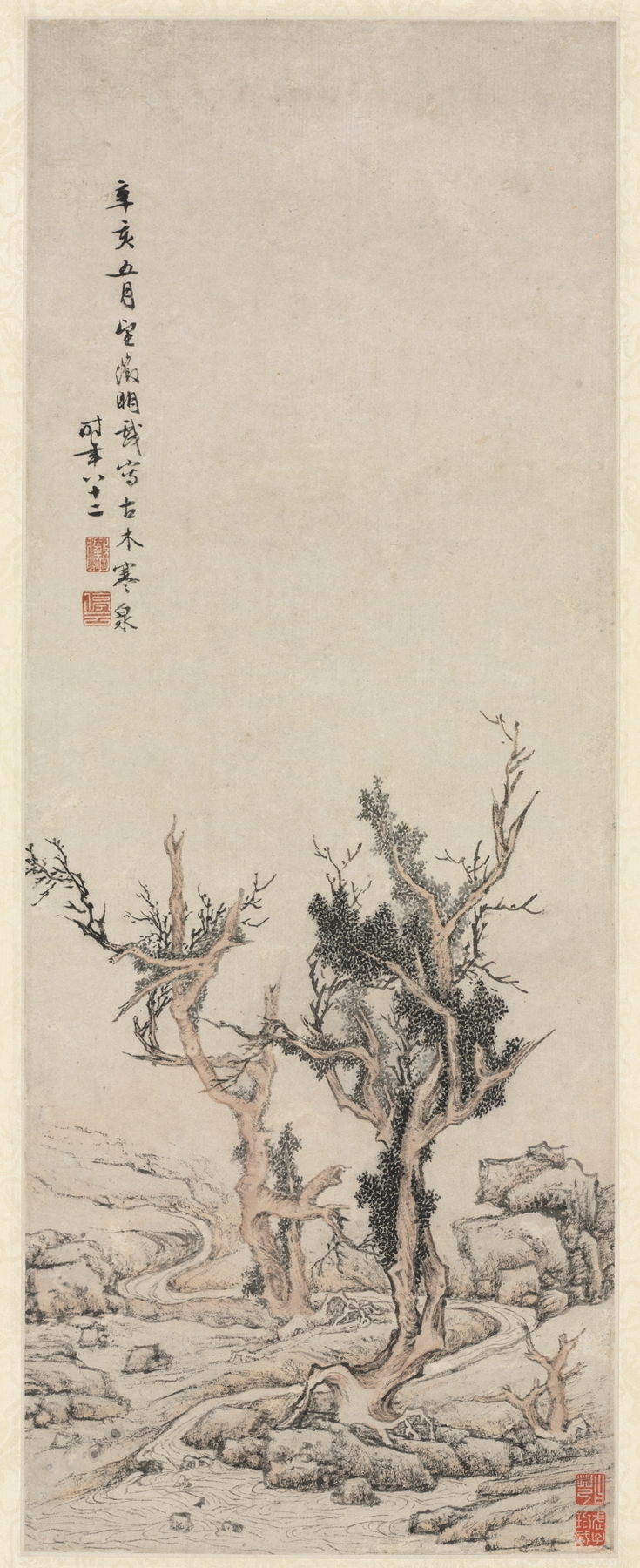
“To paint is to remember what time wants us to forget.” In the canvas of the past, transformation is both fleeting and eternal, capturing the essence of change in the natural world. Look to the lower left corner, where delicate strokes of ink depict a tranquil landscape. The mountains rise majestically, their peaks shrouded in a soft, misty embrace, while vivid bursts of autumn leaves dance against the cool, gray backdrop. Notice how the artist uses wash techniques to layer depth and texture, imbuing each element with a sense of gentle movement.
The harmony of color — the warm oranges and deep reds of foliage contrasted against the muted blues and grays — draws the viewer into a world where stillness reigns, yet life pulses beneath the surface. Here, the juxtaposition of the rugged mountain strength against the fragile beauty of the falling leaves serves as a poignant reminder of the transience of life. Each brushstroke resonates with the concept of impermanence, evoking emotions tied to both nostalgia and acceptance. The viewer is left to ponder their own place within this cycle of decay and renewal, as nature’s tableau reflects the inevitable changes that echo through time.
Wen Zhengming painted this work during the early 16th century, a period marked by the flourishing of the Ming dynasty's cultural and artistic achievements. Living in Suzhou, a hub for artists and scholars, he was deeply influenced by the literati tradition, which emphasized an intellectual approach to art. As he captured the essence of the autumn landscape, he also participated in a broader dialogue about nature, beauty, and the human experience, encapsulating the transformative power of art in a time of great artistic expression.