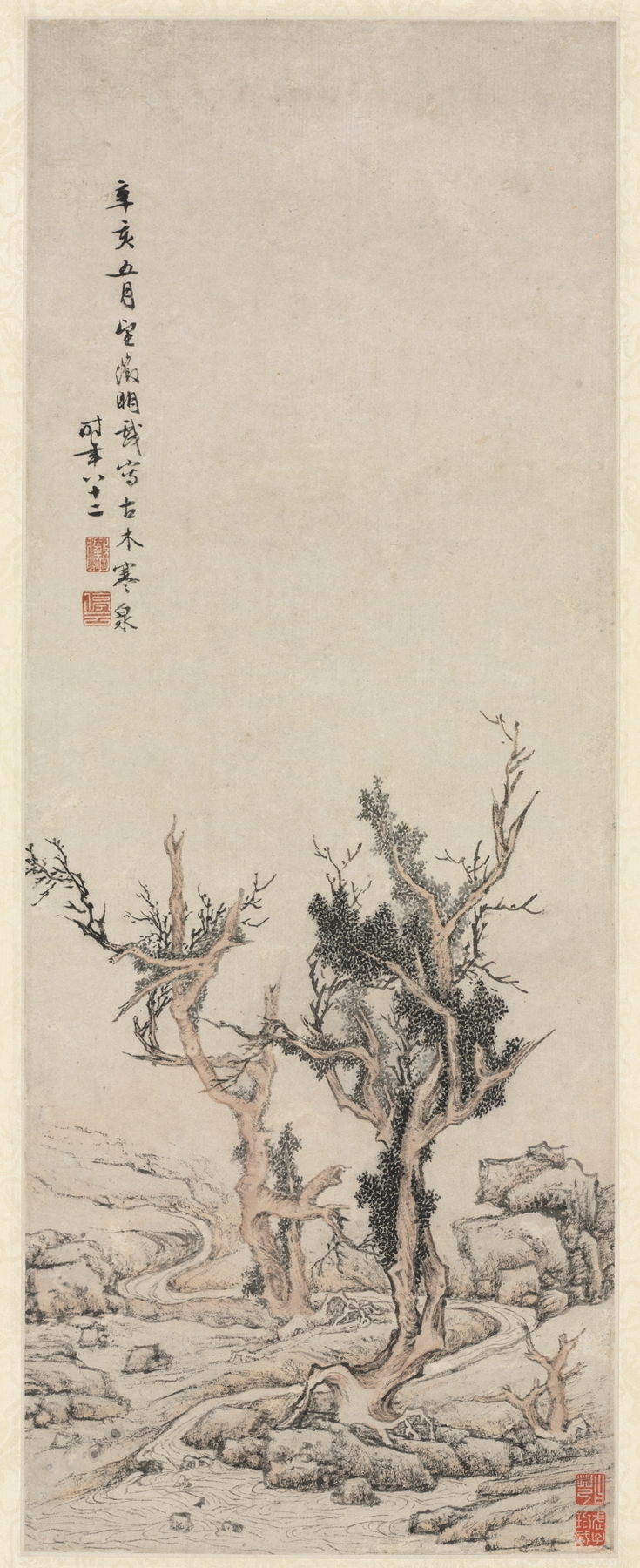
Snowy Landscape — History & Analysis
Is this a mirror — or a memory? In Snowy Landscape, a serene winter vista unfolds, beckoning the viewer to lose themselves in a realm where silence reigns and time seems suspended. The delicate strokes evoke a sense of longing, as if the scene encapsulates both beauty and a profound sense of loss. Look closely at the foreground, where intricate brushwork forms the gentle lines of snow-covered hills. Notice how the soft whites blend with subtle blues and greys, creating a tranquil atmosphere that envelops the composition.
The distant mountains rise like stoic sentinels, their peaks dusted in white, while the delicate trees stand bare, stripped of their vibrance yet rich in character. This juxtaposition of life and dormancy invites contemplation, encouraging the viewer to reflect on the cycle of nature and the passage of time. The emotional tension in the painting lies in the balance between solitude and introspection. The stark landscape mirrors the inner world of human experience, where moments of clarity often coexist with shadows of nostalgia. Here, snowfall acts as a metaphor for the layers of memory that accumulate over time; it buries the past yet preserves its essence, reminding us that loss can foster an appreciation for what remains.
Each stroke of the brush, each shade of color, invites a dialogue with both the beauty of nature and the fragility of existence. Wen Zhengming created this evocative piece during the Ming Dynasty, a period marked by cultural flourishing and artistic innovation in China. Active between 1470 and 1559, the artist was heavily influenced by his surroundings and the literati tradition, where landscape painting symbolized both personal expression and philosophical introspection. Snowy Landscape reflects not only his technical mastery but also the deep emotional resonance of a changing world, capturing the zeitgeist of an era steeped in reflection and artful contemplation.