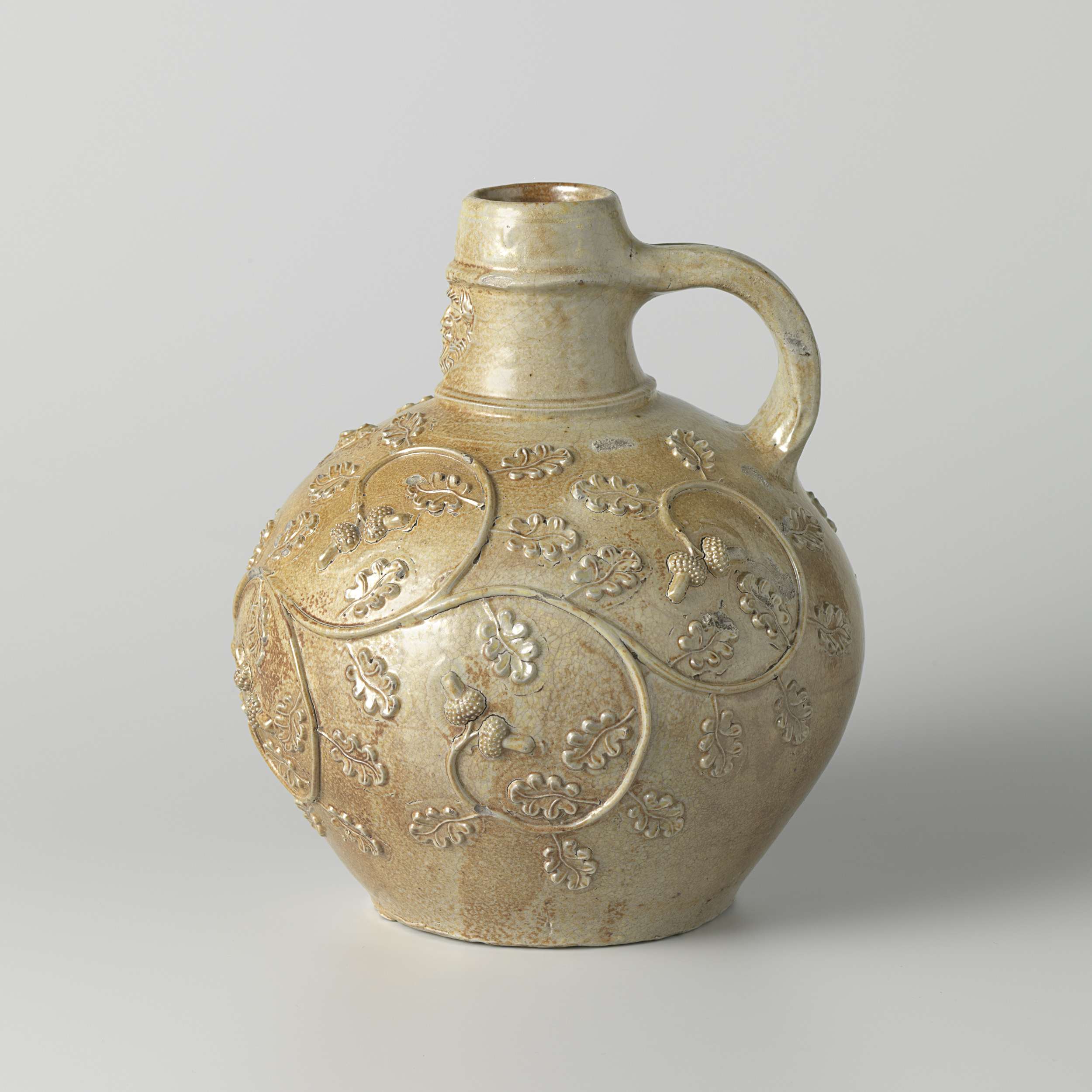
Bartmann (bearded-man) jug with floral decoration — History & Analysis
“Under the brush, chaos becomes grace.” Each stroke of paint, each twist of clay, transforms raw materials into a vessel of faith and daily life, bridging the mundane and the sacred in a delicate dance. Look closely at the floral decorations swirling around the jug’s belly; the intricate patterns pull your gaze, inviting you to explore their complexity. The bearded figure, likely a representation of a wise artisan, stands guard at the neck of the vessel, his presence embodying both craftsmanship and spirituality.
The rich, earthy tones of the glazing contrast sharply with the brilliant white highlights, creating a vibrant interplay of color that speaks to the careful balance between utility and artistry. The jug is more than an object; it encapsulates the era's aspiration for beauty amidst the simplicity of domestic life. The bearded man’s serene expression suggests wisdom or perhaps a silent prayer, imbuing the piece with a layer of introspection.
The floral motifs, often linked to faith and renewal, weave together a narrative of hope, suggesting that even the ordinary can be a reflection of the divine. This jug comes from a period when utilitarian objects were increasingly adorned with artistic flourishes, reflecting a burgeoning Renaissance sensibility. Created between 1525 and 1549, it stands as a testament to the craftsmanship of its unknown artist, who likely inhabited a world transitioning from medieval traditions to a deeper exploration of humanism and individual expression in art.