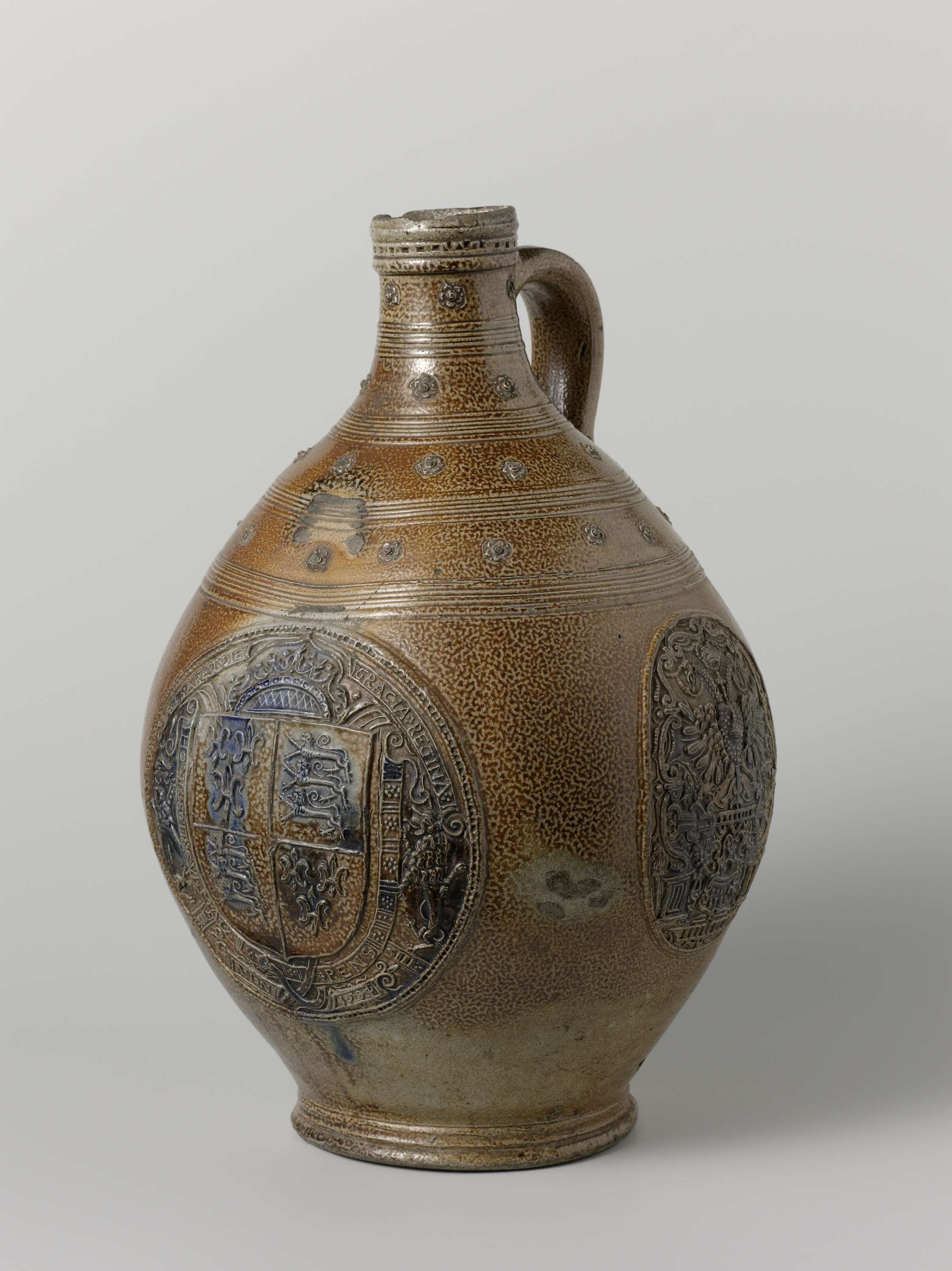
What secret hides in the quiet of the canvas? The *Bartmann jug*, an enigmatic vessel from the late 16th century, unveils layers of cultural exchange and symbolism, whispering tales from a time when artistry and utility were intertwined. Look closely at the jug’s bearded face, an expressive visage that draws the viewer in. Notice the meticulous detailing of his features, each curve and contour crafted with care. The earthy tones blend harmoniously, evoking a sense of warmth and nostalgia, while the arms of England are emblazoned across the vessel, hinting at a connection to national identity. The surface, with its textured glaze, creates a subtle interplay of light and shadow, inviting inspection and revealing the jug’s intricate craftsmanship. Yet, the jug is more than merely decorative. The juxtaposition of the human form with the practical vessel suggests a deeper commentary on the roles of men and the artifacts they create. The bearded figure may represent an ideal of masculinity, while the utilitarian purpose of the jug speaks to the everyday life of the time. This blend of illusion and reality raises questions about the relationship between identity and function, and what narratives are embedded in utilitarian objects. Crafted between 1594 and 1600, this jug emerged during a period of flourishing creativity in Europe, marked by exploration and the exchange of ideas. The artist, though unknown, was part of a vibrant community reacting to the socio-political landscape of the late Renaissance. As England's influence grew, this jug served not only as a functional item but as a vessel of cultural storytelling, capturing the spirit of an age in transition.