Bomschuiten At Sea — History & Analysis
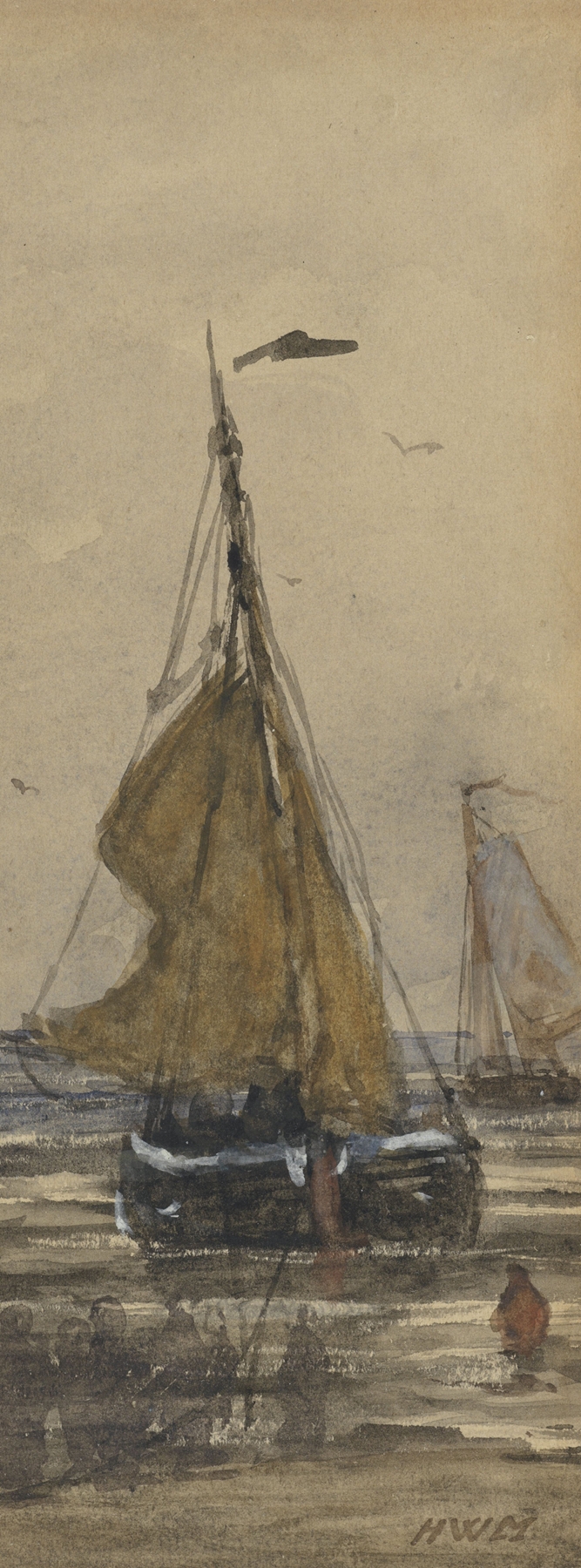
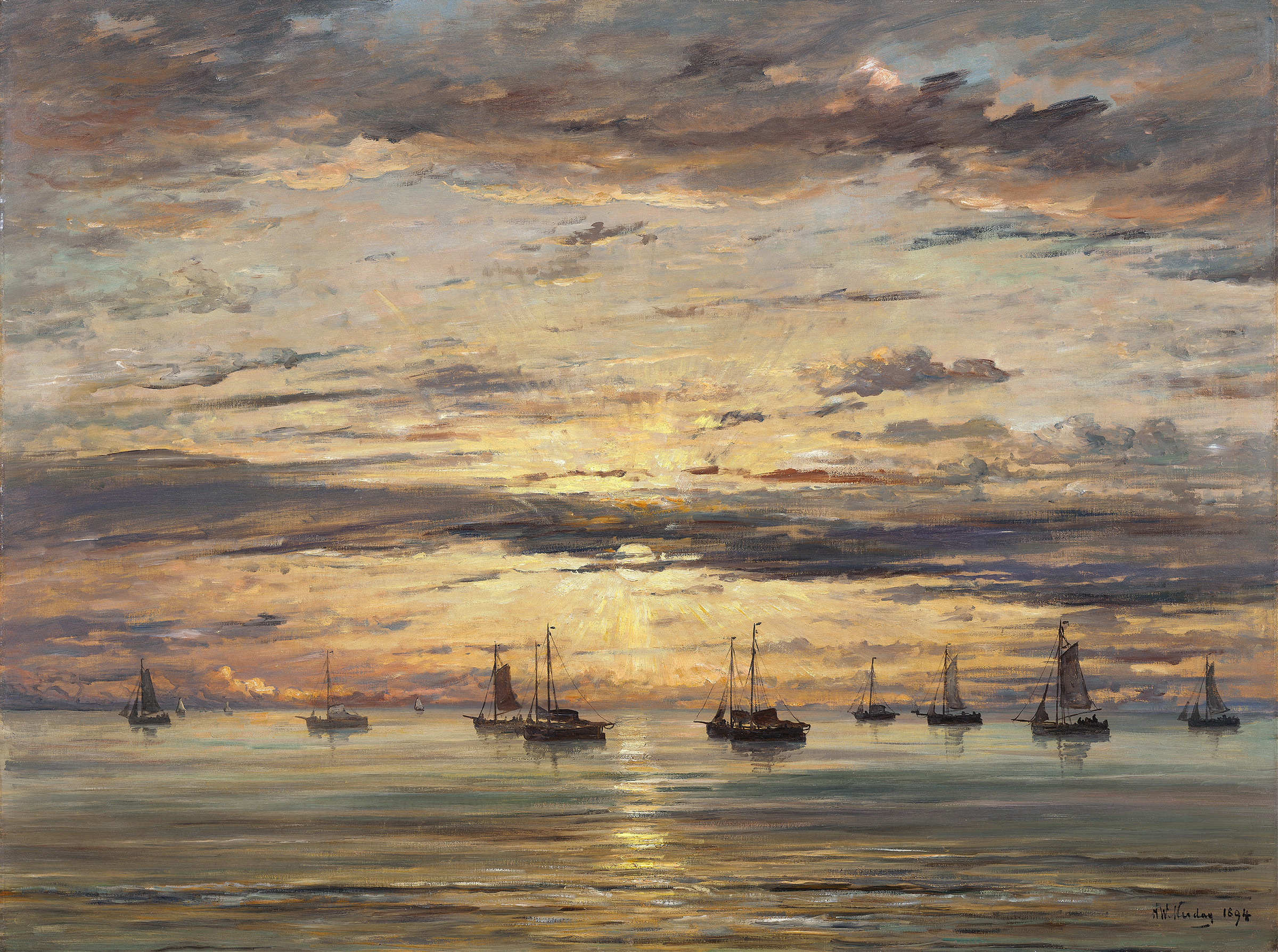
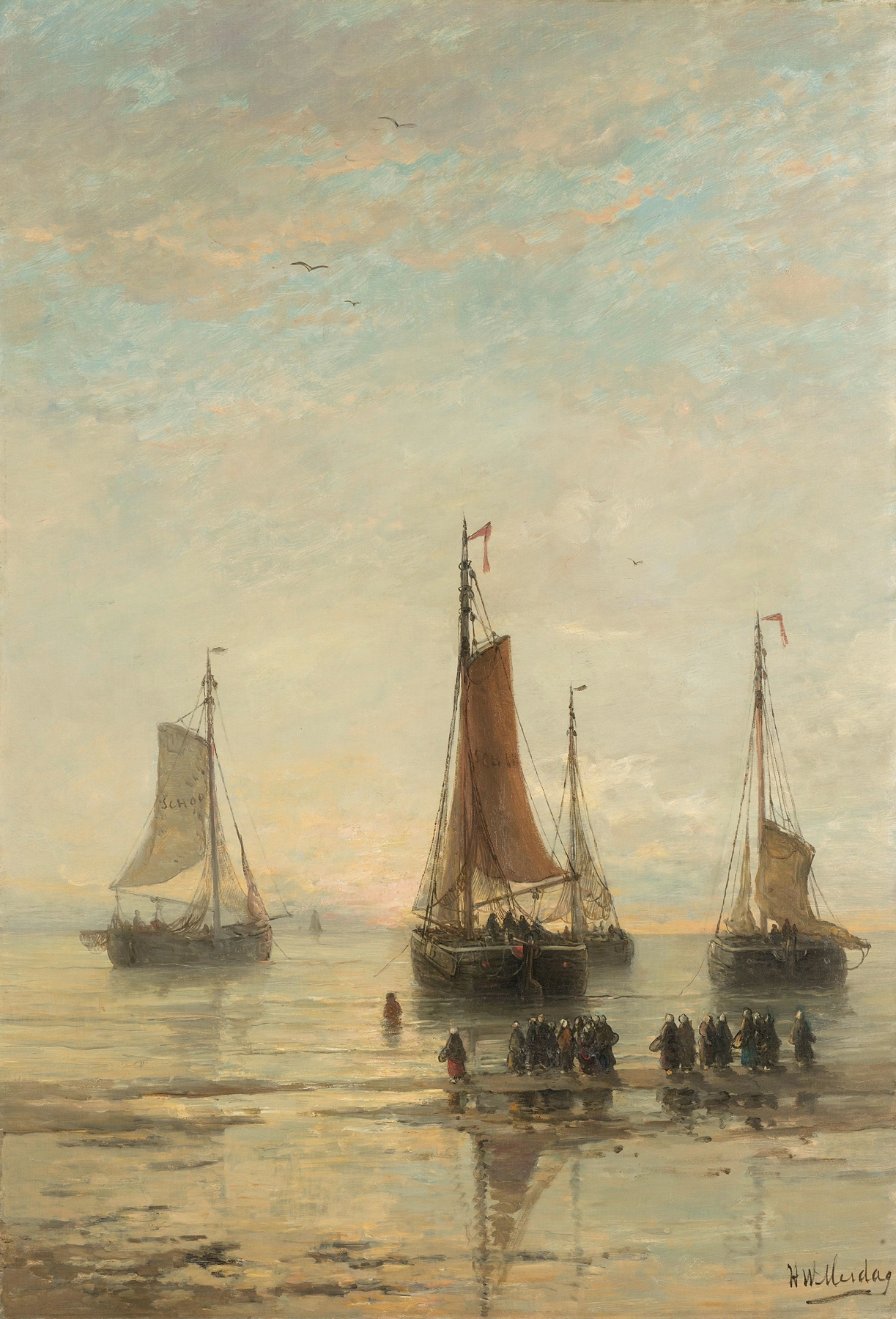
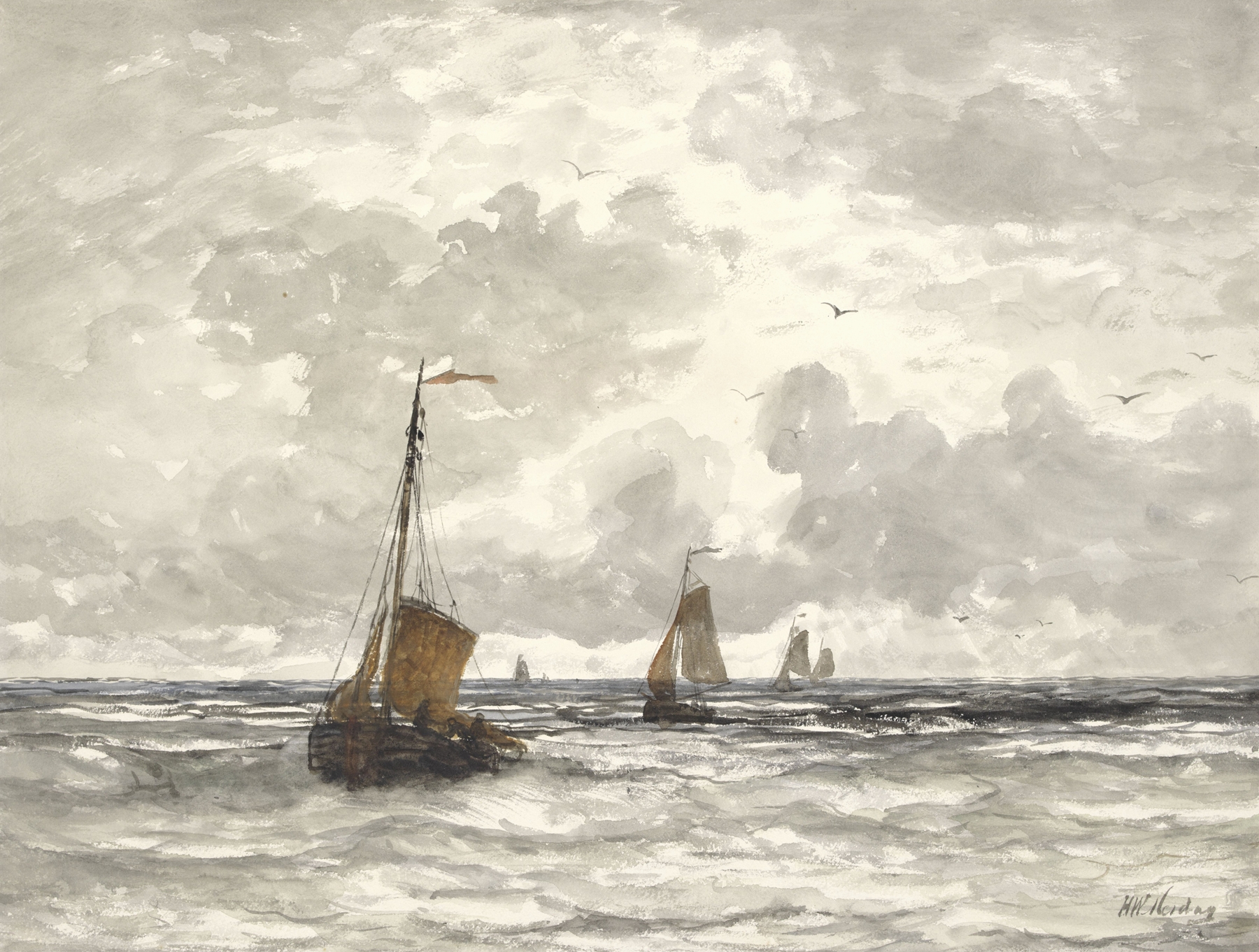
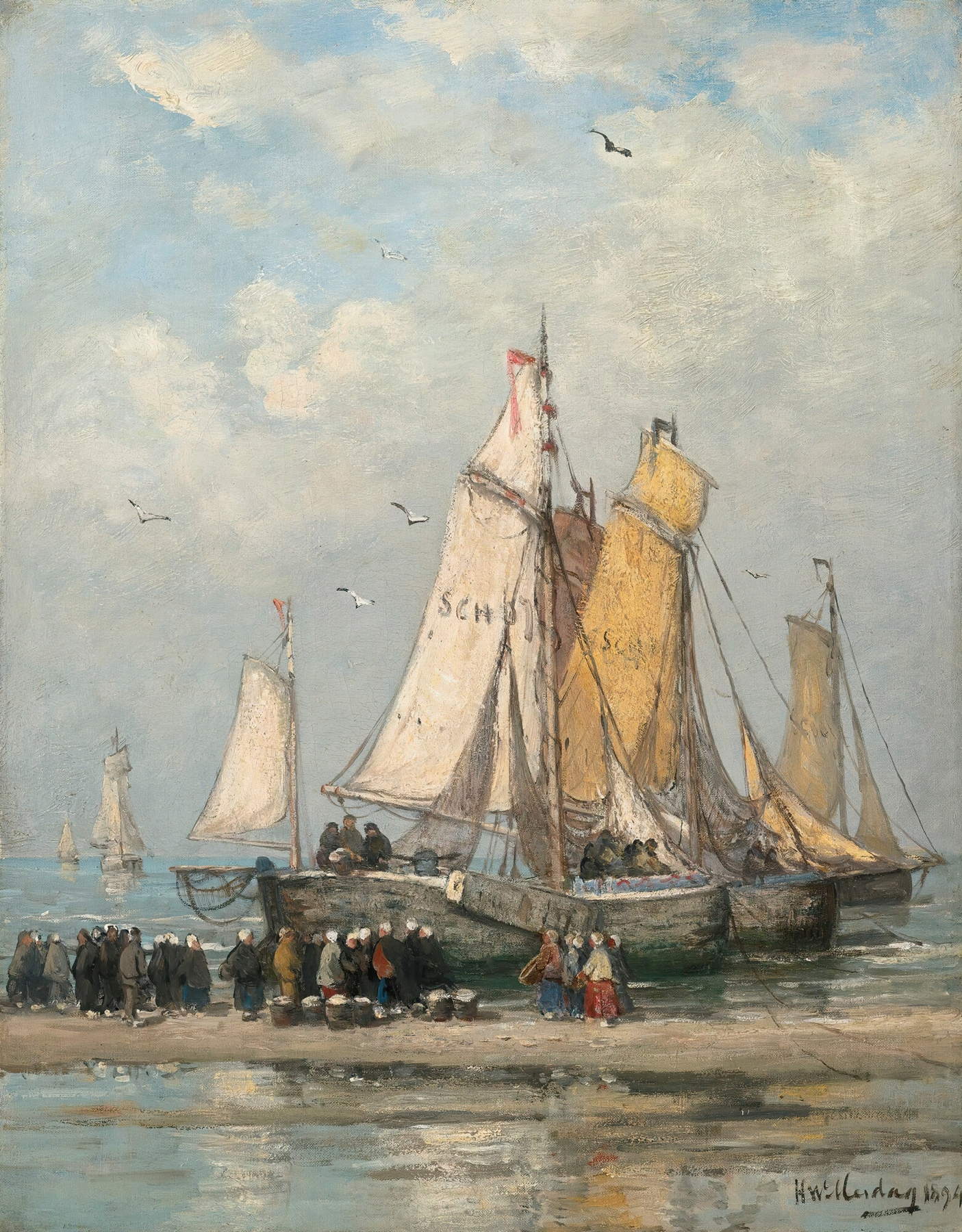
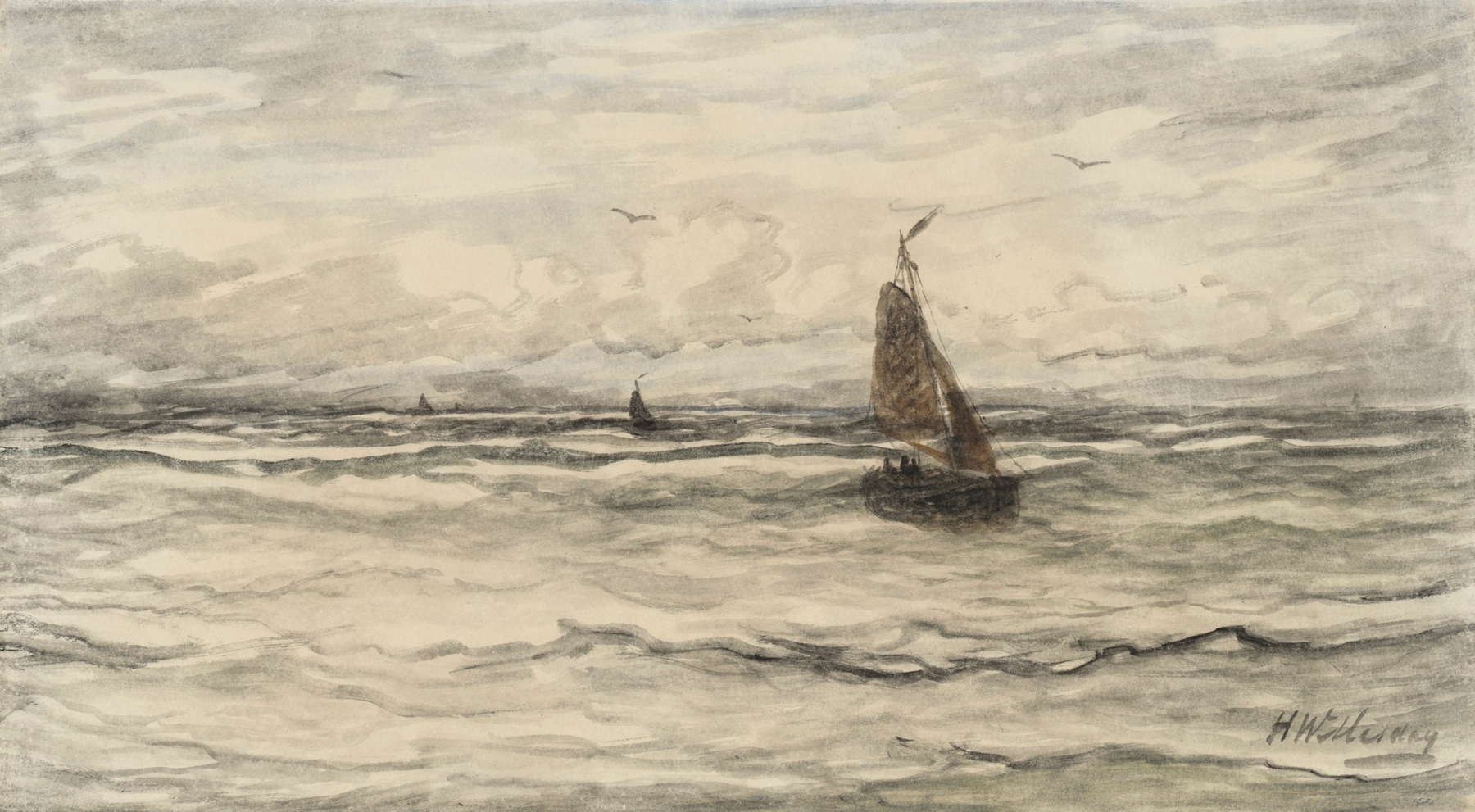
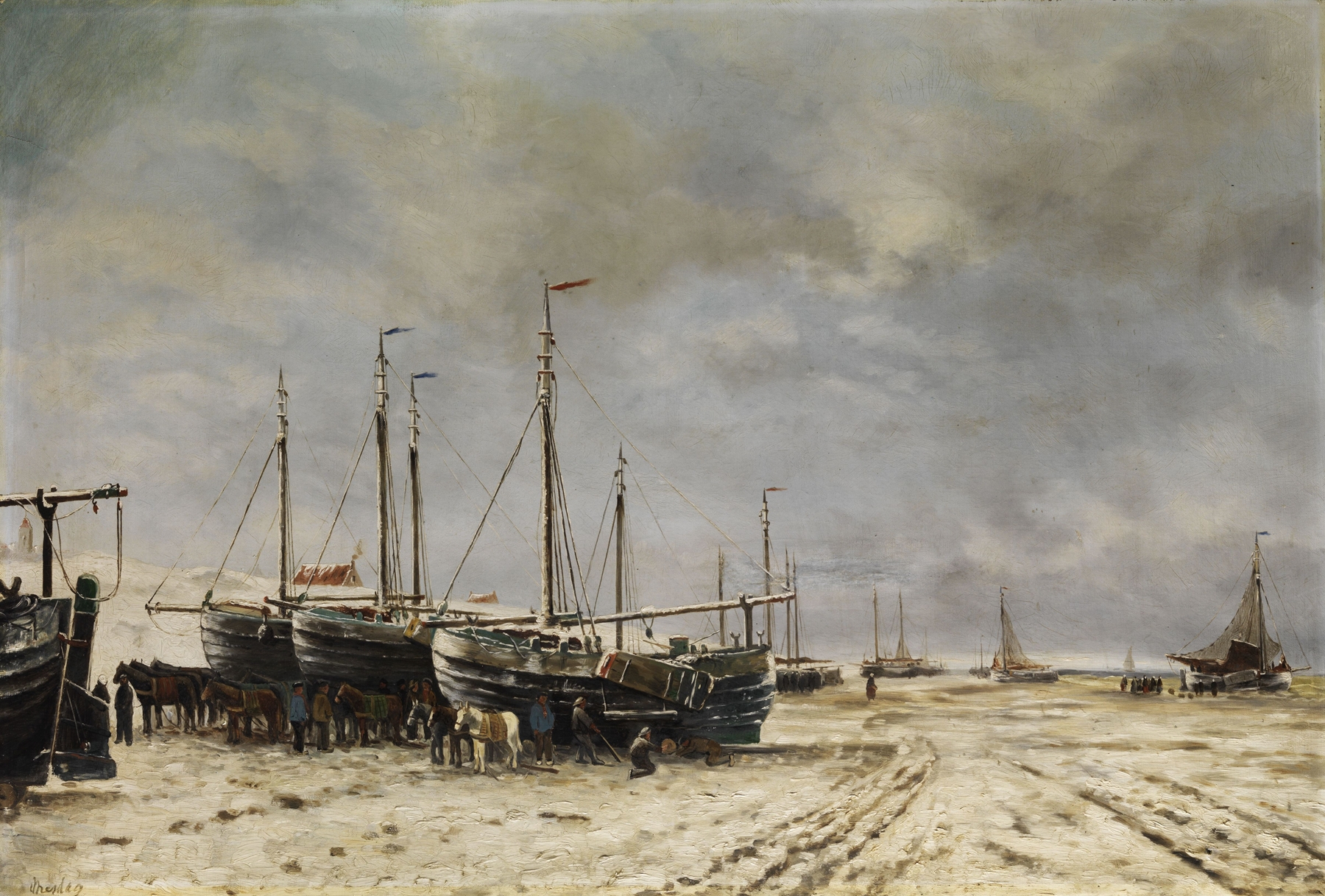
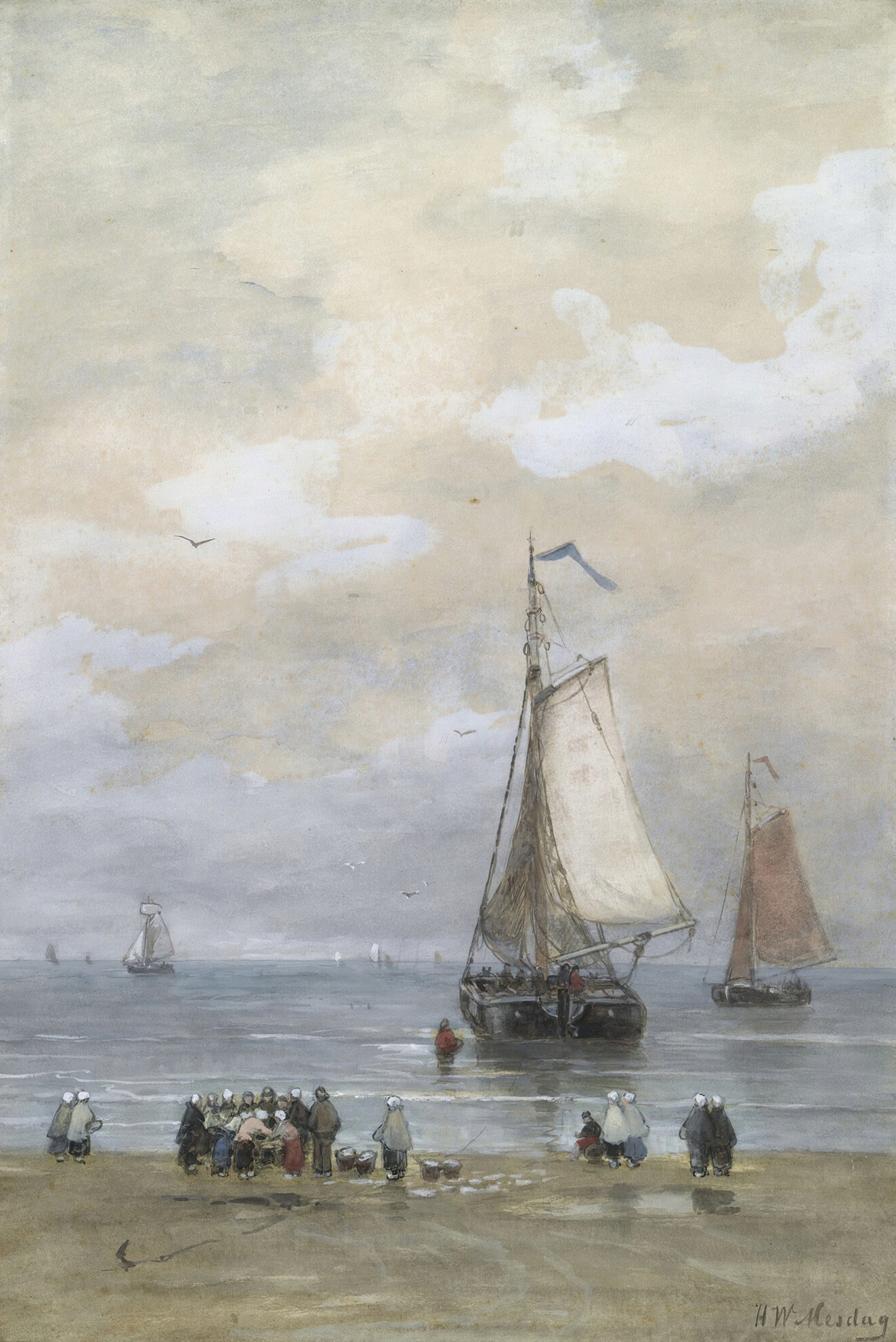
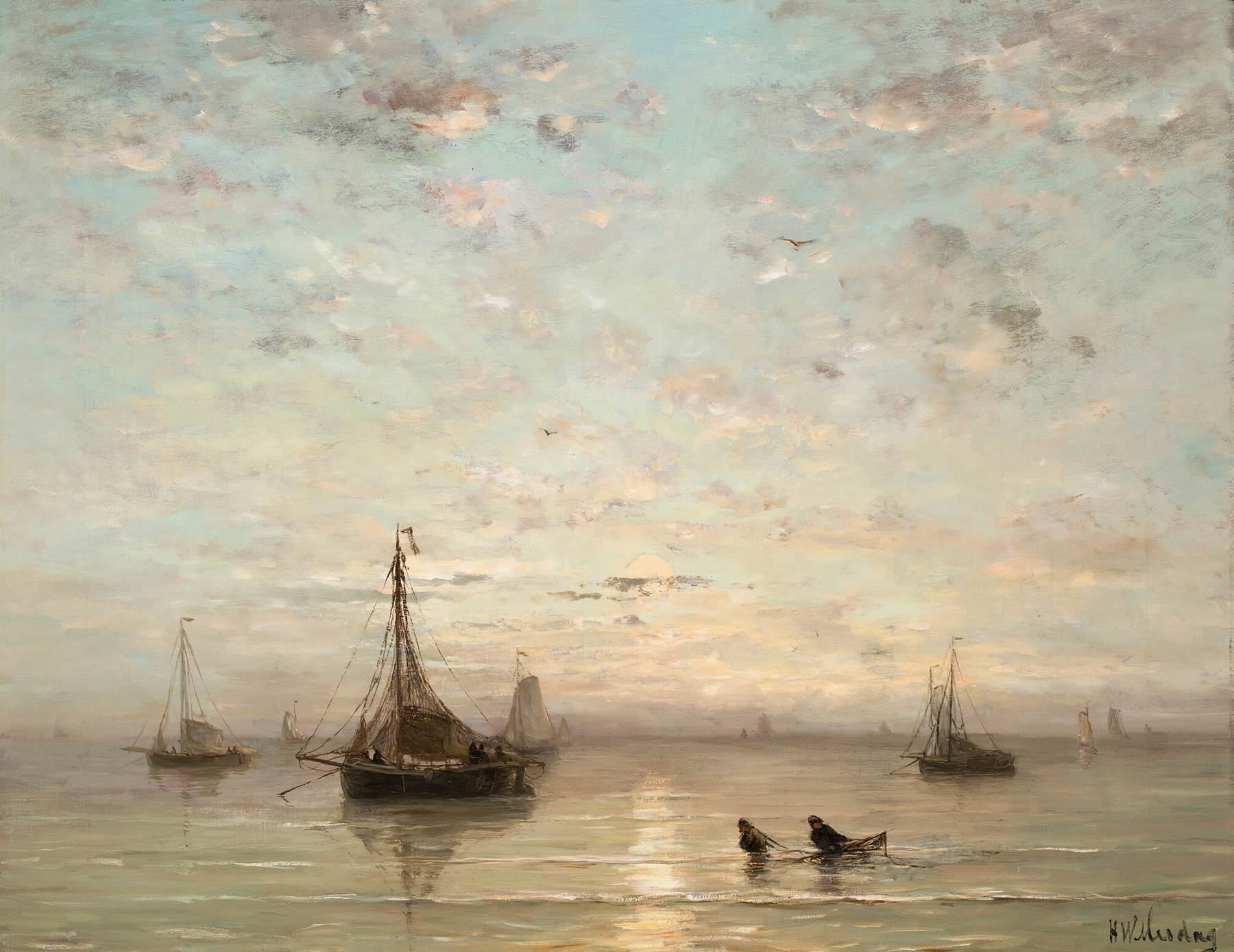
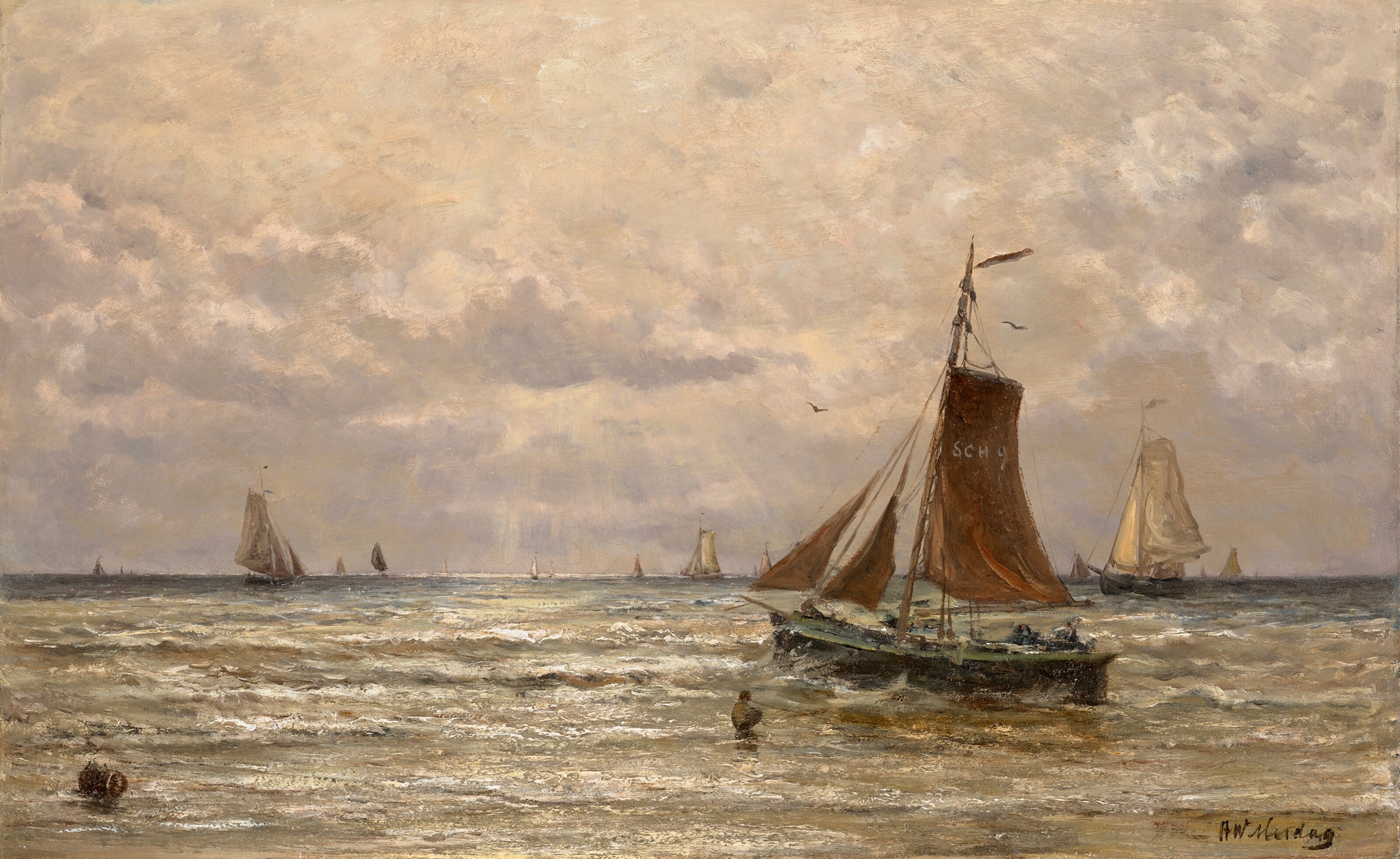
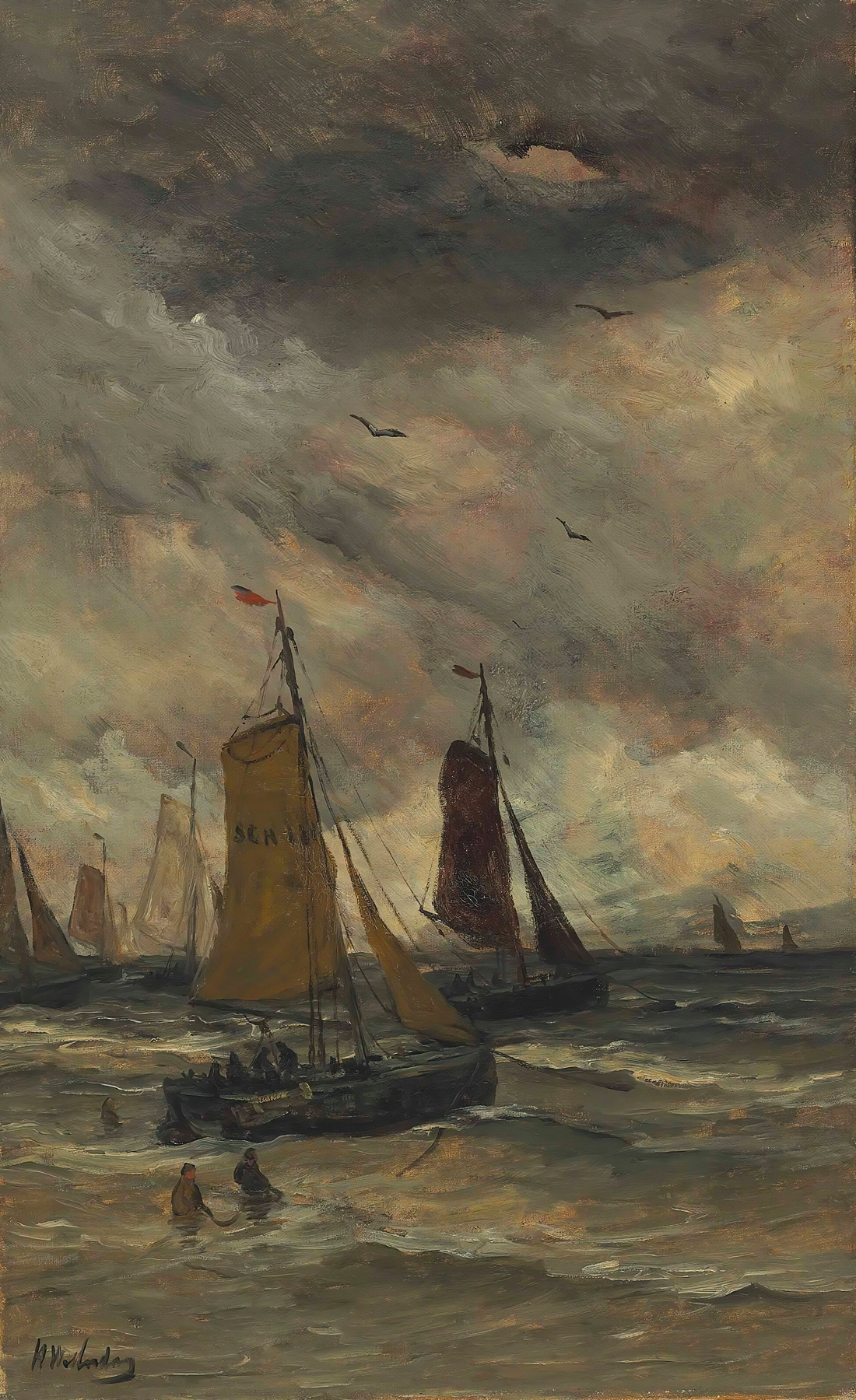
Could beauty survive in a century of chaos? In Bomschuiten At Sea, the raw power of nature intertwines with the delicate craft of human endeavor, suggesting a rebirth of hope amidst turbulence. Look to the lower right, where sturdy fishing boats, the bomschuiten, brave the churning waves, their broad hulls painted in earthy tones contrasting against the vibrant blues of the tumultuous sea. The artist employs a sweeping horizontal composition that draws your gaze across the expansive horizon, inviting you to witness the dance of light upon the water’s surface.
Notice how the interplay of warm and cool colors evokes a sense of both tranquility and impending storm, encapsulating the duality of existence. Beyond the surface, the painting reflects deeper meanings of resilience and vulnerability. The boats symbolize the struggle of humanity against the indifferent forces of nature, while the distant sun peeking through the clouds hints at the promise of a new dawn. Each brushstroke on the water captures the ephemeral nature of life itself, portraying both the beauty and unpredictability inherent in the world.
The tension between calm and chaos speaks to our collective experience, urging us to confront our own trials. Hendrik Willem Mesdag, a renowned Dutch painter active during the late 19th century, created this piece during a period when the art world was shifting towards realism and a focus on capturing nature's grandeur. Living in The Hague, surrounded by the Dutch fishing industry, Mesdag's connection to the sea deeply influenced his work. The period was marked by a yearning for authenticity, and Mesdag's striking portrayal of marine life reflects both personal and collective resilience, resonating with viewers even today.