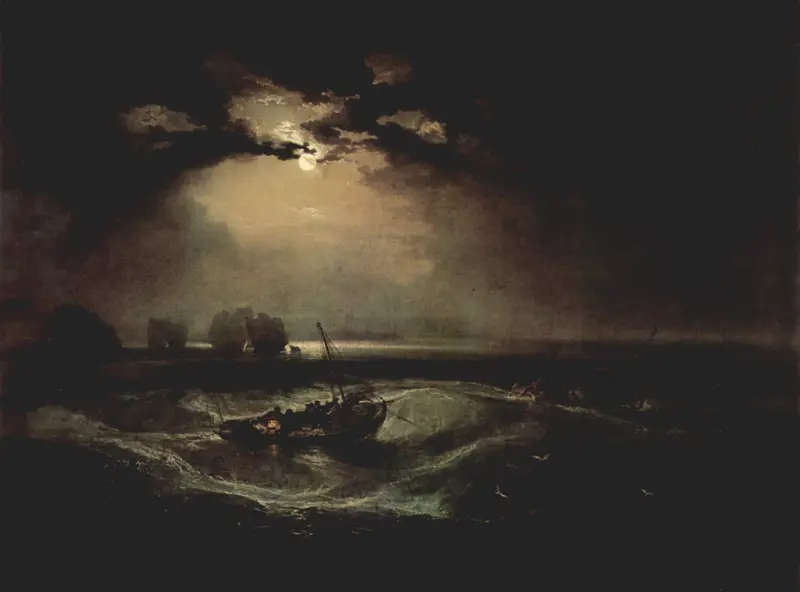
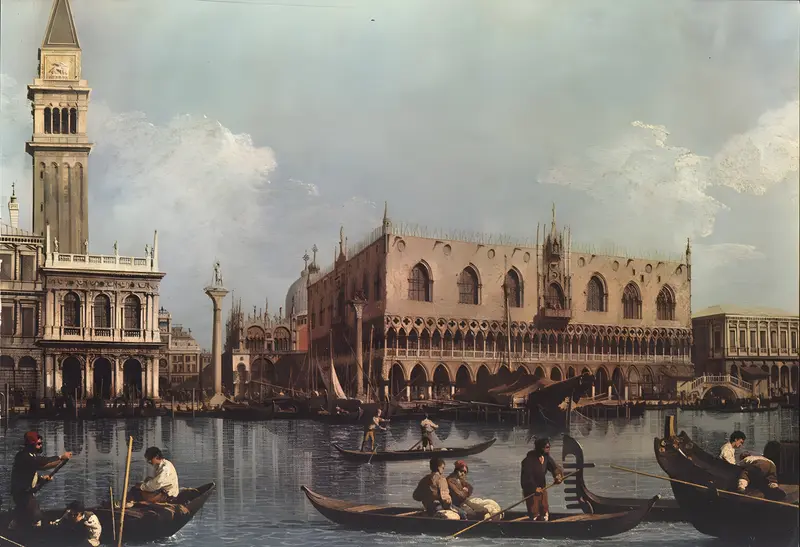
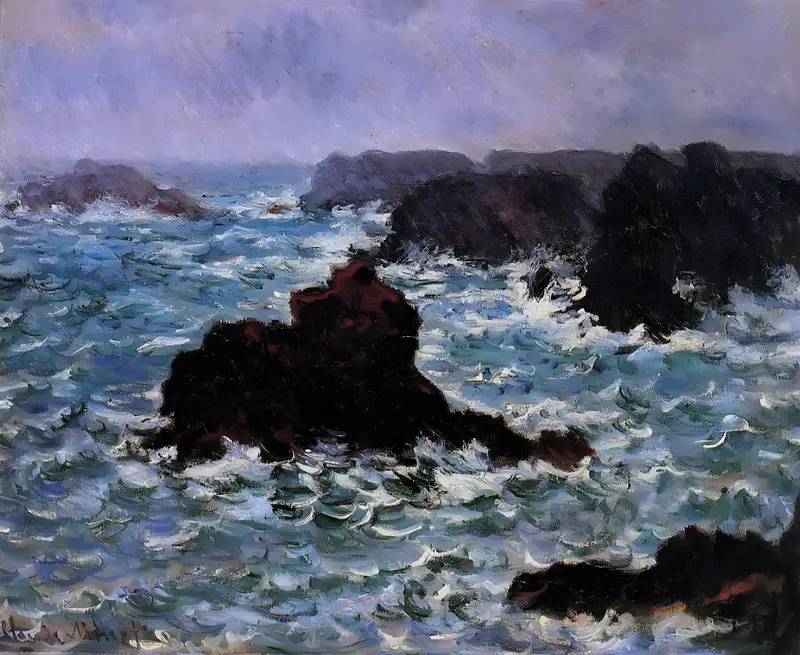
Public domain · Free to download
Famous Ocean Paintings
From Hokusai's Great Wave to Turner's Fighting Temeraire, these are the 25 most famous ocean paintings of all time: storms and shipwrecks, sea battles, quiet beaches and the open sea itself. We added the most famous paintings of ships, of storms and shipwrecks, of beaches and of naval battles.
For each one you get what it shows, the story behind it, a detail to look for and where to see it today. Every image is a public-domain reproduction of the real work, free to download and free to use.
The seascape became a genre of its own in the Netherlands in the 1600s, when painters such as the Van de Veldes recorded ships and sea battles in close detail. Later artists such as Friedrich and Turner painted the sea as something vast and frightening, far bigger than anyone standing before it.
Selected and written by Pavel MazuelasUpdated October 30, 2026
Part of The Most Famous Paintings in the WorldRelated: Famous Landscape Paintings, Famous Historical Paintings
The 25 most famous ocean paintings of all time
Ranked from 1 to 25 by worldwide fame. Click any painting to see it up close and download it free.
No. 1Ukiyo-e
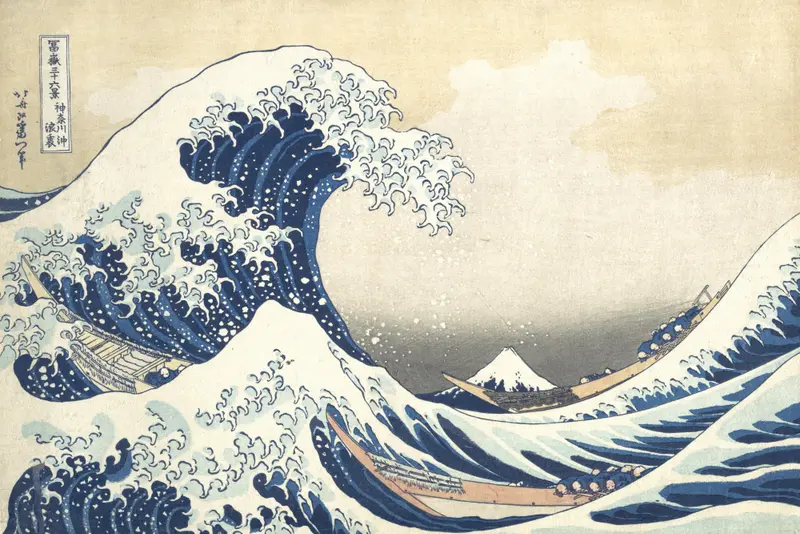
The Great Wave off Kanagawa by Katsushika Hokusai
Place: Off Kanagawa, Japan
c. 1830–1832 · Woodblock print; ink and color on paper · 25.7 × 37.9 cm
Metropolitan Museum of Art, New York
A giant wave curls over three fishing boats off Kanagawa, its clawlike crest about to break, while Mount Fuji sits small in the hollow beneath it. Katsushika Hokusai designed it around 1830–32 as a woodblock print for his series Thirty-six Views of Mount Fuji, and the publisher advertised its new Prussian blue, an imported pigment. Look at the crews crouched low in their boats, clinging on. It is said to have inspired Debussy's La Mer. The impression shown here is in the Metropolitan Museum of Art in New York.
Sources: Metropolitan Museum of Art
No. 2Impressionism
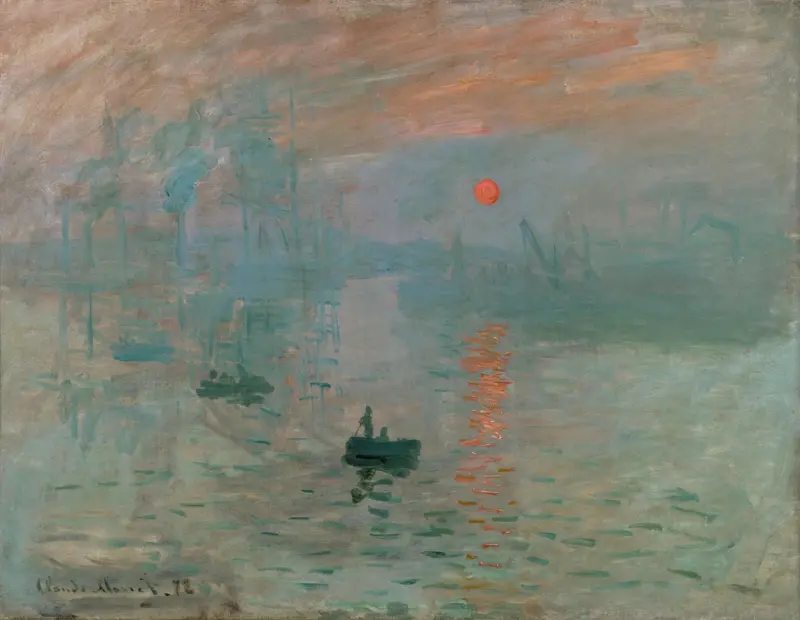
Impression, Sunrise by Claude Monet
Place: Le Havre harbor
1872 · Oil on canvas · 50 × 65 cm
Musée Marmottan Monet, Paris
An orange sun rises through the mist over the harbor of Le Havre, its reflection broken into short strokes on the water, while rowboats drift by in silhouette. Claude Monet painted it from his hotel window around November 1872 and called it simply Impression; in 1874 a critic mocked the title, and the name Impressionists stuck. Stolen from the Musée Marmottan Monet by an armed gang in 1985, it was recovered in Corsica in 1990 and hangs there again, in Paris.
Sources: Musée Marmottan Monet
No. 3Romanticism
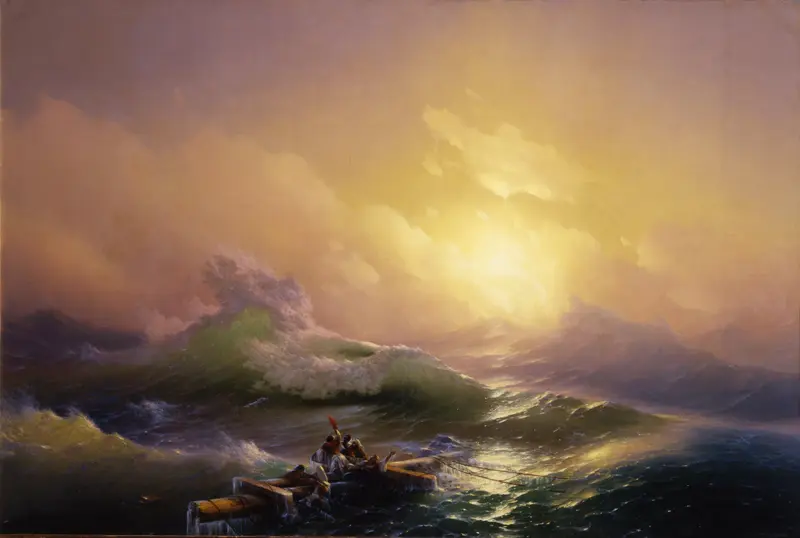
The Ninth Wave by Ivan Aivazovsky
1850 · Oil on canvas · 221 × 332 cm
Russian Museum, St. Petersburg
At dawn, survivors of a shipwreck cling to a broken mast as a huge wave rolls toward them: the ninth wave, which legend calls the most terrible in a storm. Ivan Aivazovsky painted it in 1850 from memory, as he always did, saying a splash of a wave cannot be painted from life. The Russian Museum reads the golden light breaking through as a sign of hope. Probably his most famous work, it is in the Russian Museum in St. Petersburg.
Sources: Russian Museum
No. 4Dutch Golden Age
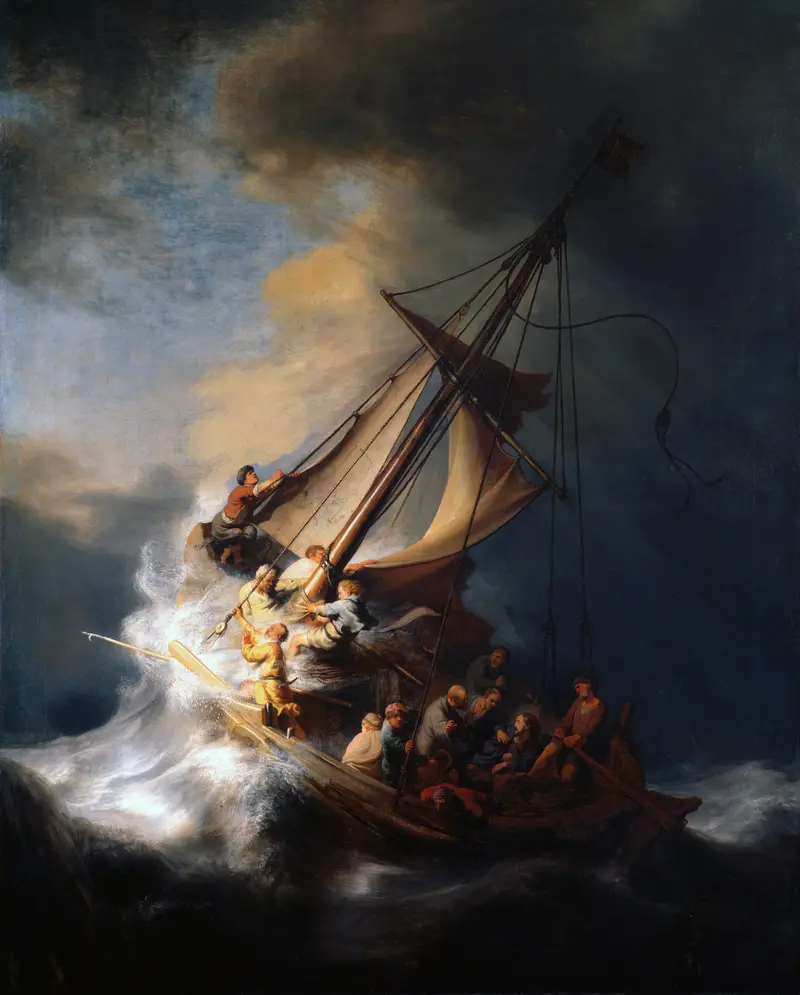
The Storm on the Sea of Galilee by Rembrandt
Place: Sea of Galilee
1633 · Oil on canvas · 160 × 128 cm
Isabella Stewart Gardner Museum (stolen 1990), Boston
Christ's disciples fight to save their boat as a storm on the Sea of Galilee lifts its bow up a towering wave, while others turn to Jesus at the stern. It is Rembrandt's only known seascape, painted in 1633, and the figure looking straight out at us is thought to be the artist himself. Isabella Stewart Gardner bought it in 1898. On March 18, 1990, thieves dressed as police officers stole it from her museum in Boston, and it is still missing; its empty frame hangs in the Dutch Room.
Sources: Isabella Stewart Gardner Museum
No. 5
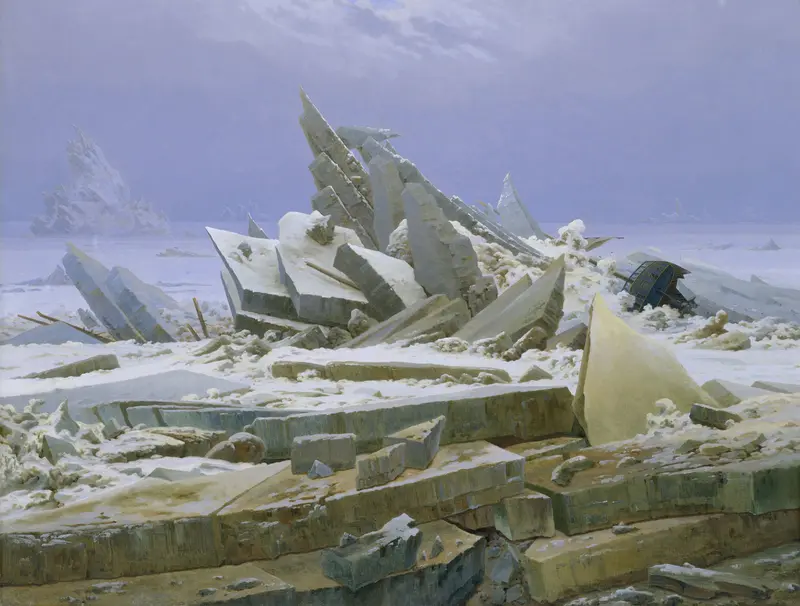
The Sea of Ice by Caspar David Friedrich
c. 1823–1824 · Oil on canvas · 96.7 × 126.9 cm
Hamburger Kunsthalle, Hamburg
Great slabs of pack ice pile up like a shattered monument, and only at the right can you make out the hull of the ship they have crushed. Caspar David Friedrich based the ice on sketches of floes breaking up on the Elbe in the winter of 1820–21, and he was probably inspired by the Arctic voyages of the explorer Parry. Once known as The Failed Hope, it was bought after his death by the painter Johan Christian Dahl. It is in the Hamburger Kunsthalle in Hamburg.
Sources: Hamburger Kunsthalle
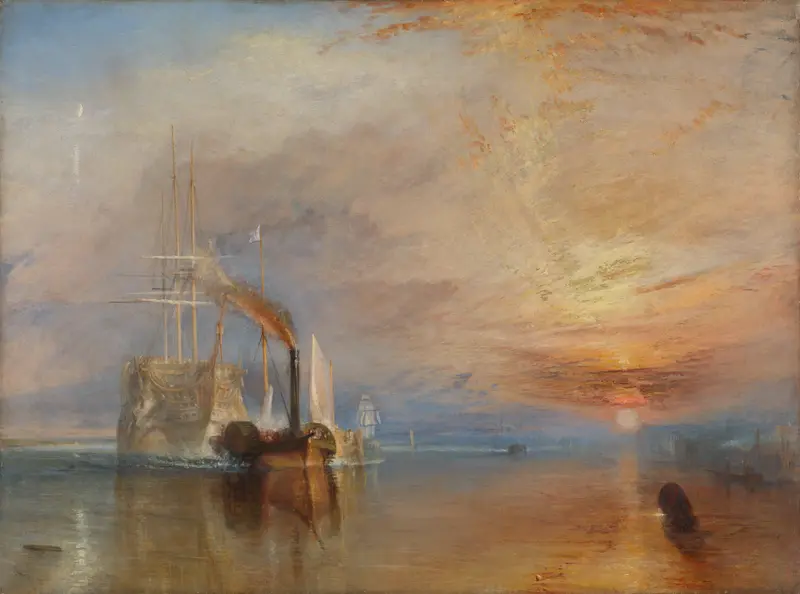
No. 6Romanticism
The Fighting Temeraire by J. M. W. Turner
Place: River Thames
1839 · Oil on canvas · 90.7 × 121.6 cm
National Gallery, London
The old warship Temeraire, ghostly pale, is towed up the Thames by a dark steam tug as the sun goes down in a blaze of red and gold. She had fought at Trafalgar in 1805; in 1838 the Admiralty sold her to a shipbreaker for £5,530, and she was towed from Sheerness to Rotherhithe to be broken up. Look at the single tug: there were two, but J. M. W. Turner left one out. When he showed the picture at the Royal Academy in 1839, it carried lines adapted from Thomas Campbell's poem Ye Mariners of England. It is in the National Gallery in London.
Sources: National Gallery
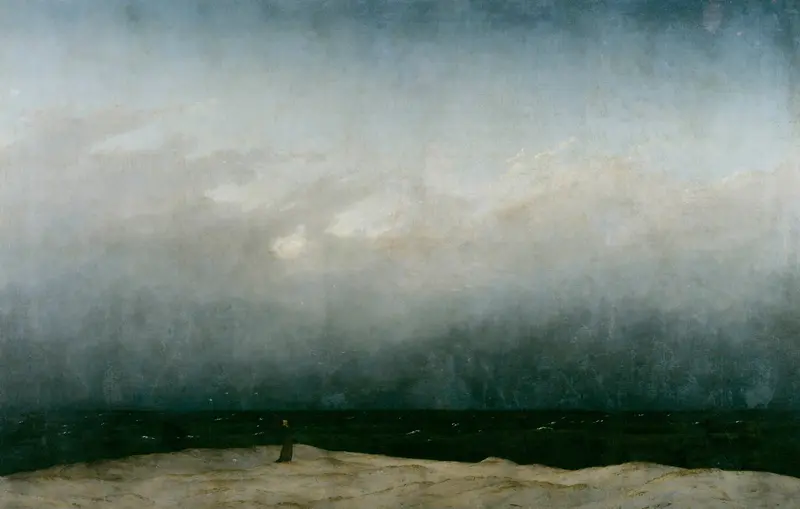
No. 7Romanticism
The Monk by the Sea by Caspar David Friedrich
1808–1810 · Oil on canvas · 110 × 171.5 cm
Alte Nationalgalerie, Berlin
A tiny figure in black stands on a bare dune before a vast, dark sea, under a sky that fills most of the canvas. Caspar David Friedrich worked on it for two years, and infrared images made during its 2013–16 restoration show that he painted out three sailing ships to leave the sea empty. When it was shown in Berlin in 1810, the writer Heinrich von Kleist said that looking at it felt as if your eyelids had been cut away. It is in the Alte Nationalgalerie in Berlin.
Sources: Alte Nationalgalerie
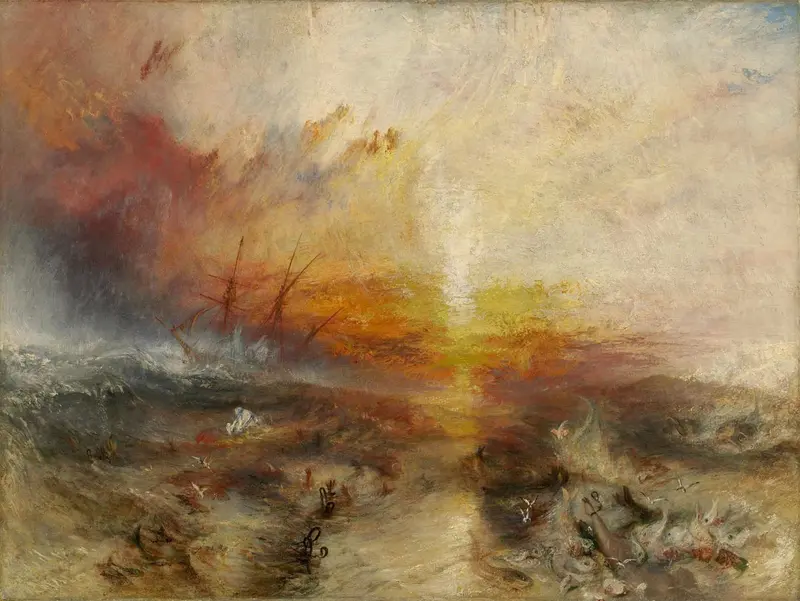
No. 8Romanticism
The Slave Ship by J. M. W. Turner
1840 · Oil on canvas · 90.8 × 122.6 cm
Museum of Fine Arts, Boston, Boston
A ship sails off into a typhoon at sunset while chained captives drown in a blood-red sea; look for the shackled leg rising from the waves at the lower right. J. M. W. Turner showed it at the Royal Academy in 1840, the year the World Anti-Slavery Convention met in London, and the Museum of Fine Arts says it was likely inspired by the Zong massacre of 1781, when 133 captives were thrown overboard for the insurance money. It is in the Museum of Fine Arts in Boston.
Sources: Museum of Fine Arts, Boston
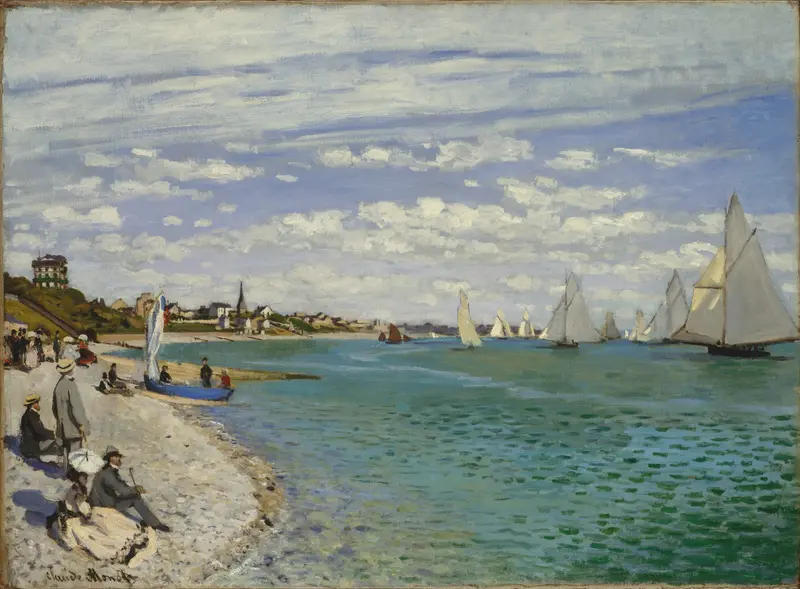
No. 9Impressionism
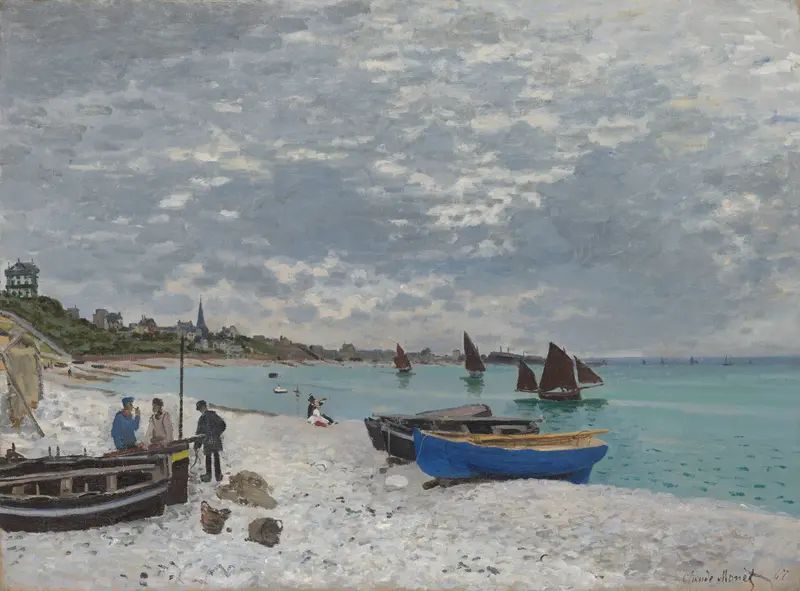
Regatta at Sainte-Adresse by Claude Monet
Place: Sainte-Adresse, near Le Havre
1867 · Oil on canvas · 75.2 × 101.6 cm
Metropolitan Museum of Art, New York
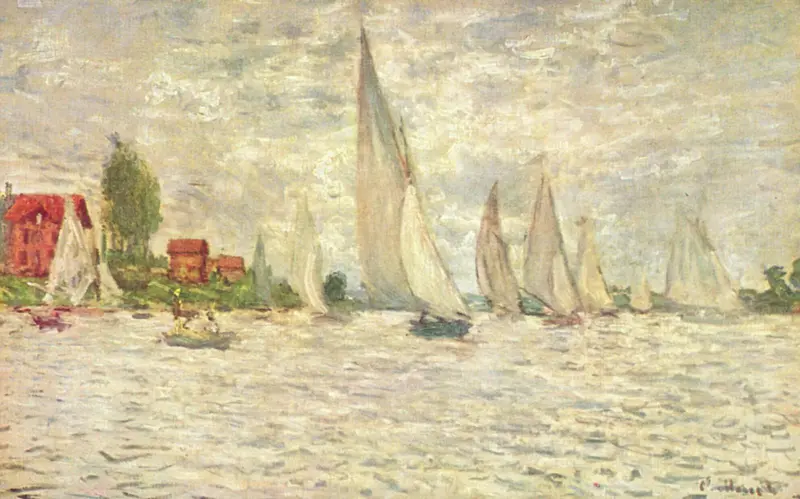
Sailboats race across a bright blue sea while well-dressed visitors watch from the beach at high tide. Claude Monet spent the summer of 1867 at Sainte-Adresse, near Le Havre, and wrote that he was painting “the regattas of Le Havre with many figures on the beach.” The Met believes he conceived it as a pair with The Beach at Sainte-Adresse, an overcast scene at low tide now in Chicago. It is in the Metropolitan Museum of Art in New York.
Sources: Metropolitan Museum of Art
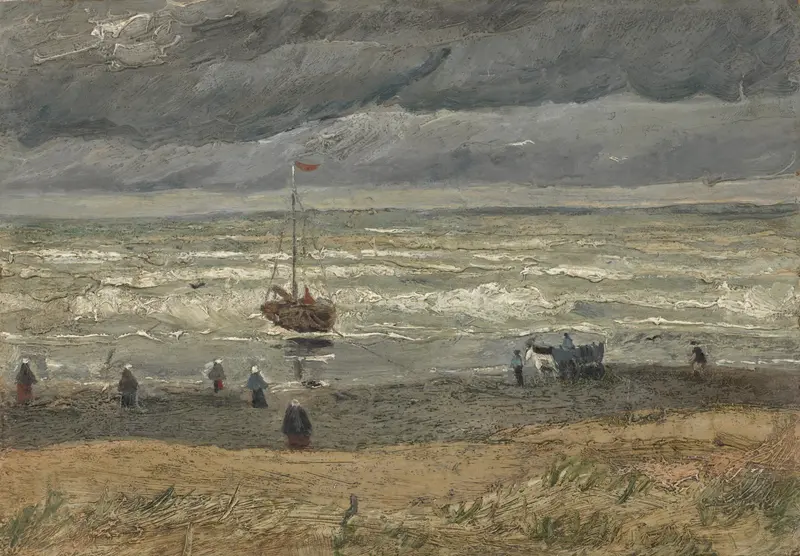
No. 10Post-Impressionism
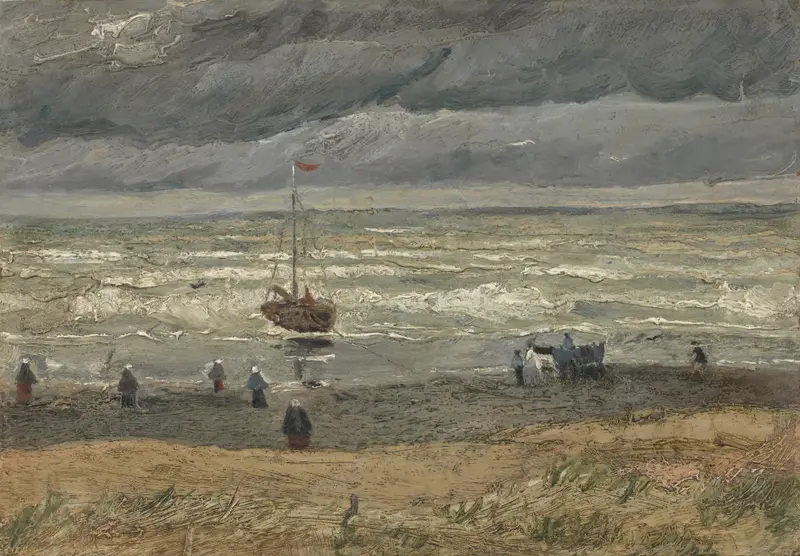
View of the Sea at Scheveningen by Vincent van Gogh
Place: Scheveningen beach
1882 · Oil on paper on canvas · 36.4 × 51.9 cm
Van Gogh Museum, Amsterdam
Gray waves roll onto the beach at Scheveningen under a stormy sky, with a fishing boat and a few figures on the sand. Vincent van Gogh painted it in August 1882 during what he called a “nasty little storm”; the wind blew sand onto the canvas, where it mixed with the paint. Stolen from the Van Gogh Museum, it was recovered near Naples in 2016, fourteen years later, with one corner torn. It is back in the Van Gogh Museum in Amsterdam.
Sources: Van Gogh Museum
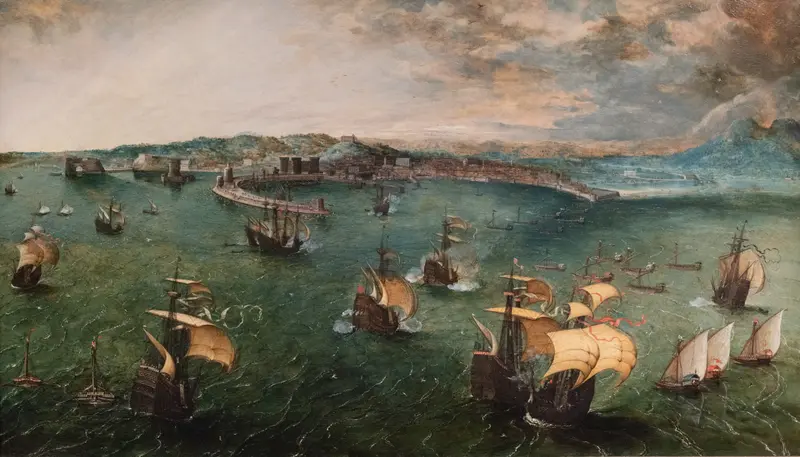
No. 11Northern Renaissance
Naval Battle in the Gulf of Naples by Pieter Bruegel the Elder
Place: Bay of Naples
Oil on panel · 42.2 × 71.2 cm
Galleria Doria Pamphilj, Rome
Seen from high above, war galleys clash in the harbor of Naples, with the city spread along the shore behind them. Pieter Bruegel the Elder painted the small panel in Italy, where he visited Rome, Naples and Messina, and the Galleria Doria Pamphilj says the battle is probably imaginary. It calls the picture an early example of the sea-battle painting, a genre that only fully developed much later. It is in the Galleria Doria Pamphilj in Rome.
Sources: Galleria Doria Pamphilj
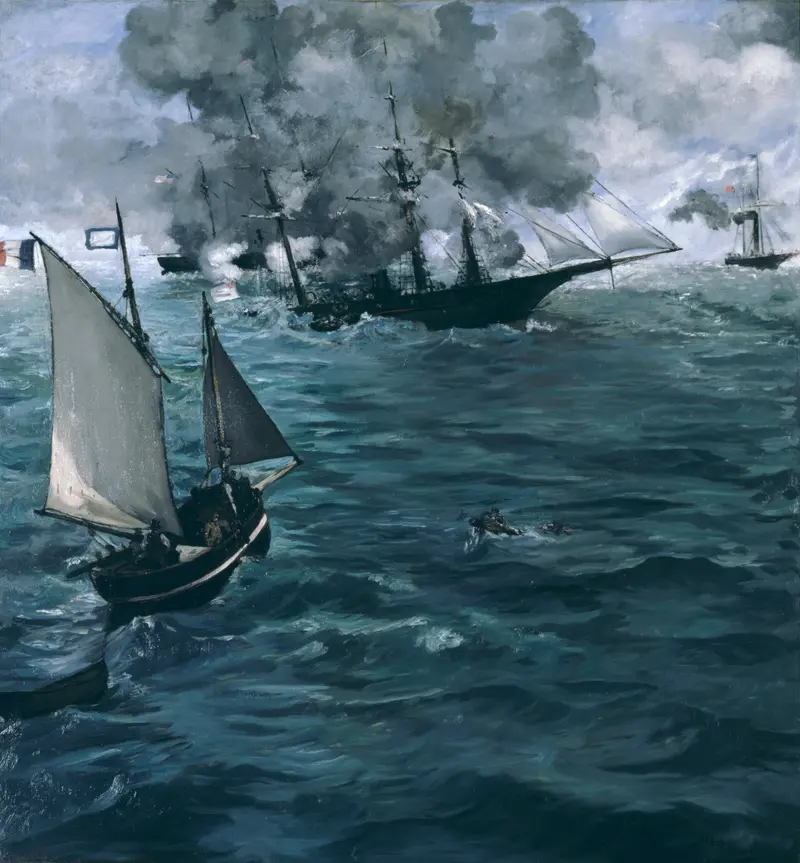
No. 12Impressionism
The Battle of the Kearsarge and the Alabama by Édouard Manet
Place: Off Cherbourg, France
1864 · Oil on canvas · 137.8 × 128.9 cm
Philadelphia Museum of Art, Philadelphia
In the distance, the Confederate raider Alabama sinks by the stern after her battle with the Union warship Kearsarge off Cherbourg, France, on June 19, 1864, while a small sailboat rides the green waves in front. Édouard Manet never saw the fight: he read about it in the papers and showed the painting in a Paris print-shop window within weeks. It was his first known seascape. It is in the Philadelphia Museum of Art.
Sources: Philadelphia Museum of Art
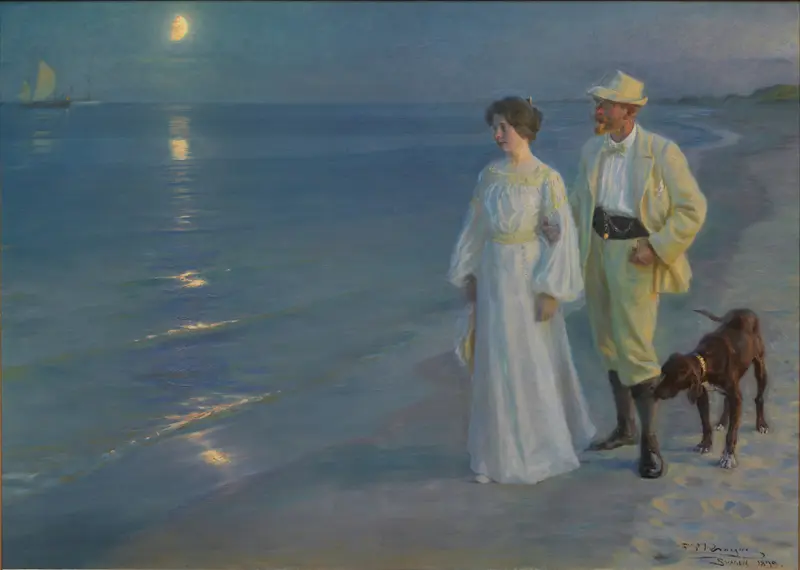
No. 13
Summer Evening at Skagen Beach by Peder Severin Krøyer
Place: Skagen beach, Denmark
1899 · Oil on canvas · 135 × 187 cm
Hirschsprung Collection, Copenhagen
Marie and P. S. Krøyer stroll arm in arm along the beach at Skagen at dusk, their dog beside them, as the moon is reflected in the still sea. Peder Severin Krøyer painted his wife and himself in 1899, at the northern tip of Denmark. The tobacco manufacturer Heinrich Hirschsprung, who had known Krøyer since he was a very young artist, built the largest collection of his work outside Skagen. It is in the Hirschsprung Collection in Copenhagen.
Sources: Hirschsprung Collection
No. 14
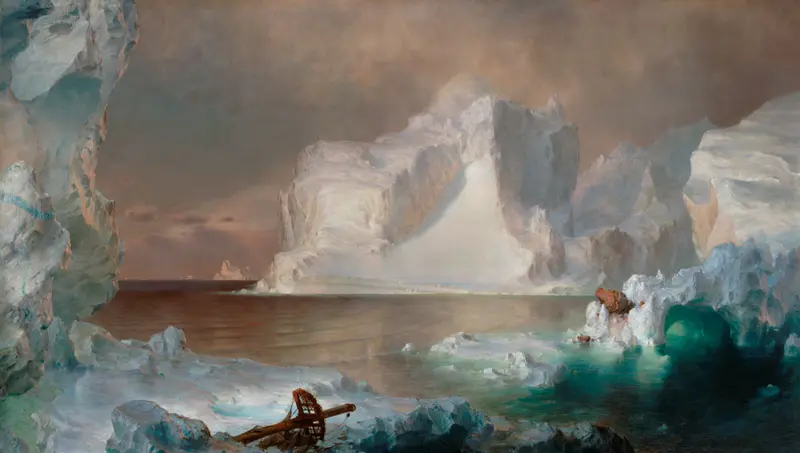
The Icebergs by Frederic Edwin Church
Place: North Atlantic
1861 · Oil on canvas · 163.8 × 285.8 cm
Dallas Museum of Art, Dallas
Towering Arctic icebergs glow under a clouded sky, and in the foreground lies a broken ship's mast. Frederic Edwin Church based the picture on sketches from a month-long voyage off Newfoundland and Labrador in 1859, and he first showed it as The North just twelve days after the Civil War began, giving the ticket money to the Union cause. After it was sold in London it vanished for 116 years, until it fetched $2.5 million at auction in 1979, then a record for an American painting. It is in the Dallas Museum of Art.
Sources: Dallas Museum of Art
No. 15
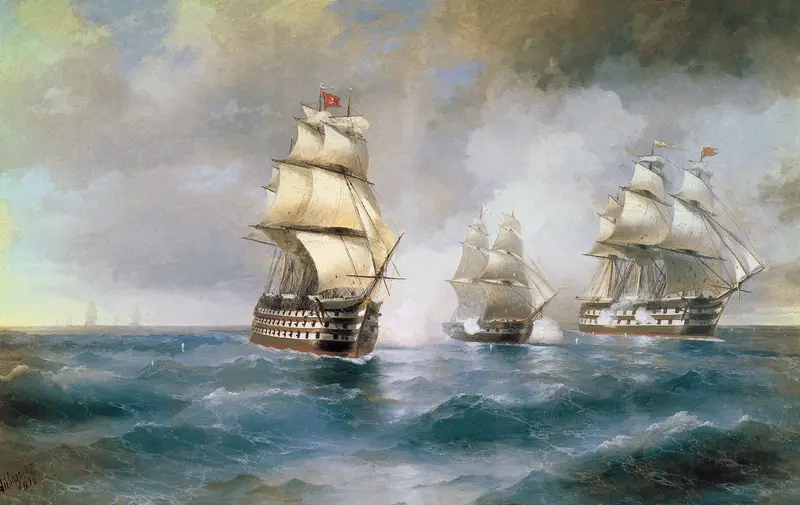
Brig Mercury Attacked by Two Turkish Ships by Ivan Aivazovsky
Place: Black Sea, off the Bosphorus
1892 · Oil on canvas · 216 × 344 cm
Aivazovsky National Art Gallery, Feodosia
Under the St. Andrew's flag, the small Russian brig Mercury takes on two huge Turkish ships of the line off the Bosphorus on May 14, 1829, and beats them, with 18 guns against 184. Ivan Aivazovsky was not yet 12 when the battle was fought; he painted it in 1892 and gave most of the canvas to the sky. The crew won the right to fly the St. George flag, and their captain, Kazarsky, got a monument in Sevastopol. It is in the Aivazovsky National Art Gallery in Feodosia.
Sources: Aivazovsky National Art Gallery, Feodosia (in Russian)
No. 16
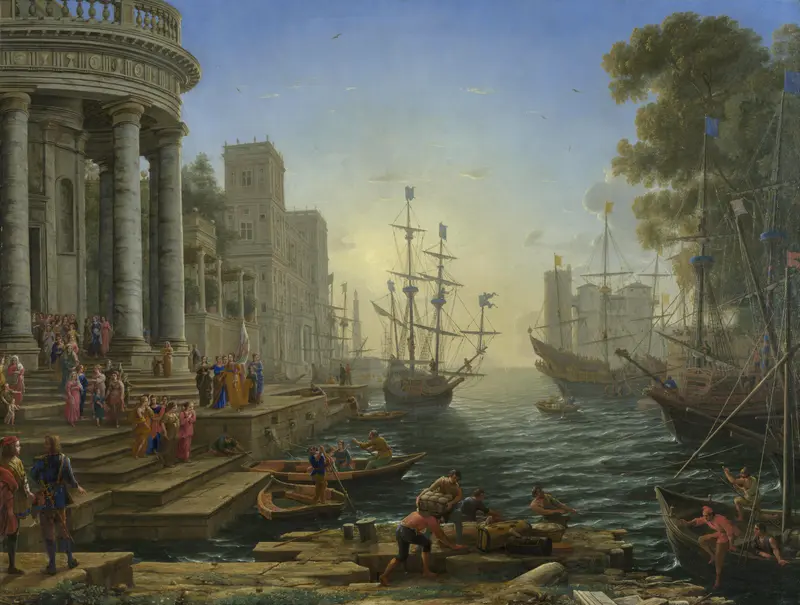
Seaport with the Embarkation of Saint Ursula by Claude Lorrain
1641 · Oil on canvas · 112.9 × 149 cm
National Gallery, London
Saint Ursula, in yellow and holding a flag with a red cross, leads her companions down to the ships of an imaginary harbor at sunrise. Claude Lorrain painted it in 1641 for Fausto Poli, an official of Pope Urban VIII's household, and the blue flags on the ships bear the emblem of the Pope's Barberini family. When the young J. M. W. Turner saw it, he reportedly burst into tears, saying he would never paint anything like it. It is in the National Gallery in London.
Sources: National Gallery
No. 17
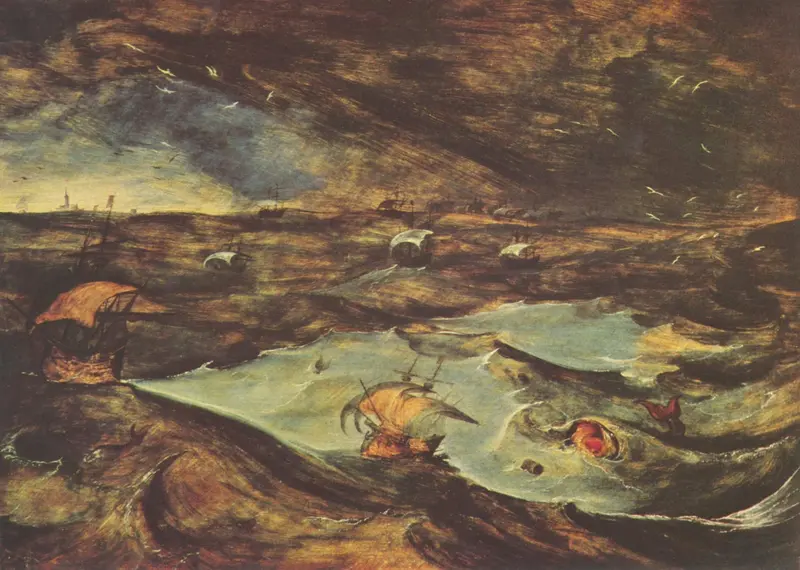
The Storm at Sea by Joos de Momper the Younger
c. 1610–1615 · Oil on oak panel · 71 × 97 cm
Kunsthistorisches Museum, Vienna
A sailing ship heels over in a violent storm, a whale breaks the surface nearby, and a church stands on the distant shore while birds wheel overhead. For centuries the panel was attributed to Pieter Bruegel the Elder, but tree-ring dating shows its wood was not felled before about 1580, after his death in 1569. The Kunsthistorisches Museum now gives it to Joos de Momper the Younger, around 1610–15. It is in the Kunsthistorisches Museum in Vienna.
Sources: Kunsthistorisches Museum
No. 18
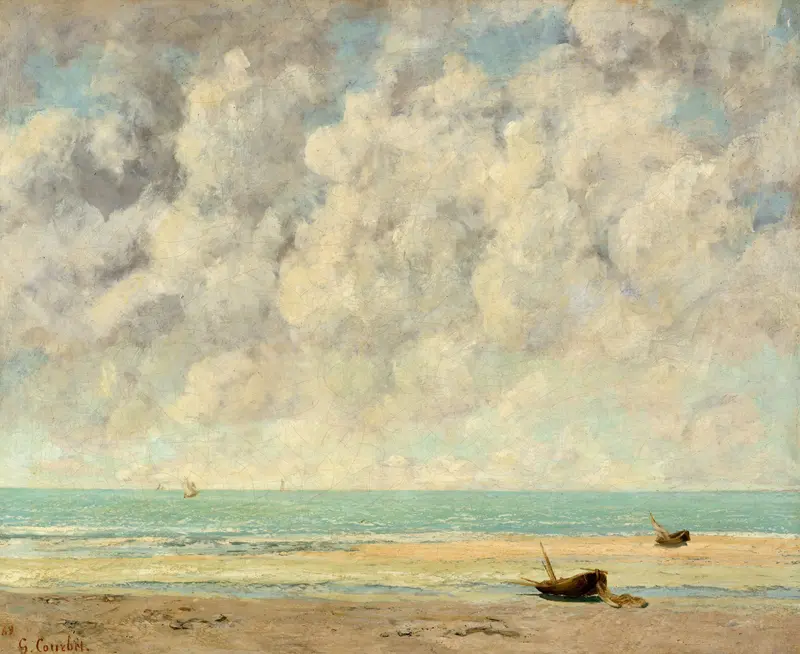
The Calm Sea by Gustave Courbet
Place: Étretat, Normandy
1869 · Oil on canvas · 59.7 × 73 cm
Metropolitan Museum of Art, New York
Two small boats lie stranded on the sand at low tide, beneath an immense sky that takes up most of the canvas. Gustave Courbet painted this view out over the English Channel during a visit to Étretat, on the Normandy coast, in August 1869. The Met points out how unusual such a calm scene is among his seascapes of those years, which are dominated by crashing waves. It came to the museum in 1929 with the H. O. Havemeyer Collection and is in the Metropolitan Museum of Art in New York.
Sources: Metropolitan Museum of Art

No. 19
Sad Inheritance by Joaquín Sorolla
Place: Beach at Valencia, Spain
1899 · Oil on canvas · 212 × 288 cm
Fundación Bancaja, Valencia
Nearly twenty boys from a Valencia hospital bathe at the edge of a dark sea, some of them on crutches, gathered around a friar in a black habit. Joaquín Sorolla came across the scene in the summer of 1899 and got permission to paint it right there by the water. His friend the novelist Vicente Blasco Ibáñez suggested the title, which alludes to the belief of the time that parents' vices were passed on to their children. The jury of the 1900 Paris Exposition Universelle gave Sorolla its Grand Prix, above all for this painting. It belongs to the Fundación Bancaja in Valencia.
Sources: Fundación Bancaja
No. 20Dutch Golden Age
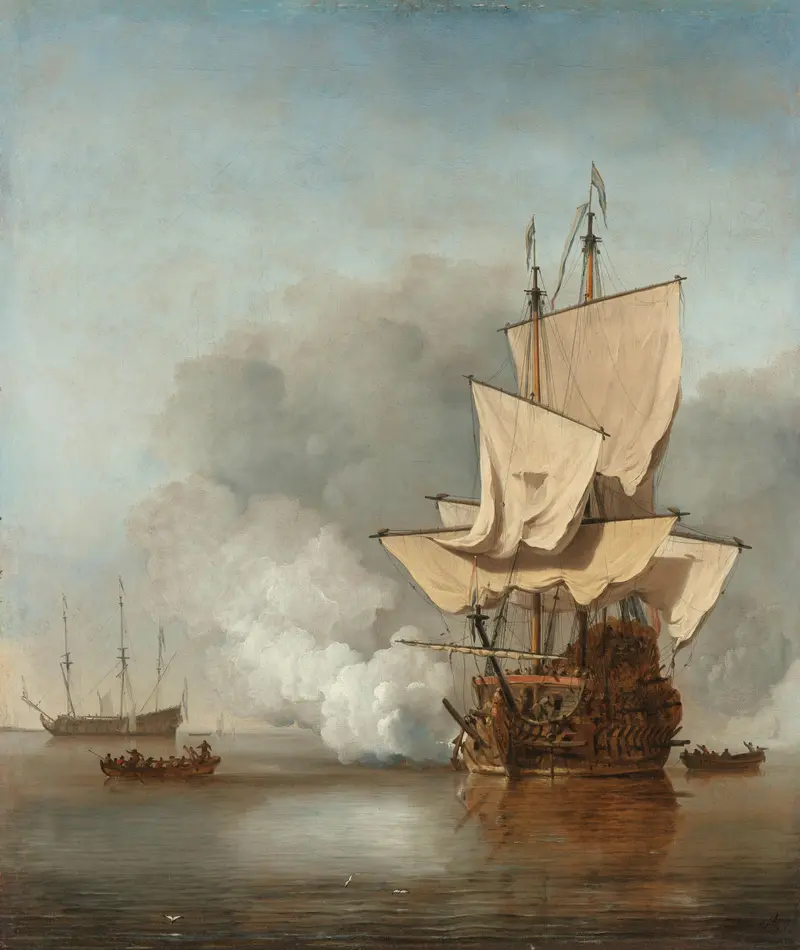
The Cannon Shot by Willem van de Velde the Younger
c. 1680 · Oil on canvas · 78.5 × 67 cm
Rijksmuseum, Amsterdam
Becalmed, with its sails hanging loose, a Dutch warship fires a cannon, and a great cloud of white smoke rolls out over the still water. Two sloops float on either side, and another Dutch ship lies in the distance. Willem van de Velde the Younger painted it in England around 1680, after he and his father, also a marine painter, entered the service of the English court in 1672, and he made it as the calm companion to his storm scene The Gust. It is in the Rijksmuseum in Amsterdam, on loan from the City of Amsterdam.
Sources: Rijksmuseum
No. 21Romanticism
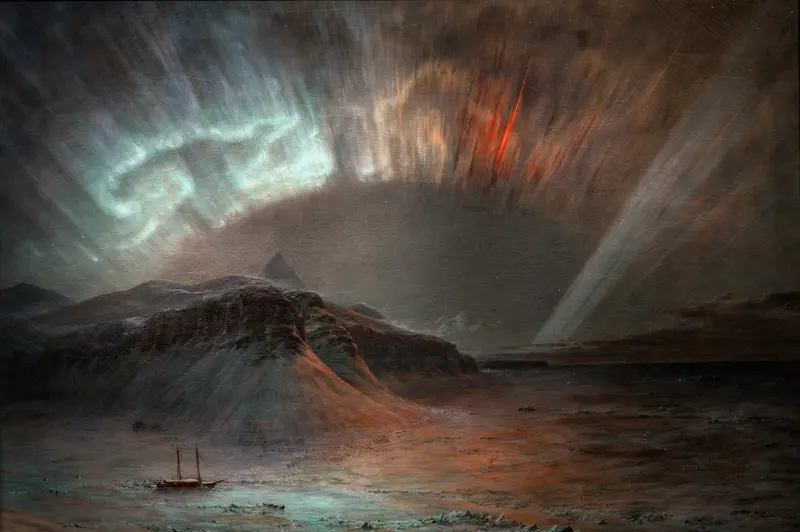
Aurora Borealis by Frederic Edwin Church
Place: The Arctic
1865 · Oil on canvas · 142.3 × 212.2 cm
Smithsonian American Art Museum, Washington, DC
Northern lights flare in green and red over a dark Arctic cliff, and below it a small ship lies trapped in the pack ice. She is the United States, the ship of the polar explorer Isaac Israel Hayes, a friend of Frederic Edwin Church who gave him his Arctic sketches after returning in 1861. Church finished the canvas around April 1865, as the Civil War ended, at a time when many Americans read the northern lights as a sign of God's displeasure with the Confederacy. It is in the Smithsonian American Art Museum in Washington, DC.
Sources: Smithsonian American Art Museum
No. 22Impressionism
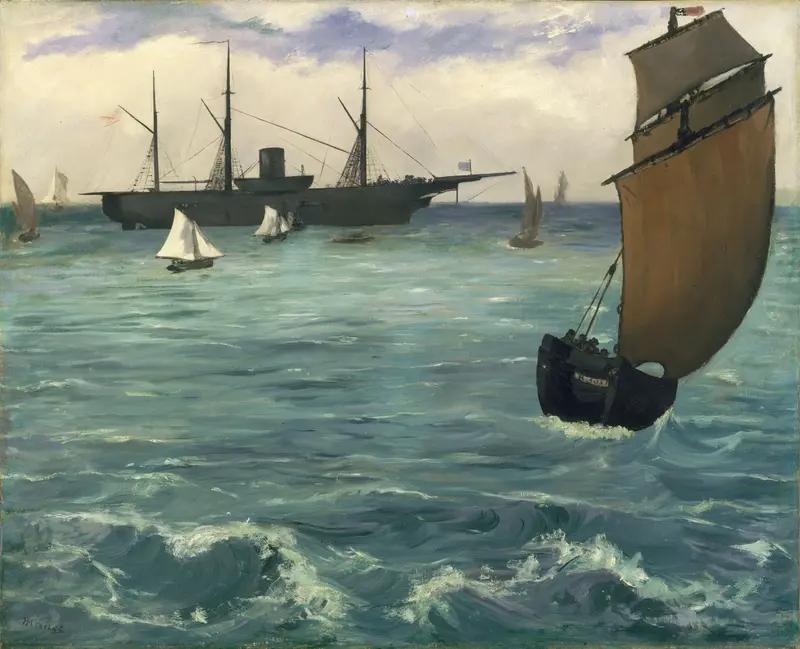
The Kearsarge at Boulogne by Édouard Manet
Place: Off Boulogne-sur-Mer, France
1864 · Oil on canvas · 81.6 × 100 cm
Metropolitan Museum of Art, New York
A fishing boat with a brown sail heels through the choppy green sea in the foreground, while behind it the Union warship Kearsarge lies at anchor among small white sailboats. During the American Civil War the Kearsarge made headlines by sinking the Confederate raider Alabama off the coast of France. Édouard Manet did not witness the battle; the Met says this picture was prompted by his visit to the victorious ship at anchor near Boulogne. Together with his painting of the battle itself, it was his first depiction of a current event. It is in the Metropolitan Museum of Art in New York.
Sources: Metropolitan Museum of Art
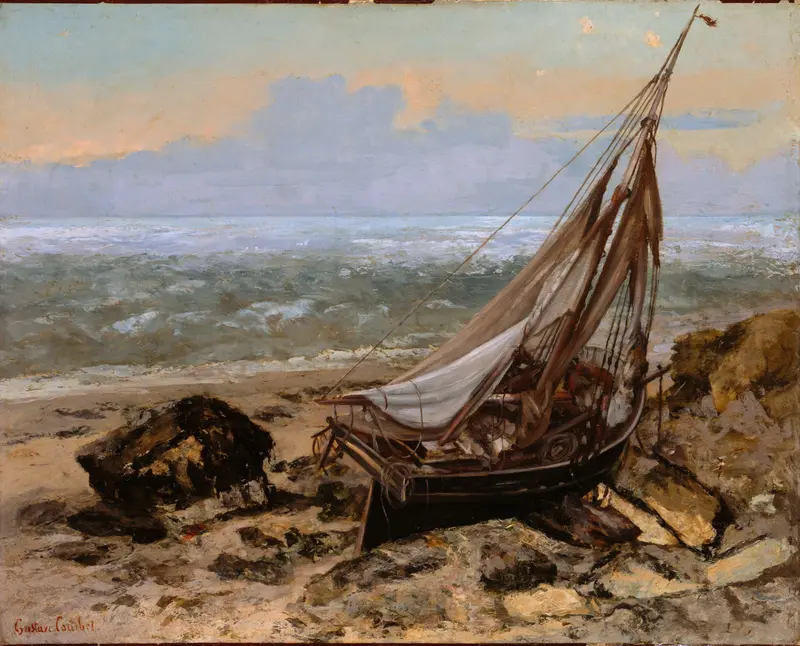
No. 23Realism
The Fishing Boat by Gustave Courbet
1865 · Oil on canvas · 64.8 × 81.3 cm
Metropolitan Museum of Art, New York
A fishing boat, rigged and loaded with gear, lies beached among the rocks while gray-green waves break behind it under a peach-colored sky. Gustave Courbet painted it in 1865, during an intensely productive autumn at Trouville with James McNeill Whistler; he boasted to his father that he had made “thirty-five paintings” in a very short time. Unlike most seascapes of the day, the Met notes, the boat itself is the focus of the picture rather than a minor detail. In 1899 it became the first work by Courbet to enter the Metropolitan Museum of Art in New York, where it hangs today.
Sources: Metropolitan Museum of Art
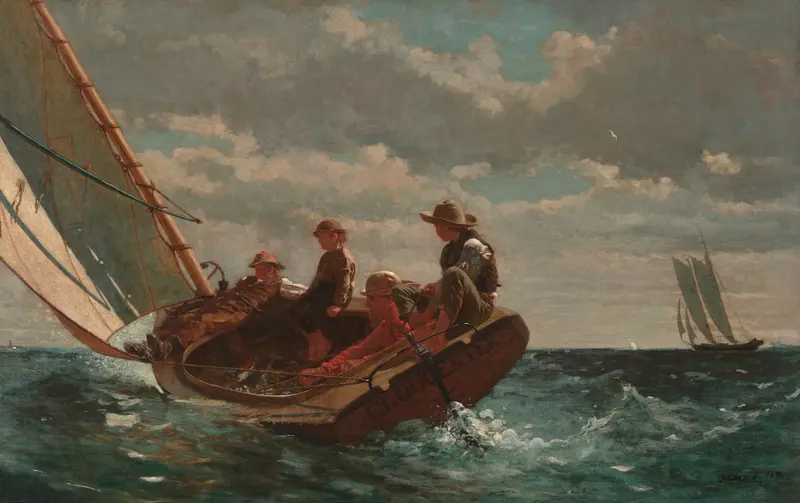
No. 24Realism
Breezing Up (A Fair Wind) by Winslow Homer
1873–1876 · Oil on canvas · 61.5 × 97 cm
National Gallery of Art, Washington, DC
A man and three boys sit on the high side of a small sailboat as it heels over a choppy sea, with a schooner on the horizon at the right. Winslow Homer reworked an earlier painting, The Flirt, for this canvas: an anchor now lies in the bow where a figure once sat, and a boy has taken the tiller from a man in red. When Homer showed it at the 1876 Centennial Exposition in Philadelphia, critics saw the anchor as a symbol of hope and the boy's forward gaze as an optimistic statement about the nation. It is in the National Gallery of Art in Washington, DC.
Sources: National Gallery of Art
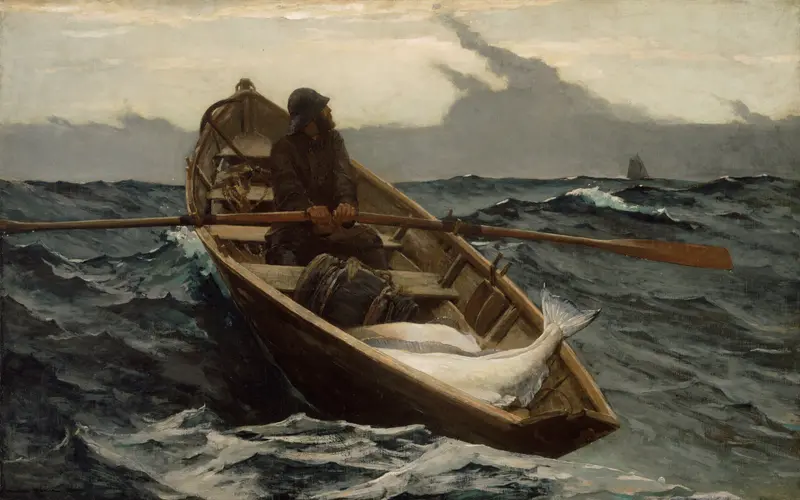
No. 25Realism
The Fog Warning by Winslow Homer
Place: North Atlantic
1885 · Oil on canvas · 76.8 × 123.2 cm
Museum of Fine Arts, Boston, Boston
A lone fisherman rows his dory over high, choppy waves, his catch of halibut in the boat, and looks over his shoulder toward his ship on the horizon as a bank of fog rolls in. Winslow Homer painted it in 1885 at Prouts Neck, Maine, one of three pictures he made that year about the lives of North Atlantic fishermen. The Museum of Fine Arts notes that the hardest task of his day, the row back to the ship, is still ahead, and that Homer leaves his fate open. It is in the Museum of Fine Arts in Boston.
Sources: Museum of Fine Arts, Boston
Want to see more? Browse every ocean painting in the collection.
Browse all 8,094 ocean paintingsFamous ship paintings
Six more famous ship paintings, from Dutch East India ships to Van Gogh's fishing boats.
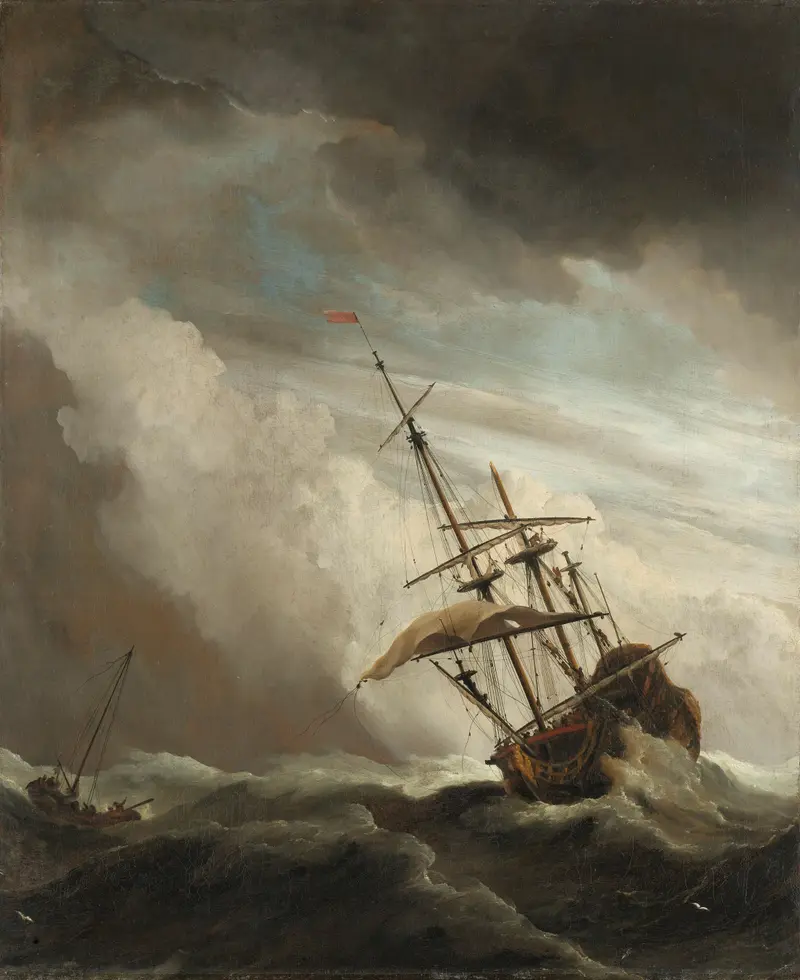

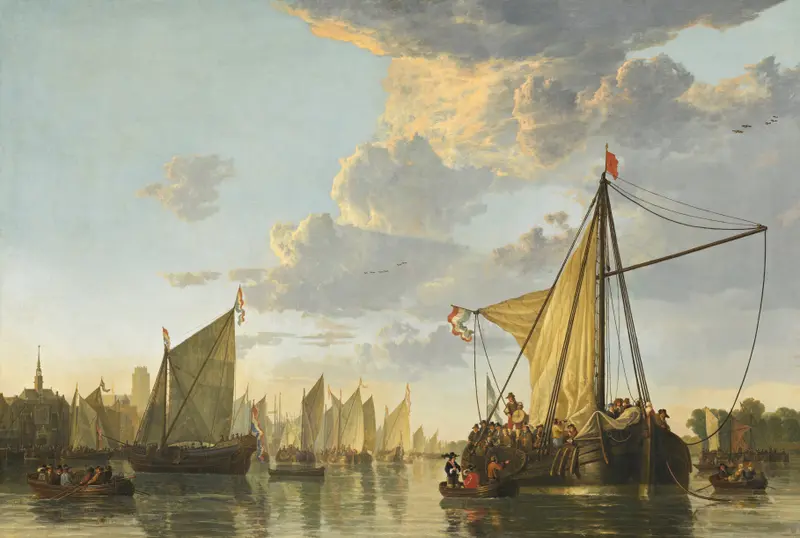
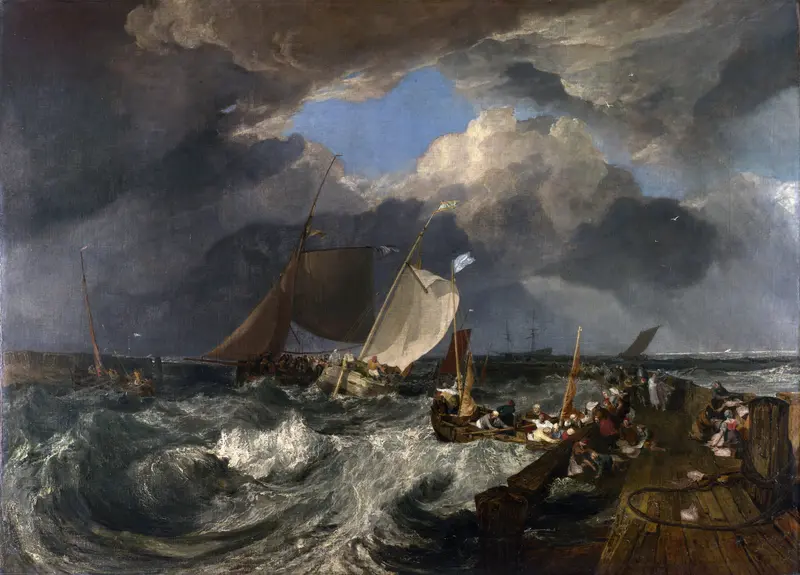
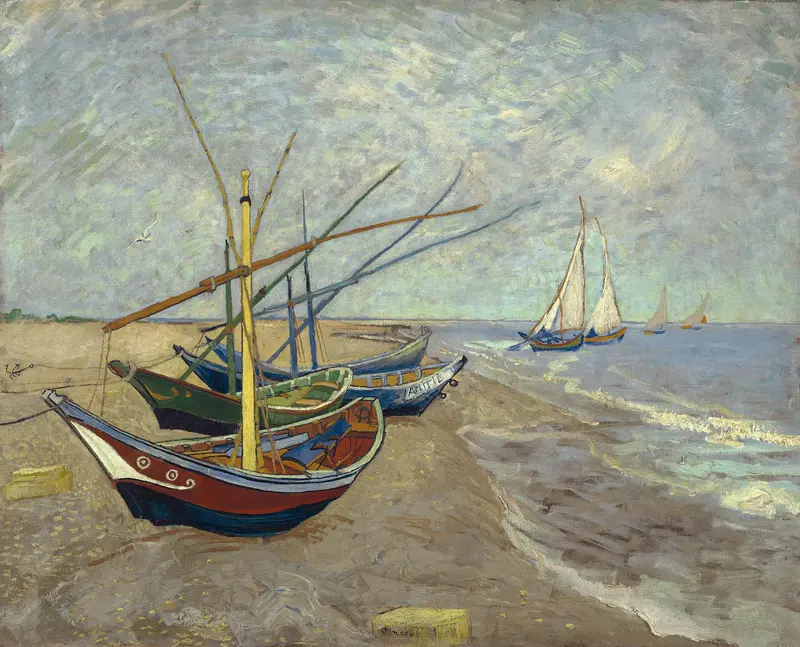
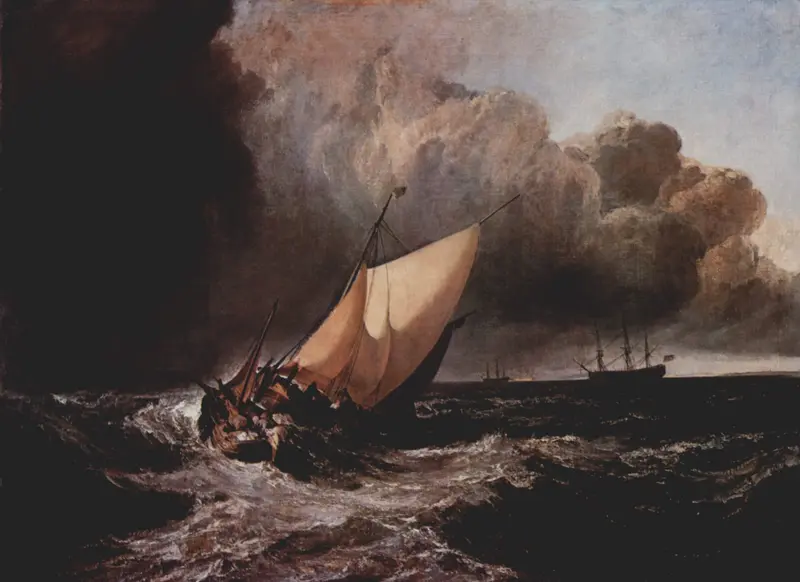
Famous storm and shipwreck paintings
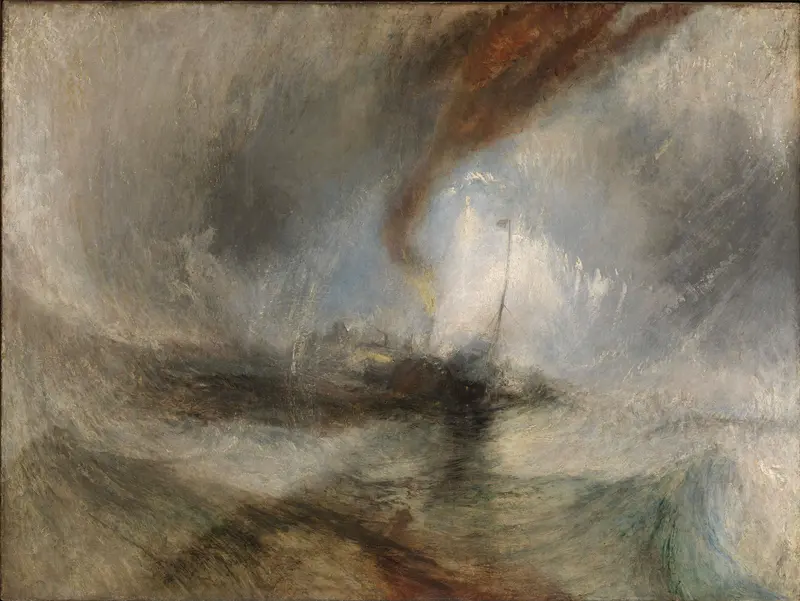
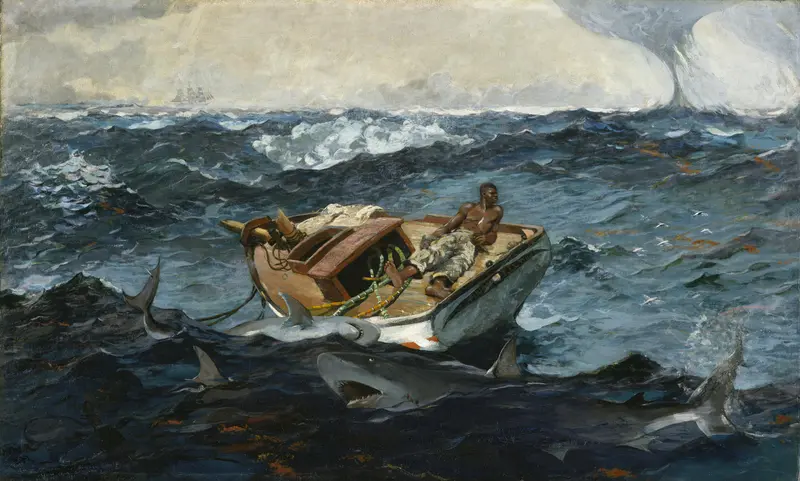
Six famous paintings of storms and shipwrecks, from Turner's Snow Storm to Homer's Gulf Stream.
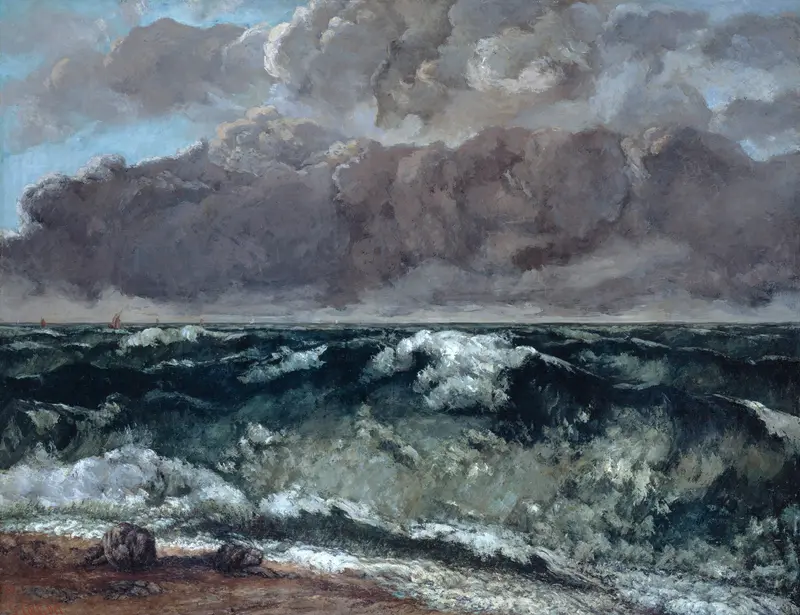
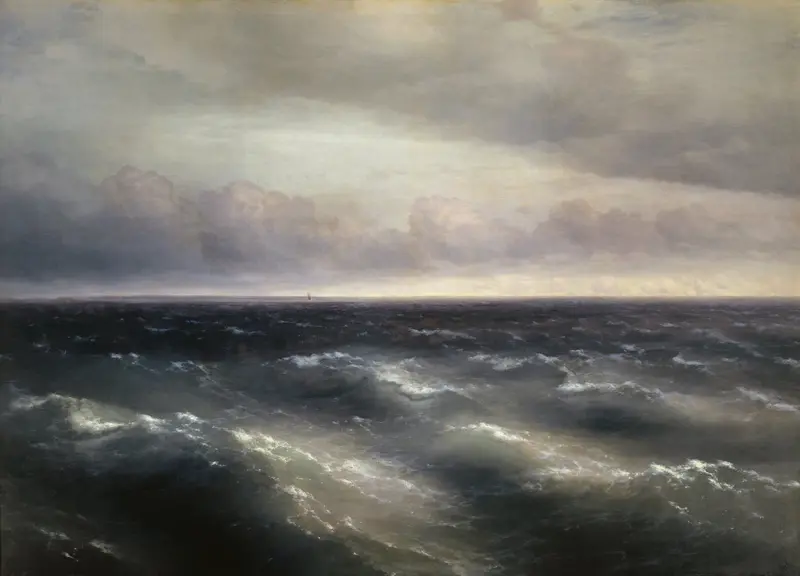
Famous beach paintings
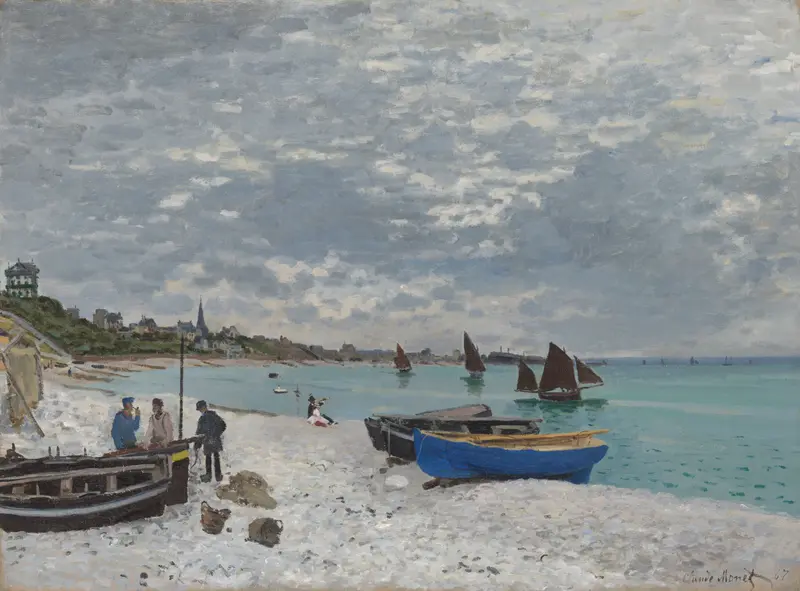
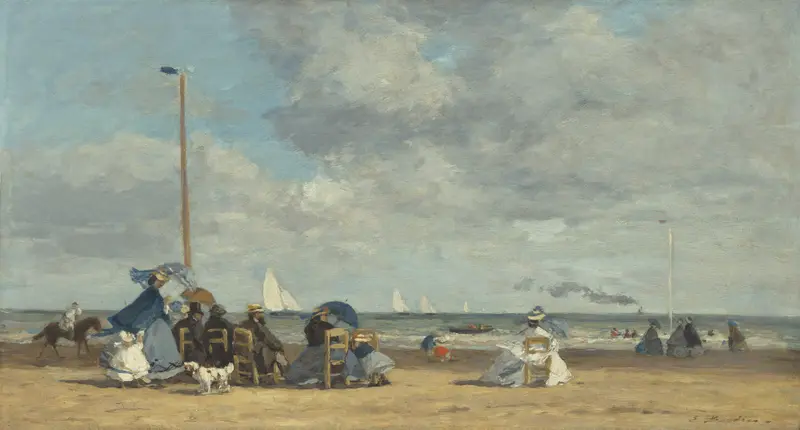
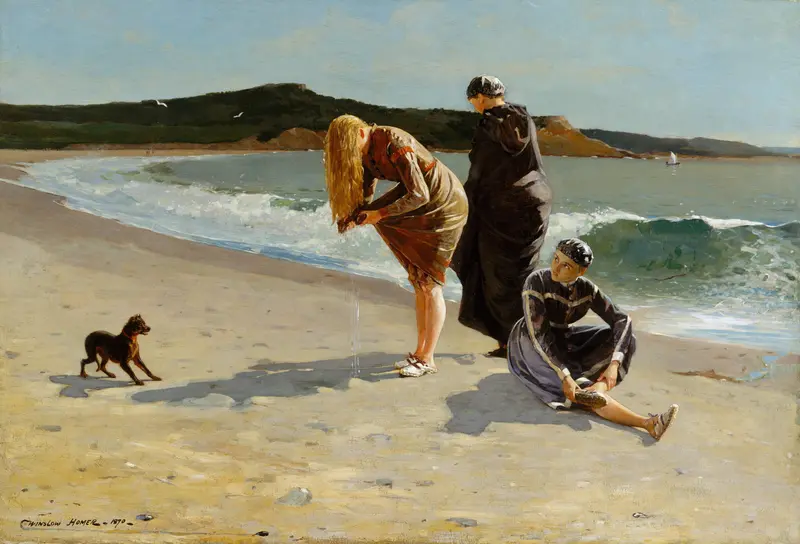
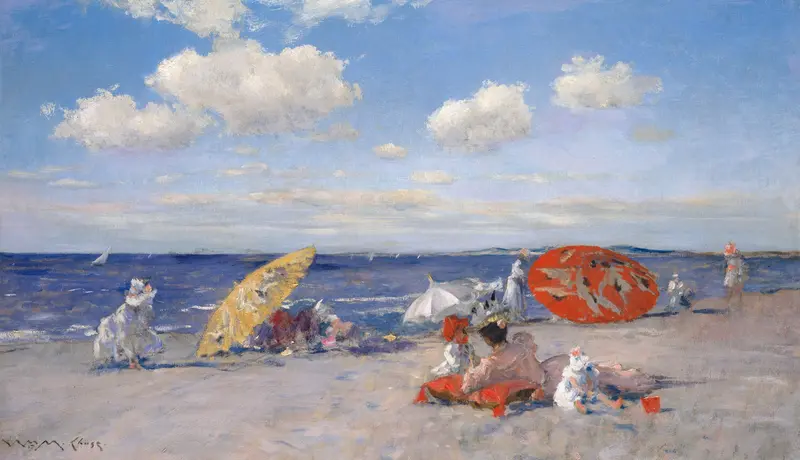
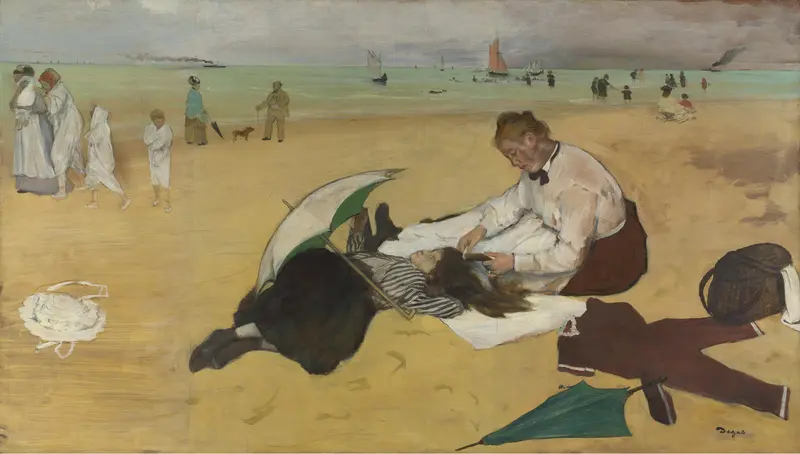
Six famous beach paintings, from Monet at Sainte-Adresse to Sorolla in Valencia.
Famous naval battle paintings
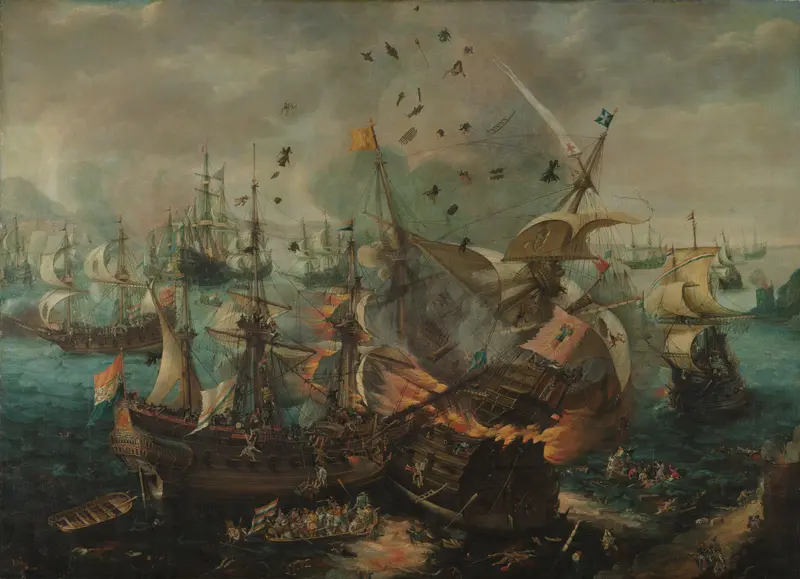
Six famous naval battle paintings, from Gibraltar in 1607 to Trafalgar.

Famous seascape painters
Famous seascape painters, from Willem van de Velde and Turner to Aivazovsky and Winslow Homer. Each link opens all their paintings.
- Willem van de Velde the YoungerWorked in England for most of his life; considered in Britain to be the pre-eminent sea painter.
- J. M. W. TurnerIn his last twenty years he painted the sea more often and more boldly, including storms, shipwrecks and whaling scenes.
- Caspar David FriedrichWorked two years on The Monk by the Sea, repeatedly overpainting it until the composition became unusually abstract.
- Ivan AivazovskyNamed painter of Russia's Main Naval Staff in 1844, he left over 6,000 works, chiefly seascapes, storms and shipwrecks.
- Gustave CourbetPainted The Fishing Boat during an intensely productive 1865 visit to Trouville with Whistler, boasting of "thirty-five paintings."
- Claude MonetPainted Impression, Sunrise in just a few hours from his hotel window overlooking Le Havre's harbor around November 1872.
- Winslow HomerProuts Neck's pounding Atlantic surf supplied the main subject of Homer's dramatic paintings in his final decades.
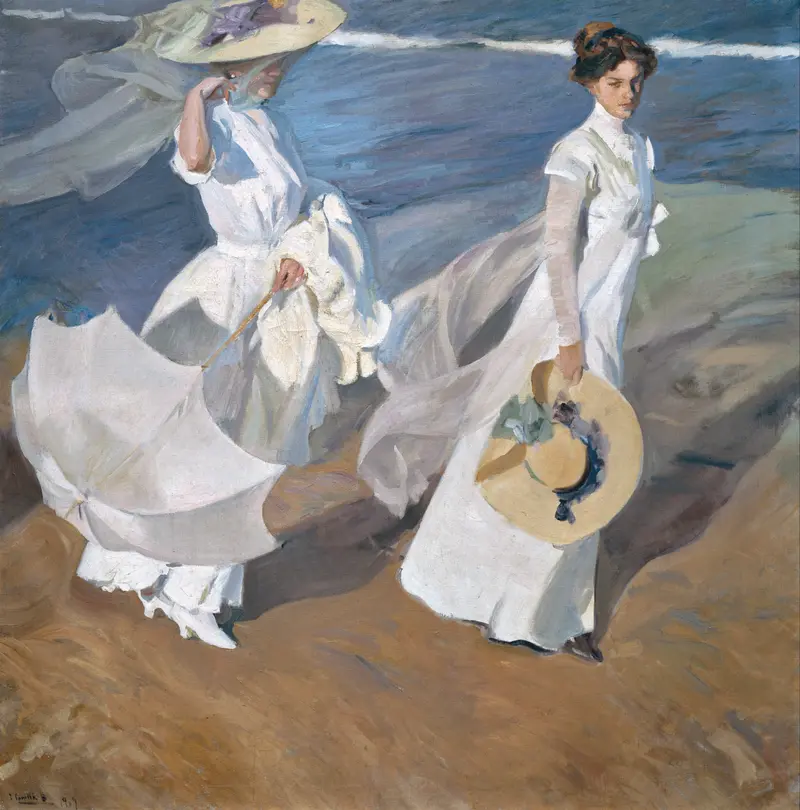 Joaquín SorollaPainted Strolling along the Seashore on Valencia's beach in the summer of 1909, one of his most celebrated paintings.
List of famous ocean paintings and their artists
The 25 most famous ocean paintings: who painted them, which place they show, when, and where each one is today.
Show the list of 25 ocean paintingsHide the list
| # | Painting | Place | Painted by | Year | Medium | Size | Located in | City |
|---|---|---|---|---|---|---|---|---|
| 1 | The Great Wave off Kanagawa | Off Kanagawa, Japan | Katsushika Hokusai | c. 1830–1832 | Woodblock print; ink and color on paper | 25.7 × 37.9 cm (10.1 × 14.9 in) | Metropolitan Museum of Art | New York |
| 2 | Impression, Sunrise | Le Havre harbor | Claude Monet | 1872 | Oil on canvas | 50 × 65 cm (19.7 × 25.6 in) | Musée Marmottan Monet | Paris |
| 3 | The Ninth Wave | Ivan Aivazovsky | 1850 | Oil on canvas | 221 × 332 cm (87 × 130.7 in) | Russian Museum | St. Petersburg | |
| 4 | The Storm on the Sea of Galilee | Sea of Galilee | Rembrandt | 1633 | Oil on canvas | 160 × 128 cm (63 × 50.4 in) | Isabella Stewart Gardner Museum (stolen 1990) | Boston |
| 5 | The Sea of Ice | Caspar David Friedrich | c. 1823–1824 | Oil on canvas | 96.7 × 126.9 cm (38.1 × 50 in) | Hamburger Kunsthalle | Hamburg | |
| 6 | The Fighting Temeraire | River Thames | J. M. W. Turner | 1839 | Oil on canvas | 90.7 × 121.6 cm (35.7 × 47.9 in) | National Gallery | London |
| 7 | The Monk by the Sea | Caspar David Friedrich | 1808–1810 | Oil on canvas | 110 × 171.5 cm (43.3 × 67.5 in) | Alte Nationalgalerie | Berlin | |
| 8 | The Slave Ship | J. M. W. Turner | 1840 | Oil on canvas | 90.8 × 122.6 cm (35.7 × 48.3 in) | Museum of Fine Arts, Boston | Boston | |
| 9 | Regatta at Sainte-Adresse | Sainte-Adresse, near Le Havre | Claude Monet | 1867 | Oil on canvas | 75.2 × 101.6 cm (29.6 × 40 in) | Metropolitan Museum of Art | New York |
| 10 | View of the Sea at Scheveningen | Scheveningen beach | Vincent van Gogh | 1882 | Oil on paper on canvas | 36.4 × 51.9 cm (14.3 × 20.4 in) | Van Gogh Museum | Amsterdam |
| 11 | Naval Battle in the Gulf of Naples | Bay of Naples | Pieter Bruegel the Elder | Oil on panel | 42.2 × 71.2 cm (16.6 × 28 in) | Galleria Doria Pamphilj | Rome | |
| 12 | The Battle of the Kearsarge and the Alabama | Off Cherbourg, France | Édouard Manet | 1864 | Oil on canvas | 137.8 × 128.9 cm (54.3 × 50.7 in) | Philadelphia Museum of Art | Philadelphia |
| 13 | Summer Evening at Skagen Beach | Skagen beach, Denmark | Peder Severin Krøyer | 1899 | Oil on canvas | 135 × 187 cm (53.1 × 73.6 in) | Hirschsprung Collection | Copenhagen |
| 14 | The Icebergs | North Atlantic | Frederic Edwin Church | 1861 | Oil on canvas | 163.8 × 285.8 cm (64.5 × 112.5 in) | Dallas Museum of Art | Dallas |
| 15 | Brig Mercury Attacked by Two Turkish Ships | Black Sea, off the Bosphorus | Ivan Aivazovsky | 1892 | Oil on canvas | 216 × 344 cm (85 × 135.4 in) | Aivazovsky National Art Gallery | Feodosia |
| 16 | Seaport with the Embarkation of Saint Ursula | Claude Lorrain | 1641 | Oil on canvas | 112.9 × 149 cm (44.4 × 58.7 in) | National Gallery | London | |
| 17 | The Storm at Sea | Joos de Momper the Younger | c. 1610–1615 | Oil on oak panel | 71 × 97 cm (28 × 38.2 in) | Kunsthistorisches Museum | Vienna | |
| 18 | The Calm Sea | Étretat, Normandy | Gustave Courbet | 1869 | Oil on canvas | 59.7 × 73 cm (23.5 × 28.7 in) | Metropolitan Museum of Art | New York |
| 19 | Sad Inheritance | Beach at Valencia, Spain | Joaquín Sorolla | 1899 | Oil on canvas | 212 × 288 cm (83.5 × 113.4 in) | Fundación Bancaja | Valencia |
| 20 | The Cannon Shot | Willem van de Velde the Younger | c. 1680 | Oil on canvas | 78.5 × 67 cm (30.9 × 26.4 in) | Rijksmuseum | Amsterdam | |
| 21 | Aurora Borealis | The Arctic | Frederic Edwin Church | 1865 | Oil on canvas | 142.3 × 212.2 cm (56 × 83.5 in) | Smithsonian American Art Museum | Washington, DC |
| 22 | The Kearsarge at Boulogne | Off Boulogne-sur-Mer, France | Édouard Manet | 1864 | Oil on canvas | 81.6 × 100 cm (32.1 × 39.4 in) | Metropolitan Museum of Art | New York |
| 23 | The Fishing Boat | Gustave Courbet | 1865 | Oil on canvas | 64.8 × 81.3 cm (25.5 × 32 in) | Metropolitan Museum of Art | New York | |
| 24 | Breezing Up (A Fair Wind) | Winslow Homer | 1873–1876 | Oil on canvas | 61.5 × 97 cm (24.2 × 38.2 in) | National Gallery of Art | Washington, DC | |
| 25 | The Fog Warning | North Atlantic | Winslow Homer | 1885 | Oil on canvas | 76.8 × 123.2 cm (30.2 × 48.5 in) | Museum of Fine Arts, Boston | Boston |
Famous ocean paintings: questions and answers
What is the most famous ocean painting?
There is no official answer, but four works are strong candidates. An article on the British Museum's website calls Hokusai's Great Wave, a print rather than a painting, the most famous Japanese woodblock print in the world. The Musée Marmottan calls Monet's Impression, Sunrise his most famous painting. Turner's Fighting Temeraire was voted the Greatest Painting in Britain in a 2005 national poll, and the State Russian Museum calls Aivazovsky's Ninth Wave a world-famous masterpiece.
Sources: British Museum: The making and evolution of Hokusai's Great Wave (C. Korenberg) · Musée Marmottan Monet: Impression, Sunrise (collection record) · National Gallery, London: The Fighting Temeraire on the £20 note · State Russian Museum: restoration of The Ninth Wave (in Russian)
What is a seascape painting?
A seascape is a picture in which the ocean or another large body of water dominates the scene, according to the Getty Art & Architecture Thesaurus. Getty draws two boundaries around the term. Lesser bodies of water count as landscapes, and views of ships, shipbuilding or harbors count as marines. This page spans open-water storms, ship portraits and shorelines.
Sources: Getty Art & Architecture Thesaurus: seascapes · Getty Art & Architecture Thesaurus: marines (visual works)
What is the difference between marine art and a seascape?
Getty's thesaurus separates them by what fills the picture. A seascape is a work in which the ocean or another large body of water dominates the scene, while "marines" are works about ships, shipbuilding or harbors. Under that rule, a storm over open water is a seascape and a portrait of a warship is a marine. Royal Museums Greenwich uses "marine artist" and "maritime art" for the Van de Veldes' ship paintings.
Sources: Getty Art & Architecture Thesaurus: marines (visual works) · Getty Art & Architecture Thesaurus: seascapes · Royal Museums Greenwich: Who were the Van de Veldes?
What is the famous Japanese wave painting?
That is The Great Wave off Kanagawa by Katsushika Hokusai, although it is a woodblock print rather than a painting. The Met dates it to around 1830–32 and lists it as part of the series Thirty-six Views of Mount Fuji. An article on the British Museum's website calls it the most famous Japanese woodblock print in the world. A huge wave is about to engulf three fishing boats, while Mount Fuji in the background is easily mistaken for another wave crest.
Sources: The Metropolitan Museum of Art: collection record · British Museum: The making and evolution of Hokusai's Great Wave (C. Korenberg)
What is the most famous ship painting?
No one can name an official winner, but The Fighting Temeraire is the strongest candidate. The National Gallery says Turner's 1839 painting was voted the Greatest Painting in Britain in a 2005 national poll, and it still ranks among Britain's most popular paintings. It shows the veteran Trafalgar warship being towed to the breaker's yard by a steam tug. Van de Velde's The Gust, with a 70-gun British warship in distress, is another ship picture worth knowing.
Sources: National Gallery, London: The Fighting Temeraire on the £20 note · National Gallery, London: The Fighting Temeraire (collection record) · Rijksmuseum: A Ship on the High Seas Caught by a Squall, Known as 'The Gust'
What is the famous ship painting that was stolen?
Rembrandt's The Storm on the Sea of Galilee, which the Isabella Stewart Gardner Museum lists as Christ in the Storm on the Sea of Galilee. Two men dressed as police officers took it and 12 other works from the Boston museum on March 18, 1990. The museum calls it Rembrandt's only known seascape and says the theft remains unsolved. Its board extended a $10 million reward in 2018, and the museum still lists the painting among its 13 stolen works.
Sources: Isabella Stewart Gardner Museum: The Theft · Isabella Stewart Gardner Museum: reward extension, January 2018
What is the most famous painting of a storm at sea?
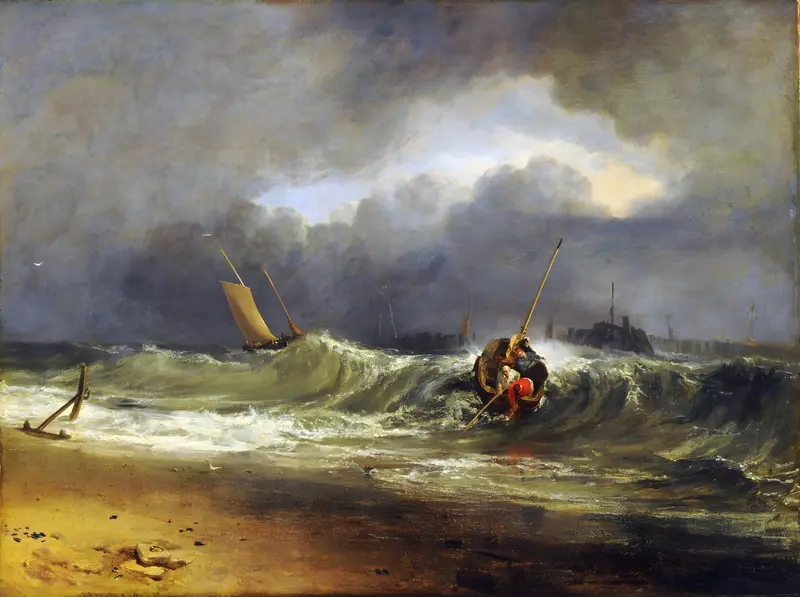
There is no official answer, but three storm pictures are strong candidates. Rembrandt's The Storm on the Sea of Galilee is, according to the Gardner Museum, his only known seascape. Tate calls Turner's Snow Storm: Steam-Boat off a Harbour's Mouth one of his most daring paintings, and notes his claim that sailors lashed him to the mast to watch the storm. Turner's Dutch Boats in a Gale was a huge success at the Royal Academy, the National Gallery says.
Sources: Isabella Stewart Gardner Museum: reward extension, January 2018 · Tate Britain: Toil and Terror at Sea (gallery labels) · National Gallery, London: Dutch Boats in a Gale (The Bridgewater Sea Piece)
What are the most famous shipwreck paintings?
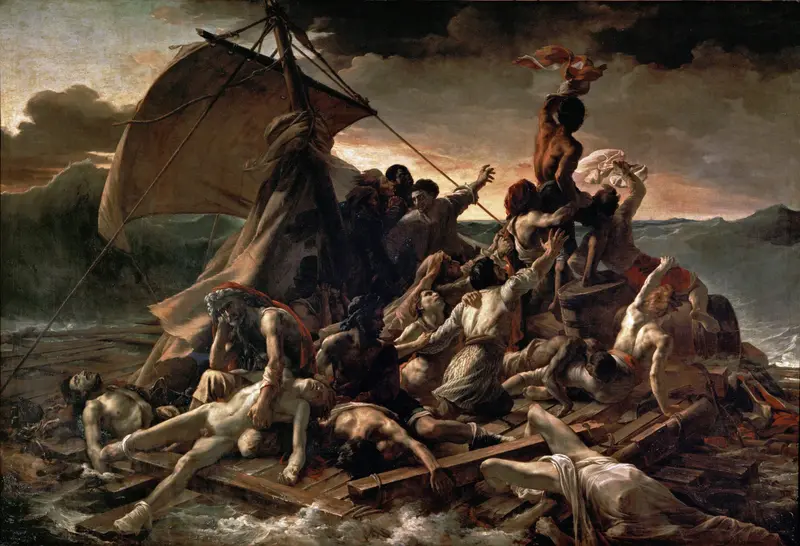
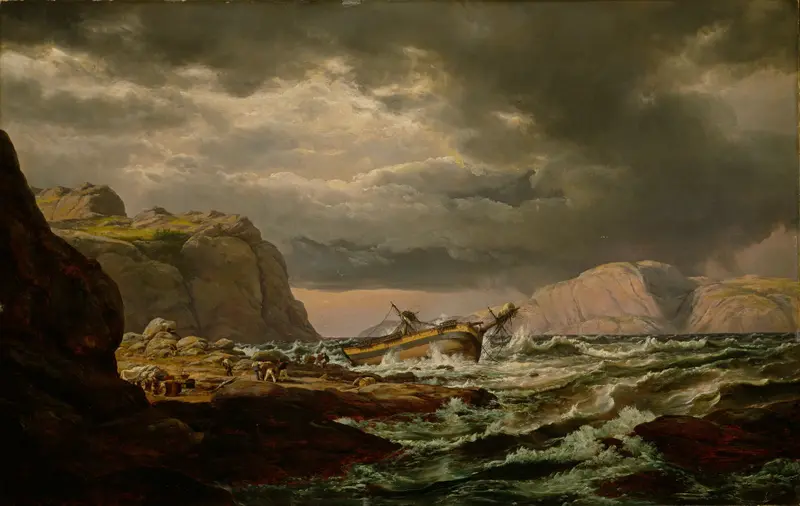
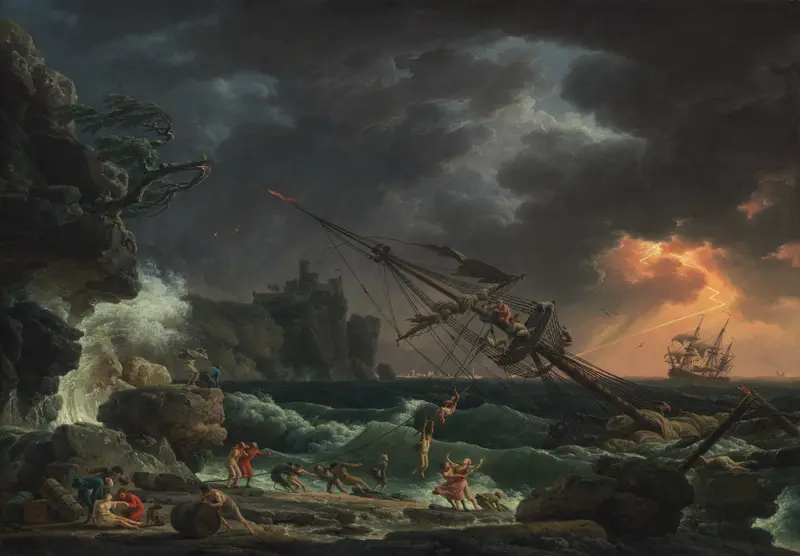
No official ranking exists, but strong candidates include Vernet's The Shipwreck (1772), which the National Gallery of Art says is meant to evoke the sublime, with small, frantic figures overwhelmed by wind, waves and lightning. Dahl's Shipwreck on the Coast of Norway (1832) is on display at Norway's Nasjonalmuseet. Géricault's The Raft of the Medusa, about the 1816 wreck of the frigate Méduse, is on our historical paintings page.
Sources: National Gallery of Art, Washington, via Google Arts & Culture: The Shipwreck · Nasjonalmuseet: Shipwreck on the Coast of Norway (collection record) · Musée du Louvre: Le radeau de la Méduse (collection record)
What are the most famous beach paintings?
There is no official ranking, but museums single out a few. Museo Sorolla calls Strolling along the Seashore (1909), listed on this page as Walk on the Beach, one of Sorolla's most celebrated paintings. At Denmark's Hirschsprung Collection, Krøyer's Summer Evening on the Beach at Skagen (1899) shows the painter and his wife walking at dusk. The National Gallery in London describes Degas's Beach Scene as one of four beach paintings he made around 1869 after traveling to the northern French coast.
Sources: Museo Sorolla: Strolling along the Seashore (collection record) · The Hirschsprung Collection: P.S. Krøyer · National Gallery, London: Beach Scene (collection record)
What is the most famous naval battle painting?
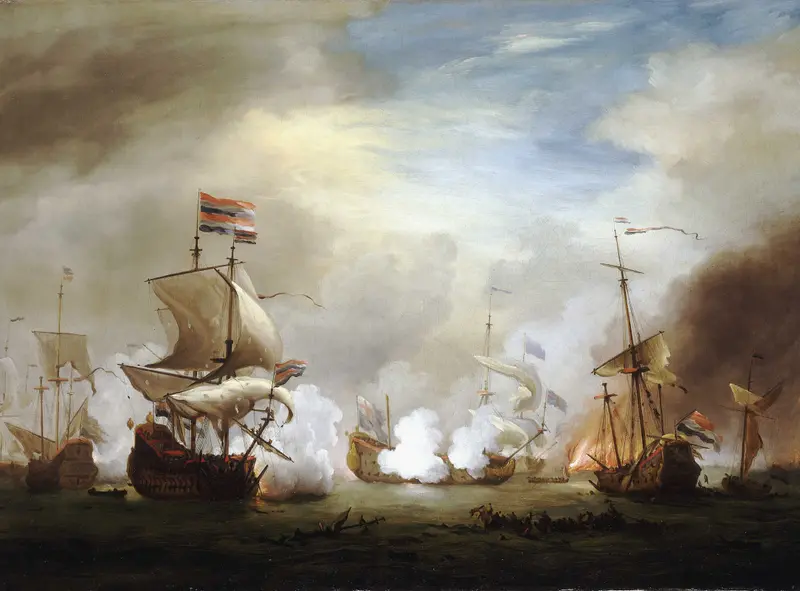
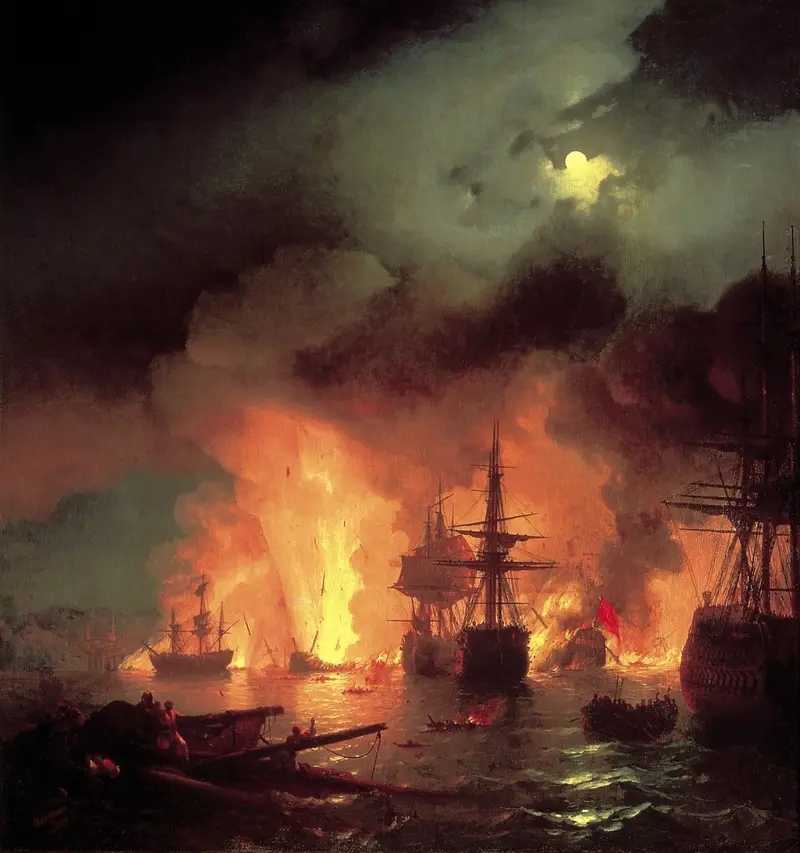
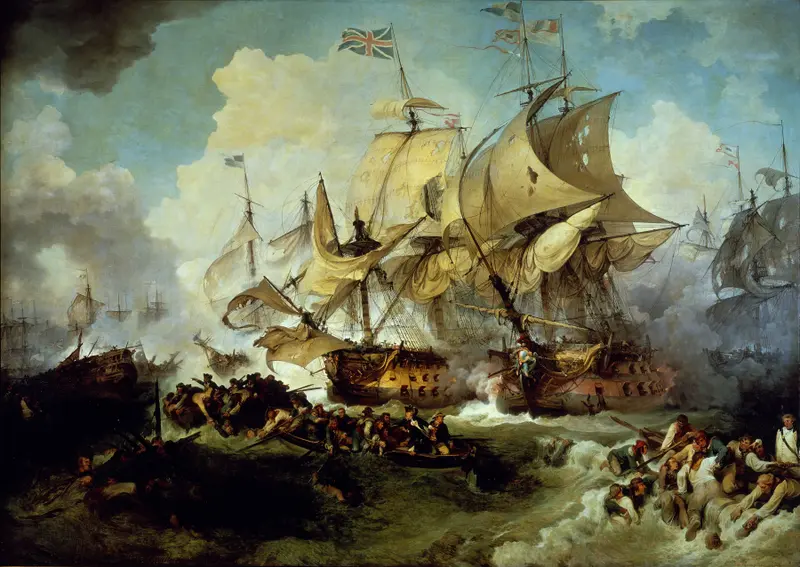
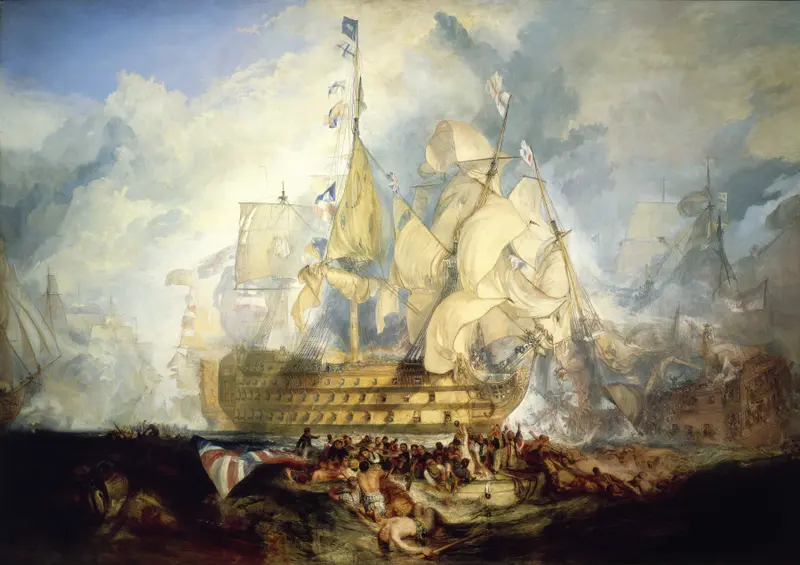
There is no official answer, but four paintings are strong candidates. The Feodosia gallery lists Aivazovsky's Battle of Chesma (1848) among the battle pictures that brought him worldwide fame. Van Wieringen's Battle of Gibraltar, at the Rijksmuseum, shows a Spanish flagship exploding in 1607. Tate's Battle of the Nile by Loutherbourg shows the explosion of L'Orient. Manet's Kearsarge and Alabama, at the Philadelphia Museum of Art, is his first known seascape.
Sources: Aivazovsky National Art Gallery, Feodosia: Ivan Aivazovsky (in Russian) · Rijksmuseum: Battle of Gibraltar in 1607 · Tate: Turner's Modern World large print guide · Philadelphia Museum of Art: The Battle of the USS Kearsarge and the CSS Alabama
Who are the most famous seascape painters?
No official ranking exists, but museums single out these names. Royal Museums Greenwich calls the Van de Veldes the most influential maritime artists of the 17th century. Tate says Turner furthered his reputation as the nation's most exciting maritime painter. Aivazovsky left more than 6,000 works, according to the gallery in his hometown of Feodosia. In his final decades, Winslow Homer's main subject was the Atlantic surf at Prouts Neck, Maine, the Cleveland Museum of Art says.
Sources: Royal Museums Greenwich: Who were the Van de Veldes? · Tate Britain: Sea Power (J.M.W. Turner display) · Aivazovsky National Art Gallery, Feodosia: Ivan Aivazovsky (in Russian) · Cleveland Museum of Art: Early Morning After a Storm at Sea
Are famous ocean paintings in the public domain, and can I download them for free?
Yes, for paintings as old as these. In the U.S., works published before 1931 are in the public domain, as are unpublished works by artists who died before 1956, according to Cornell University Library's copyright chart. A faithful photo adds no new copyright: the U.S. Copyright Office won't register a "slavish copy" of a painting, and EU Directive 2019/790, Article 14, says much the same for Europe. Every work here is public domain, and standard downloads are free for any use, including commercial.
Sources: Cornell University Library: Copyright Term and the Public Domain in the United States · U.S. Copyright Office: Compendium, Chapter 900 (visual art) · Directive (EU) 2019/790, Article 14: Works of visual art in the public domain
How we chose the most famous ocean paintings
We ranked the works by how widely each one is known around the world: the number of languages that have an encyclopedia entry about it, checked in October 2026. The more cultures write about an ocean painting, the higher it ranks.
A few rules keep the list useful. Every work is in the public domain, so you can download and use it freely. No painter has more than two places. The sea has to be the subject, not just the setting: history paintings that take place at sea, such as The Raft of the Medusa and Watson and the Shark, are on our list of famous historical paintings instead. Hokusai's Great Wave is a woodblock print rather than a painting, but it ranks first by a wide margin, so we included it. We left out works whose only available images are too small to view properly, such as Watts's After the Deluge.
Dates, sizes and locations come from the museums' own records, and each entry links to its sources.
Spotted a mistake? Tell us and we will correct it.
Browse all 8,094 ocean paintings
Every one is public domain and free to download, most famous first: ocean paintings by famous artists, from the 1500s to the 1900s.