Boomstudie — History & Analysis
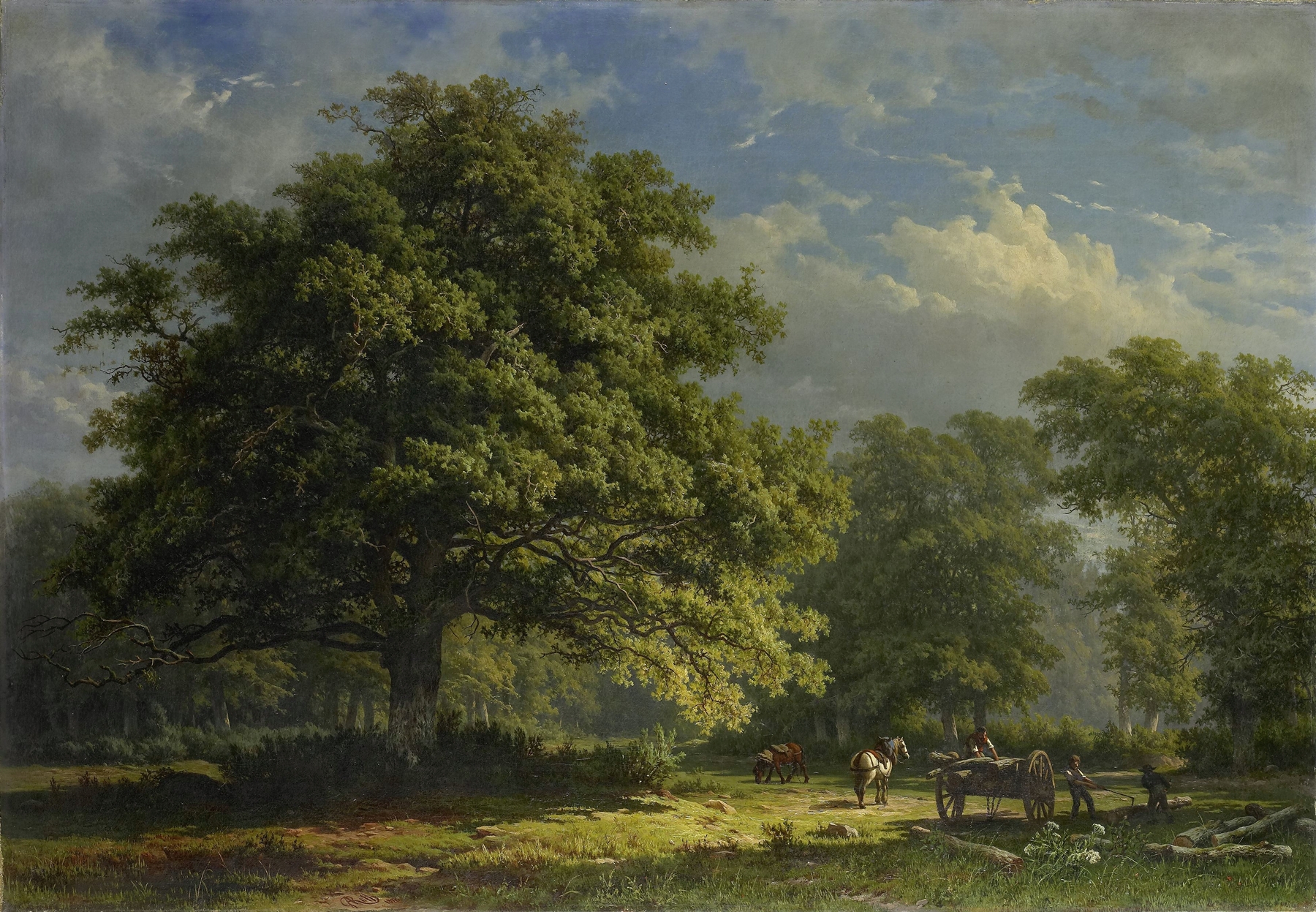
Can beauty exist without sorrow? In Boomstudie, George Andries Roth invites viewers to confront this poignant question, revealing the interplay between light and shadow. Look to the left at the meticulously rendered tree trunk, its bark etched with strokes that suggest both strength and vulnerability. The delicate play of sunlight filtering through the foliage creates a dappled effect on the ground, drawing your gaze to the interplay between illumination and darkness.
The rich greens of the leaves contrast with the somber browns and grays of the trunk, evoking a sense of life’s complexity—beauty intertwined with decay. Delve deeper into the piece, and you’ll notice the subtle shadows lurking beneath the branches, whispering untold stories of loss and resilience. Each shadow seems to cradle a memory, a moment suspended in time, highlighting the fleeting nature of existence. The tension between the vibrant hues and the muted tones creates an emotional resonance, suggesting that within every beauty lies an inherent melancholy—a reminder that joy and sorrow coexist.
Roth painted Boomstudie in the midst of the 19th century, an era marked by a fascination with the natural world. As a part of the burgeoning Romantic movement, he sought to capture the essence of nature’s beauty while reflecting on humanity’s place within it. Roth’s life during this time was characterized by exploration of textures and forms, and Boomstudie stands as a testament to his skill in intertwining emotional depth with technical precision.