View in the Bentheim Forest — History & Analysis
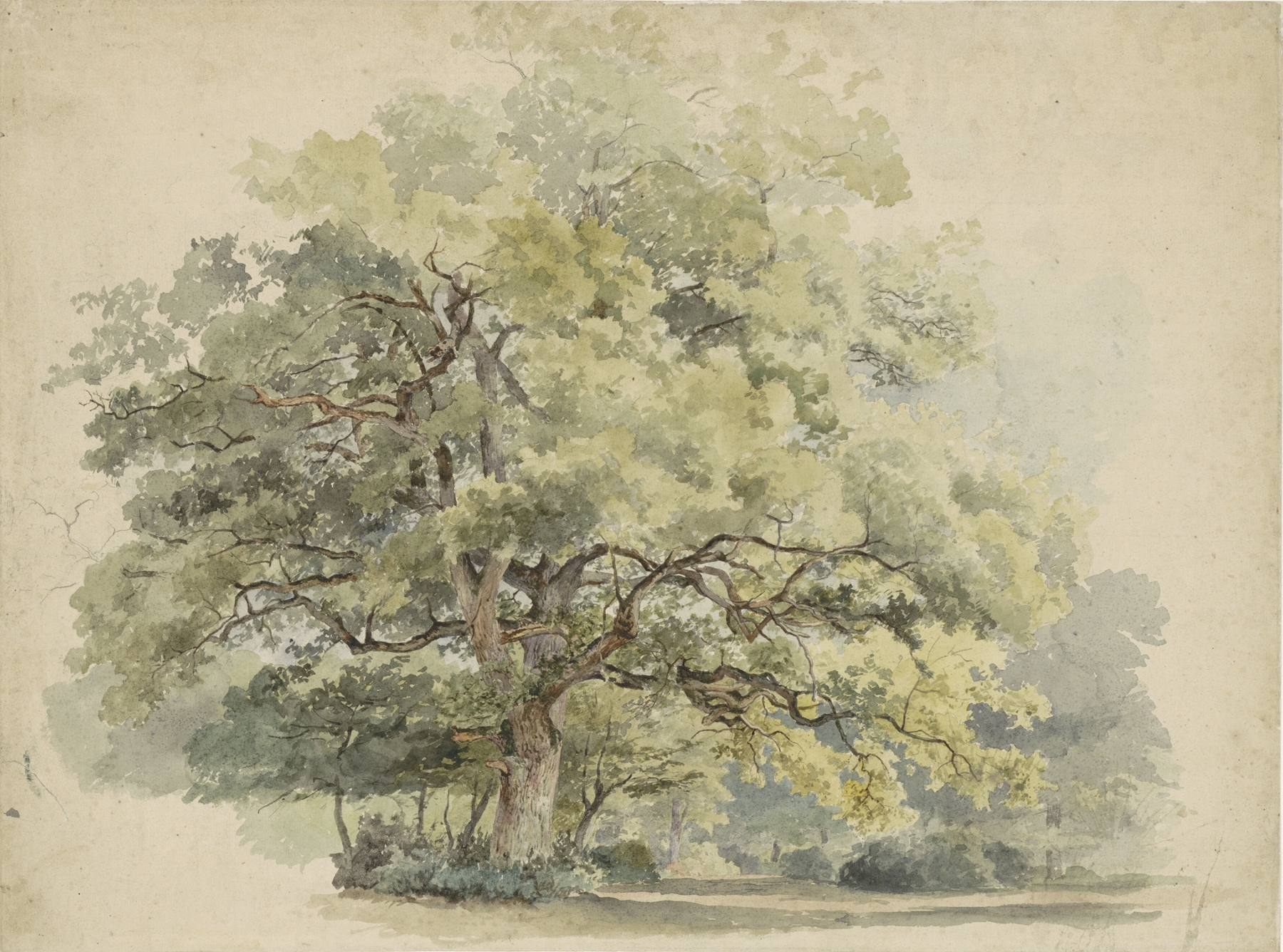
Can paint confess what words never could? In View in the Bentheim Forest, fear is woven into the very fabric of the trees, casting long shadows that whisper untold stories. Look closely at the foreground, where dark, gnarled roots intertwine with tufts of grass, suggesting a battle between life and decay. The use of deep greens and browns contrasts sharply with the ethereal light filtering through the treetops—an almost haunting glow that invites you to wander deeper yet warns you to tread carefully.
Notice how the painter skillfully captures the texture of the bark; rough and weathered, it speaks of time and the weight of secrets held within the forest’s heart. As you explore the edges, a sense of solitude emerges. The looming trees create a barrier, isolating the viewer while simultaneously beckoning them forward—an invitation laced with unease. Each blade of grass and flicker of light hints at the presence of unseen creatures, evoking a primal fear of the unknown that lies just beyond the path.
This duality—invitation and apprehension—elicits a visceral response that reflects the tension between nature's beauty and its more sinister aspects. Created in 1870, this painting emerged during a pivotal moment in Roth's life, as he grappled with the artistic movements of his time. Living in Germany, he was influenced by the growing Romanticism that sought to explore the emotional depths of the natural world. The painting stands as a testament to his unique ability to encapsulate the essence of fear through the lens of a serene yet haunting landscape.