Boslandschap — History & Analysis
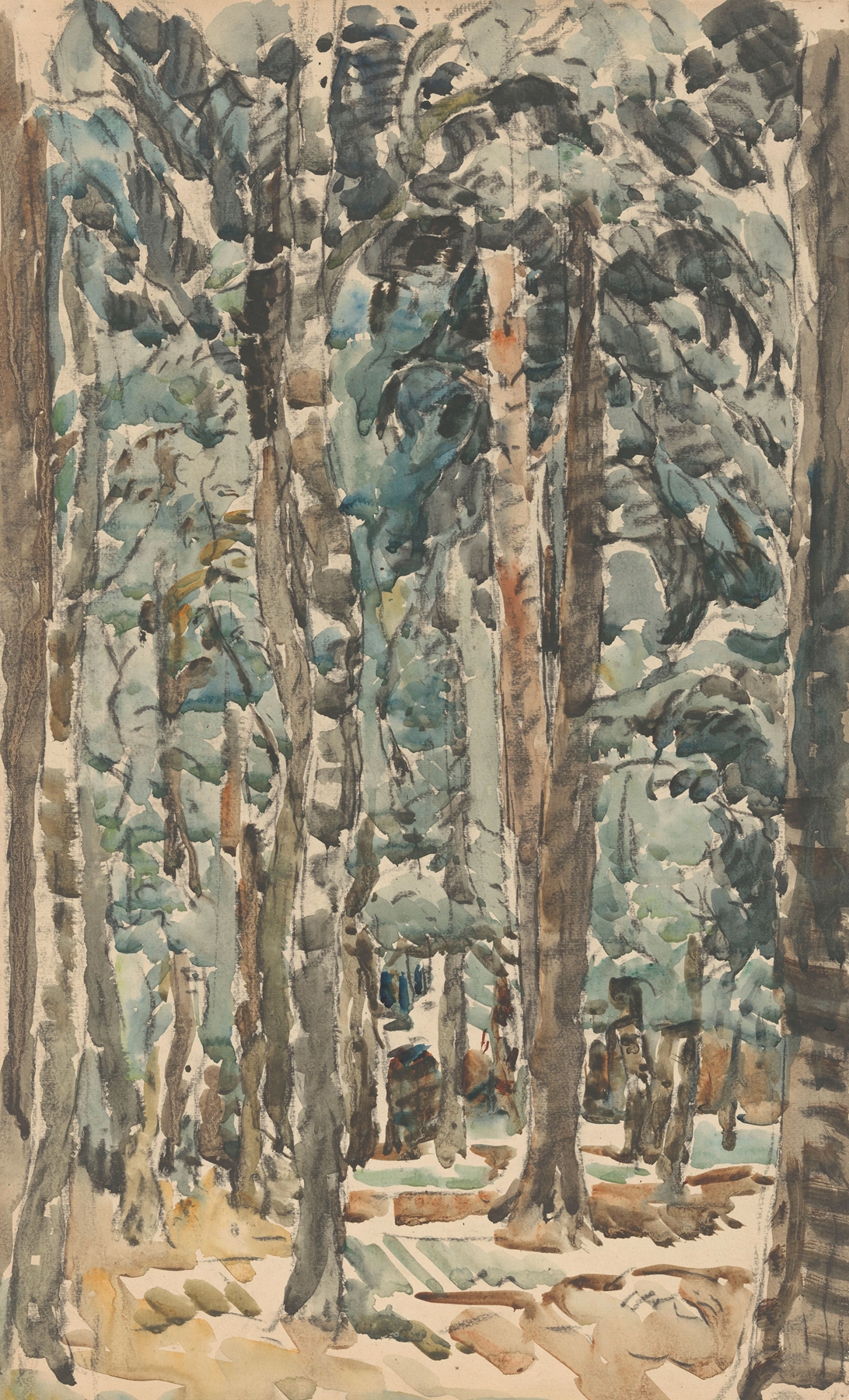
What secret hides in the quiet of the canvas? Each brushstroke in Boslandschap invites the viewer to pause and listen to the whispers of nature, revealing a world of tranquil awe. Look to the left at the dense clustering of trees, their emerald canopies reaching towards an unseen sky. Notice how the gentle play of light dances through the foliage, casting soft shadows that hint at the underbrush below.
The artist employs a rich palette of greens and earthy browns, inviting the viewer into a serene woodland that feels both intimate and expansive, a sanctuary where one could lose oneself in thought. As you explore further, the subtle contrasts emerge. The vibrant greens of the leaves are countered by the muted browns of the forest floor, symbolizing the delicate balance of life and decay. Here, time seems suspended; the stillness evokes a deep reverence for nature's mysteries.
Perhaps it is a moment of reflection on the passage of time or the interconnectedness of all living things that resonates through the composition. Wilhelmus Johannes Steenhoff created Boslandschap during a period of profound change in the art world, where traditional techniques began to blend with modernist ideas. Working in the Netherlands between 1873 and 1932, he was influenced by the prevailing Romantic movements, which sought to capture the emotional depth of landscapes. In this painting, Steenhoff masterfully balances realism and emotional expression, allowing viewers to connect with nature on a personal level.