Cattle Resting at a River Crossing — History & Analysis
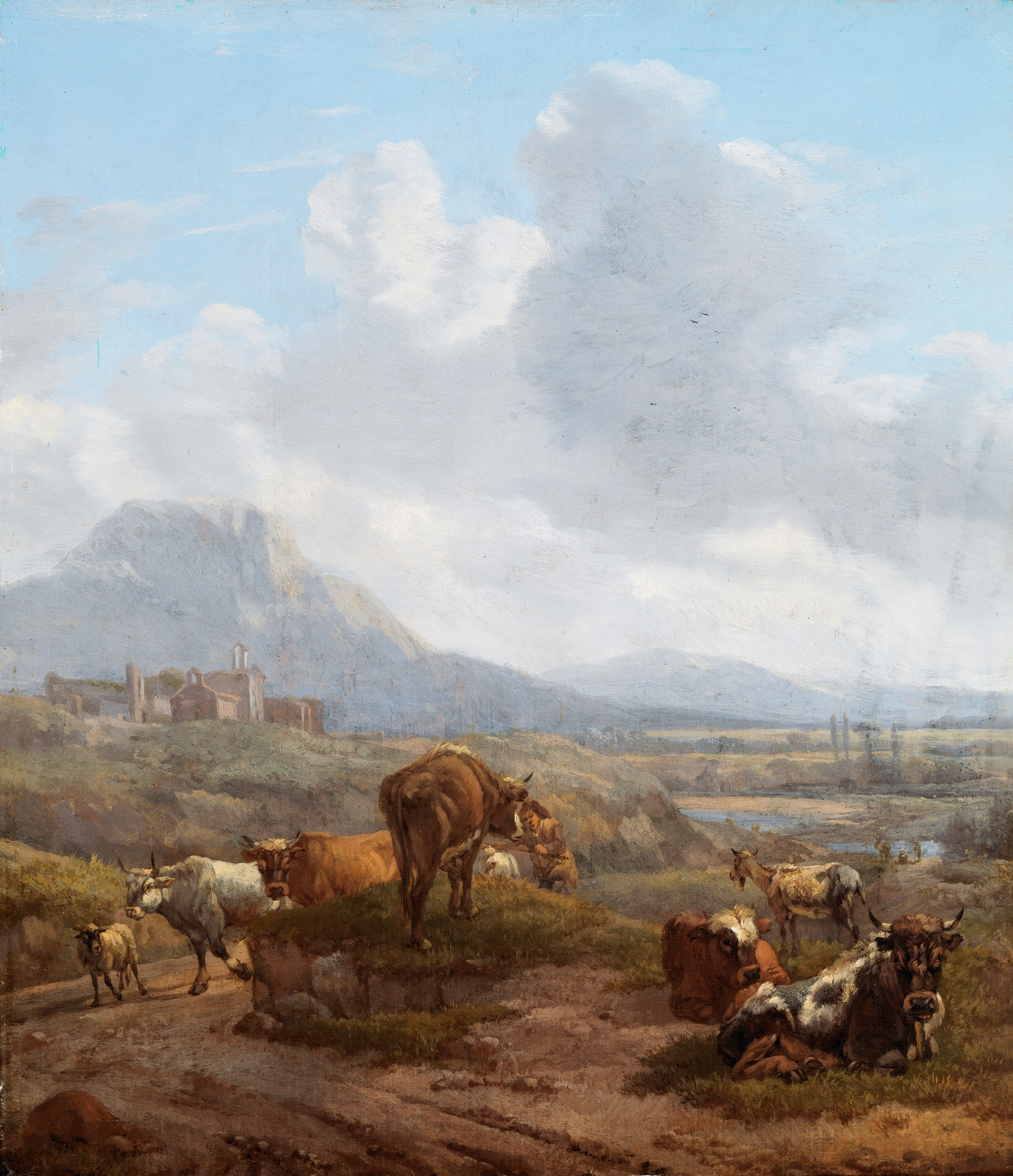
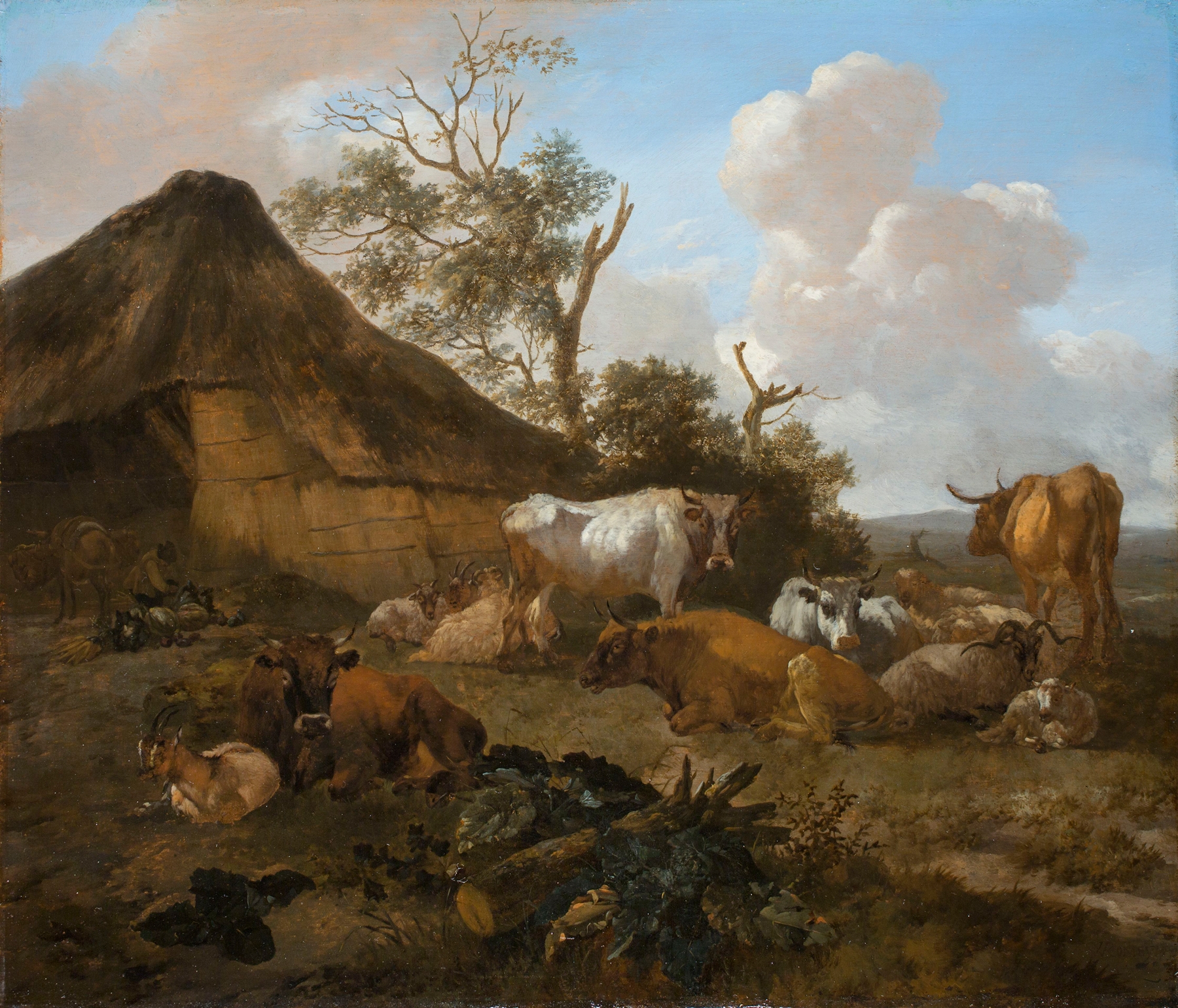
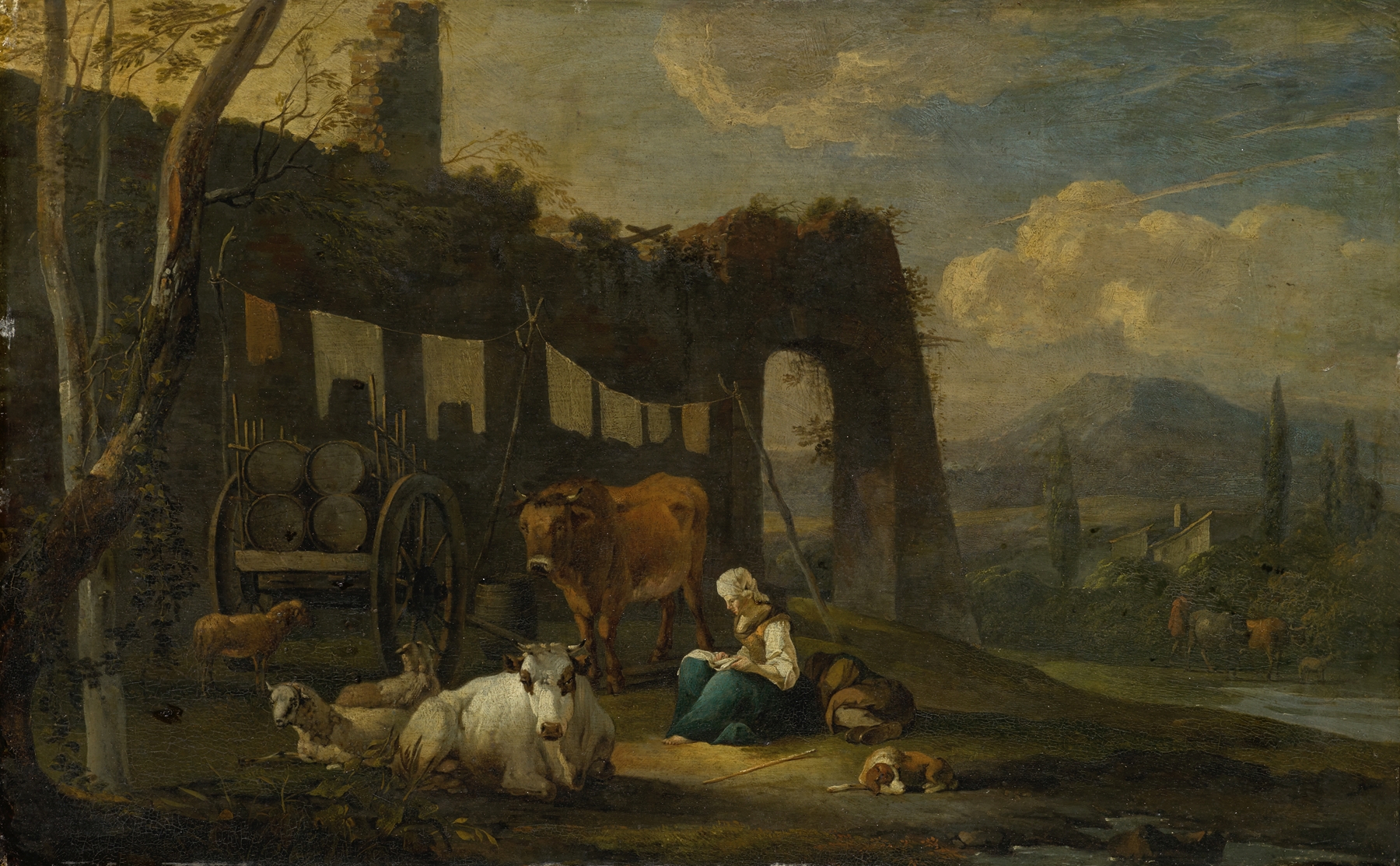
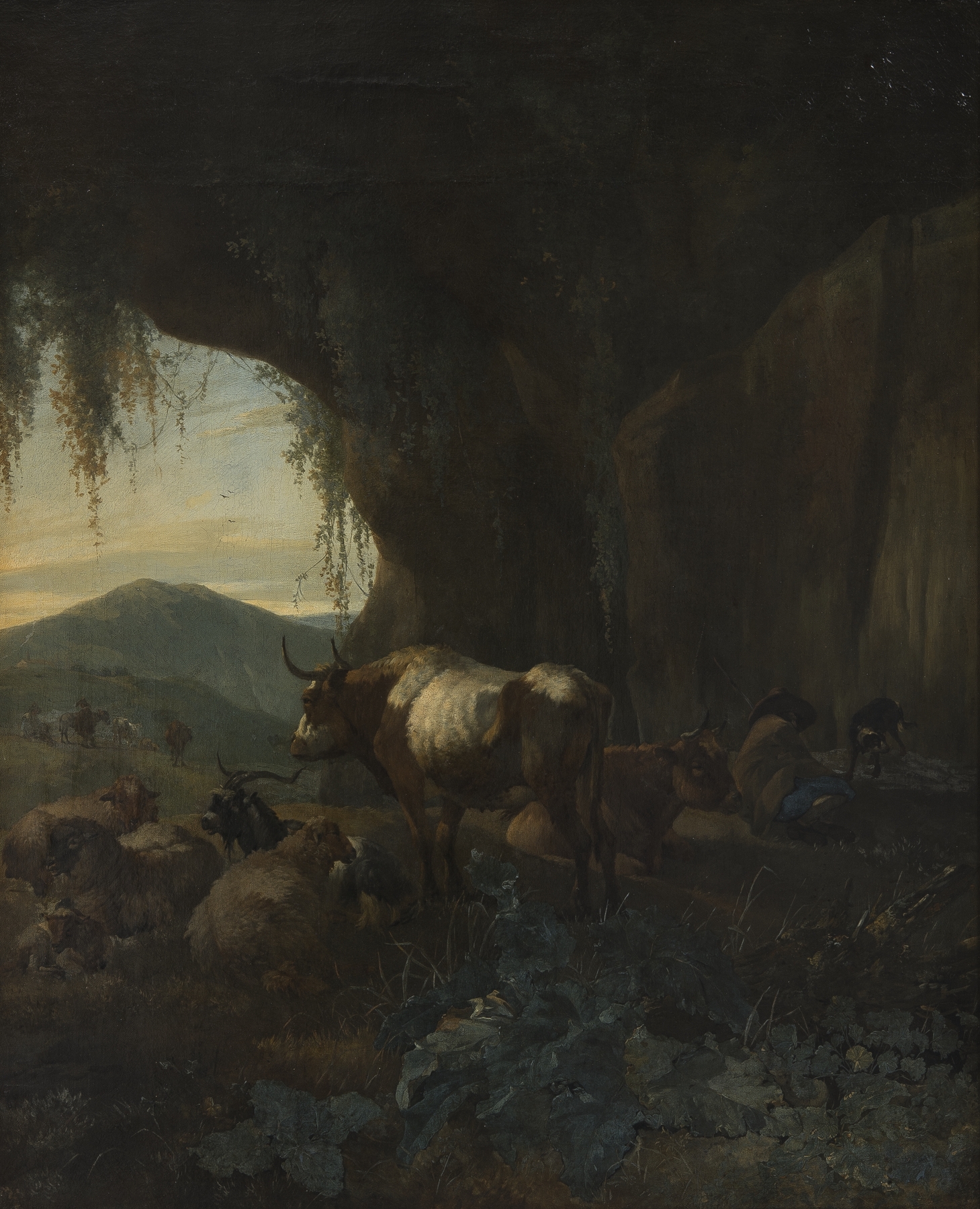
“The canvas doesn’t lie — it simply waits.” In the stillness of a moment captured, the vulnerability of life hangs in the air, as if time itself holds its breath. Look to the foreground where the cattle are gathered, their bodies forming a soft, rounded mass against the smooth flow of the river. Notice the way the sun dapples through leaves, casting warm patterns across the earthy tones of the cows' coats. The contrast of the dark water glistening in the light serves to highlight the delicate balance between tranquility and the underlying unease of nature’s unpredictability.
There’s an intimacy in this scene, a whisper of fear that lingers just beneath the surface. The gentle slope of the bank suggests the potential for erosion, a reminder that serenity can be fleeting. The cows, though seemingly at rest, are poised within a world that holds both refuge and threat, their expressions betraying the tension of a moment caught between safety and the unknown.
Willem Romeyn painted this work around 1654-1655 during his time in the Netherlands, a period marked by both artistic innovation and the challenges of a changing society. With the emerging Baroque style influencing his brushwork, he strived to capture both the beauty and the realities of nature, engaging with themes that resonate through the ages. It reflects a moment in history when pastoral life faced threats from both nature and societal shifts, infusing each stroke with the weight of those concerns.