Christ on the Cross, the Virgin, Saint John the Evangelist, and Cardinal Torquemada — History & Analysis
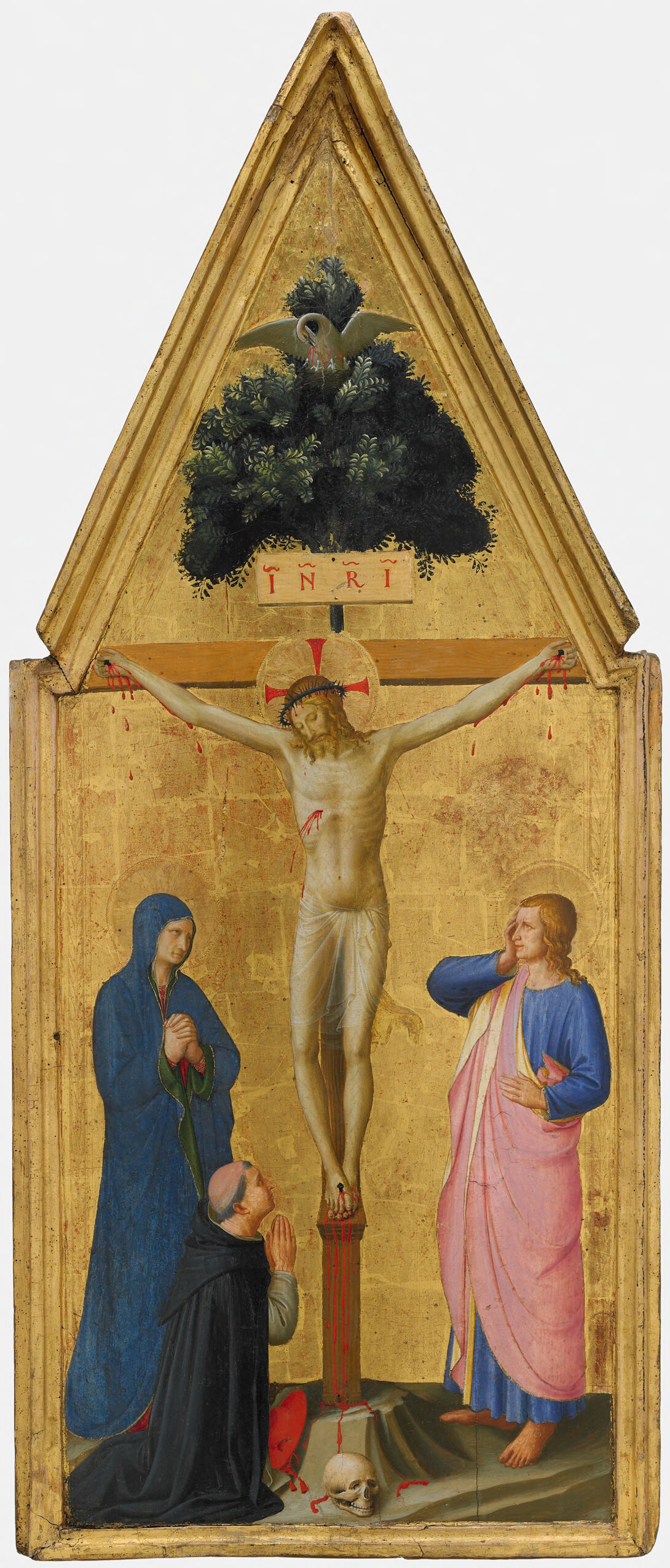
“To paint is to remember what time wants us to forget.” In a world where chaos reigns, balance becomes a silent plea embedded within the brushstrokes of art. This profound struggle is vividly encapsulated in the ethereal piece where faith and sorrow intertwine. Look to the center, where Christ’s figure hangs suspended, embodying a tragic grace. Notice how the light bathes His form—a stark contrast to the shadowed anguish of the Virgin and Saint John. Their gazes, heavy with grief, converge at the crucifixion, drawing the viewer’s eye to the pivotal moment of sacrifice. The delicate palette of soft blues and muted earth tones complements the solemnity of the scene, evoking a sense of divine presence amid human despair. As you explore further, consider the posture of Cardinal Torquemada, positioned at the feet of Christ. His stance suggests authority yet reveals vulnerability, a reflection on the duality of power and humility. The angels hovering above seem to carry the weight of the moment, their wings a symbol of protection and transcendence. This juxtaposition of despair and grace creates an emotional tension that resonates deeply, inviting contemplation on the nature of sacrifice and redemption. Created in Florence around 1453-1454, this work emerged during a pivotal era for Fra Angelico, who was deeply involved in the Dominican order and its spiritual teachings. Influenced by the burgeoning Renaissance, he sought to marry devotion with artistic expression, capturing the divine within the human experience. The piece serves as a testament to an artist grappling with the intersection of faith, mortality, and the transcendent power of love.