Chute inférieure du Reichenbach dans la vallée d’Oberhasli — History & Analysis
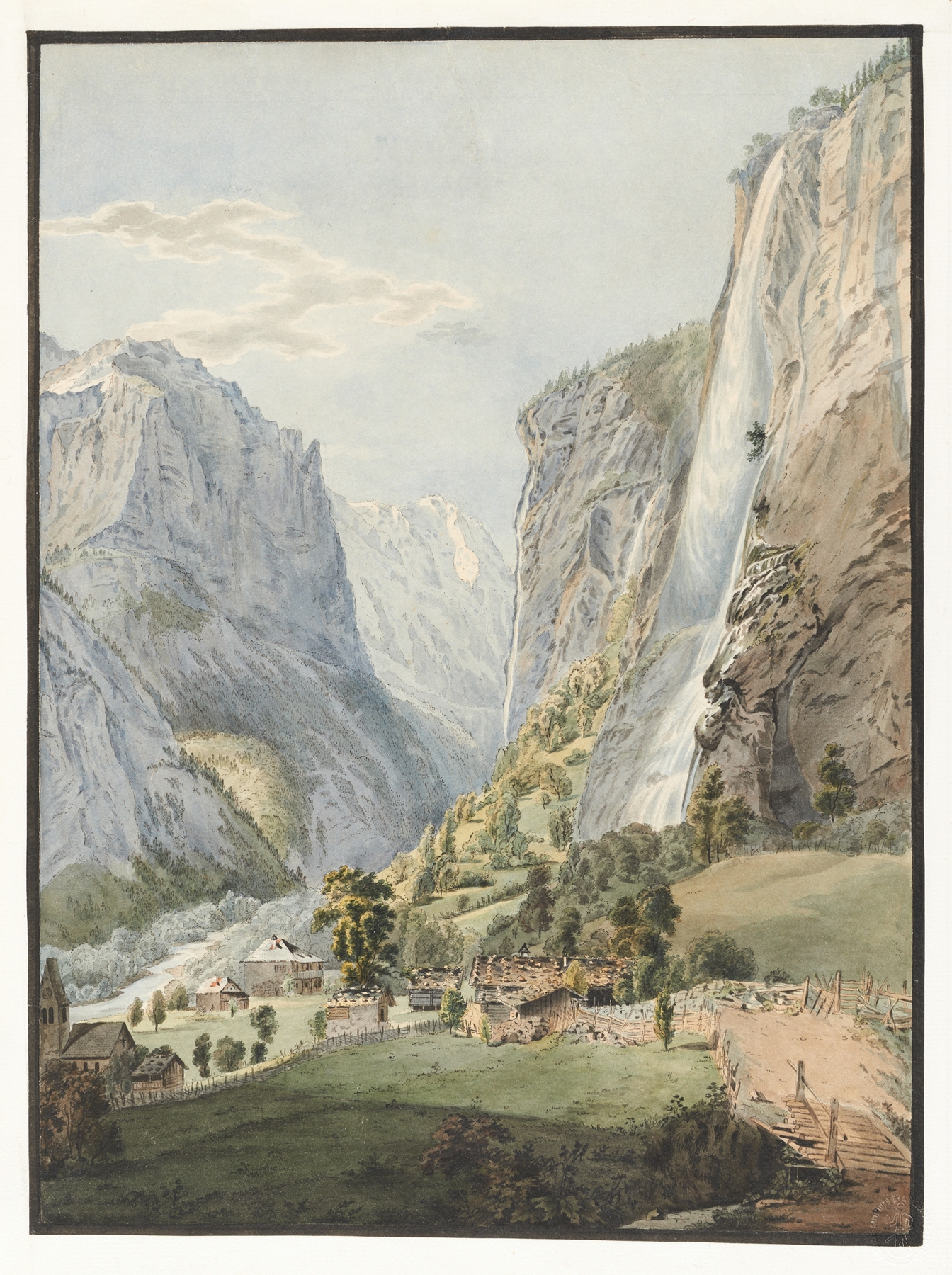
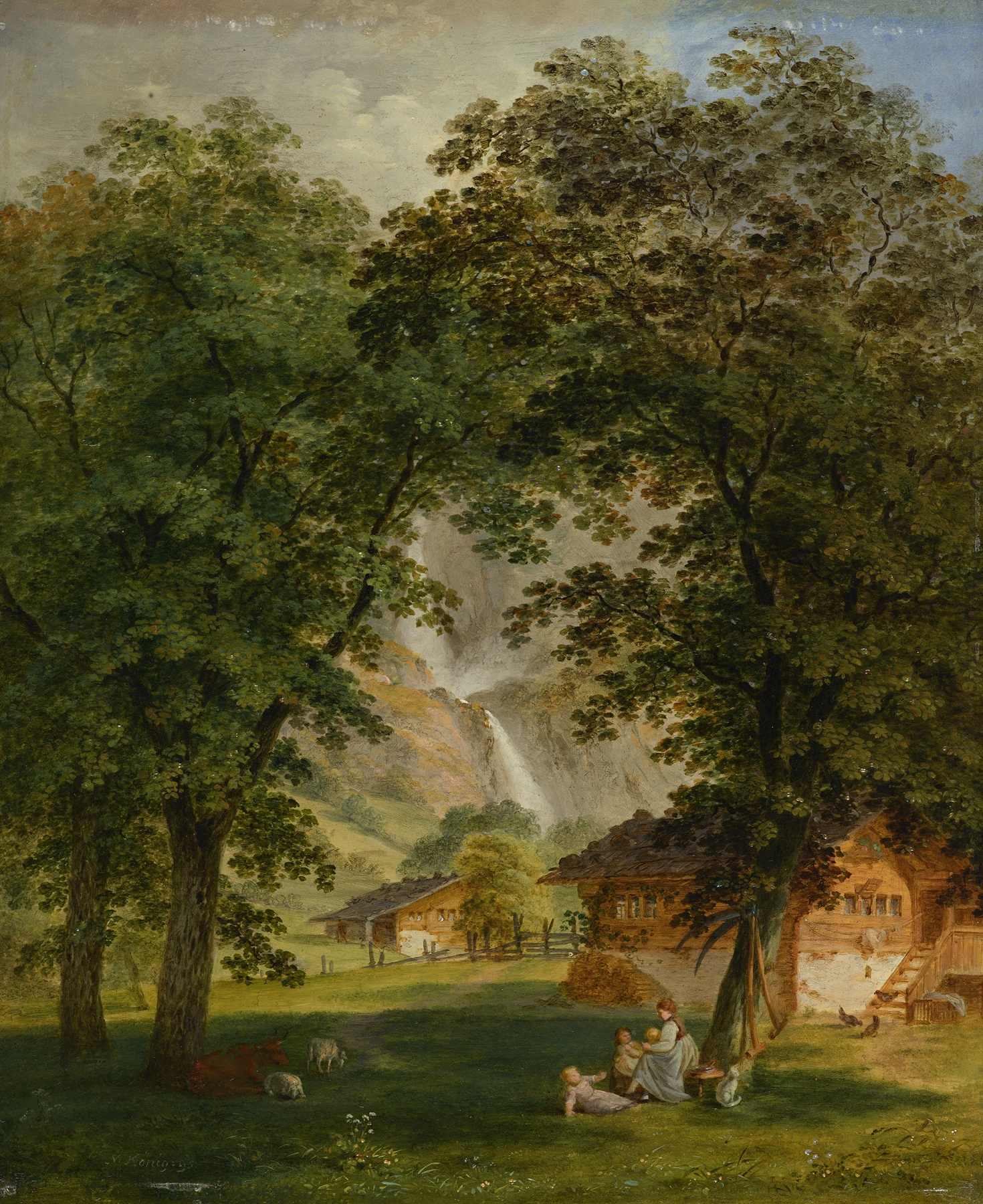
Did the painter know this moment would outlive them? In Chute inférieure du Reichenbach dans la vallée d’Oberhasli, a torrent of water plunges dramatically down rocky cliffs, a fierce dance of nature captured in vibrant strokes. The energy of the falls reverberates through the piece, inviting viewers to feel the rush and relentless movement that defines this alpine scene. Look to the left, where the cascading water dominates the composition, framed by jagged rocks that lend a sense of grounding.
Notice how the artist employs bold blues and whites to evoke the vibrancy of the waterfall, contrasting it sharply with earthy browns and greens of the surrounding landscape. The dynamic brushwork suggests motion, pulling the eye downwards as if enticing viewers to follow the water’s journey with their gaze. Yet, amidst nature’s power, there’s a subtle stillness in the background, where soft hues of dawn hint at an emerging day. This contrast between the tumultuous water and the serene landscape speaks to the duality of existence—the relentless march of time against the tranquil moments that often slip away unnoticed.
The painting captures not just a place, but an experience, evoking both the thrill of adventure and the peace found in solitude. König created this work between 1915 and 1945, a period marked by immense change in Europe, including two world wars. Living in Switzerland, he was influenced by the Romantic tradition, yet sought to convey the raw beauty and movement of nature with an evolving modern touch. This piece reflects his desire to immortalize fleeting moments in the face of turmoil, a testament to the resilience of both the artist and the landscapes he cherished.