Count-Duke of Olivares on Horseback, after Velazquez — History & Analysis
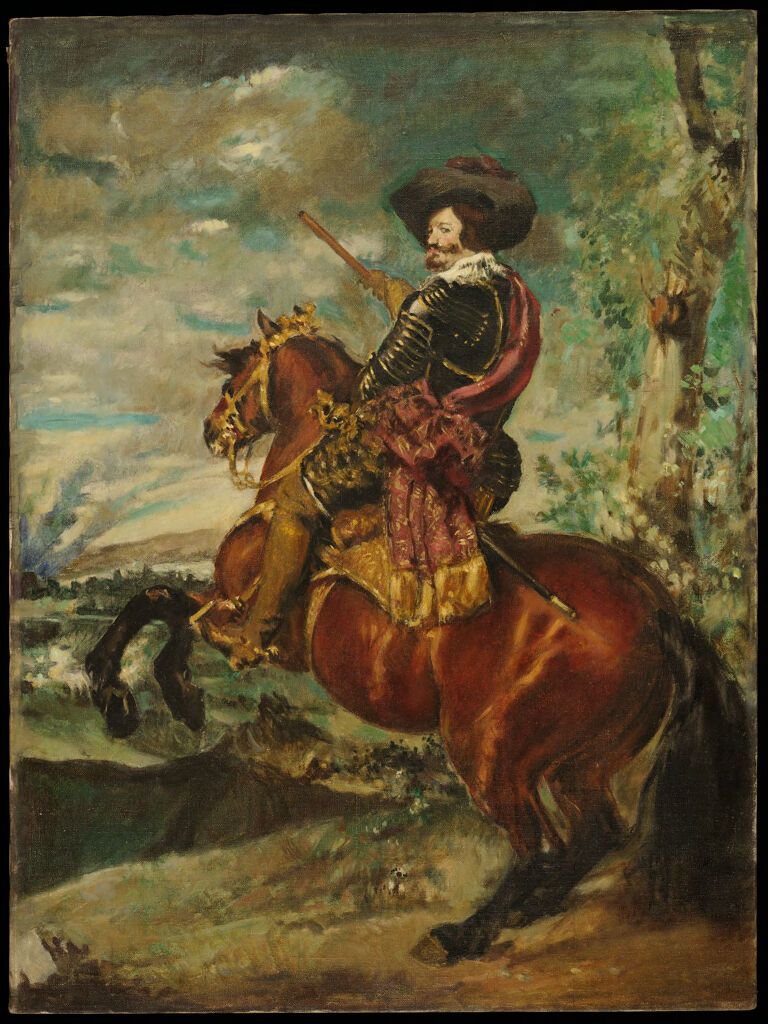
“Art reveals the soul when the world turns away.” In an era dominated by the unrelenting march of modernity, the essence of destiny remains captured within the brushstrokes of a masterful reinterpretation. This artwork invites reflections on the relationships between power, identity, and the passage of time. Begin your exploration by focusing on the regal figure at the center, the Count-Duke himself, poised upon his magnificent steed. Notice how the artist employs rich, muted tones to create a sense of gravity, lending the composition an air of solemnity. The intricate detailing of the horse’s mane and the Count’s attire draws the viewer’s eye, grounding them in a historical moment while the surrounding background fades into softer hues, suggesting an ethereal quality that hints at the weight of destiny. Within the details lies a deeper significance. The contrast between the Count’s commanding presence and the delicate strokes that form the background evokes a tension between earthly power and the ephemeral nature of existence. The slight tilt of the horse's head implies movement, as if ready to embark on a journey that echoes the untold stories of those who have come before. Each element conveys a sense of inevitability, whispering the quiet truth that even the most powerful are but players in a grander scheme of fate. Created in the late 19th to early 20th century, this work emerged during a time of artistic revival, where Waldo Ross sought to bridge classical themes with contemporary perspectives. Living in Boston, he drew inspiration from the Spanish master Velazquez, reinterpreting historical narratives through his lens. This period marked a transition in the art world, where the past and present engaged in a dialogue, enriching the cultural tapestry of the time.