Das van kloskant met kraallijst — History & Analysis
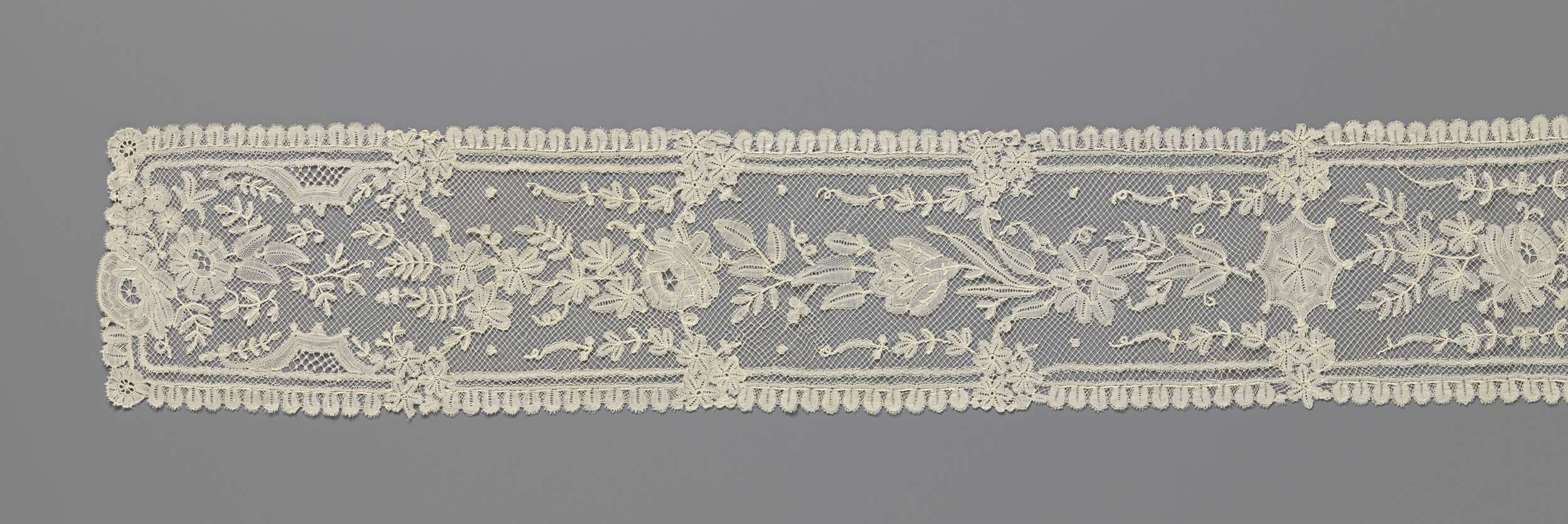
What if beauty was never meant to be finished? In the delicate interplay of craft and care, something profound weaves through the fabric of our existence, hinting at the betrayal of imperfection. Look to the intricate beadwork that frames the edges of the textile, each bead glistening with a life of its own. The soft, muted colors of the fabric invite the eye to wander, but it's the elaborate detail in the craftsmanship that commands attention first.
Notice how the patterns, symmetrical yet subtly askew, evoke a sense of harmony laced with discord. The delicate stitches tell their own story, revealing the artist’s dedication while whispering tales of fragility and fleeting moments. The underlying tension of this piece lies in its juxtaposition of beauty and betrayal, where the meticulous design can almost mask a deeper narrative of abandonment or loss. The unfinished edges leave viewers yearning, suggesting that this artwork—like life itself—may always be a work in progress.
Each fold and curve carries the weight of unseen histories, inviting contemplation on the nature of completion, and the heart’s capacity for resilience amid imperfection. Created between 1880 and 1890, this textile emerges from an era steeped in craftsmanship, where artisans poured their souls into creating objects of beauty. The lack of a known artist adds a layer of mystery—was this creation a solitary labor of love, or a collective endeavor hidden beneath the layers of time? In a world rapidly industrializing, this piece stands as a testament to the enduring spirit of handwork, echoing the stories of those who valued the personal touch amid the rise of mass production.