Design for a Park Gateway. — History & Analysis
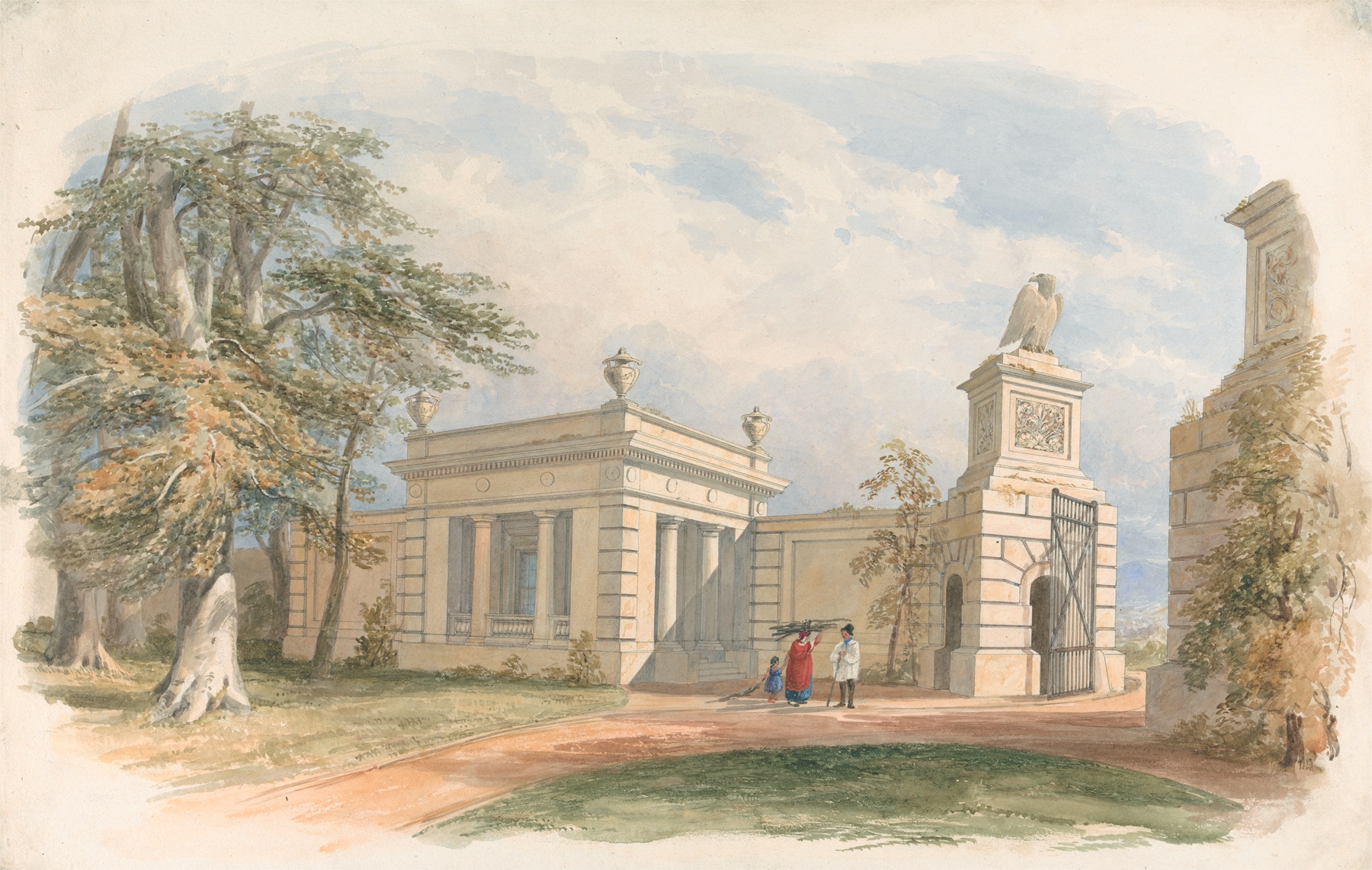
“The canvas doesn’t lie — it simply waits.” In the delicate interplay of stone and vision, a sense of longing permeates this design, echoing the loss of tranquility in our increasingly chaotic world. It invites us to reflect on what we yearn for in our shared spaces, as artists like Edward Blore envision better places for us to inhabit. Look closely at the intricate archway, where the lines converge in elegant symmetry. The soft curvature suggests an invitation, a threshold between the ordinary and the extraordinary.
Notice how the light gracefully dances across the proposed structure, casting soft shadows that hint at the possibility of life and community. The muted palette provides a sense of calm, yet it also whispers of the untold stories that will unfold in this space, each detail carefully considered to evoke a harmonious union between nature and artistry. Beneath the serene facade lies a profound tension—a yearning for connection in a world that often feels fractured. The elegant design speaks of nostalgia, perhaps a longing for parks that once thrived, where laughter and conversation flowed freely.
It captures a moment frozen in time, hinting at the vibrant life that could flourish within its embrace, yet simultaneously mourning the absence of those who would occupy it, those who have come and gone, leaving echoes in their wake. Created at an unspecified time, this design reflects Edward Blore’s role in shaping public spaces during a period of both innovation and introspection in 19th-century England. As the world grappled with industrialization and urbanization, his vision sought to create sanctuaries where nature and community could intersect, representing a response to the shifting dynamics of society. In this endeavor, he channeled a deep understanding of architecture's potential to heal and unite, even amidst the backdrop of change.