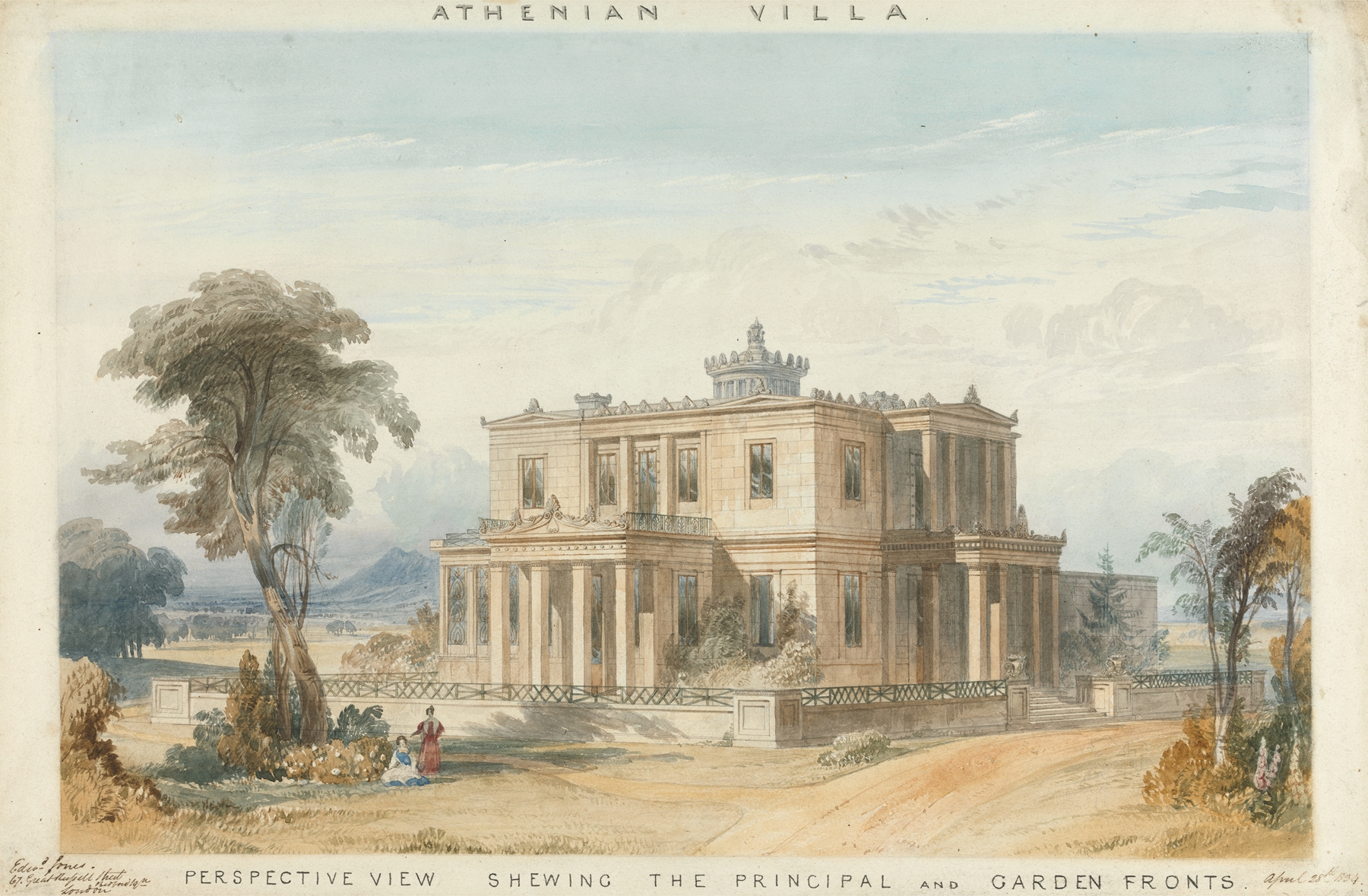
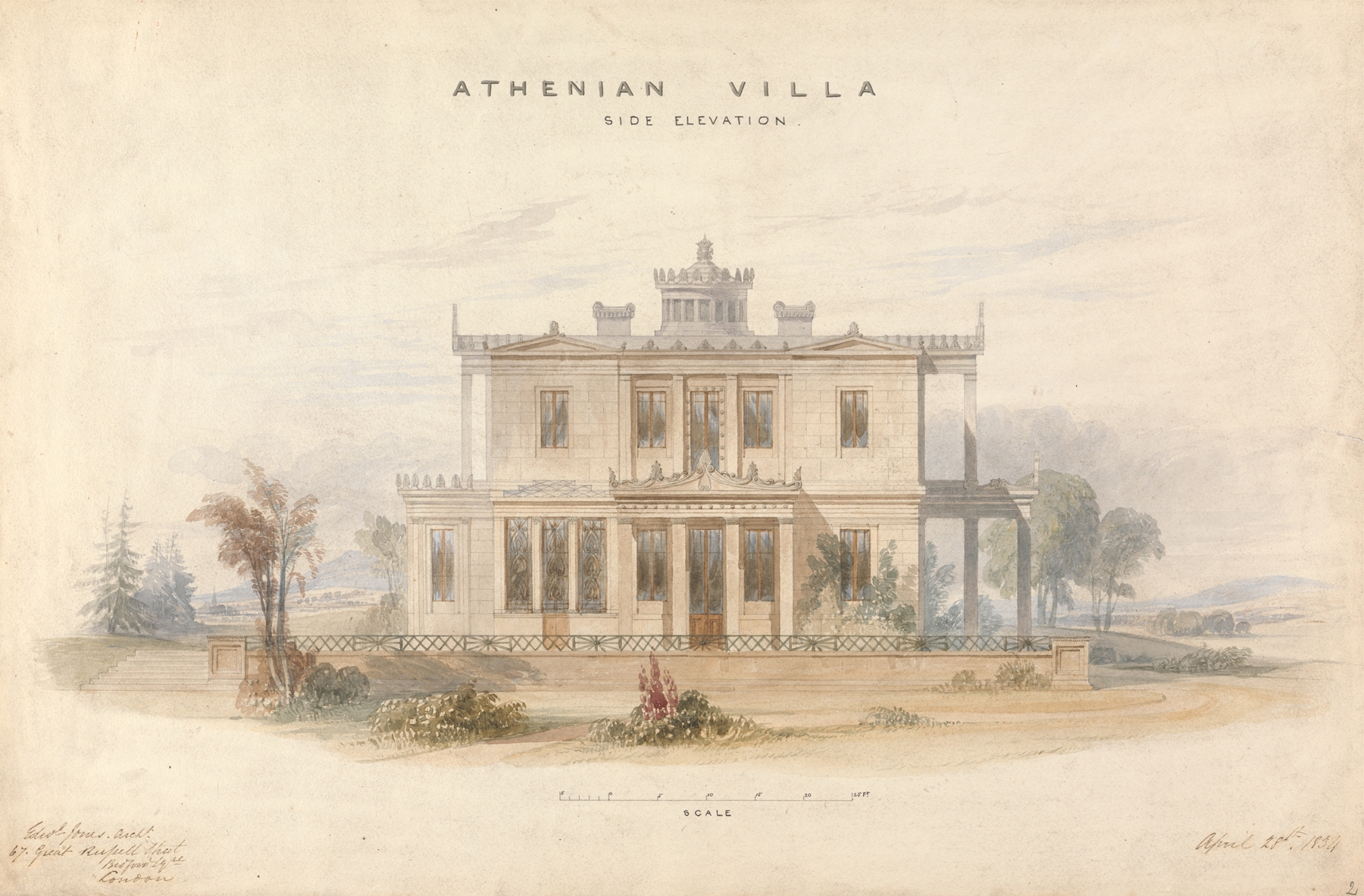
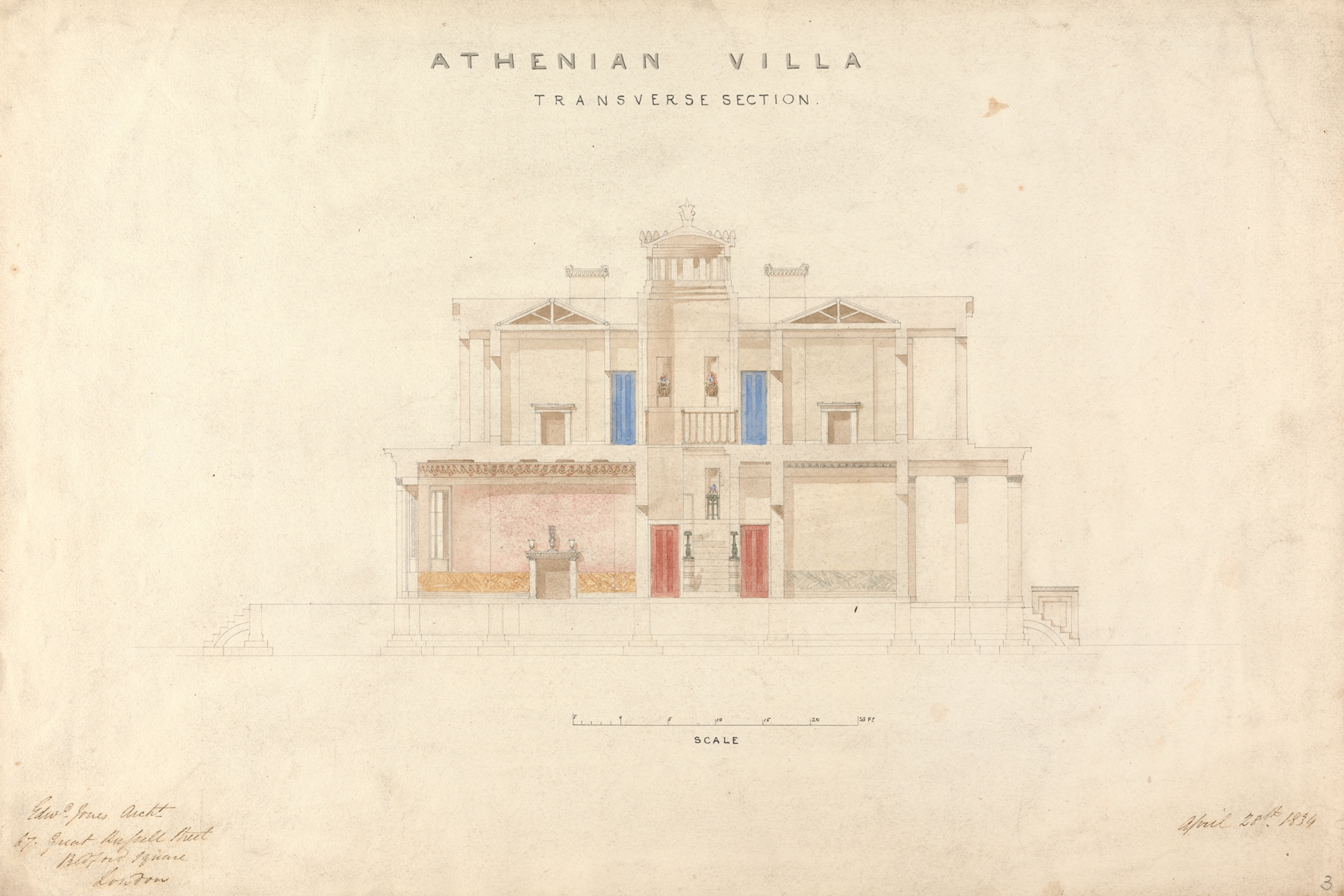
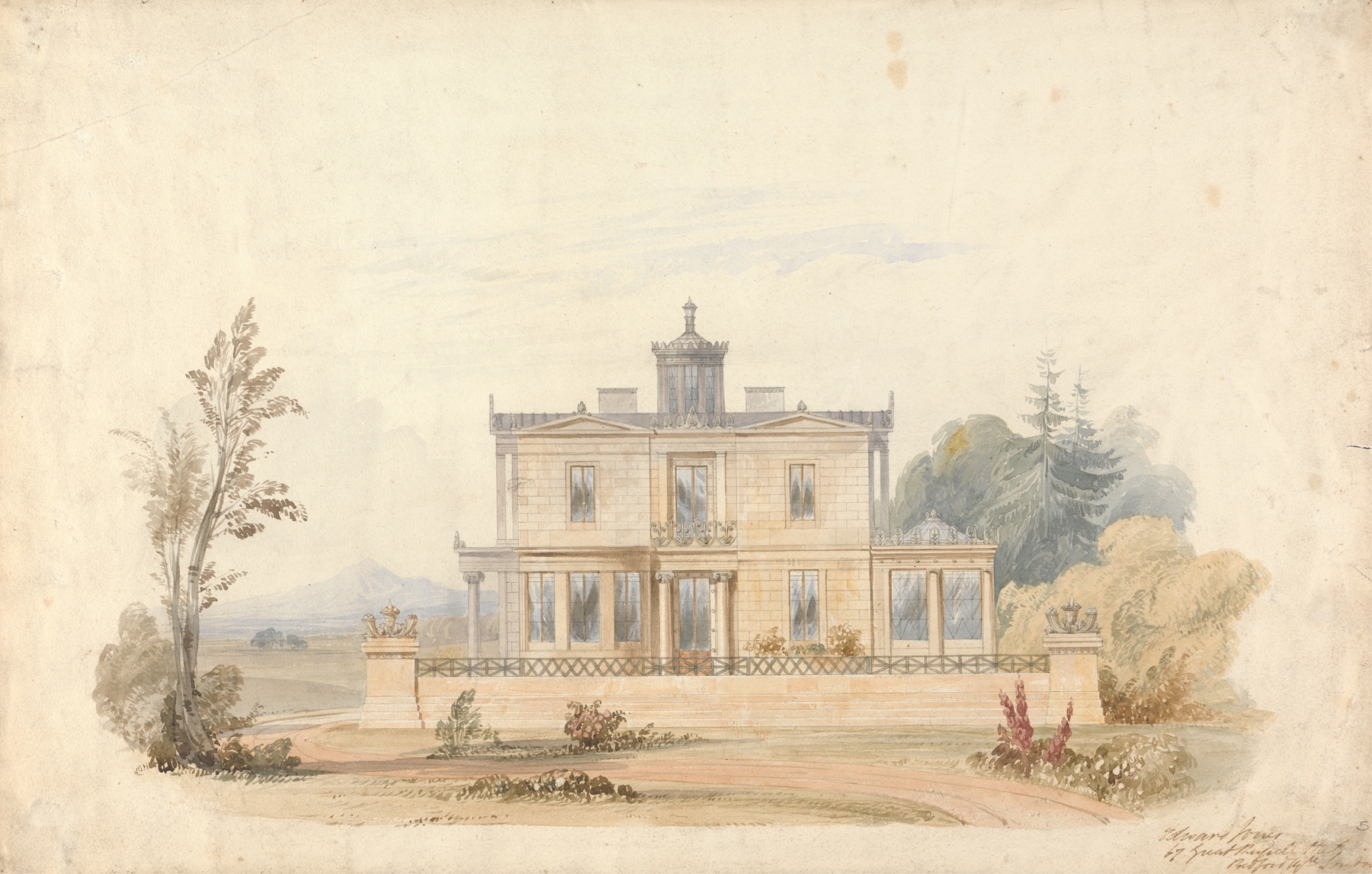
Design for an Athenian Villa, Front Elevation — History & Analysis
“Under the brush, chaos becomes grace.” Each stroke reveals an underlying desire for beauty, a longing for serenity amidst the bustling world. Look closely at the elegant symmetry of the structure, where the majestic columns rise with a quiet authority. Notice how the meticulous detailing of the frieze draws your gaze upward, inviting admiration for both craftsmanship and design. The soft palette of earth tones harmonizes with the surrounding landscape, suggesting a seamless integration of architecture and nature.
The gentle curves and refreshing lines evoke a sense of tranquility, as if this villa is a sanctuary waiting to shelter its inhabitants. Delve deeper into the subtleties of this elevation: observe the interplay between the shadow and light, which reveals the artist's intent to create depth and perspective. The choice of a classical style contrasts with the yearning for modernity that permeated the early 19th century. This design is not merely a structure; it embodies a vision of a harmonious lifestyle, reflecting aspiration and the desire for a refined existence.
In 1834, the artist created this work amidst a rapidly evolving architectural landscape, influenced by neoclassical ideals and a growing admiration for ancient Greece. During this period, Edward Jones was exploring new possibilities in design, navigating his ambitions against the backdrop of a society increasingly captivated by romanticism and idealized living. This villa design stands as a testament to his aspiration, embodying both personal and cultural desires for beauty and order.