Design for Little Frogmore; Elevation — History & Analysis
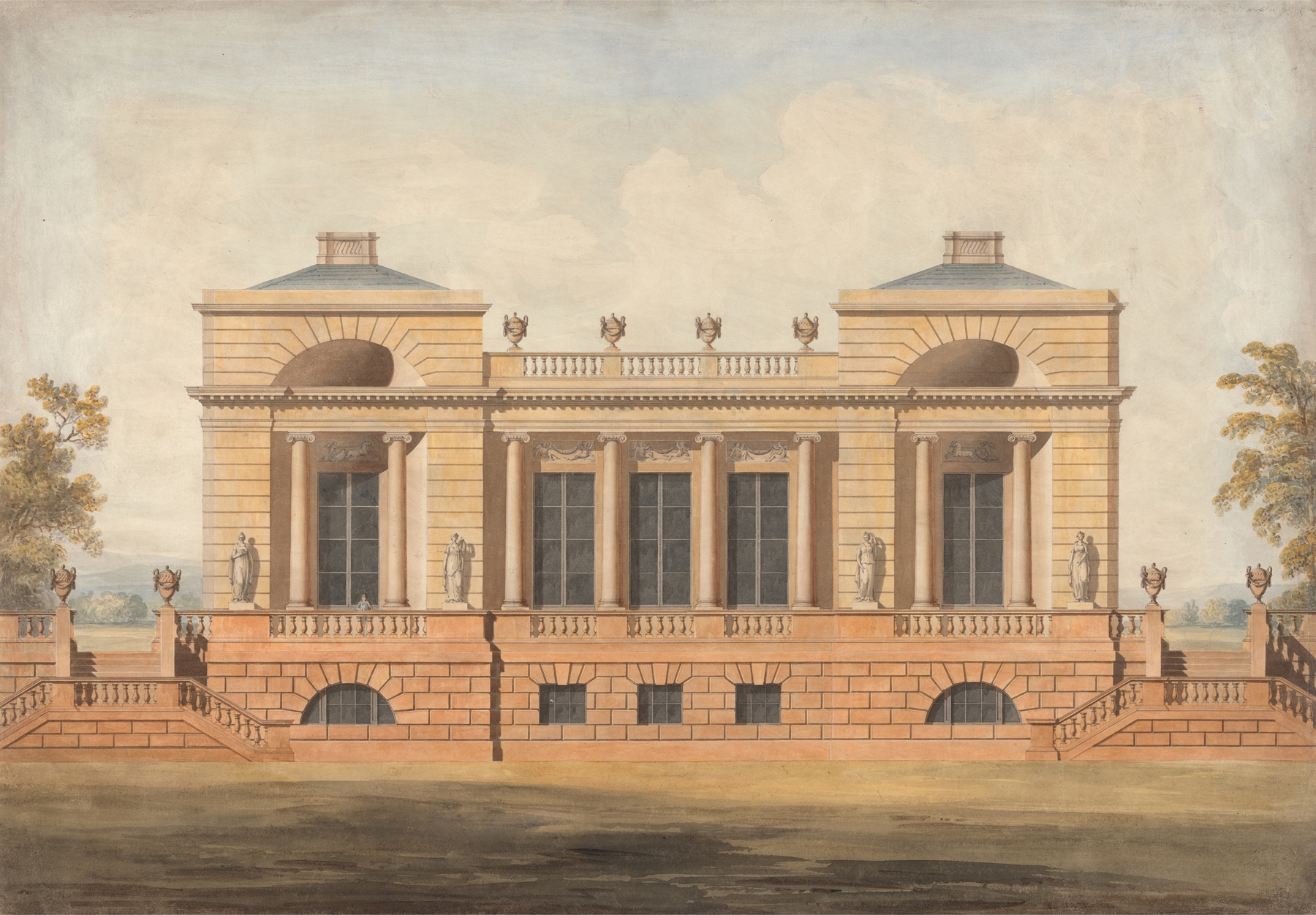
“To paint is to remember what time wants us to forget.” In a world where tranquility often masks the turmoil beneath, the elevation of design reveals the tension between serenity and violence lurking in the shadows of history. Look closely at the delicate lines and soft curves that compose the structure in the foreground. Notice how the light dances across the meticulously drawn columns, each one artfully detailed and robust, yet somehow fragile against the backdrop of chaos that time has wrought. The subtle hues of earth and sky blend seamlessly, drawing the viewer’s eye toward the horizon, where nature and architecture coexist in a delicate balance.
The elegance of the design is at once inviting and foreboding, as if whispering secrets veiled beneath its beauty. Within this composition, the juxtaposition of grand architectural ambition against the tranquil landscape speaks to the strife of a nation caught between aspiration and decay. The grandeur of Wyatt’s vision stands as a testament to the enlightenment ideals of progress, yet it is juxtaposed with a sense of unease; how can beauty emerge from a world steeped in violence? The intricate details of the design suggest a narrative of hope, yet the shadows they cast hint at the darker forces that often accompany such aspirations.
Created in 1791, this piece emerged during a pivotal time in British architecture, as the country navigated the tempest of the French Revolution and the shifting tides of social change. Wyatt, already an established architect, was exploring neoclassical forms while confronting the turbulent realities of a changing world. This work reflects not only his artistic ambitions but also the zeitgeist of an era grappling with the consequences of its own progress.