Elevated Railroad — History & Analysis
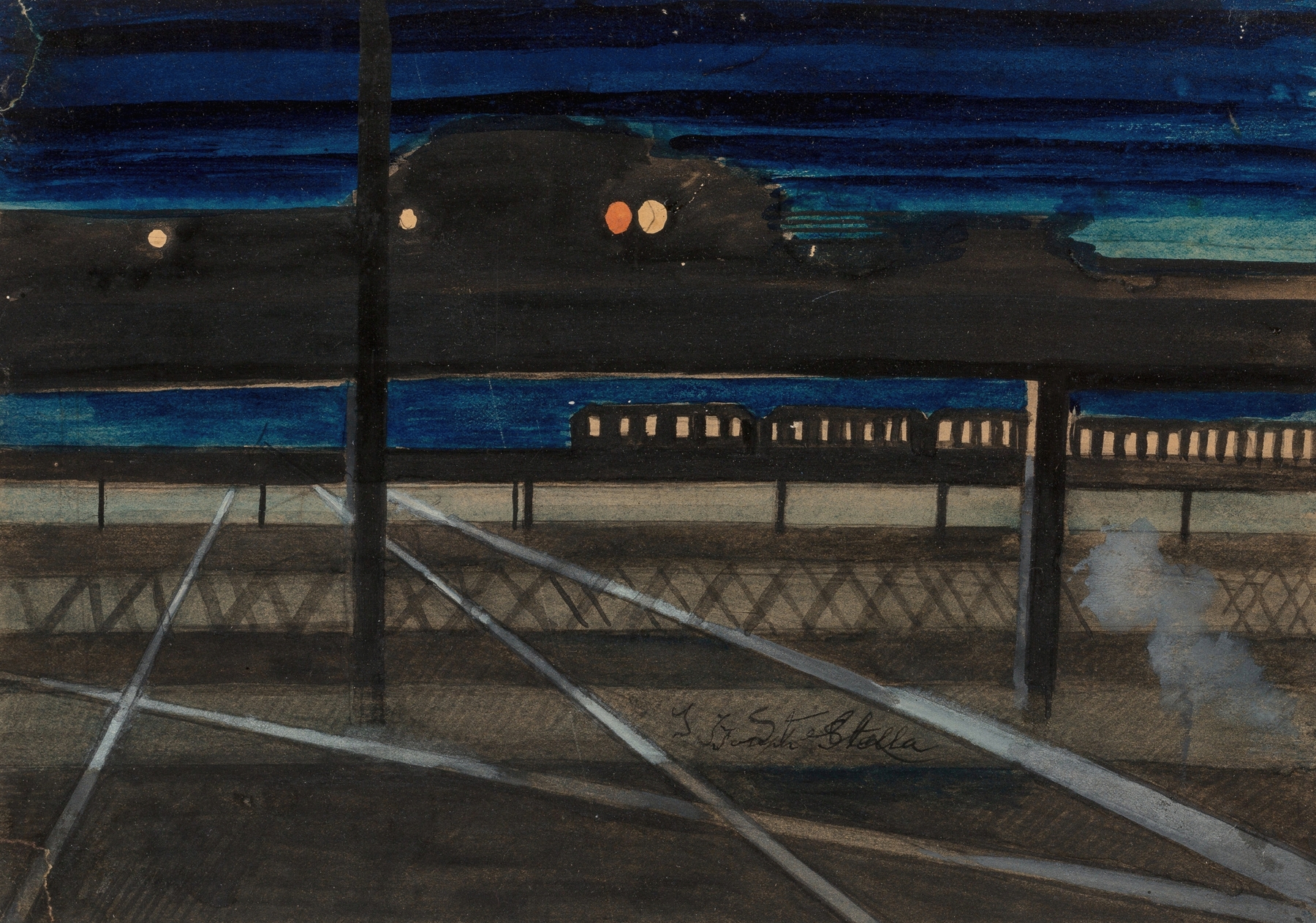
Who listens when art speaks of silence? In a world bustling with noise, there exists a haunting fragility within the urban landscape that demands our attention. Focus on the vibrant colors that meld and clash across the canvas, imbuing the steel structures with life. Notice how the bold lines of the elevated railroad cut sharply through the softer hues of the sky, creating a striking tension.
The artist's use of sweeping curves captures the movement of the city, while the contrasts between light and shadow suggest an underlying struggle between progress and preservation. Examine the delicate balance between chaos and order that unfolds in this piece. The elevated railroad, a symbol of modernity, seems to float precariously above the city, emphasizing its own fragility against the backdrop of bustling life below. This disconnection invites reflections on the cost of progress, prompting the viewer to consider whether the structures we build are more than mere functions of utility; they embody the very human experiences that pulse beneath their steel exteriors.
During the years 1920-22, the artist found himself in New York, capturing the essence of a rapidly evolving urban landscape. This era was marked by a blend of optimism and anxiety as the country emerged from World War I, striving towards a modern age. Stella's fascination with the interplay of light and architecture reflects both his personal journey as an immigrant and the broader transformation of American society.