Fire at Amsterdam by Night — History & Analysis
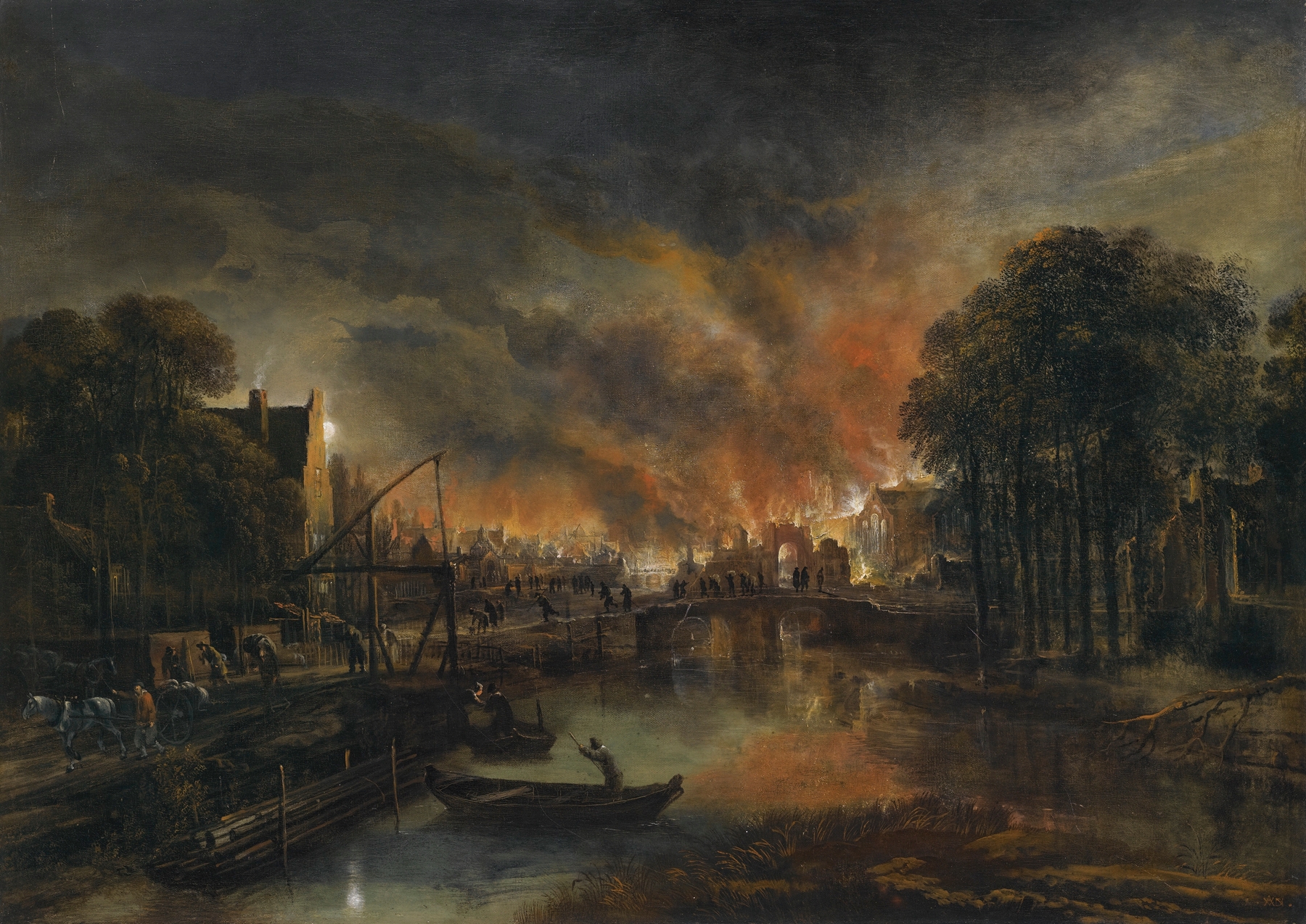
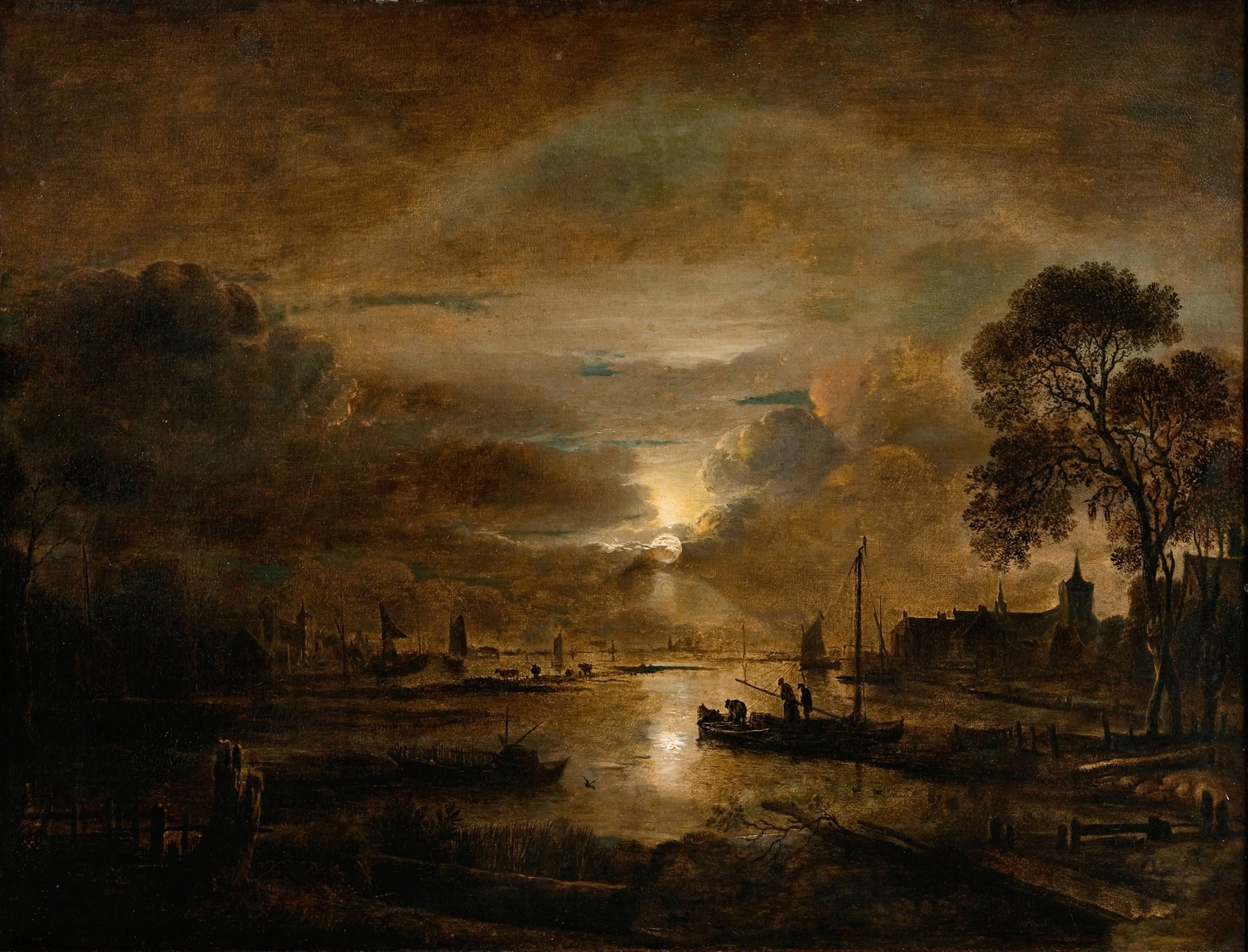
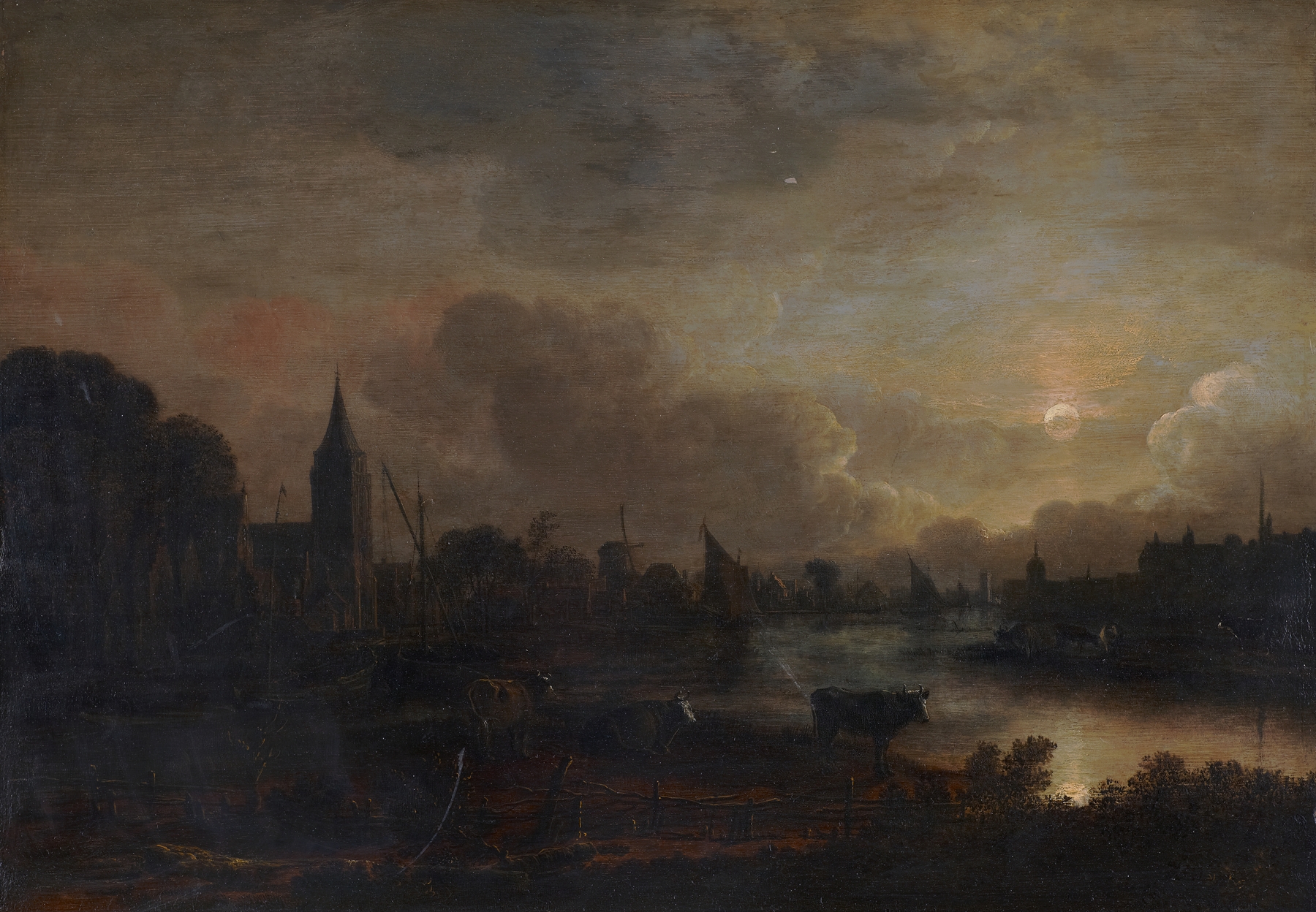
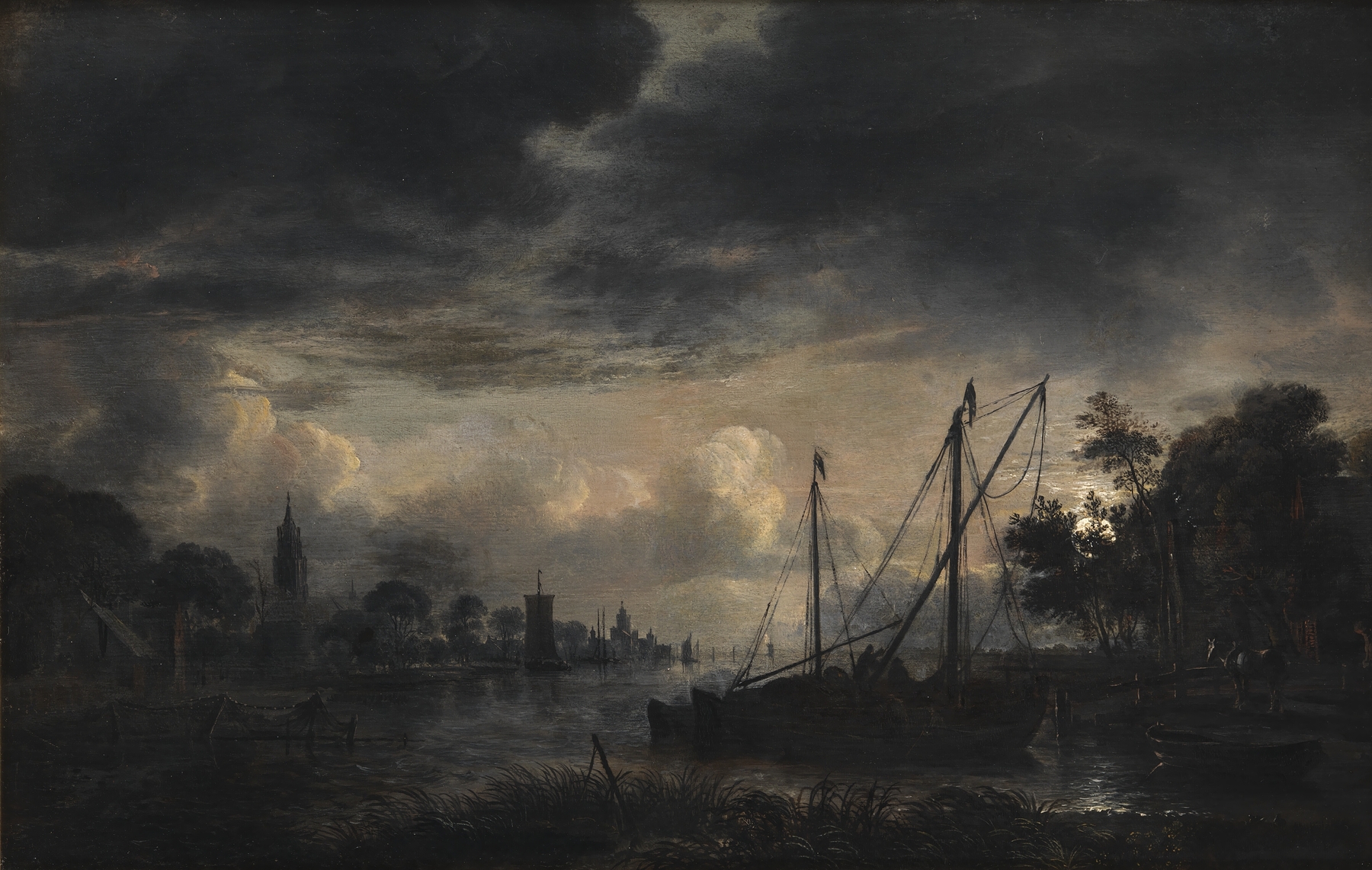
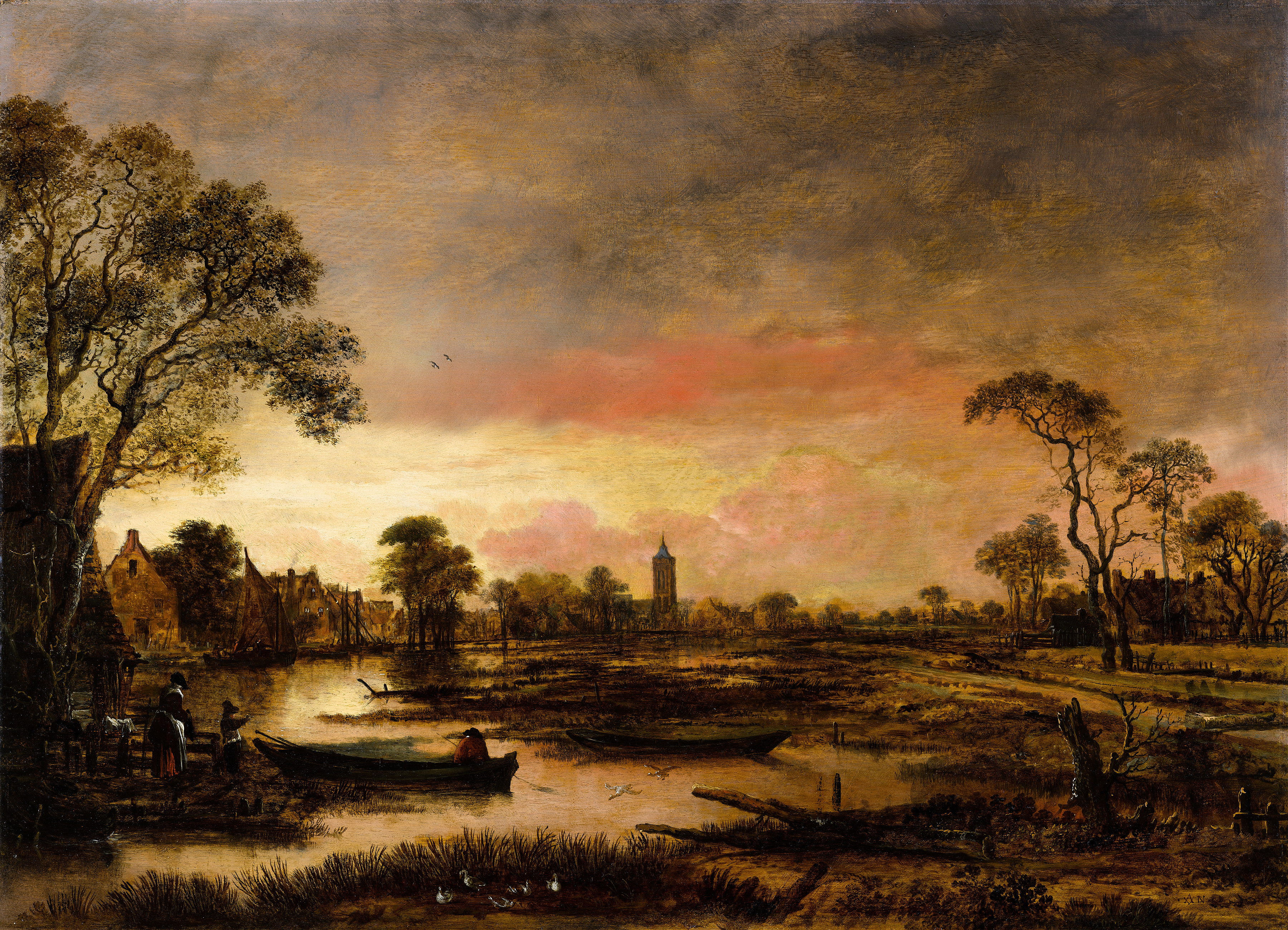
Can paint confess what words never could? In Fire at Amsterdam by Night, a vivid tapestry of light and shadow reveals the ecstasy and despair intertwined in the human experience. Look to the left where the flickering flames dance against the night sky, illuminating the faces of anxious onlookers. The artist utilizes a rich palette of deep blues and oranges, drawing your eye to the striking contrast between the cool darkness and the fiery glow.
The reflections in the water mimic the chaos above, creating an almost surreal quality, as if the scene is a dream teetering on the edge of reality. Notice how the brushstrokes pulse with life, capturing both the urgency and stillness that permeate the moment. Beneath this vibrant spectacle lies a deeper tension; the juxtaposition of celebration and calamity. The fire, while destructive, draws people together, uniting them in shared awe and fear.
Small details, such as the figures' varied expressions, evoke a spectrum of emotions, from curiosity to dread, hinting at the fragility of life amidst the ecstasy of illumination. This duality challenges us to reflect on how beauty and tragedy often coexist in our lives. Created in the mid-17th century, Aert van der Neer painted this work while residing in Amsterdam, a city emerging from economic prosperity yet marred by social unrest. As the Dutch Golden Age flourished, the artist sought to capture the interplay of light and drama, a reflection of his times and an exploration of human emotion.