Frau im Innenhof — History & Analysis
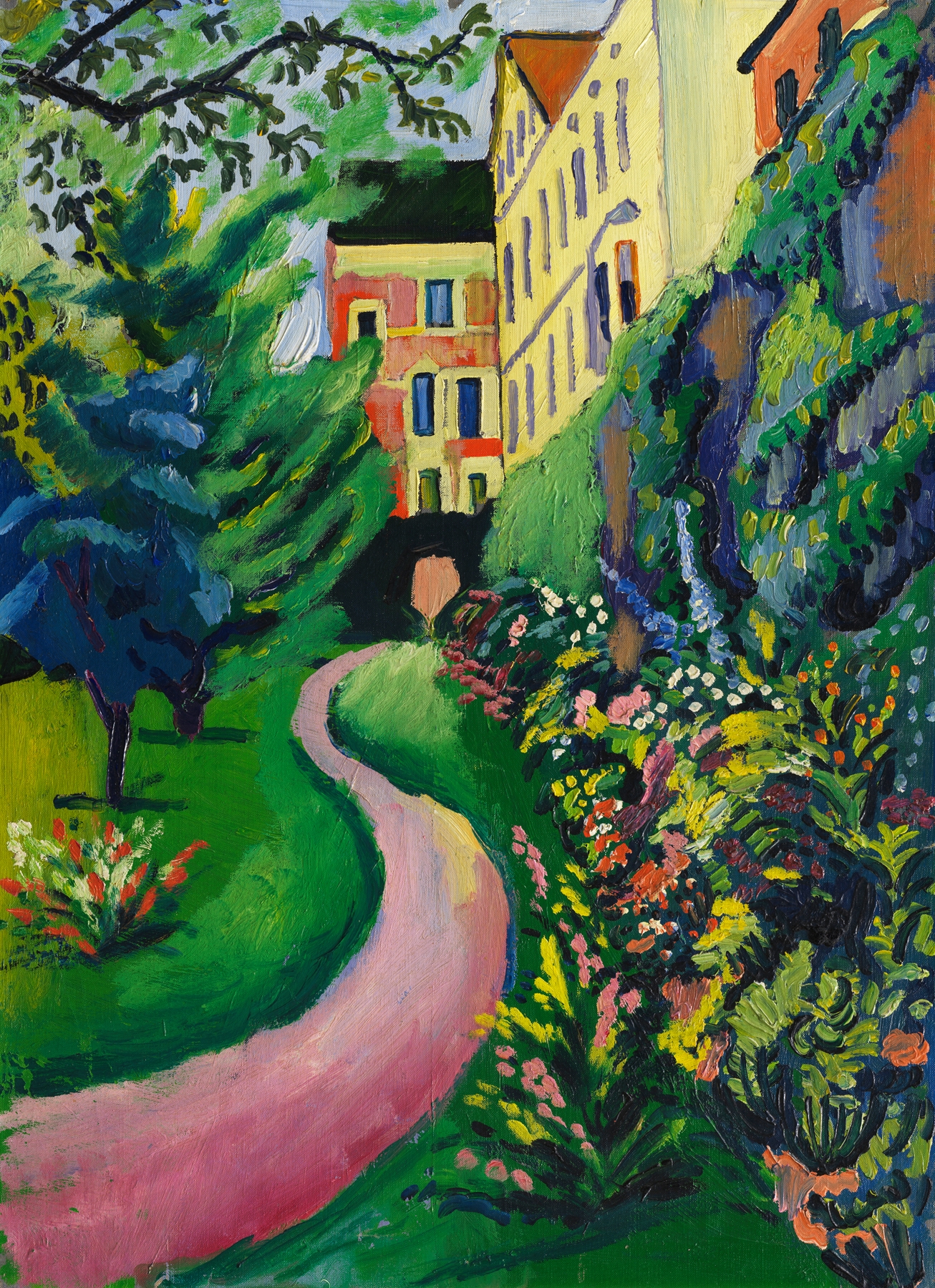
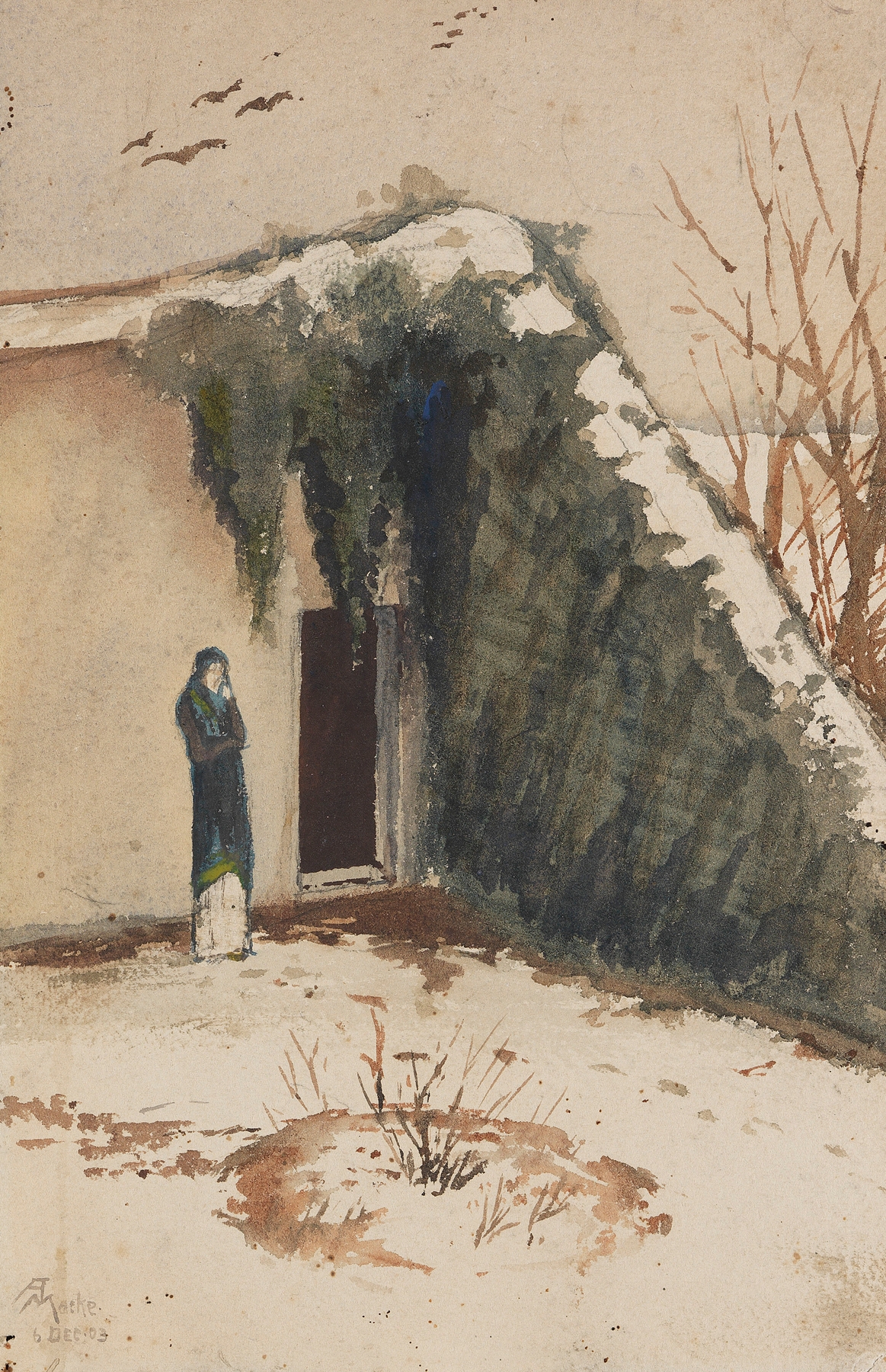
“To paint is to remember what time wants us to forget.” In Frau im Innenhof, the interplay of color and form brings forth the poignant weight of grief, transforming a simple moment into an echo of loss. Look to the left at the woman, poised yet distant, her dress a vivid cascade of blues and greens. Notice how the sunlight glimmers off the wall behind her, casting warmth against the cool palette that surrounds her. The courtyard, framed by soft, expressive brushstrokes, feels at once intimate and claustrophobic, as if the very walls are witnesses to her solitude.
Each stroke is deliberate, imbued with emotional resonance, compelling the viewer to linger on the sense of isolation that permeates the scene. Delve deeper into the contrasts within this work. The vivid hues of the woman’s attire stand in stark opposition to the muted tones of the courtyard, suggesting a clash between inner vibrancy and external melancholy. Her stance, caught between motion and stillness, hints at a longing that transcends the moment.
Each element—a shadowed corner or a sunlit patch—serves as a reminder of what is left unsaid, evoking the complexities of grief that linger just beneath the surface. In 1903, August Macke painted this piece during a period of burgeoning creativity, while grappling with personal loss and the fleeting nature of existence. At this time, he was exploring the vibrant colors and emotional depth that would later define his work. The art world was shifting, and Macke, a key figure in the Expressionist movement, sought to capture the essence of human experience through his vivid landscapes and emotive figures, making Frau im Innenhof a striking embodiment of that quest.