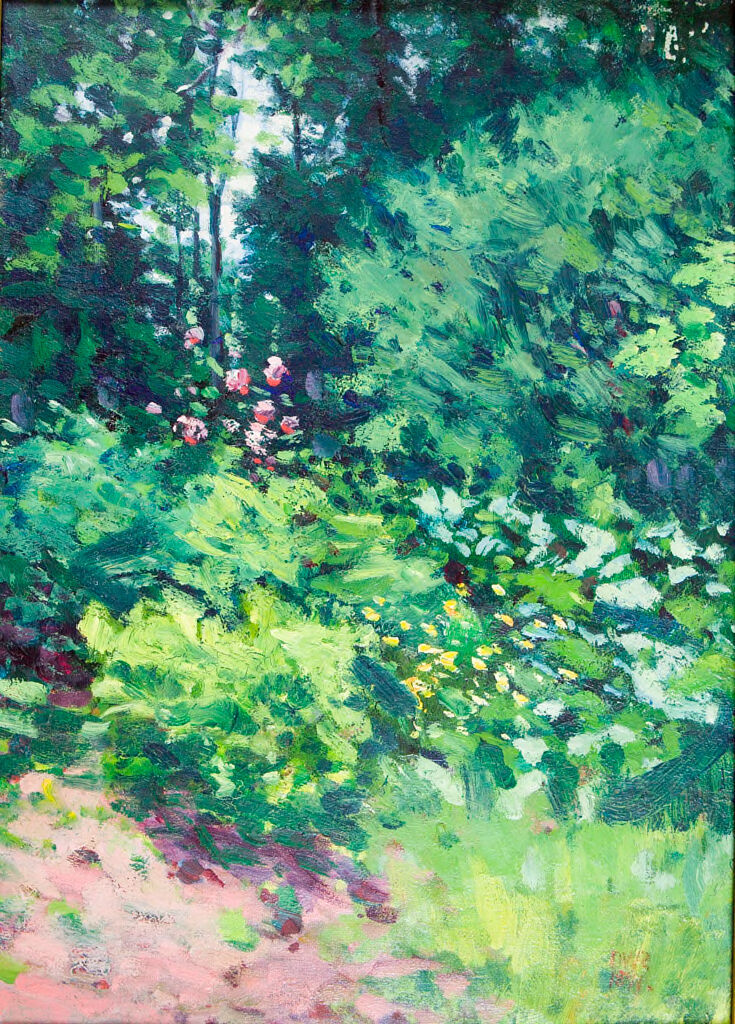
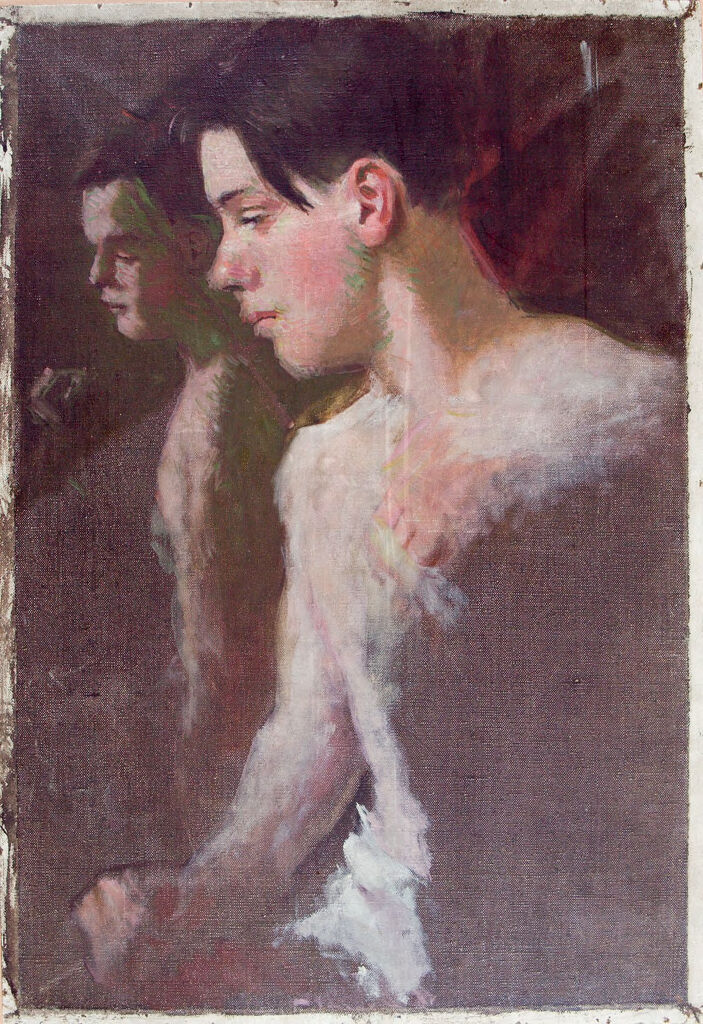
In a sun-drenched garden, vibrant blooms stretch toward the heavens, their colors dancing under the gentle kiss of a warm breeze. A solitary figure, bathed in dappled sunlight, kneels among the petals, lost in reverie, as if the earth itself whispers secrets of beauty and time. The air is thick with the scent of blossoms, a silent dialogue between nature and the artist’s soul. Look to the left at the lush greenery framing the scene, its deep greens harmonizing with the vivid reds and yellows of the flowers. Notice how the brushwork conveys a sense of movement, each stroke a breath, each hue alive with the promise of summer. The composition draws the eye inward, inviting the viewer to explore the intricate details—the petals’ delicate veins, the play of shadows—each element meticulously crafted to evoke the serenity of a moment suspended in time. Yet beneath this idyllic surface lies an exploration of legacy, reminiscent of the transient nature of beauty. The figure, an embodiment of the artist’s introspection, seems to grapple with the fleetingness of life—how these blooms, vibrant and full of life, will soon wither. The juxtaposition of thriving flora against the ephemeral essence of existence speaks to the tension between creation and decay; an invitation to reflect on what endures amidst the inevitable cycles of life. Denman Waldo Ross painted *Garden* in 1891 while living in the cultural hub of Boston, where he was deeply influenced by the burgeoning Impressionist movement. At this time, he was exploring the intersection of color and light, seeking to capture moments of stillness and beauty in nature. His work represents a significant shift within American art, as artists sought to embrace the natural world in new, evocative ways, all while contemplating their own place within it.