Garten in Tegernsee mit Haus und Berg — History & Analysis
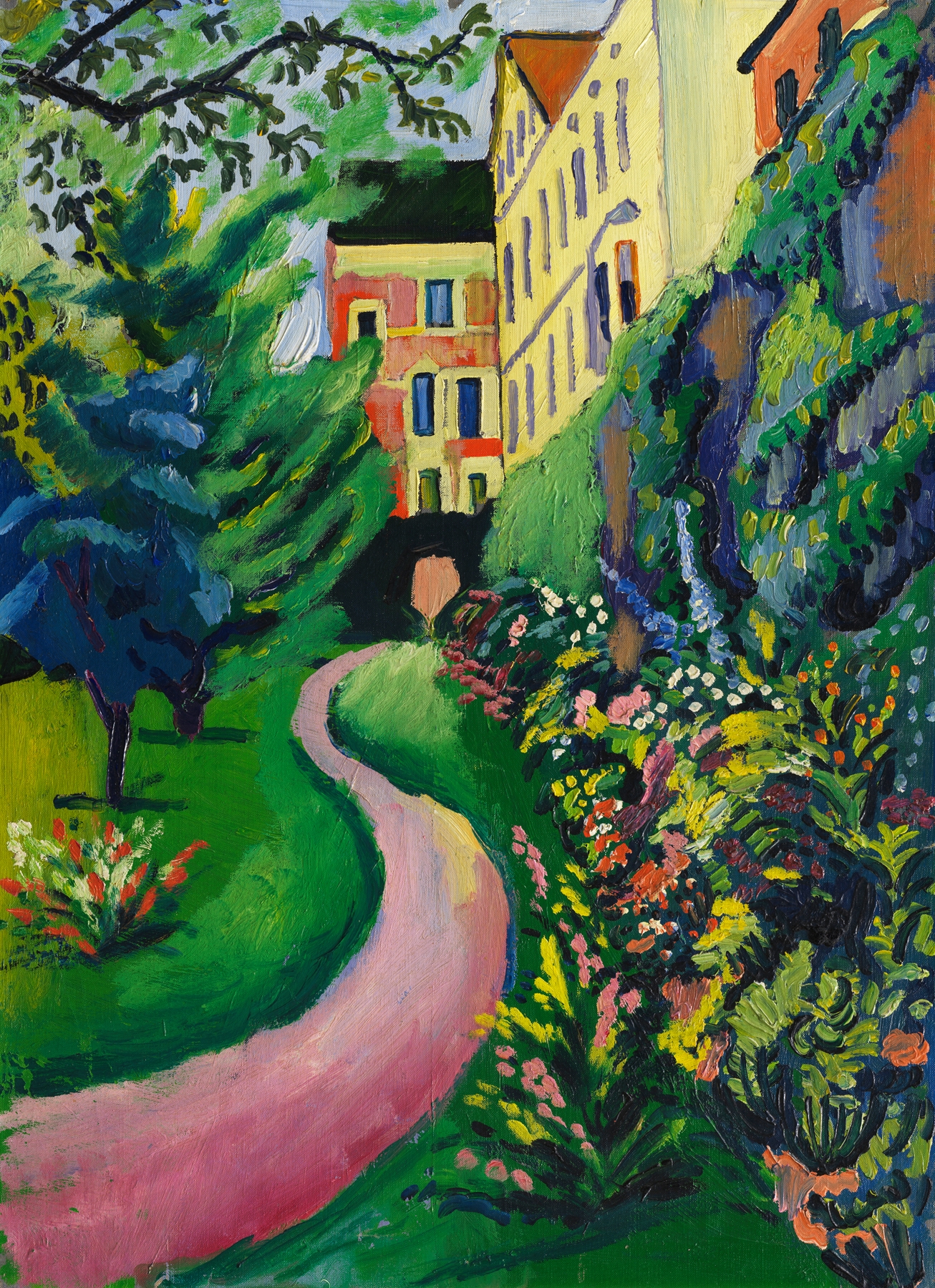
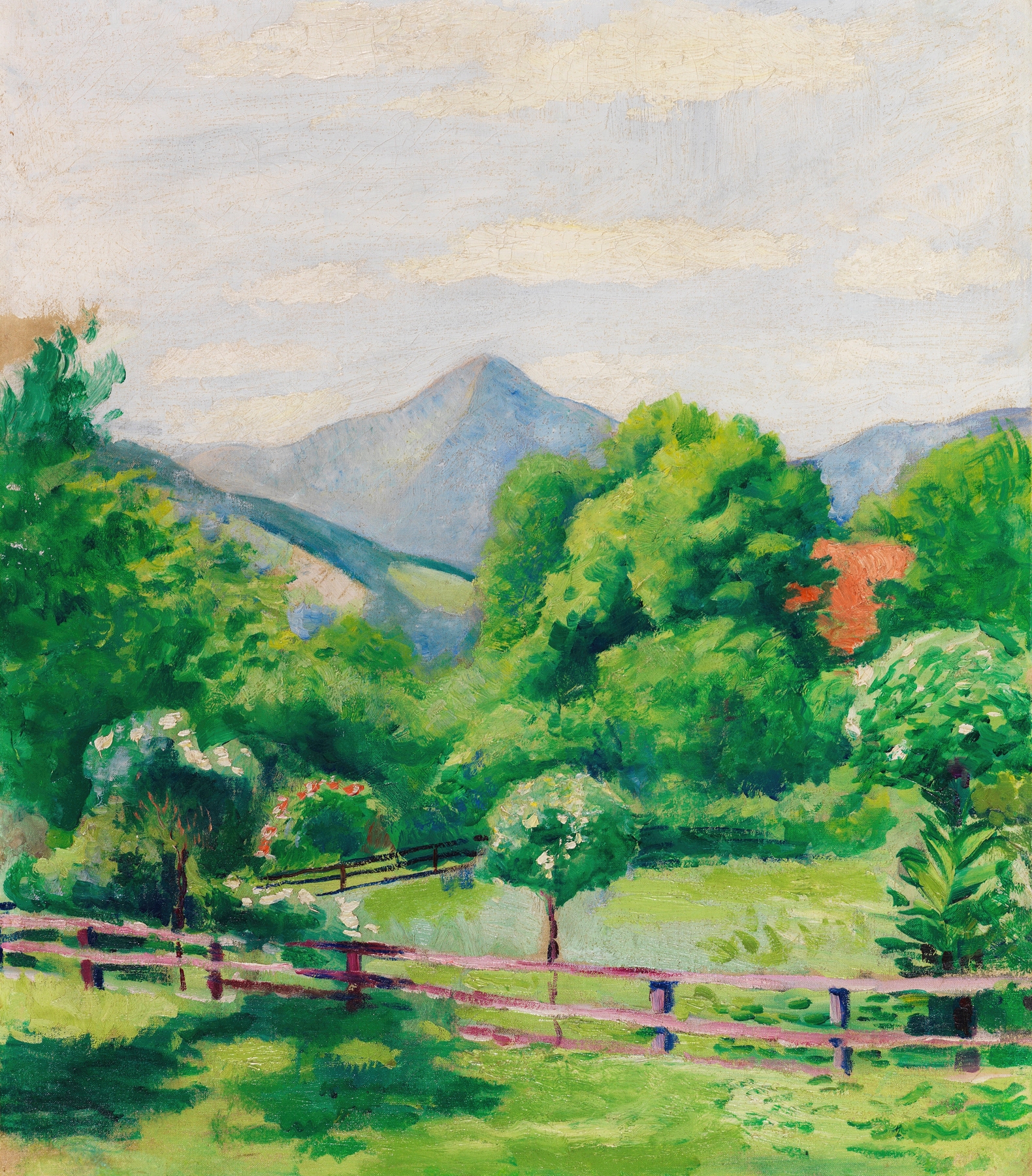
What if beauty was never meant to be finished? In August Macke’s Garten in Tegernsee mit Haus und Berg, we encounter a world rich in color and possibility, inviting the viewer to contemplate the infinitude of nature and human creation. Focus on the verdant greens that dominate the canvas, swirling with life as they lead your gaze toward the bright, cobalt-blue mountains in the background. Notice how the dappled sunlight filters through the foliage, creating playful patterns that dance across the scene.
To the left, a simple house nestles among the trees, its warm tones contrasting with the coolness of the surrounding nature, suggesting a harmony between human existence and the wild splendor around it. Delve deeper into the emotional currents that flow throughout the piece. The juxtaposition of the tranquil garden against the formidable mountains speaks to the tension between aspiration and groundedness. While the house symbolizes stability, the mountains beckon with their grandeur, evoking a longing for exploration and adventure.
This intermingling of serenity and yearning invites us to reflect on our own desires for beauty and fulfillment in the landscape of our lives. Macke created this work in 1910 during a period of personal and artistic growth. Living in Germany, he was deeply influenced by the burgeoning Expressionist movement, which sought to convey emotional truths through vibrant color and form. This painting reflects his desire to capture the essence of beauty and yearning, portraying a moment that transcends mere representation and speaks to the deeper connections between humanity and nature.