George Washington — History & Analysis
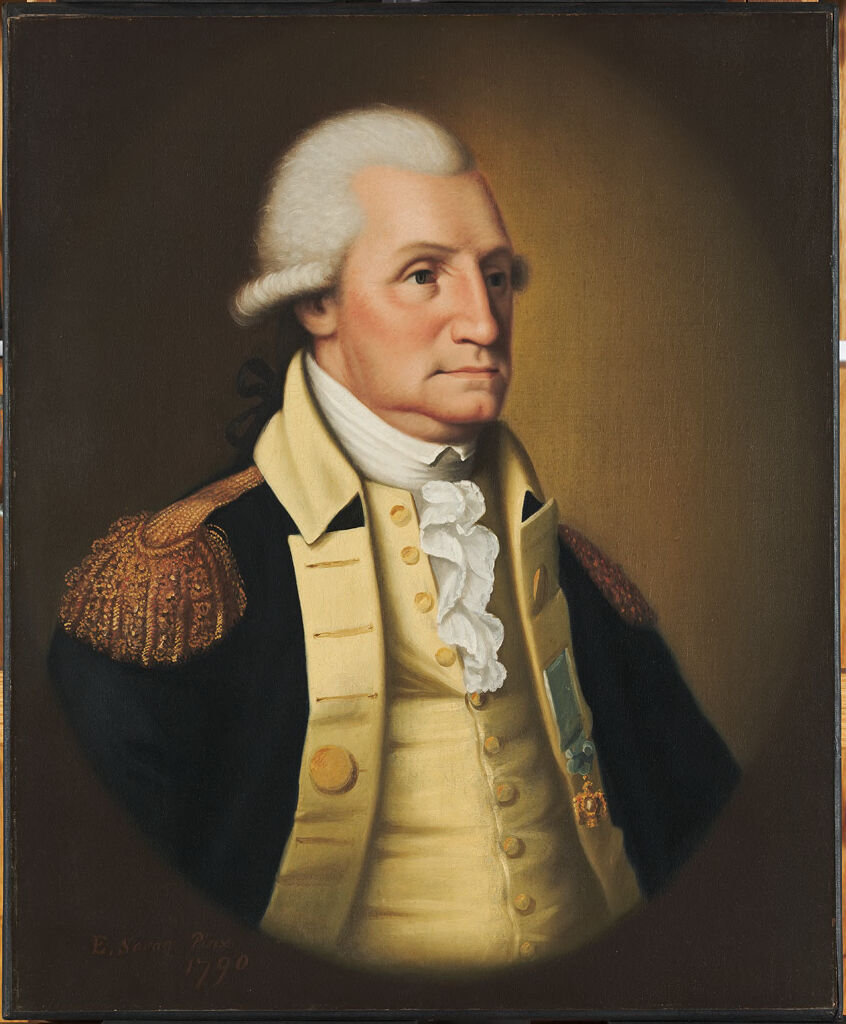
“The canvas doesn’t lie — it simply waits.” In this stillness, it holds the promise of transformation, capturing moments that shape history and identity. Look to the center where a poised George Washington stands, draped in an elegant dark coat, his presence commanding the viewer’s gaze. Surrounding him, family and supporters are arranged like a silent audience, their expressions reflecting admiration and respect. The soft, warm light bathes the figures, highlighting the intricacy of textures—from the silk of Washington's attire to the delicate lace of the women's cuffs—imbuing the scene with a sense of dignity and reverence.
As you study the painting, notice the subtle contrasts between Washington’s assured posture and the gentle attentiveness of those around him. The artist’s choice to depict Washington in a moment of quiet contemplation speaks to the weight of leadership and the burden of expectation. The interplay of light and shadow not only emphasizes the figures’ physicality but also suggests the complexities of their emotional landscapes—hope, pride, and perhaps a hint of anxiety about the future.
Edward Savage created this portrait in 1793, during a time when the United States was still defining its identity post-Revolution. The artist, based in Philadelphia, was deeply influenced by the political climate and the burgeoning sense of nationhood. This work stands not just as a representation of a leader, but as a pivotal moment in the cultural narrative of a young country, showcasing the intersection of art, politics, and collective memory.