Giessbach Première chûte — History & Analysis
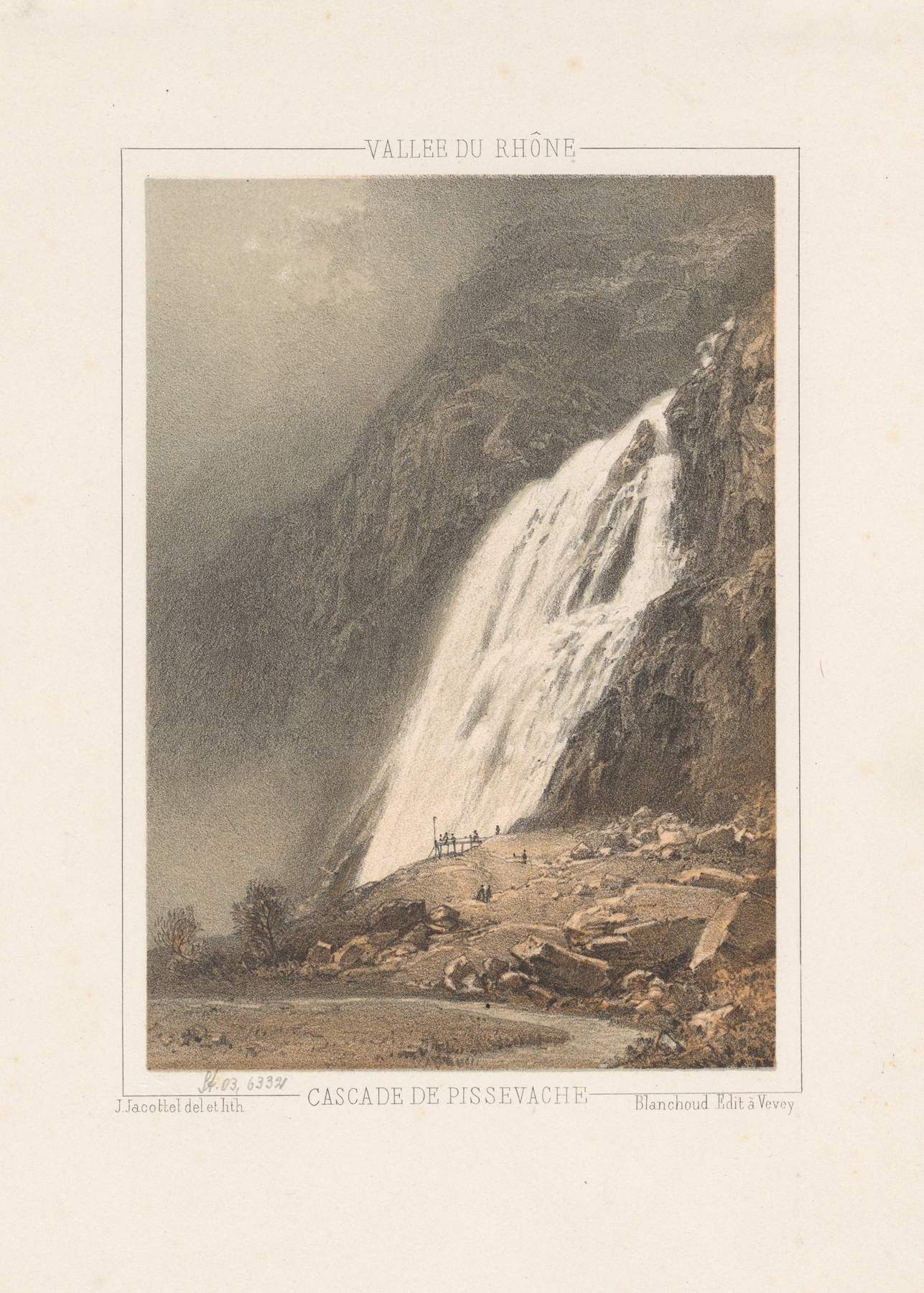
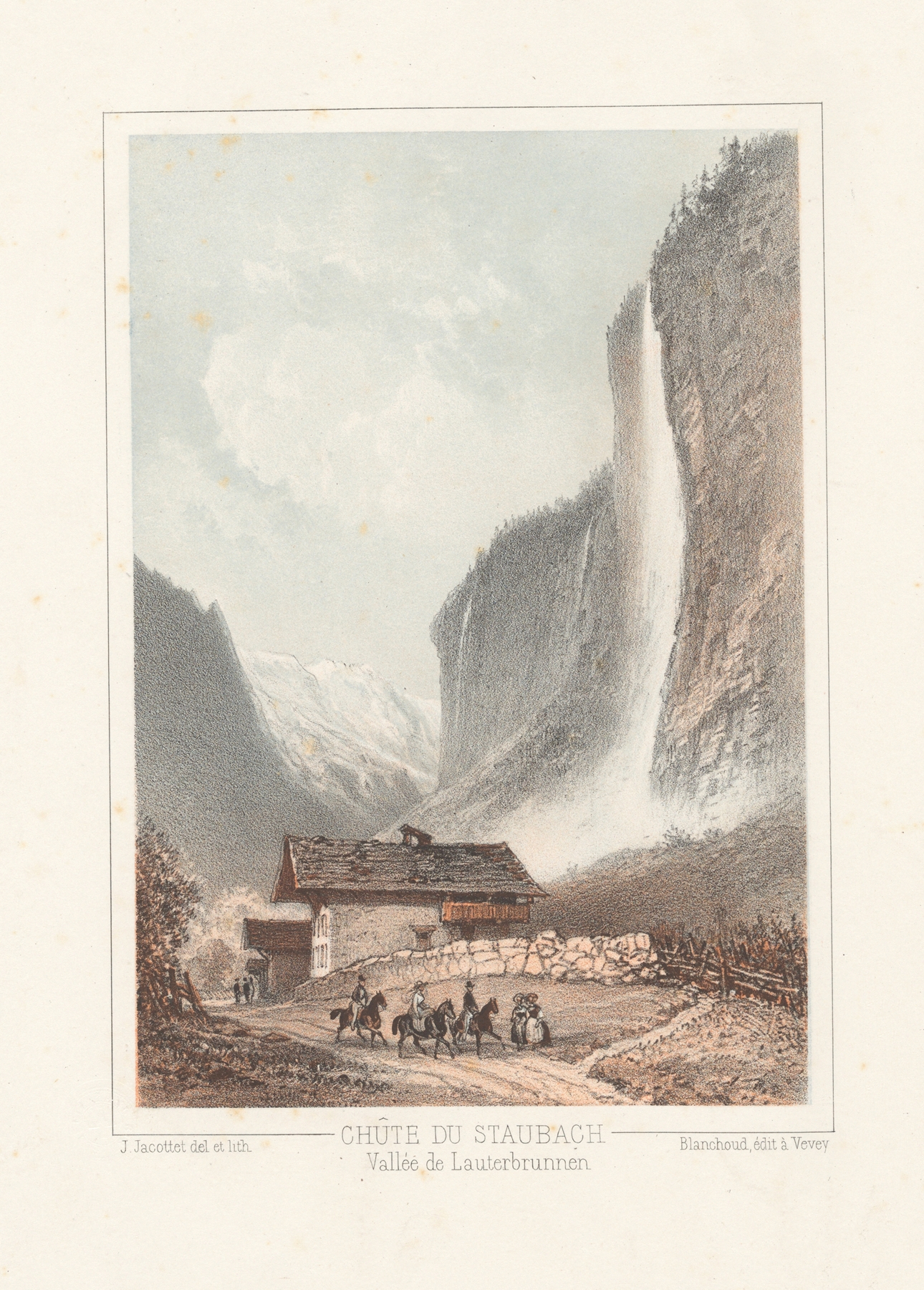
Can beauty exist without sorrow? In Giessbach Première chûte, intense torrents cascade down rocky cliffs, a metaphorical embodiment of nature's raw power and violence, hinting at the dark undertones that often underlie aesthetic grandeur. Look to the center of the canvas, where the waterfall tumbles fiercely, each droplet capturing light like shards of glass. The stark contrast between the vibrant blues of the water and the earthy browns of the rocks pulls the eye, establishing a visceral connection.
Notice how the artist's brushwork varies in texture: the smooth strokes of the water juxtaposed against the rough, jagged forms of the cliffside create a sense of tumultuous energy, enveloping the viewer in a world caught between tranquility and chaos. Deeper still, the painting conveys the tension between beauty and violence. The rushing water symbolizes nature’s unbridled force, while the surrounding trees, rendered in dark hues, suggest an impending storm, hinting at destruction lurking behind the beauty. This duality reflects a larger commentary on the human experience—how joy often exists alongside suffering, and how tragedy can elevate the appreciation of life's fleeting moments.
During the period when this artwork was created, Jean Jacottet was deeply engaged with themes of nature and emotion, emerging from an era of Romanticism that celebrated the sublime. The absence of a specific date suggests a timeless dialogue about humanity's relationship with the natural world, marked by both reverence and fear. As art movements shifted toward realism, Jacottet's focus on the emotional power of landscapes captures a poignant moment of reflection in art history.