Glacier Park — History & Analysis
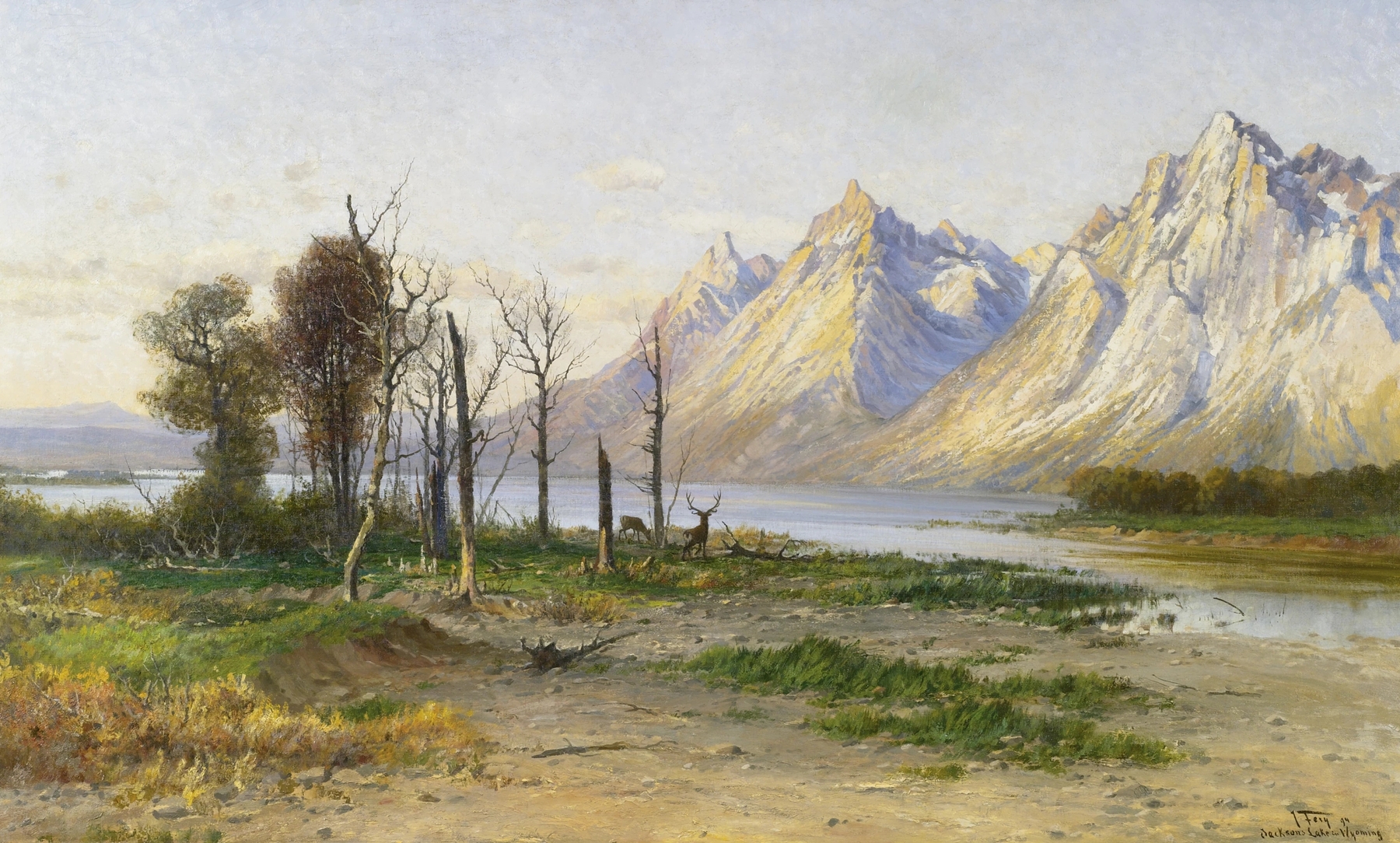
“Sometimes beauty is just pain, disguised in gold.” This poignant reflection captures the essence of the serene yet formidable presence of nature, often hiding deeper truths beneath its stunning façade. In the hands of a master like John Fery, revelations of the natural world beckon us to explore not just their beauty, but the stories woven within them. Look closely at the jagged peaks that thrust skyward, their snow-capped tips glistening under a radiant sun. Notice how the brilliant blues and whites contrast with the earthy greens and browns of the lower terrain, creating a harmonious yet tumultuous balance.
The brushstrokes are both deliberate and fluid, inviting the viewer to traverse the landscape and feel the chill of the crisp mountain air. The light dances across the canvas, illuminating hidden valleys and casting shadows that hint at the mysteries lying just beyond view. Yet, amidst the breathtaking beauty, there lies a subtle tension—between tranquility and danger, between the awe of creation and the vulnerability of existence. The expansive sky, a vibrant canvas of blues and whites, serves as a striking reminder of nature's duality; it can uplift yet overwhelm.
Fery's choice to depict the vastness of Glacier Park speaks to a larger human experience—our yearning for adventure against the backdrop of nature's fierce, untamed wilderness. John Fery created this work in the early 20th century, a time when the American landscape was increasingly celebrated in art. He was deeply inspired by the natural beauty of the American West, capturing its grandeur while advocating for the preservation of these landscapes amid the encroachment of industrialization. His work reflects both a reverence for nature and a growing recognition of the need for conservation during a transformative era in art and society.