Ground Swell — History & Analysis
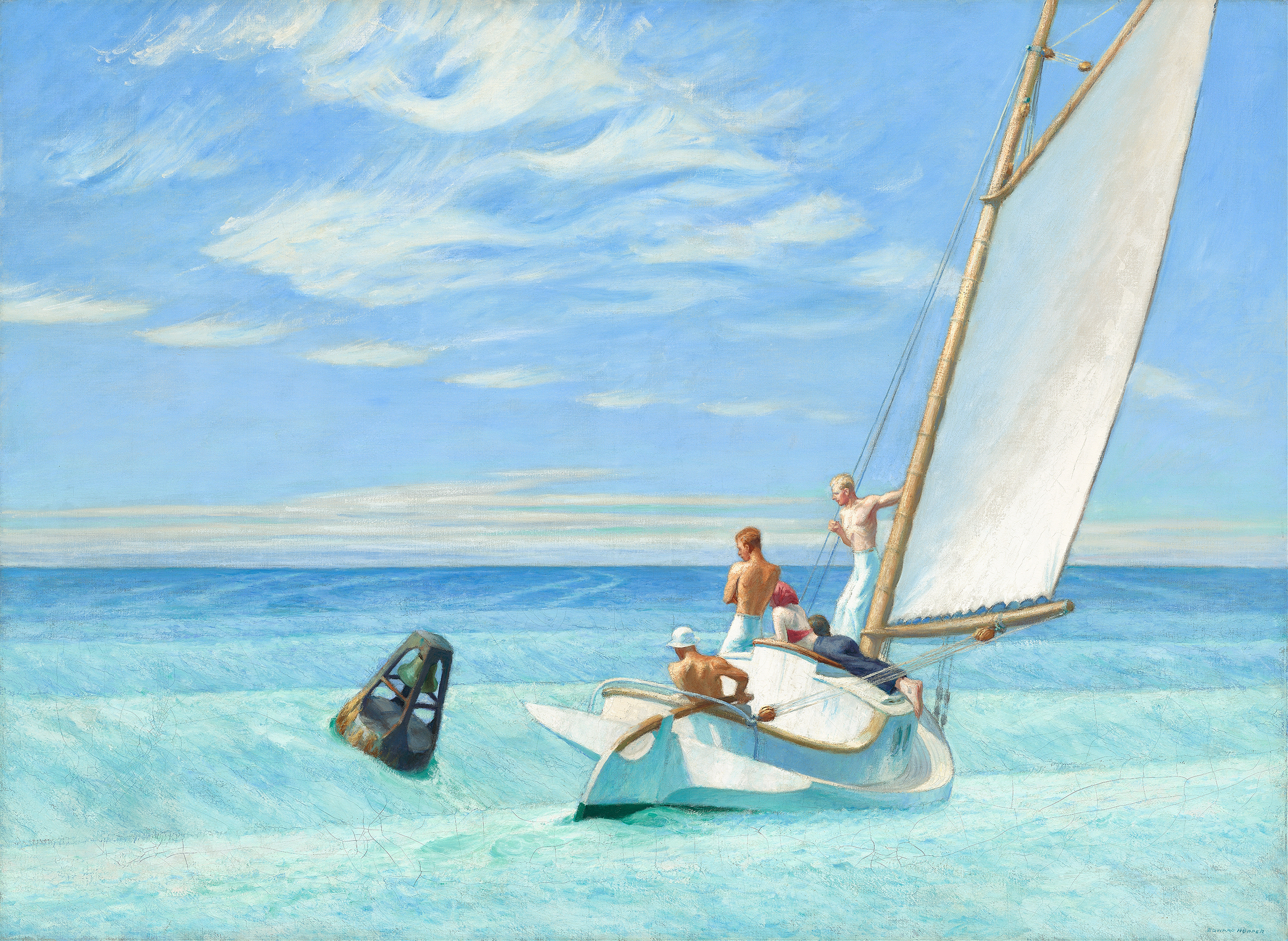
Where does light end, and longing begin? In Edward Hopper's Ground Swell, the interplay of illumination and shadow invites us to ponder the delicate balance between movement and stillness. Look to the left at the vibrant hues of the ocean, where waves rise and fall, capturing a moment of transition. The sun bathes the scene in a warm glow, highlighting the figures on the beach, who stand at the edge of water, alive with anticipation.
Notice how the color palette shifts from the cool blues of the sea to the warm sandy tones, creating a sense of harmony amidst movement. The composition draws your gaze toward the horizon, where the sky meets the water, suggesting both a promise and an unattainable distance. In the small details lies a profound tension—the figures, seemingly engaged in conversation, are separated by a vast expanse of ocean, embodying a yearning for connection yet held back by the natural divide. Their postures communicate a mix of excitement and hesitation, eliciting a feeling of longing that resonates deeply.
The rhythmic patterns of the waves echo this emotional heartbeat, suggesting a dance between freedom and constraint. Hopper created Ground Swell in 1939 while living in New York, during a period marked by economic recovery and a shift in American art towards modernism. This painting reflects his interest in capturing the essence of American life, focusing on moments filled with introspection and solitude amidst bustling surroundings. Hopper’s exploration of light and shadow during this time delineated a unique narrative about the human experience, ensuring his place in the pantheon of American art.