Hercules doodt Cacus — History & Analysis
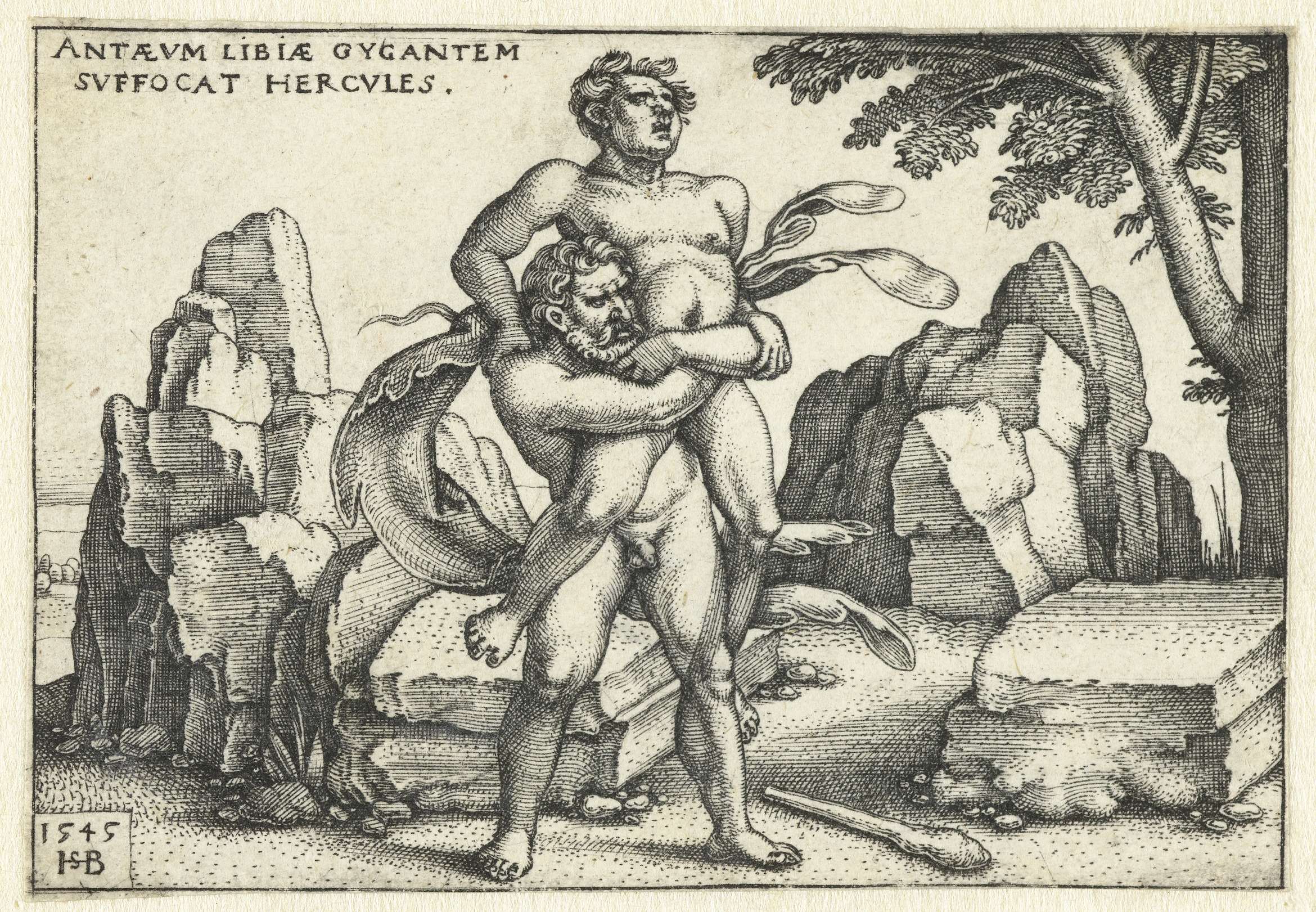
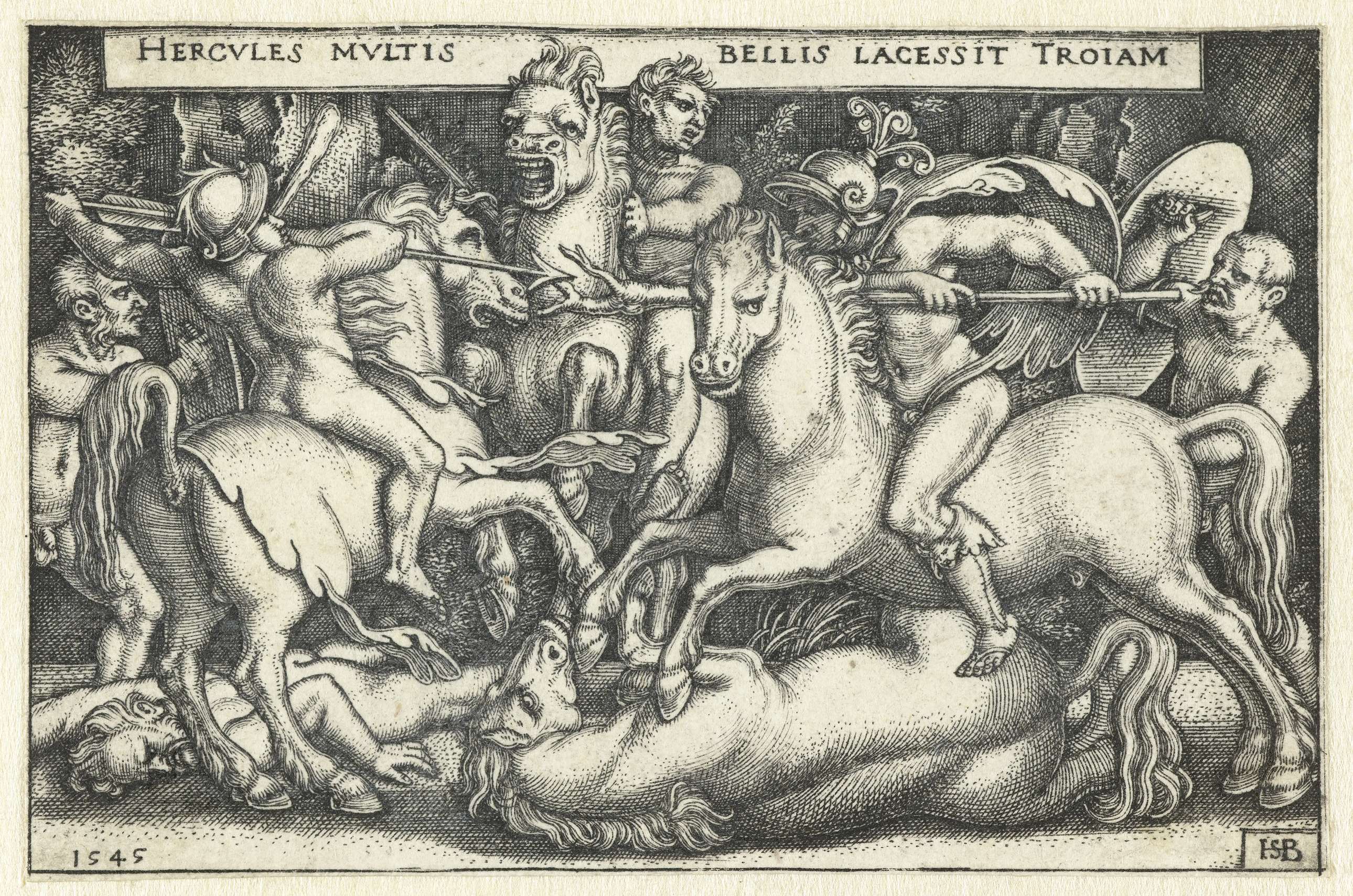
Could a single brushstroke hold eternity? In Hans Sebald Beham’s work, the confrontation between heroism and monstrosity unfolds with striking clarity, illuminating the legacy of myth and human struggle. Look to the foreground where Hercules stands resolute, muscles taut under the weight of victory. Notice how the artist employs a limited palette of earthy tones to convey the raw power of the moment, contrasting with the ghastly figure of Cacus, whose twisted form lies defeated at Hercules' feet.
The stark interplay of light and shadow not only highlights Hercules' heroic stature but also deepens the drama of the scene, drawing the viewer's eye to the tension between strength and vulnerability. As you explore the intricate details, consider the duality of the figures—a testament to the eternal battle between good and evil. Hercules embodies not just physical prowess but also the weight of moral responsibility, while Cacus serves as a reminder of the darker aspects of human nature. The careful rendering of their expressions suggests a narrative beyond the immediate conflict, whispering of legacy and the consequences of conquest.
Each nuance captures the broader human condition, rooted in a timeless struggle. In 1545, Beham painted this work during a period of shifting artistic tides in the Northern Renaissance. As a member of the Nuremberg school, he was influenced by both the growing interest in classical mythology and the evolving styles of his contemporaries. Amidst these cultural currents, this piece reflects his pursuit of harmony between form and meaning, encapsulating the grand themes of legacy and heroism that would resonate through art history.