Jug (Bartmann jug) with three medallions — History & Analysis
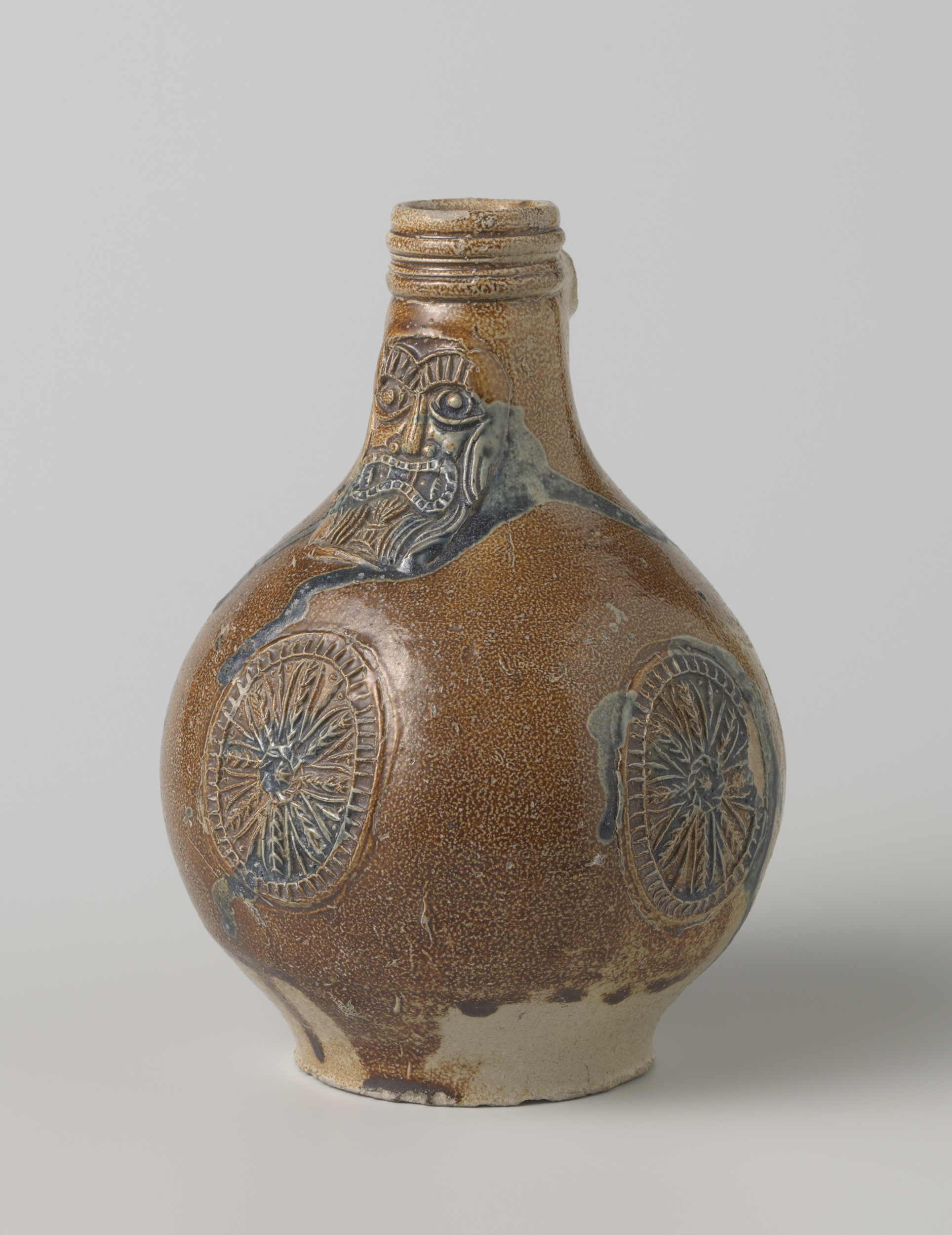
Is this a mirror — or a memory? The object before us, a Bartmann jug, stands as a testament to the art of creation, its surface an invitation to reflect on the stories etched into its very essence. Look closely at the jug’s elegant curves, tracing your gaze from the broad belly to the slender neck. Notice how the light catches the intricate medallions, revealing their detailed craftsmanship and the muted earth tones that evoke both warmth and antiquity.
The three medallions, each adorned with distinct motifs, draw you in with their enigmatic symbolism, suggesting layers of meaning waiting to be uncovered. Delve deeper into the contrasts presented by the jug: the interplay of smooth porcelain against the rough texture of its surface, the harmony between the decorative elements and the utilitarian form. This dichotomy hints at the dual nature of art — a functional object elevated to a vessel of memory, a reminder of the lives that once encompassed it.
Each mark and glaze offers echoes of the past, a dialogue between the creator and the observer that transcends time and context. Created between 1625 and 1649, this jug emerged during a period of significant change in Europe, a time when craftsmanship flourished alongside the burgeoning Baroque movement. The artist, though unknown, contributed to a tradition that celebrated both utility and beauty, reflecting the broader cultural currents of an era rich with exploration and expression.