Just Dessert — History & Analysis
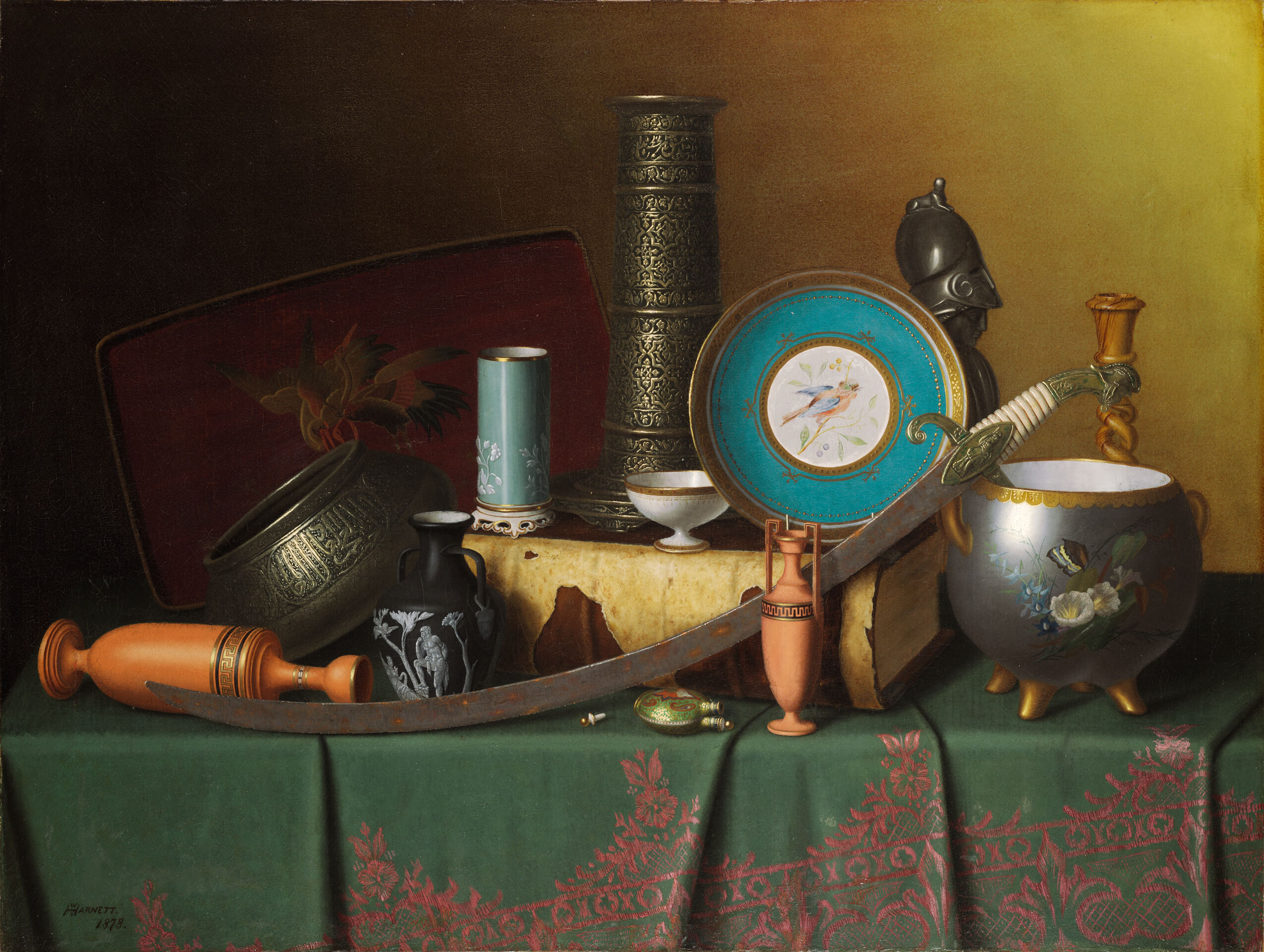
Where does light end, and longing begin? In the intricate realism of a still life, the tension between the ordinary and the extraordinary reveals a madness that lies beneath the surface. Look closely at the sumptuous slice of cake that dominates the foreground, its delicate layers seemingly inviting you into a world of indulgence. Notice how the light falls upon its frosting, each glimmer a testament to the artist's masterful technique. To the right, the glistening porcelain of a teacup provides contrast, hinting at a moment of pause amidst the chaos of desire.
The meticulously painted textures, from the smoothness of the icing to the roughness of the wooden table, draw the viewer into an intimate dance with the fleeting pleasures of life. Yet, there is a deeper narrative at play. The uneaten dessert, with its perfect surface, suggests not just satisfaction but the bitterness of unattainable desires. The dark, shadowy background evokes an unsettling contrast, hinting at loss or the quiet madness of obsession.
One can't help but feel that the cake, while a symbol of joy, also serves as a reminder of the ephemeral nature of happiness, forever just out of reach. Created in 1891, the artwork captures Harnett at a pivotal moment in his career. Residing in the United States, the artist was a key figure in the trompe-l'œil movement, which sought to blur the lines between illusion and reality. During this time, Harnett grappled with questions of materialism and the transient nature of human experience, reflecting the broader societal shifts and artistic explorations of his era.