
Still Life with Bric-a-Brac — History & Analysis
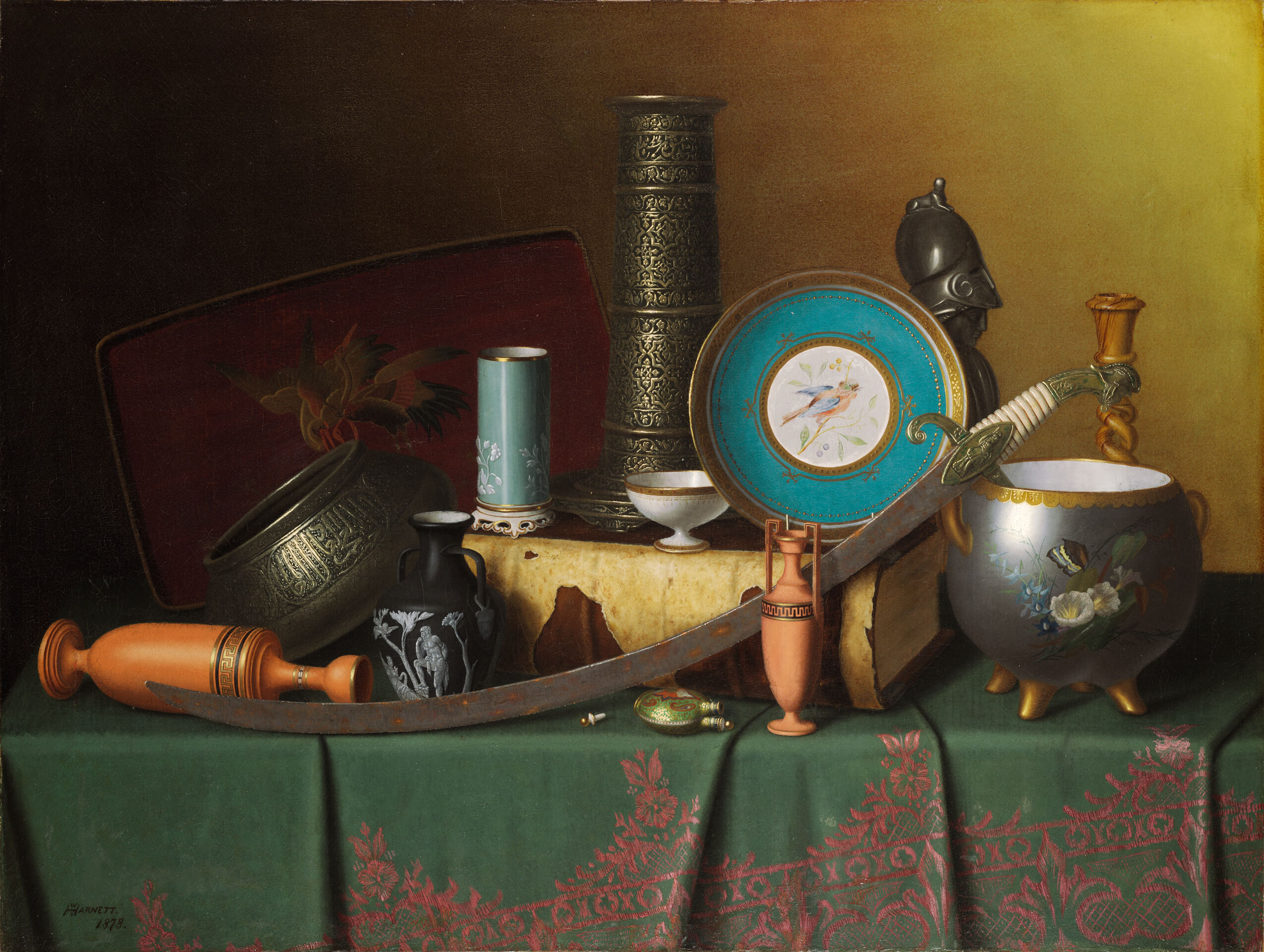
What if beauty was never meant to be finished? In Still Life with Bric-a-Brac, the fleeting nature of existence is captured in the delicate dance between reality and illusion, inviting the viewer to ponder transformation in both art and life. Look to the left at the intricate arrangement of everyday objects: a tarnished silver cup, an open book, and a vibrant fruit. Notice how Harnett masterfully manipulates light to create lifelike reflections and shadows, giving depth to the surfaces.
The muted palette is punctuated by rich hues of the apples, drawing the eye deeper into the composition, inviting contemplation of the seemingly mundane. Yet beneath this surface lies a complex interplay of permanence and transience. The polished brass contrasts with the faded pages of the book, suggesting the passage of time and the inevitable decay of all things. Each object carries history and significance, hinting at a past life that transcends its current state.
This tension between the objects' material existence and their symbolic meanings evokes a sense of nostalgia and loss. In 1878, while working in his studio in New York, Harnett was deeply influenced by the still life genre and the American realism movement. The industrial age was reshaping society, and artists like him were beginning to explore the relationship between everyday life and artistic representation. This painting reflects not just his technical prowess but also a moment in the evolution of art, where the ordinary was celebrated as worthy of profound reflection.

