
Karnak — History & Analysis
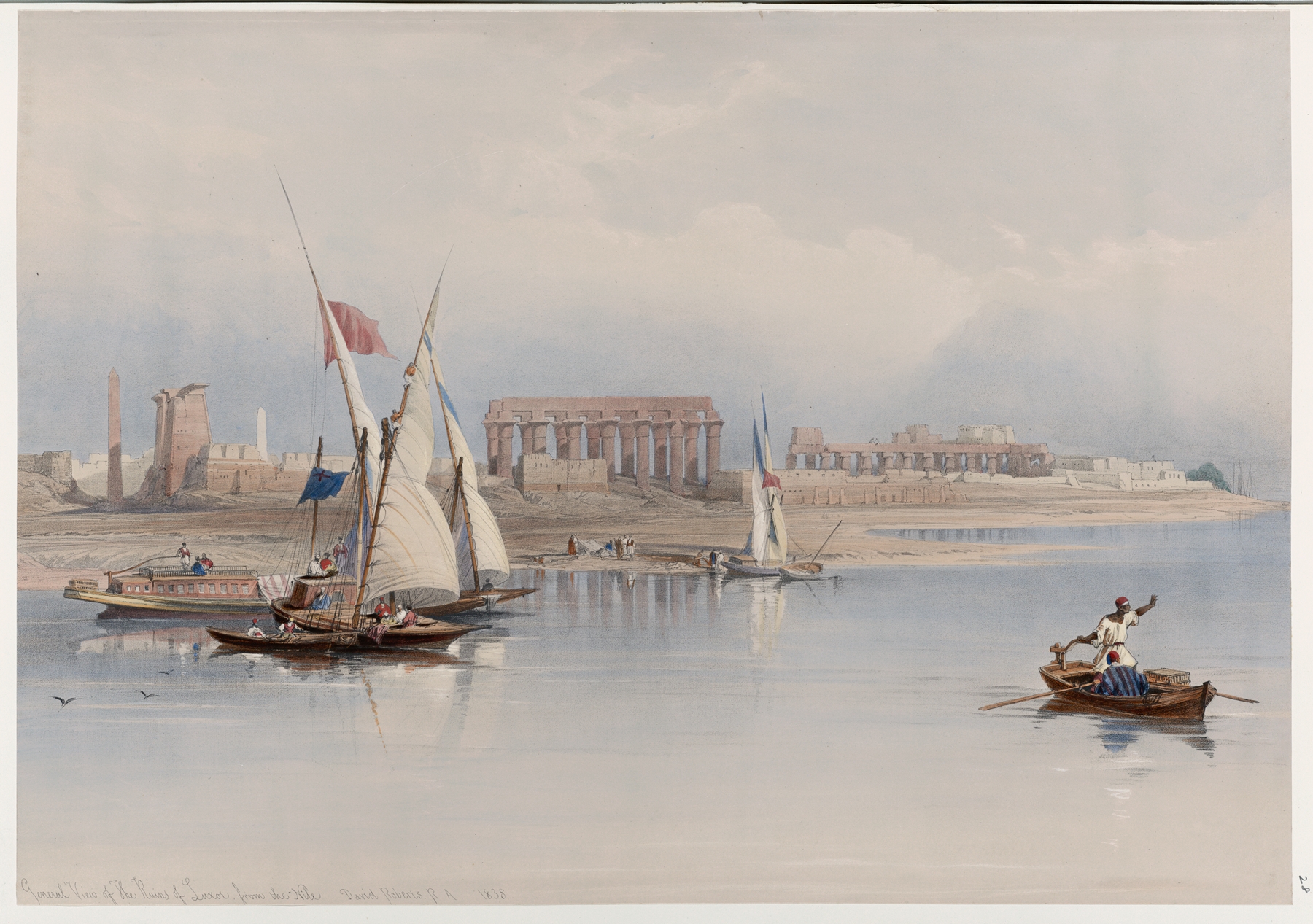
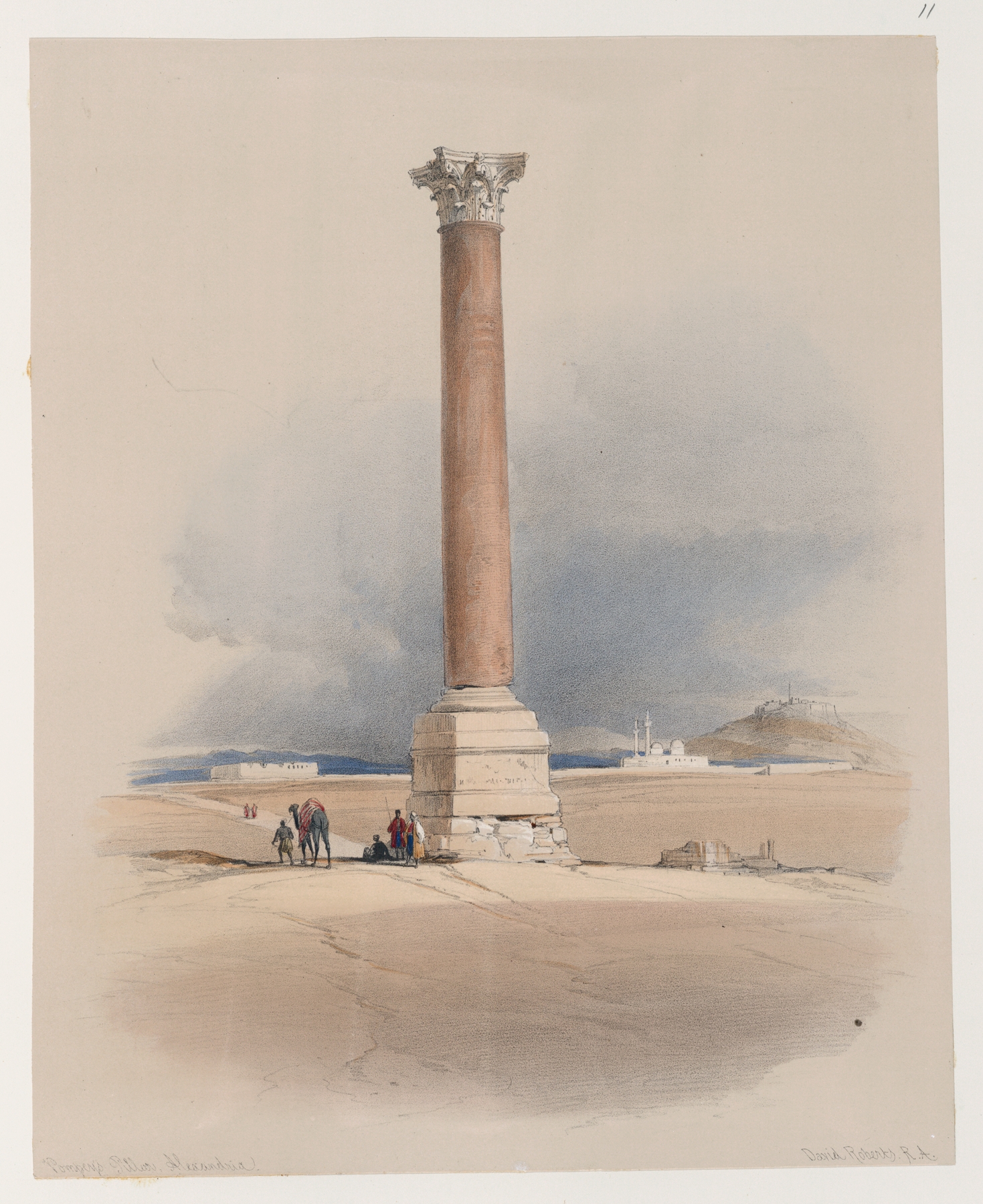
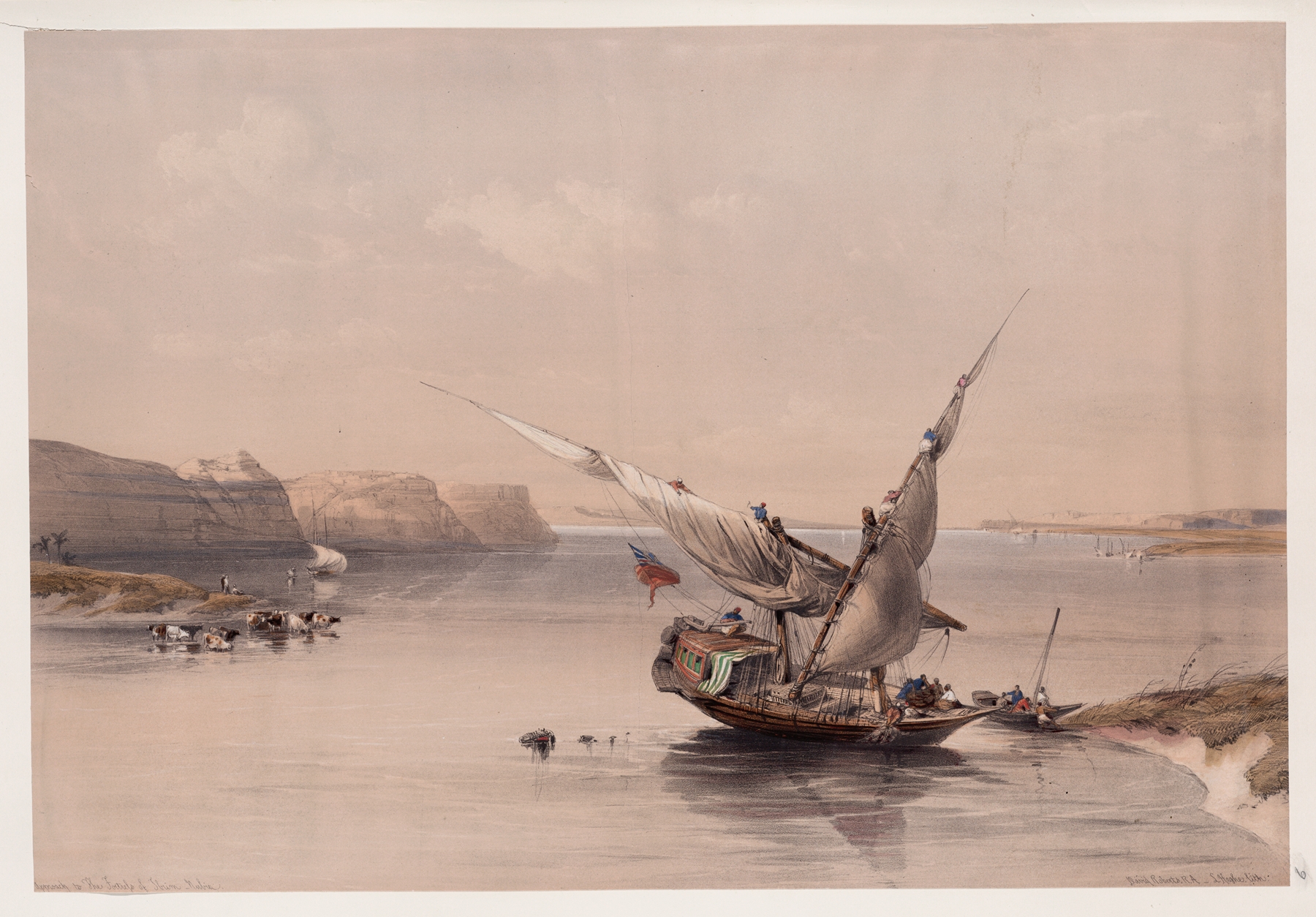
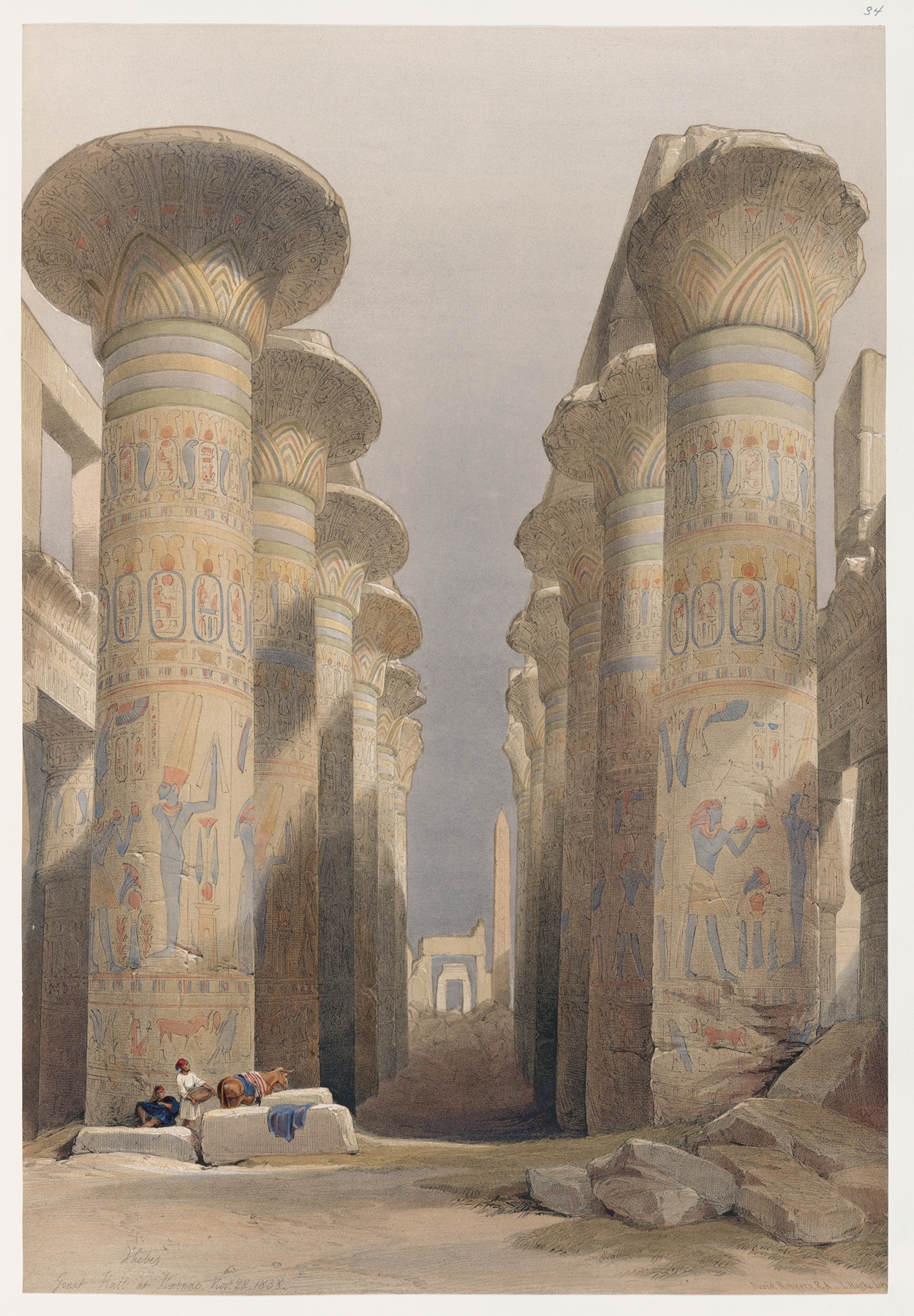
Did the painter know this moment would outlive them? In the rich, resonant hues of Karnak, a dialogue unfolds between the ethereal and the earthly, inviting viewers to contemplate the passage of time. Look to the foreground at the towering columns, their intricate hieroglyphs reaching toward the sky. Notice how the warm, golden light bathes the stones, creating a stark contrast with the cool shadows that linger between the ancient ruins. The artist’s deft brushwork captures not only the structure's grandeur but also its weathered beauty, allowing the textures of stone to speak of centuries of history.
The palette, imbued with earthy reds and vibrant ochres, breathes life into the scene, evoking the familiar warmth of the Egyptian sun. Yet, beneath the surface lies a deeper narrative. The interplay of light and shadow suggests a tension between preservation and decay, as the ruins stand both majestic and vulnerable against the passage of time. The contrasting colors symbolize the duality of life and death, while the vastness of the landscape hints at the insignificance of human endeavor amidst nature's eternal cycles.
The figures in the background, dwarfed by the colossal architecture, remind us of our fleeting presence in the vast tapestry of history. David Roberts painted Karnak between 1846 and 1849 during his travels in Egypt, a period when European interest in ancient cultures was peaking. His work coincided with the Romantic movement, as artists sought to capture the sublime, often blending personal emotion with grandeur. At this time, he was gaining acclaim for his detailed depictions of ancient sites, contributing significantly to the visual narrative of 19th-century exploration.
![Karnac [Karnak]. Nov. 29th, 1838., by David Roberts, public domain](https://froigstrpvutwqtqikzt.supabase.co/storage/v1/object/public/art-images/artworks/4d03dc1f7193c7d916a2bc790dd85d799ca595e465dea5741c39c1c0d95500f2.jpg)
![Temple of Edfou [Idfû], ancient Appolinopolis, Upper Egypt., by David Roberts, public domain](https://froigstrpvutwqtqikzt.supabase.co/storage/v1/object/public/art-images/artworks/b51e83da008fb52a9e3832297709f860ad8821d94936f0ccc0984f79e32cfea9.jpg)
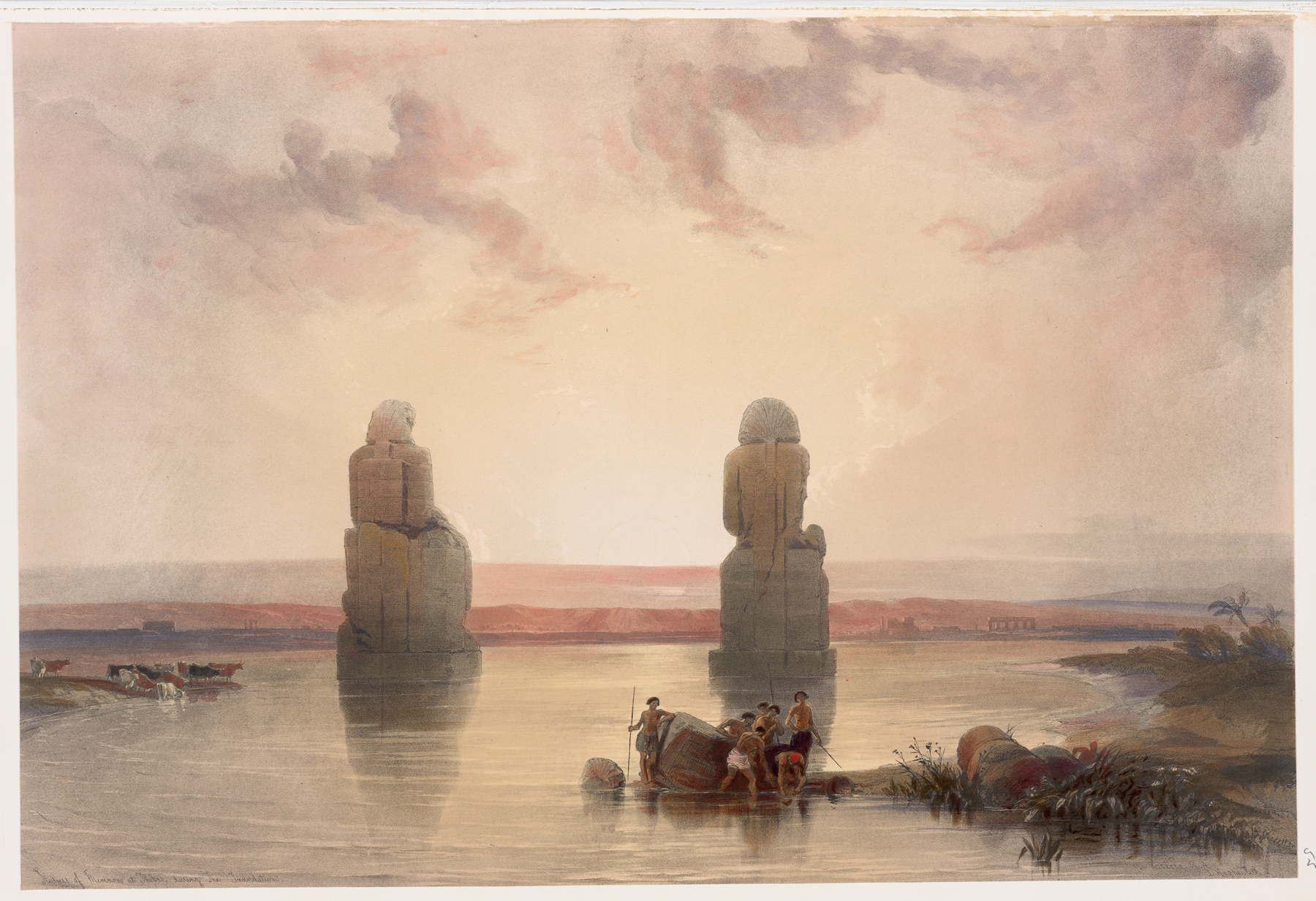
![Entrance to the tombs of the kings of Thebes. Bab-el-Malouk [Bîbân al-Mulûk]., by David Roberts, public domain](https://froigstrpvutwqtqikzt.supabase.co/storage/v1/object/public/art-images/artworks/9f12d85330f523f7a10051ef2b6b1ebe90468ae48e1601ee63ecff2779bfca39.jpg)
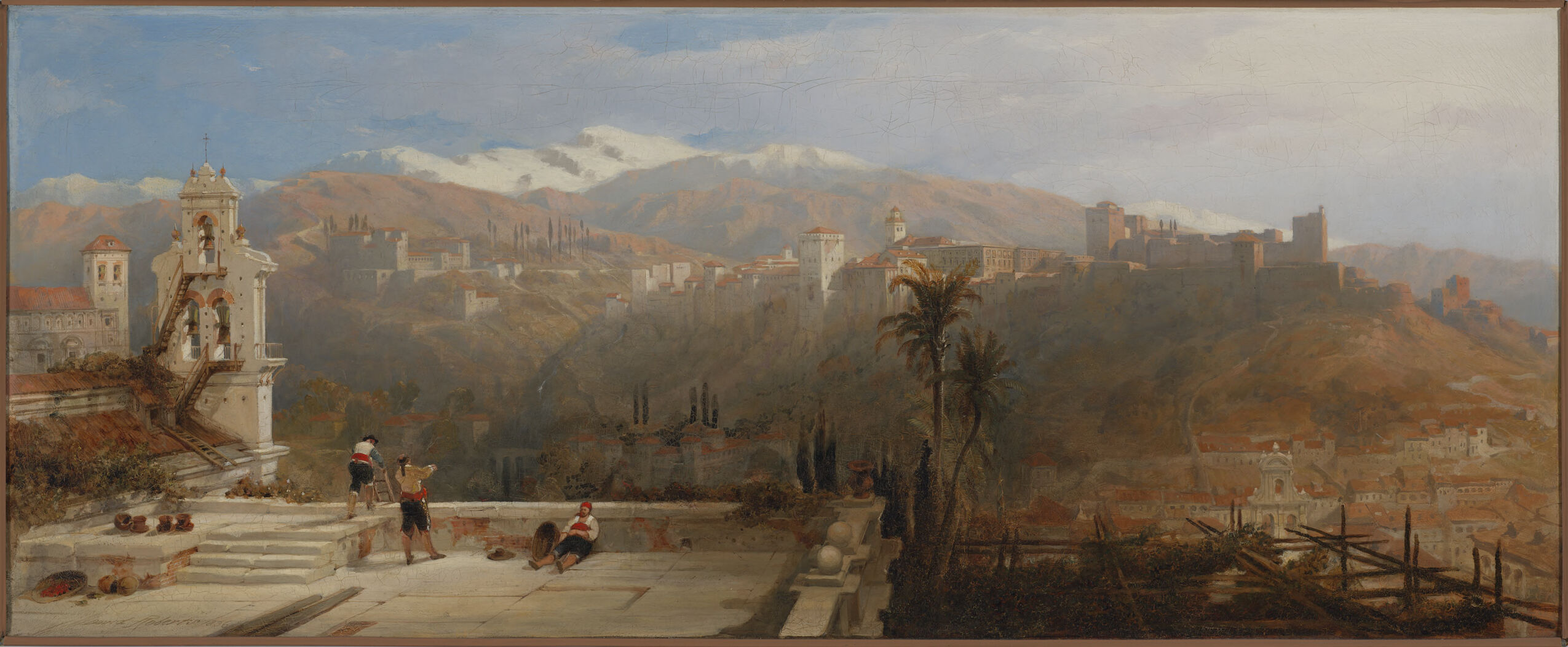
![Temple of Kalabshee [Kalabsha, Kalâbishah], Nubia. Nov. 1838., by David Roberts, public domain](https://froigstrpvutwqtqikzt.supabase.co/storage/v1/object/public/art-images/artworks/c5ed0b38c9a784f56a7ac4d7d514cecf800d77b6cf2f043be350b267a07d899e.jpg)