Public domain · Free to download
Famous Landscape Paintings
We curated the 25 most famous landscape paintings of all time, starting with the most famous landscape painting in the world, Van Gogh's The Starry Night, and added the best of the rest: Van Gogh landscapes, impressionist landscape paintings, winter landscapes and Japanese landscape paintings.
For each one you get the story of the place: where it is, how it was painted, the detail to look for and where the painting hangs today. Every image is a public-domain reproduction of the real painting, free to download and free to use.
For centuries, landscape was just the backdrop to religious and historical scenes. These paintings put it center stage, from Bruegel's snowy village of 1565 to Levitan's golden birches of 1895.
Selected and written by Pavel MazuelasUpdated October 29, 2026
Part of The Most Famous Paintings in the WorldRelated: Famous Ocean Paintings, Famous City Paintings, Famous Animal Paintings
The 25 most famous landscape paintings of all time
Ranked from 1 to 25 by worldwide fame. Click any landscape to see it up close and download it free.

No. 1Post-Impressionism
The Starry Night by Vincent van Gogh
Place: Van Gogh's window view at the asylum in Saint-Rémy-de-Provence, France
1889 · Oil on canvas · 73.7 × 92.1 cm
Museum of Modern Art, New York
Van Gogh based The Starry Night on the view from his window at the asylum in Saint-Rémy, in southern France, in June 1889, yet he painted this night scene by day, over several sessions. The village could not be seen from his window at all, and the cypress stands much closer than it really did. The bright white star left of center is probably Venus. It is at MoMA in New York.
Sources: Museum of Modern Art
No. 2Impressionism
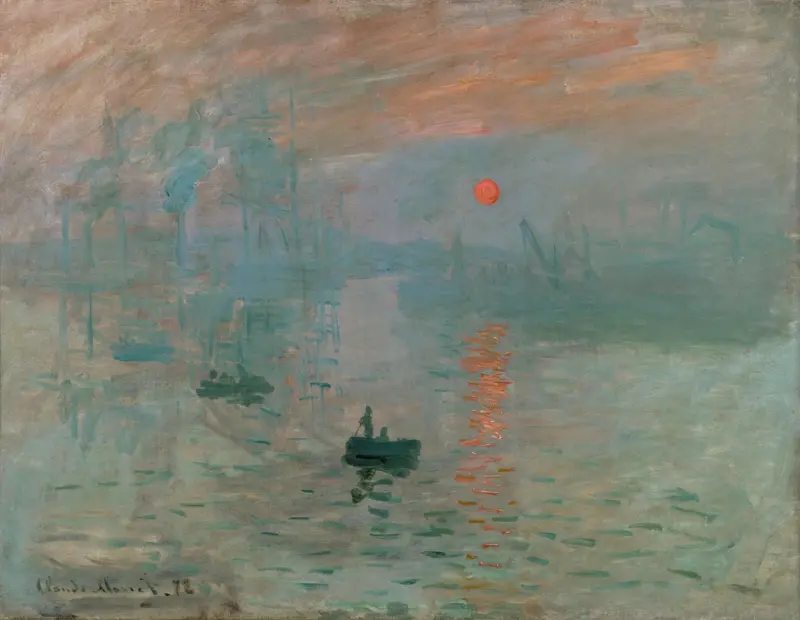
Impression, Sunrise by Claude Monet
Place: The harbor of Le Havre at dawn, France
1872 · Oil on canvas · 50 × 65 cm
Musée Marmottan Monet, Paris
This small canvas gave Impressionism its name. Monet painted it in a few hours from his hotel window in Le Havre in 1872, looking over the harbor at dawn, with cranes and masts melting into the mist under an orange sun. Shown in 1874 simply as “Impression,” it gave a critic the headline for a mocking review, and the label stuck. It is in the Musée Marmottan Monet in Paris.
Sources: Musée Marmottan Monet
No. 3Romanticism
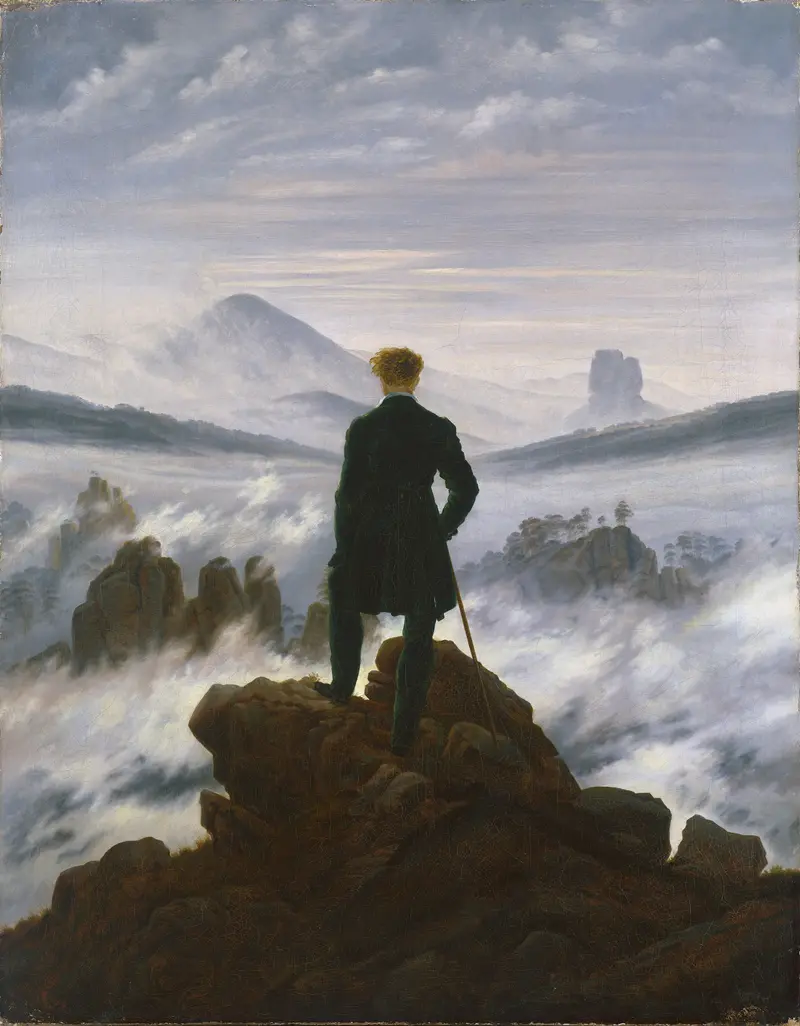
Wanderer above the Sea of Fog by Caspar David Friedrich
Place: A composite of the Elbe Sandstone Mountains in Saxon and Bohemian Switzerland
c. 1817 · Oil on canvas · 94.8 × 74.8 cm
Hamburger Kunsthalle, Hamburg
A man in a dark coat stands on a rocky peak above a sea of fog. It looks like one real view, but around 1817 Friedrich built it from separate studies: the rock from a climb in Saxon Switzerland in 1813, the mountains from sketches made in Bohemia. After World War II it even turned up credited to another painter. It is in the Hamburger Kunsthalle in Hamburg.
Sources: Hamburger Kunsthalle
No. 4Post-Impressionism
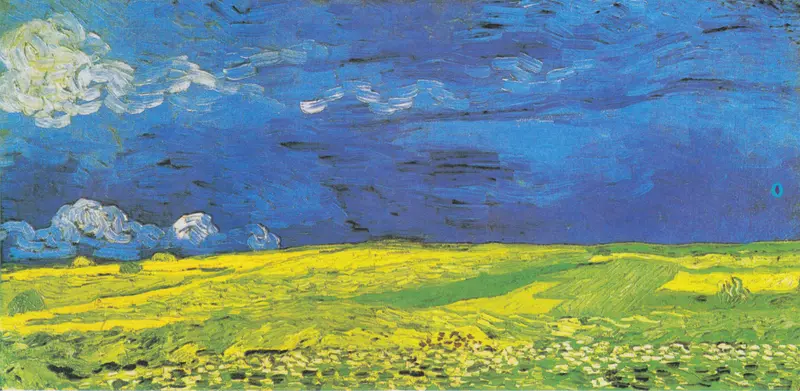
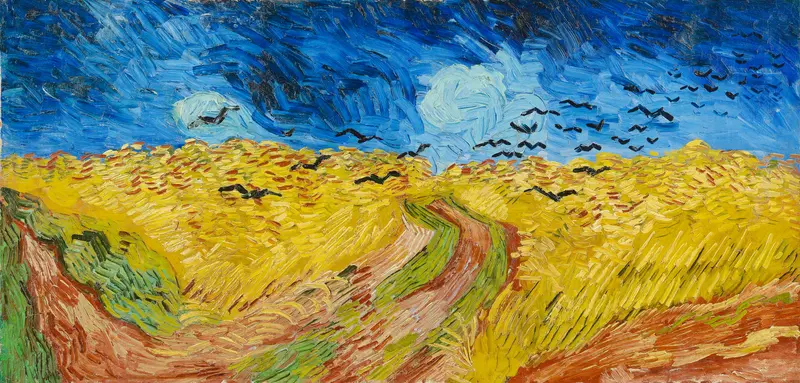
Wheatfield with Crows by Vincent van Gogh
Place: Wheatfields at Auvers-sur-Oise, France
1890 · Oil on canvas · 50.5 × 103 cm
Van Gogh Museum, Amsterdam
Van Gogh painted this stormy wheatfield at Auvers-sur-Oise in July 1890, the month he died. It is often called his last painting, but the Van Gogh Museum calls that a myth: he made several works after it. He wanted his fields under troubled skies to express sadness and loneliness, and also the healthy side of the countryside. Look at the red path between bands of green. It is in the Van Gogh Museum in Amsterdam.
Sources: Van Gogh Museum

No. 5Dutch Golden Age
View of Delft by Johannes Vermeer
Place: Delft, seen from across the Kolk harbor, the Netherlands
c. 1660–1661 · Oil on canvas · 96.5 × 115.7 cm
Mauritshuis, The Hague
Vermeer painted his hometown from across the Kolk harbor around 1660–1661, nudging buildings to suit the picture: the sunlit spire of the Nieuwe Kerk, which holds the tomb of William of Orange, really stood further to the right. Look through the top of that tower and you see sky, because its new bells were only being hung while he painted. It is in the Mauritshuis in The Hague.
Sources: Mauritshuis
No. 6Northern Renaissance
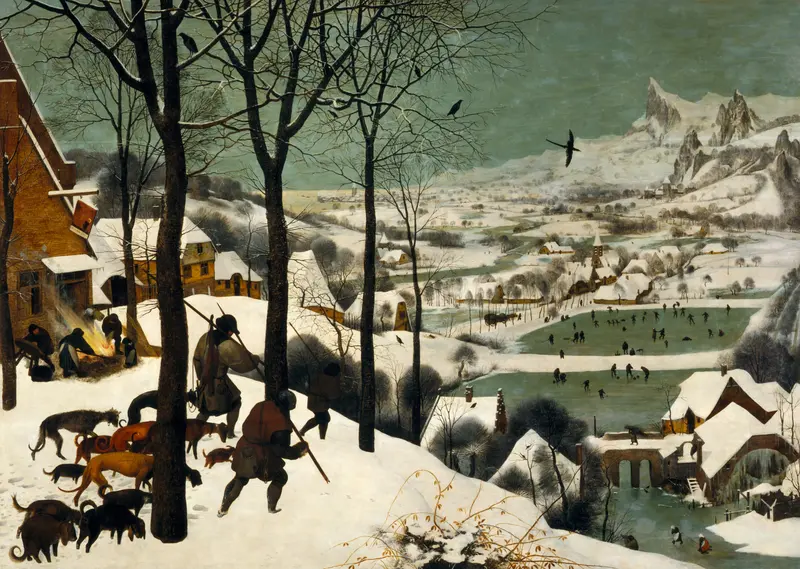
The Hunters in the Snow by Pieter Bruegel the Elder
Place: An invented Flemish village beneath Alpine peaks
1565 · Oil on oak panel · 116.5 × 162 cm
Kunsthistorisches Museum, Vienna
Hunters trudge home through the snow with tired dogs and a single fox to show for it, while villagers below skate on frozen ponds. Bruegel painted it in 1565 as one of six seasons for an Antwerp merchant's dining room, setting Alpine peaks above a flat Flemish village. The Kunsthistorisches Museum calls it the first and most prominent winter landscape in European painting. It is in Vienna.
Sources: Kunsthistorisches Museum
No. 7Renaissance
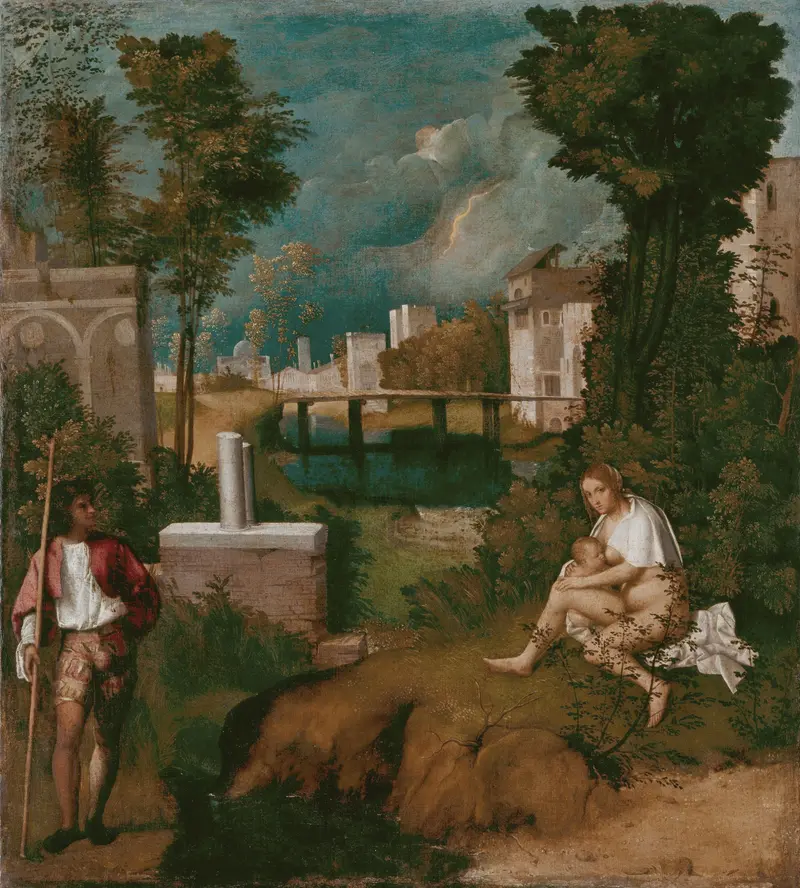
The Tempest by Giorgione
Place: An imaginary countryside outside a walled town
c. 1504 · Oil on canvas · 82 × 73 cm
Gallerie dell'Accademia, Venice
Lightning flashes over a town while a soldier and a nursing mother sit apart in the countryside, and no one agrees what it means. Giorgione painted The Tempest around 1504, and the museum calls the starring role of the landscape its greatest novelty. A Venetian collector already knew it in 1530 as “the little landscape with the storm.” It is in the Gallerie dell'Accademia in Venice.
Sources: Gallerie dell'Accademia
No. 8Impressionism
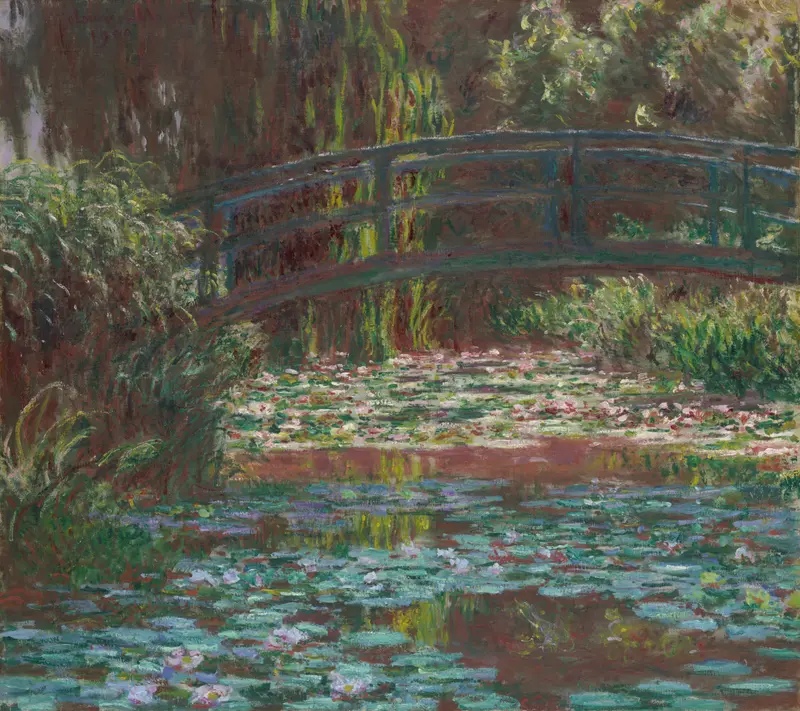
Water Lilies (Water Lily Pond) by Claude Monet
Place: Monet's water-lily pond and Japanese bridge at Giverny, France
1900 · Oil on canvas · 89.8 × 101 cm
Art Institute of Chicago, Chicago
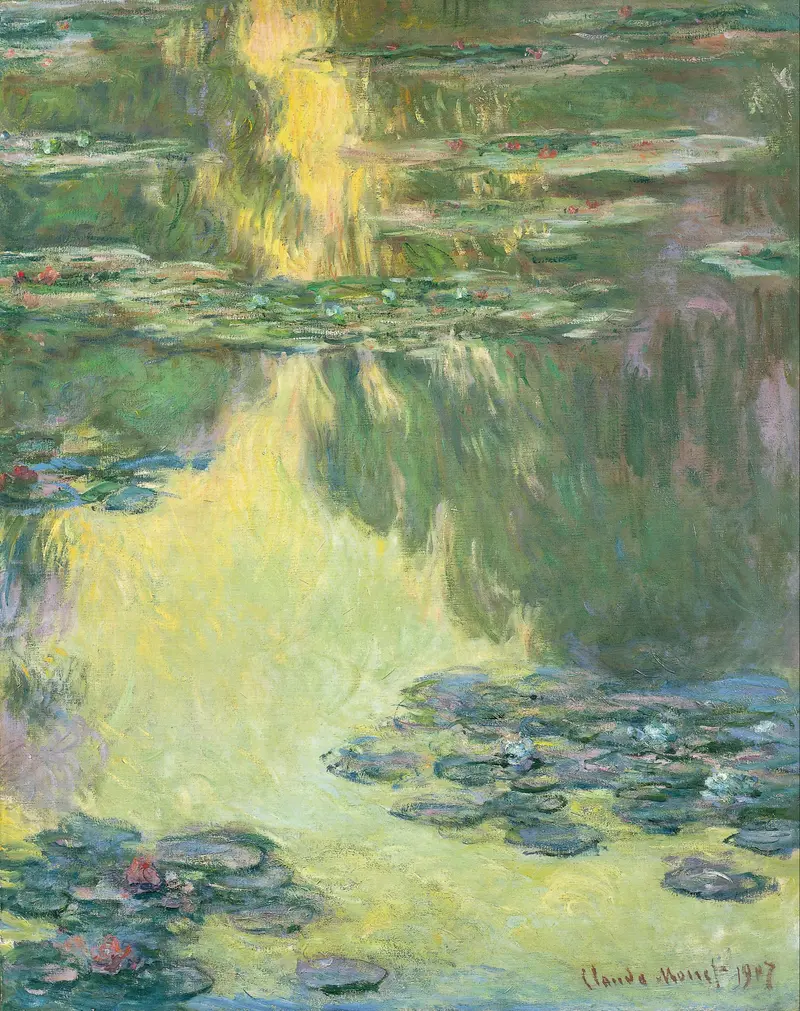
Monet's Water Lilies are not one painting but about 250, all of the pond he enlarged in his garden at Giverny, with hybrid water lilies and a humpback bridge inspired by Japanese prints. This 1900 canvas is one of 18 views of the bridge from 1899–1900. The series ended in the giant Water Lilies murals he offered to France the day after the 1918 Armistice. This one is at the Art Institute of Chicago.
Sources: Art Institute of Chicago
No. 9Romanticism
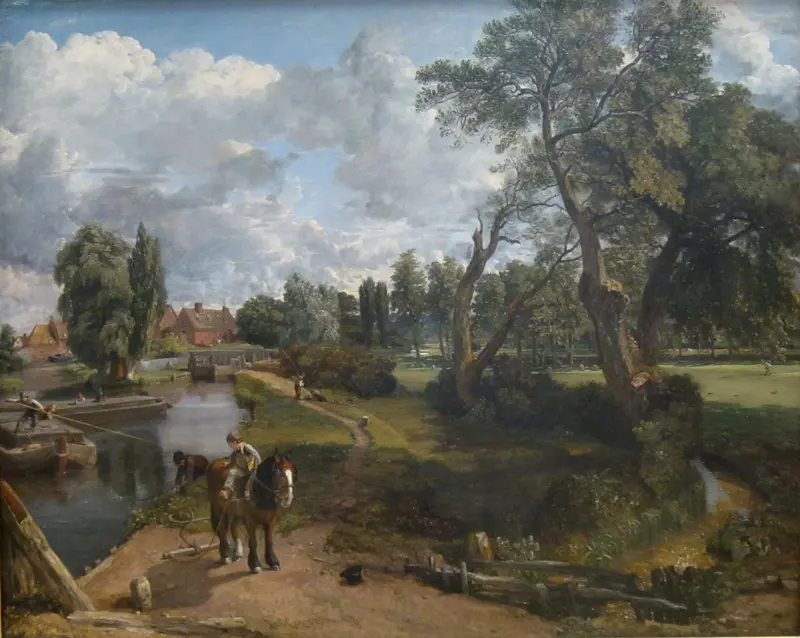
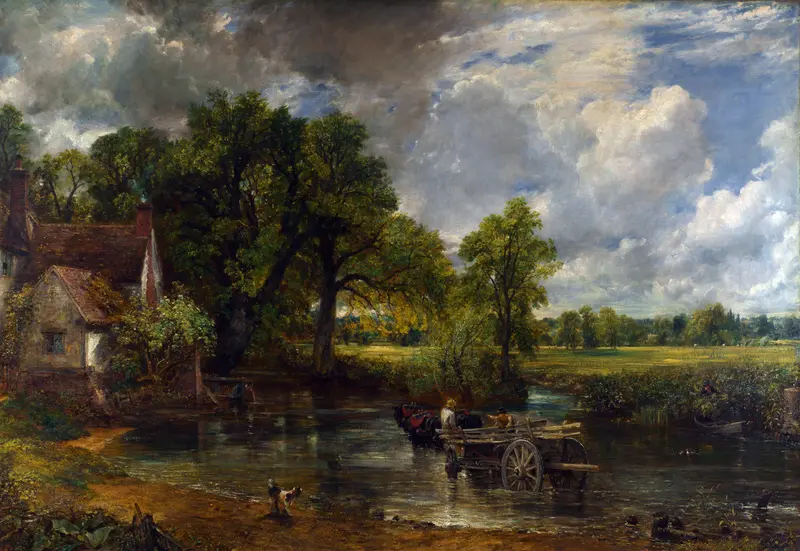
The Hay Wain by John Constable
Place: The millpond at Flatford on the River Stour, Suffolk, England
1821 · Oil on canvas · 130.2 × 185.4 cm
National Gallery, London
A hay wagon crosses the millpond at Flatford on the River Stour in Suffolk, beside the house of the farmer Willy Lott, which still stands. Constable painted The Hay Wain in his London studio in 1821 from sketches made outdoors over several years. It failed to sell at the Royal Academy, but at the 1824 Paris Salon it won him a gold medal. It is in the National Gallery in London.
Sources: National Gallery
No. 10Realism
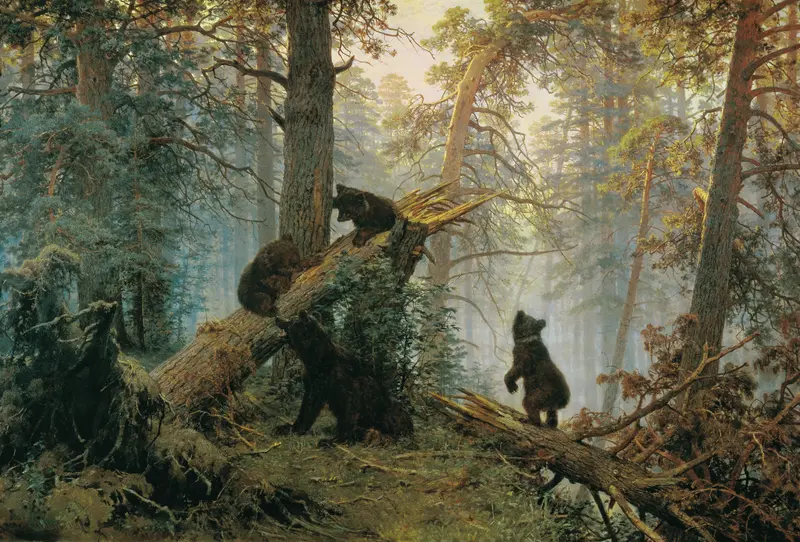
Morning in a Pine Forest by Ivan Shishkin
Place: A pine forest at sunrise; no specific place
1889 · Oil on canvas · 139 × 213 cm
Tretyakov Gallery, Moscow
Shishkin painted the misty pine forest, and his friend Konstantin Savitsky added the mother bear and her cubs, as Savitsky wrote to his family in 1889. Look at the lower left: beneath Shishkin's signature, Savitsky's name has been painted over. Pavel Tretyakov paid 4,000 rubles for it, a large sum for a landscape, and Savitsky received a quarter. It is in the Tretyakov Gallery in Moscow.
Sources: Tretyakov Gallery

No. 11Mannerism
View of Toledo by El Greco
Place: Toledo, Spain, seen from the north above the Tagus River
c. 1599–1600 · Oil on canvas · 121.3 × 108.6 cm
Metropolitan Museum of Art, New York
El Greco painted this stormy view of Toledo, the Spanish city he had worked in for more than twenty years, shortly before 1600, and a Met curator called it the most famous of all Spanish landscapes. It is not a literal view: he shows only a third of the city and moves the cathedral tower to the left. Below, Trajan's Roman bridge crosses the Tagus. It is at the Met in New York.
Sources: Metropolitan Museum of Art
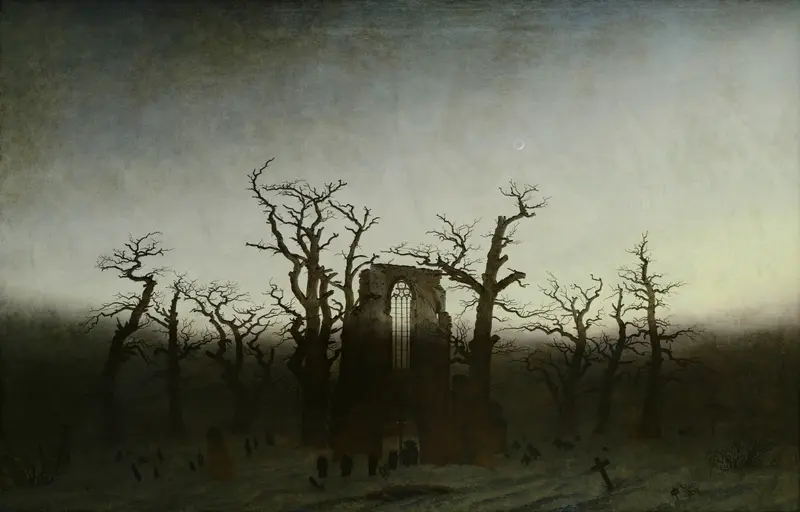
No. 12Romanticism
The Abbey in the Oakwood by Caspar David Friedrich
Place: An imagined graveyard around a ruin modeled on Eldena Abbey, Germany
1809–1810 · Oil on canvas · 110.4 × 171 cm
Alte Nationalgalerie, Berlin
Monks carry a coffin past sunken tombstones into a ruined Gothic church among bare oaks. Friedrich based the ruin on Eldena Abbey near Greifswald, but improved it, and around 1830 the real ruin was remodeled to look more like his picture. He painted it in 1809–1810 as the companion to Monk by the Sea, and the king of Prussia bought the pair. It is in the Alte Nationalgalerie in Berlin.
Sources: Alte Nationalgalerie

No. 13Romanticism
Rain, Steam and Speed – The Great Western Railway by J. M. W. Turner
Place: Brunel's Maidenhead Railway Bridge over the Thames, England
1844 · Oil on canvas · 91 × 121.8 cm
National Gallery, London
A Great Western train rushes toward us over Brunel's Maidenhead Viaduct on the Thames, half dissolved in rain and steam. Turner, in 1844, also painted a hare running ahead of the engine; the paint has turned transparent, so it is now almost invisible, though it was said to stand for speed. Look for a small boat on the river and a farmer plowing at the right. It is in the National Gallery in London.
Sources: National Gallery
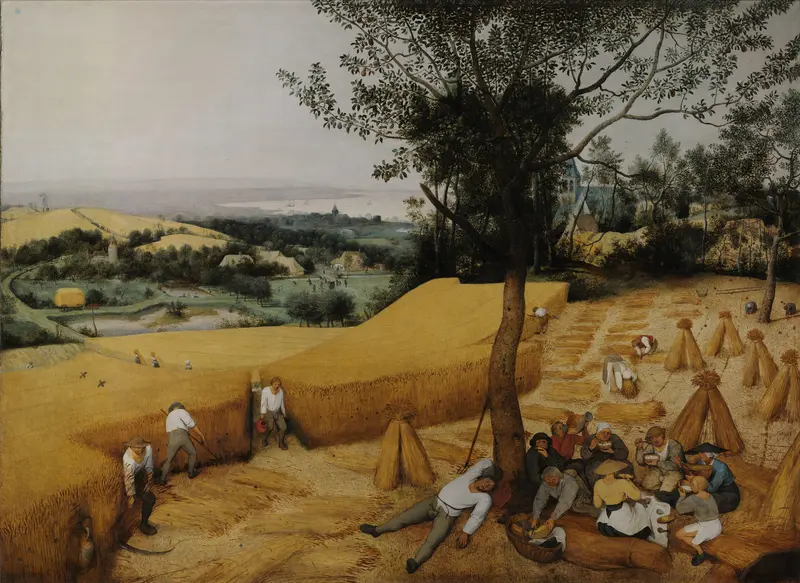
No. 14Northern Renaissance
The Harvesters by Pieter Bruegel the Elder
Place: A summer wheat harvest in the Low Countries
1565 · Oil on oak · 119 × 162 cm
Metropolitan Museum of Art, New York
Harvesters rest and eat under a tall tree while others keep cutting the wheat. Bruegel painted it in 1565 for the same series of the seasons as The Hunters in the Snow, made for an Antwerp merchant; five of the six survive. Look for the woman bent so hard over her work that her body echoes the shape of the hay bales. It is at the Met in New York.
Sources: Metropolitan Museum of Art
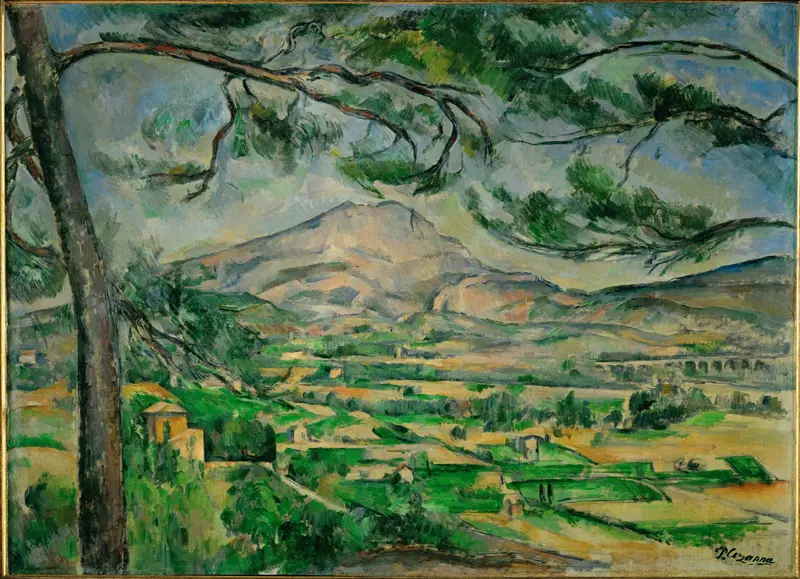
No. 15Post-Impressionism
Mont Sainte-Victoire with Large Pine by Paul Cézanne
Place: Mont Sainte-Victoire above the Arc valley near Aix-en-Provence, France
c. 1887 · Oil on canvas · 66.8 × 92.3 cm
Courtauld Gallery, London
Cézanne painted Mont Sainte-Victoire, the mountain near his hometown of Aix-en-Provence, more than 60 times. In this canvas from about 1887, the pine branches across the top echo the mountain's outline, and the only modern touches are a railway viaduct and the steam of a passing train. After it was misunderstood at a show in Aix, he gave it to a young poet who admired it. It is in the Courtauld Gallery in London.
Sources: Courtauld Gallery
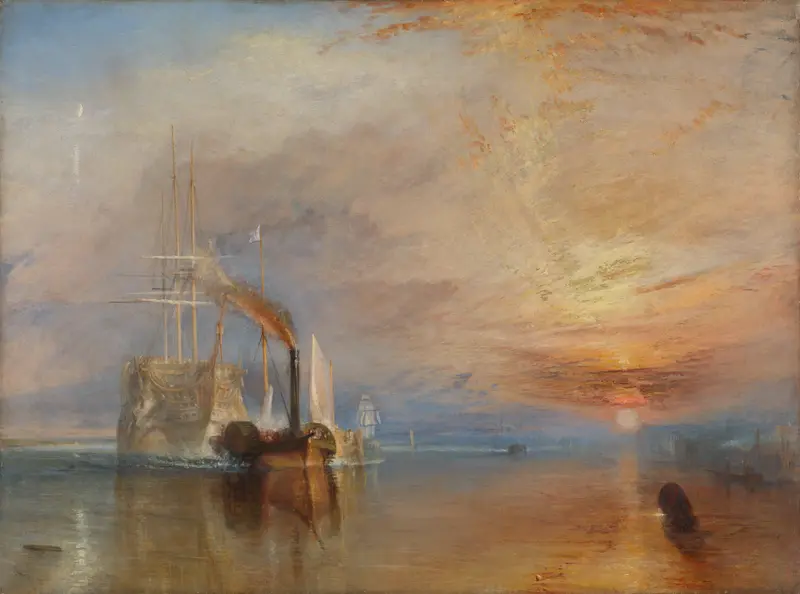
No. 16Romanticism
The Fighting Temeraire by J. M. W. Turner
Place: The River Thames near London, England
1839 · Oil on canvas · 90.7 × 121.6 cm
National Gallery, London
A small steam tug tows the Temeraire, a veteran of the Battle of Trafalgar, up the Thames to be broken up for scrap in 1838. Turner probably never saw it happen: he restored the ship's masts, painted it white and gold, and set the sun where it could not have been. He called the picture his “Darling” and never sold it, and today it is on the £20 note. It is in the National Gallery in London.
Sources: National Gallery
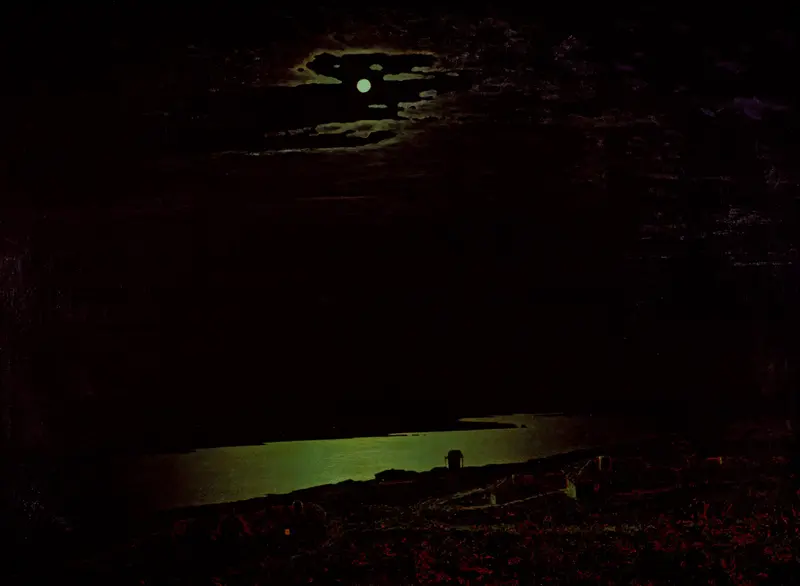
No. 17Romanticism
Moonlit Night on the Dnieper by Arkhip Kuindzhi
Place: The Dnieper River under a full moon
1882 · Oil on canvas · 104 × 143 cm
Tretyakov Gallery, Moscow
When Kuindzhi first showed Moonlit Night on the Dnieper in 1880, alone in a darkened room with hidden lighting, a poet asked whether he was looking at a painting or out of an open window. The moon and the rippling river glow from thick paint. The 1880 original, now darkened, is in the Russian Museum; this is Kuindzhi's own 1882 repeat, in the Tretyakov Gallery in Moscow.
Sources: Tretyakov Gallery
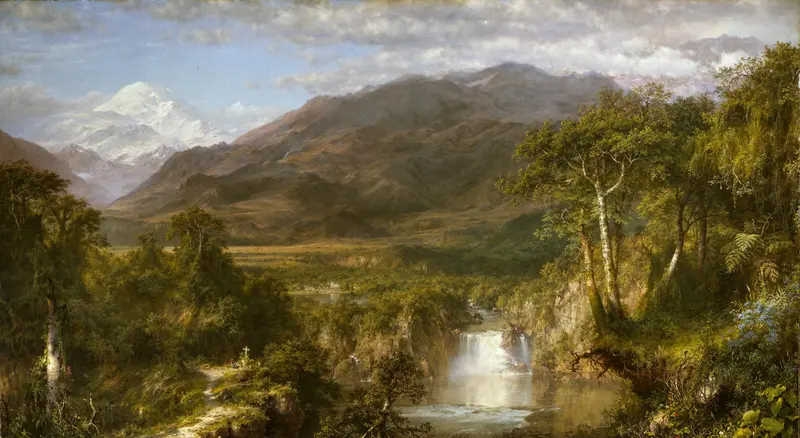
No. 18Romanticism
Heart of the Andes by Frederic Edwin Church
Place: An imagined Andean view with Chimborazo, Ecuador, in the distance
1859 · Oil on canvas · 168 × 302.9 cm
Metropolitan Museum of Art, New York
Church painted Heart of the Andes in his New York studio in 1859 from sketches made on trips to Colombia and Ecuador, combining the region's typical features rather than copying one view; the snowy peak is Chimborazo. More than 12,000 people paid 25 cents each to see this single painting at its premiere. He meant to send it to Alexander von Humboldt, whose writings inspired it, but Humboldt died days later. It is at the Met in New York.
Sources: Metropolitan Museum of Art
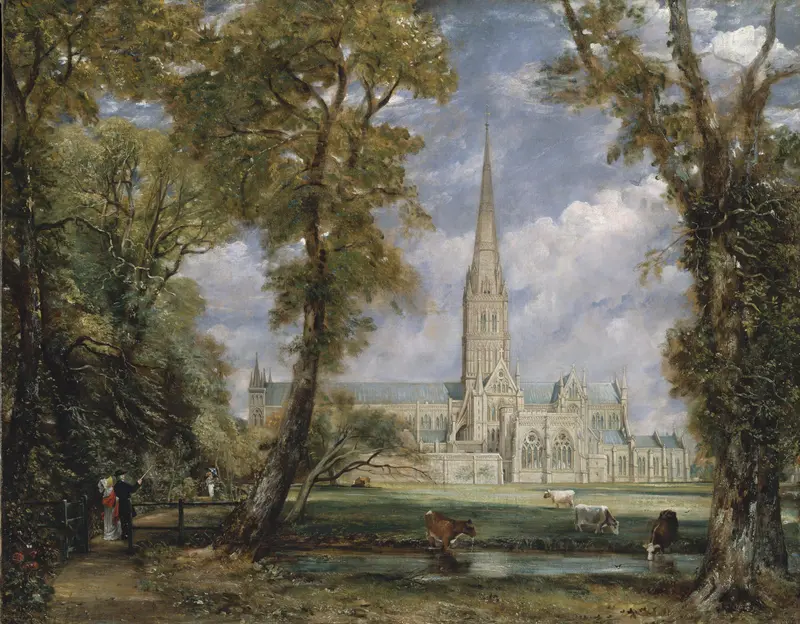
No. 19Romanticism
Salisbury Cathedral from the Bishop's Grounds by John Constable
Place: Salisbury Cathedral from the bishop's grounds, England
c. 1825 · Oil on canvas · 87.9 × 111.8 cm
Metropolitan Museum of Art, New York
Constable painted Salisbury Cathedral from the bishop's garden for his patron, Bishop John Fisher, who disliked the dark cloud over the spire in the first version of 1823 and wanted a sunnier sky. This canvas from about 1825 is the full-scale study for Constable's final version, now in the Frick Collection. Look at the clear blue sky over the spire: he removed overhanging foliage to open it up. It is at the Met in New York.
Sources: Metropolitan Museum of Art
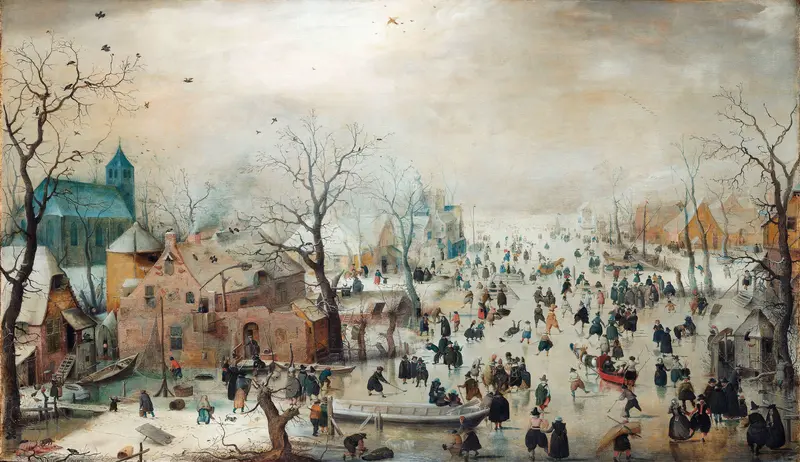
No. 20Dutch Golden Age
Winter Landscape with Ice Skaters by Hendrick Avercamp
Place: A frozen river beside a Dutch village
c. 1608 · Oil on oak panel · 77.3 × 131.9 cm
Rijksmuseum, Amsterdam
Hundreds of people crowd a frozen river beside a Dutch village: skaters, sleighs, ice-boats and players of kolf, the forerunner of golf. Avercamp painted it around 1608, and it is his largest and most ambitious winter landscape. Look closer and you find grim details too, like crows and a dog feeding on a horse that froze to death. It is in the Rijksmuseum in Amsterdam.
Sources: Rijksmuseum

No. 21Dutch Golden Age
The Windmill at Wijk bij Duurstede by Jacob van Ruisdael
Place: The River Lek at Wijk bij Duurstede, the Netherlands
c. 1668–1670 · Oil on canvas · 83 × 101 cm
Rijksmuseum, Amsterdam
A windmill towers over the River Lek at Wijk bij Duurstede, standing up to dark rain clouds and dwarfing the town's castle and church. Ruisdael painted it around 1668–1670, gathering low land, water and a vast sky into what the Rijksmuseum calls a world-famous picture. Look for the tiny miller on the mill's balcony, as if checking the weather. It is in the Rijksmuseum in Amsterdam.
Sources: Rijksmuseum
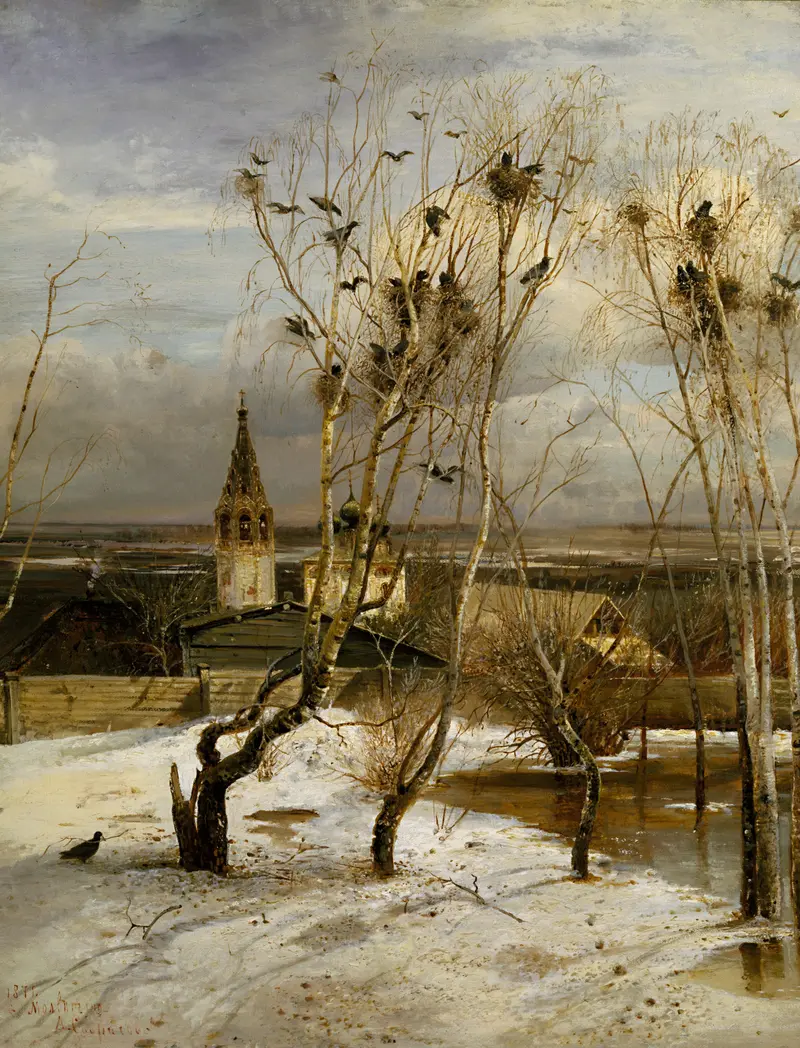
No. 22Realism
The Rooks Have Returned by Alexei Savrasov
Place: The village of Molvitino near Kostroma, Russia
1871 · Oil on canvas · 62 × 48.5 cm
Tretyakov Gallery, Moscow
In the spring of 1871 Savrasov traveled to the Volga to recover from the death of his newborn daughter, and in the village of Molvitino he sketched rooks returning to the birches beside a church. He finished the picture in his Moscow studio, and it was shown that November at the first exhibition of the Wanderers, the new Russian artists' society. It is in the Tretyakov Gallery in Moscow.
Sources: Tretyakov Gallery
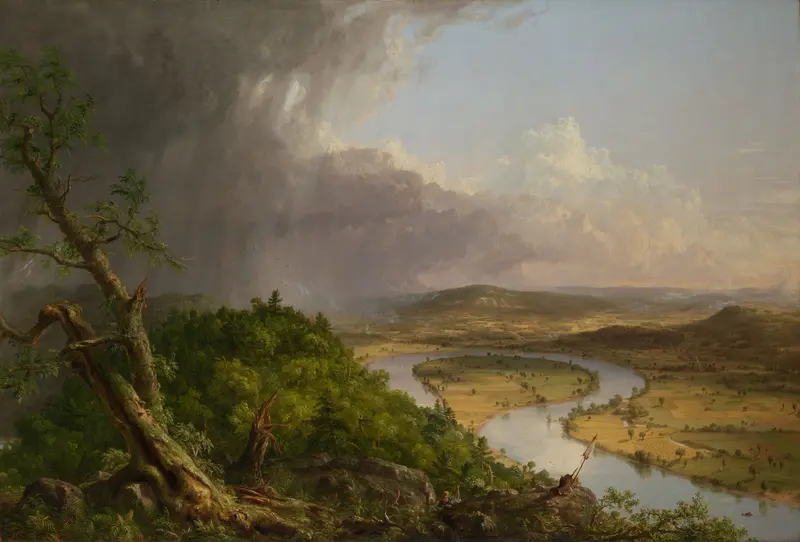
No. 23Romanticism
The Oxbow by Thomas Cole
Place: The Connecticut River's oxbow from Mount Holyoke, Massachusetts
1836 · Oil on canvas · 130.8 × 193 cm
Metropolitan Museum of Art, New York
Thomas Cole painted the great bend of the Connecticut River from Mount Holyoke in Massachusetts just after a thunderstorm, with wild forest at left and farmland at right, for an exhibition in New York in 1836. Look for Cole himself: the tiny painter at his easel in the foreground. Some read the clearings on the distant hill as Hebrew letters spelling “Noah.” It is at the Met in New York.
Sources: Metropolitan Museum of Art
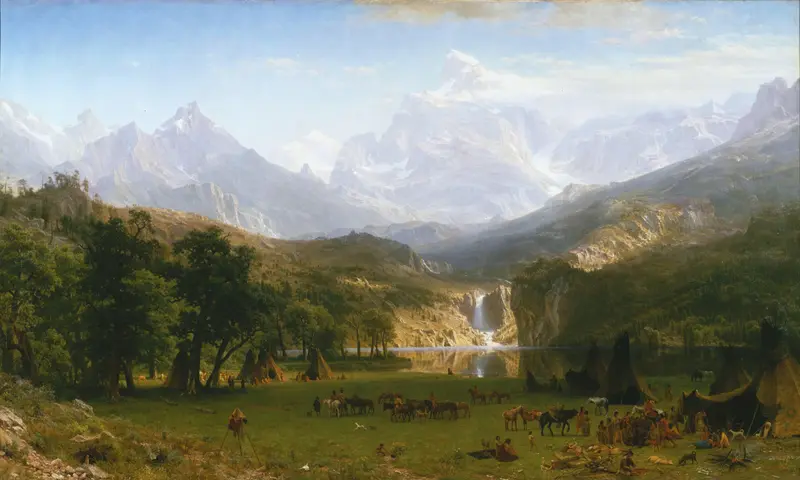
No. 24Romanticism
The Rocky Mountains, Lander's Peak by Albert Bierstadt
Place: The Wind River Range of the Rocky Mountains, Wyoming
1863 · Oil on canvas · 186.7 × 306.7 cm
Metropolitan Museum of Art, New York
In 1859 Bierstadt joined Colonel Frederick W. Lander's government survey expedition to the Rocky Mountains, and he named the central peak of this vast view of Wyoming's Wind River Range after him. In the foreground he painted a Shoshone encampment by a lake and waterfall. Shown in New York in 1864 facing Church's Heart of the Andes, it sold for a reported $25,000, as much as any living American artist had been paid. It is at the Met in New York.
Sources: Metropolitan Museum of Art
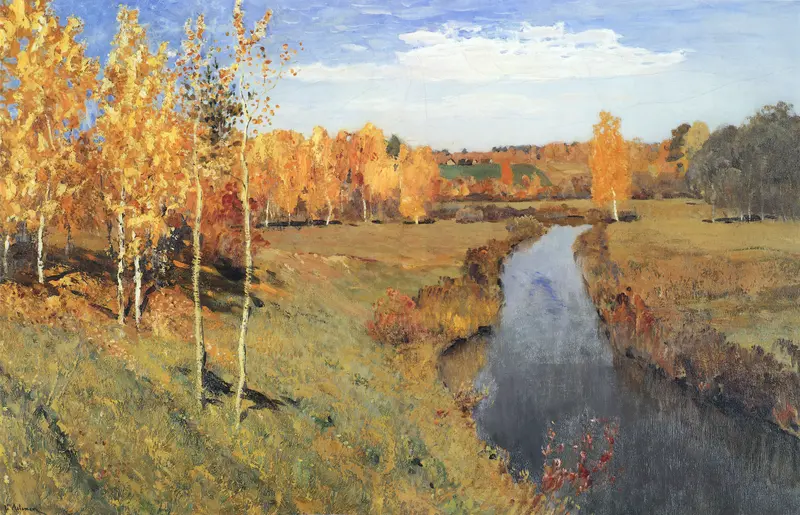
No. 25Impressionism
Golden Autumn by Isaac Levitan
Place: A river among autumn birches in Tver Province, Russia
1895 · Oil on canvas · 83.6 × 127.2 cm
Tretyakov Gallery, Moscow
Golden birches glitter beside a calm blue river in Levitan's Golden Autumn, painted with broad, free brushstrokes in 1895, while he was a guest at the Gorka estate in Russia's Tver Province, working in a studio built just for him. Pavel Tretyakov bought it the following year, together with Levitan's March. It is in the Tretyakov Gallery in Moscow.
Sources: Tretyakov Gallery
Want to see more? Browse every landscape in the collection.
Browse all 43,994 landscapesVan Gogh landscapes
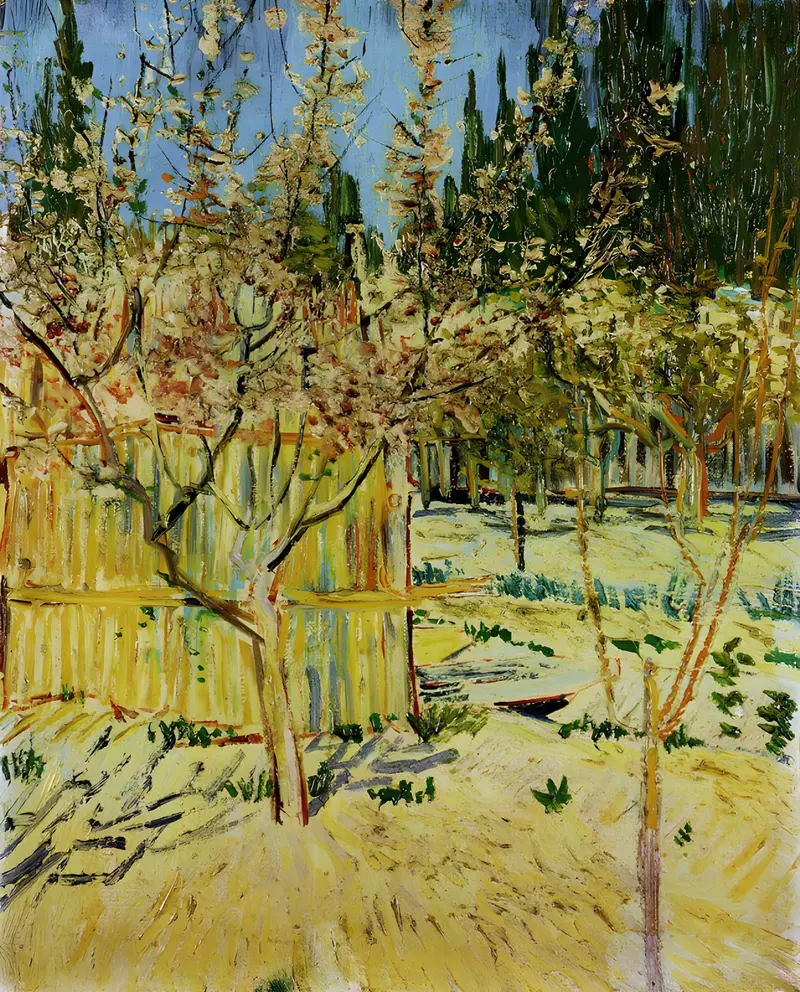
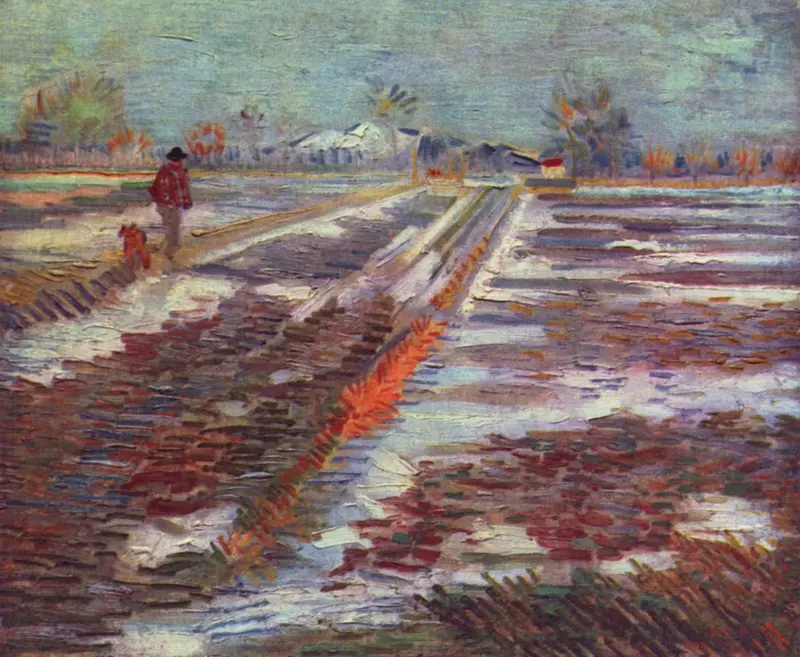
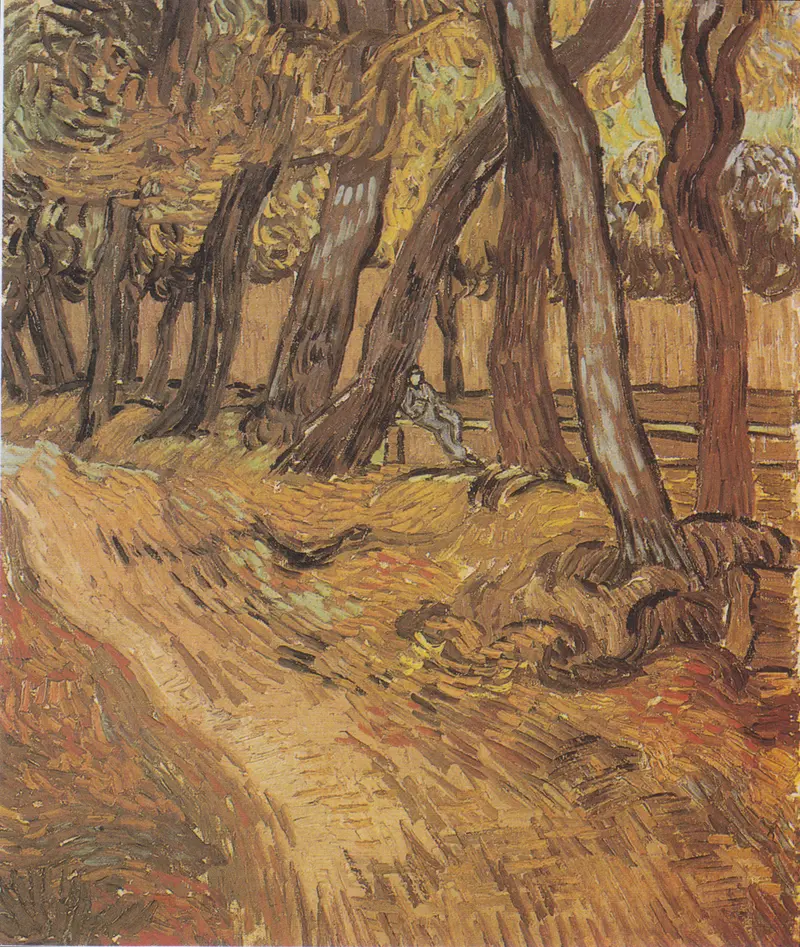
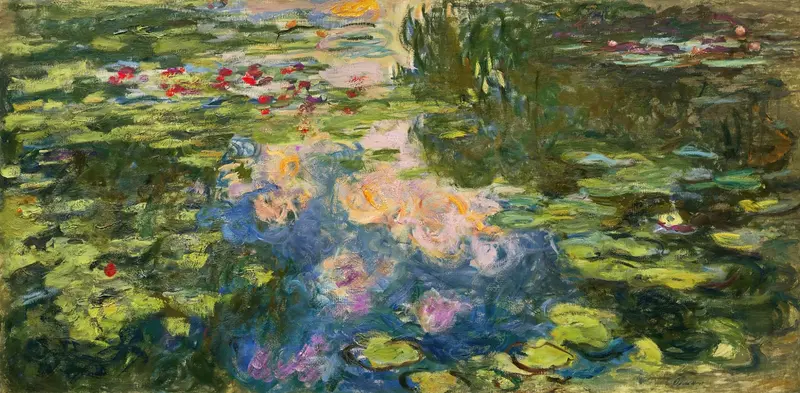
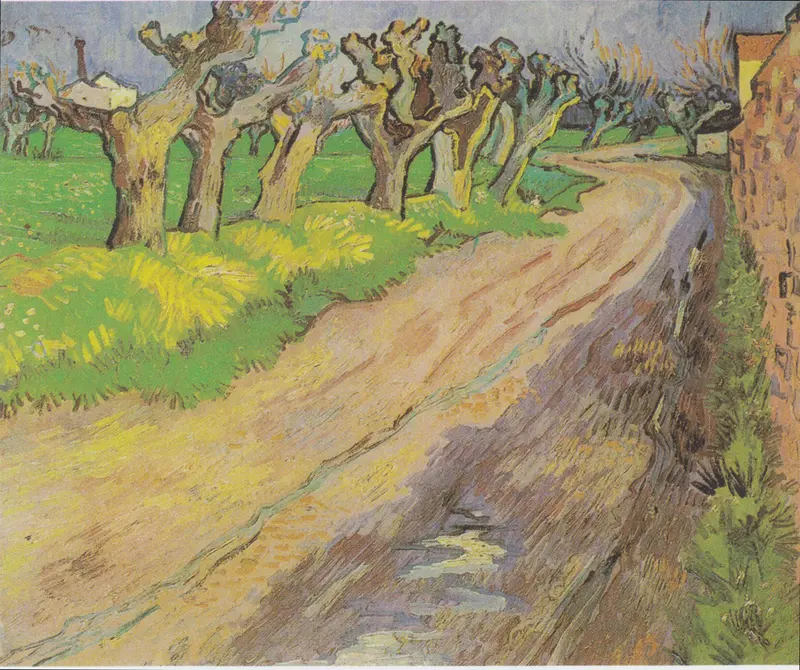
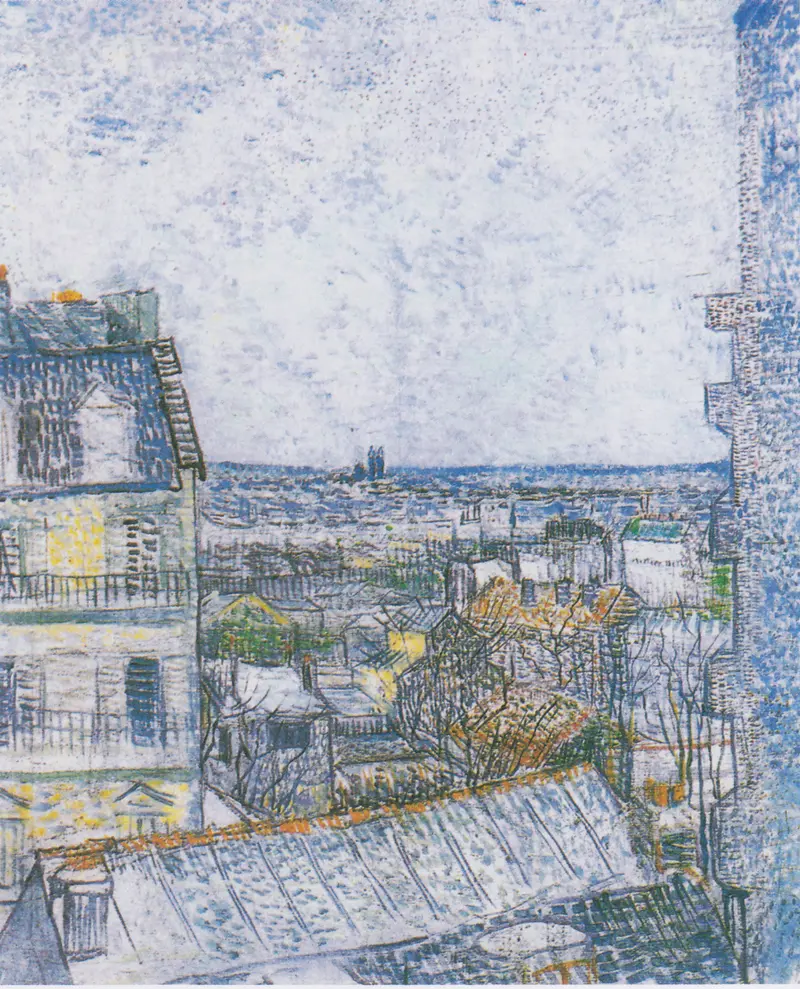
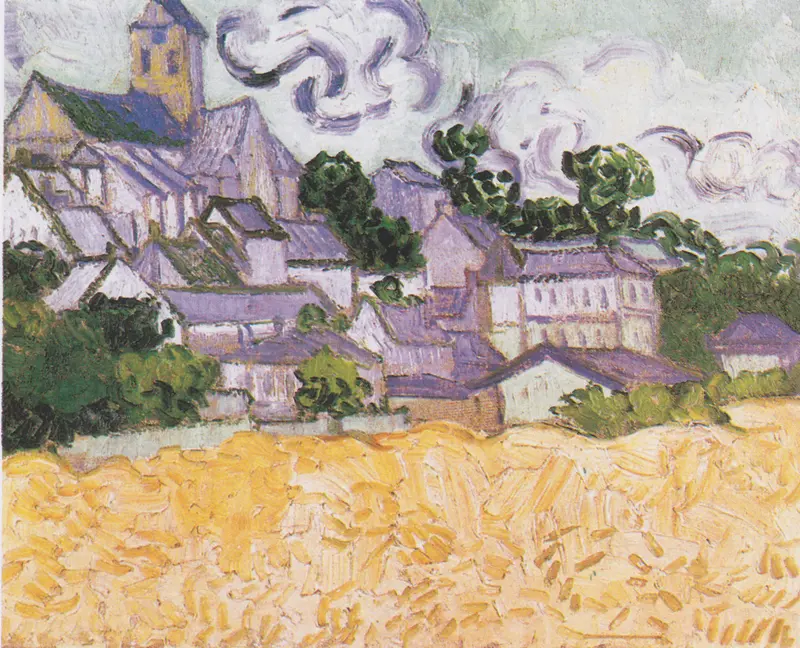
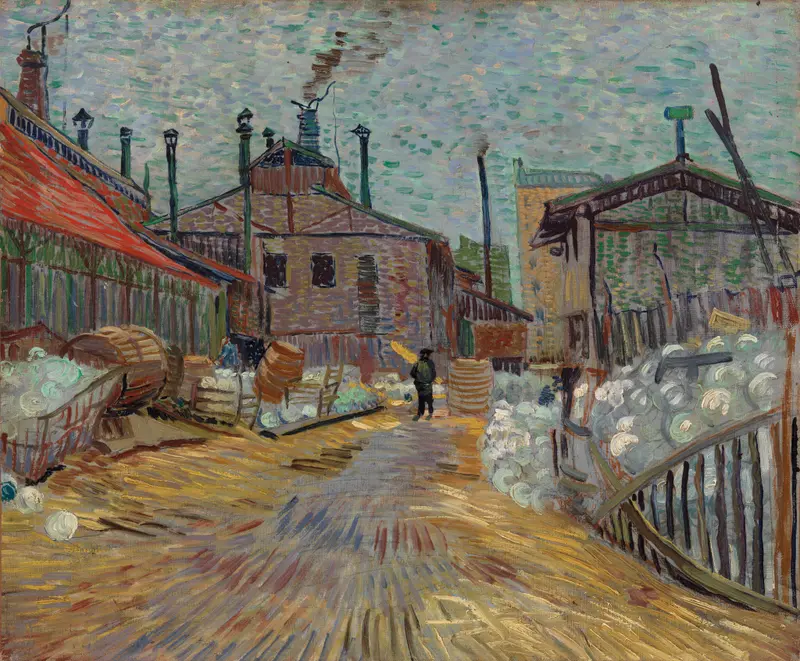
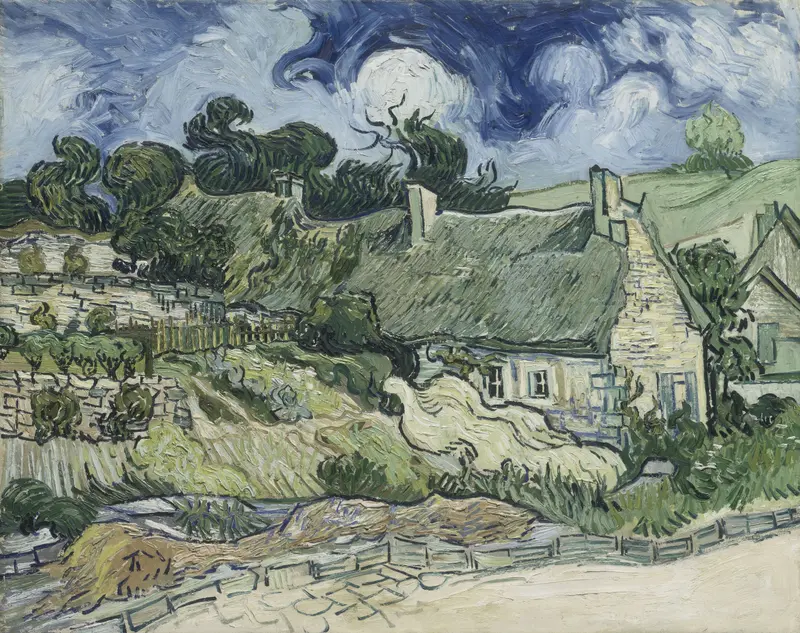
Van Gogh painted the fields, olive groves and night skies of southern France again and again. Here are six more famous Van Gogh landscapes, after The Starry Night and Wheatfield with Crows above.
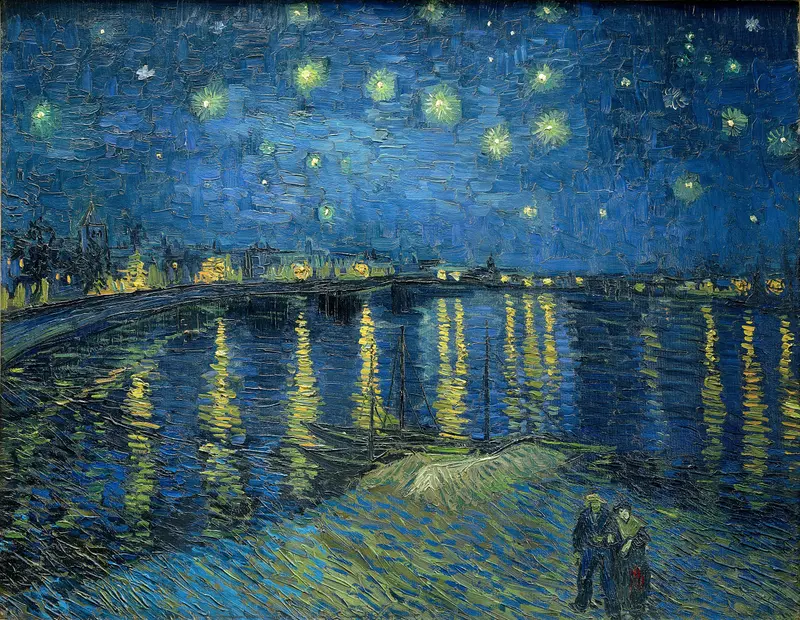

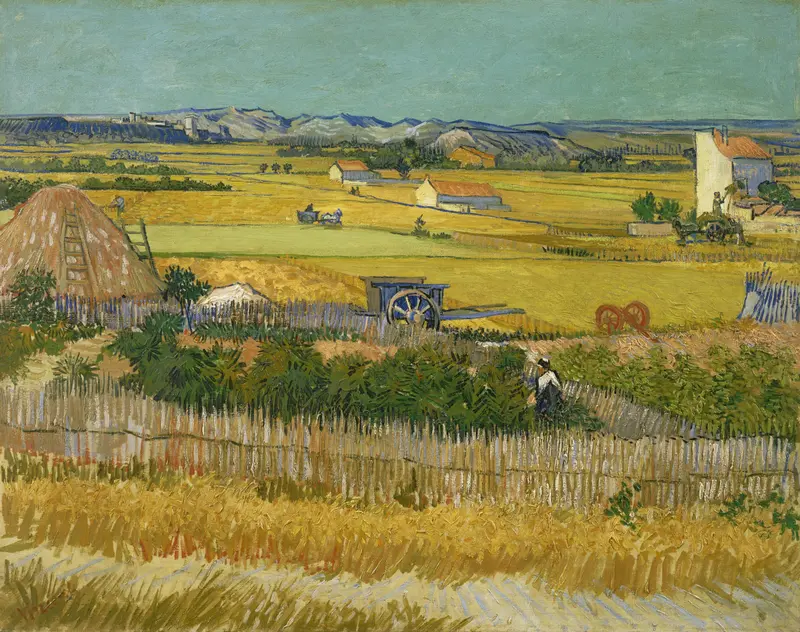

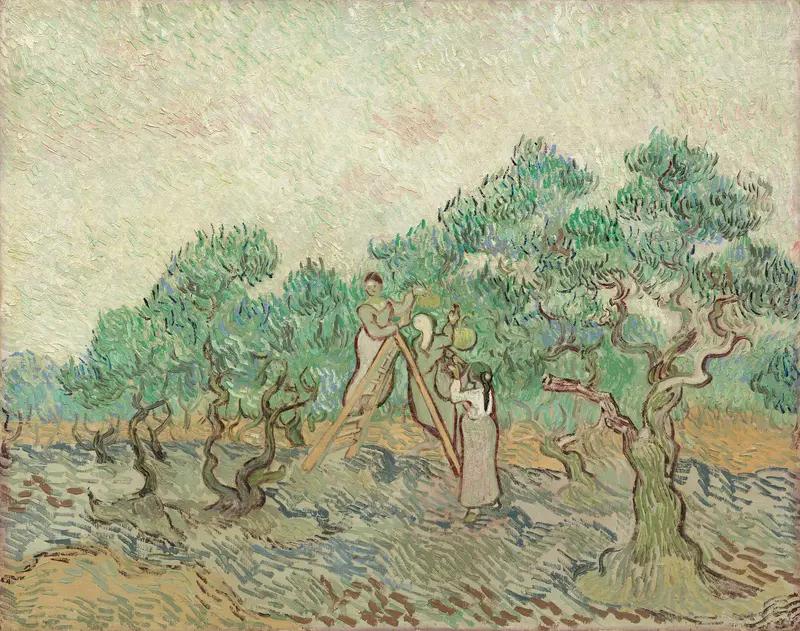
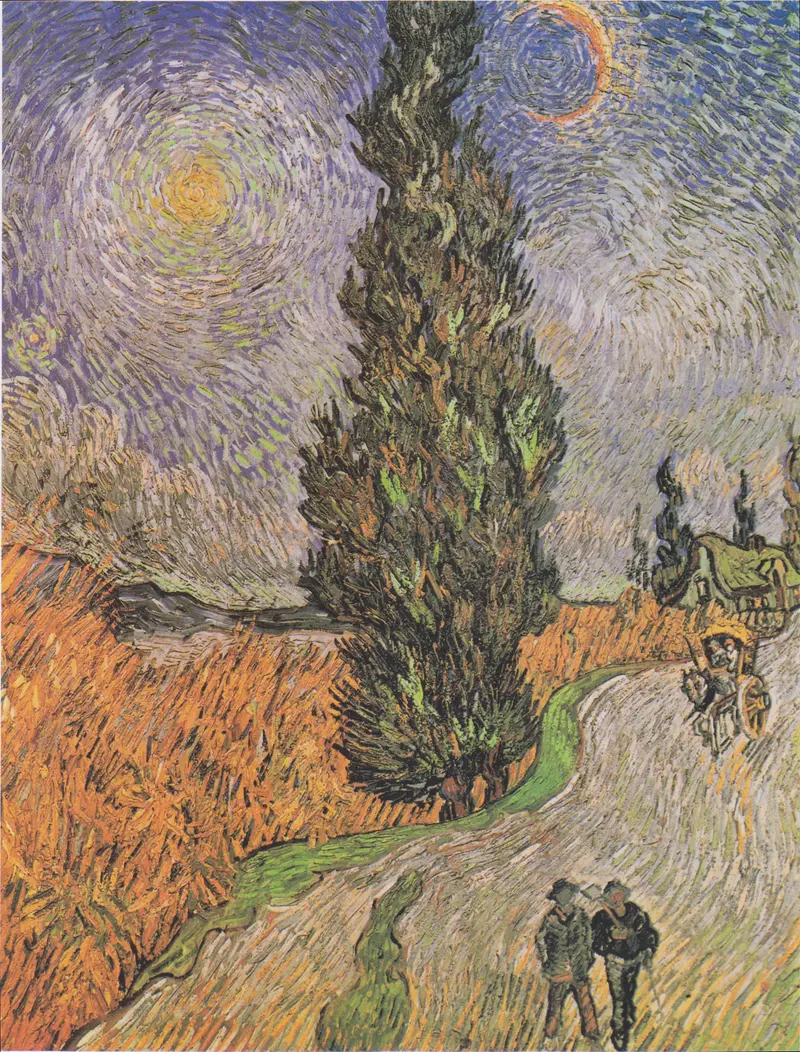
Impressionist landscape paintings
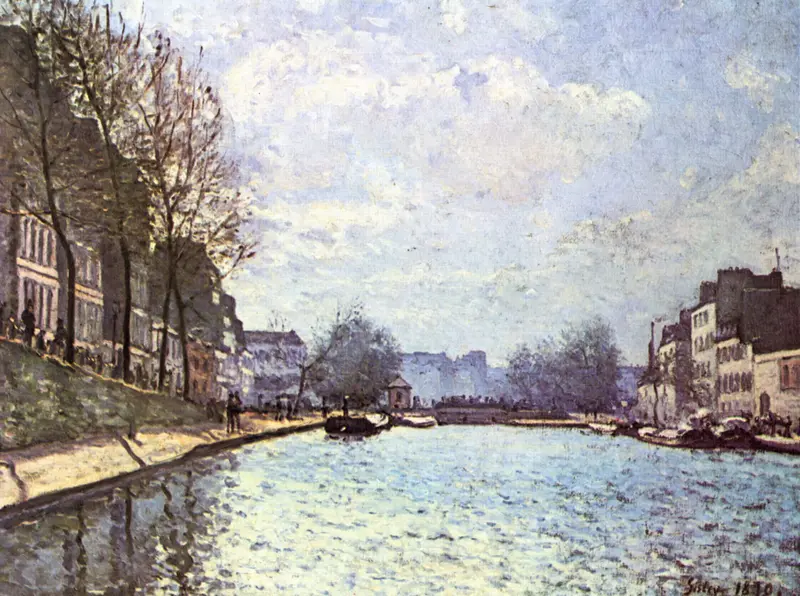
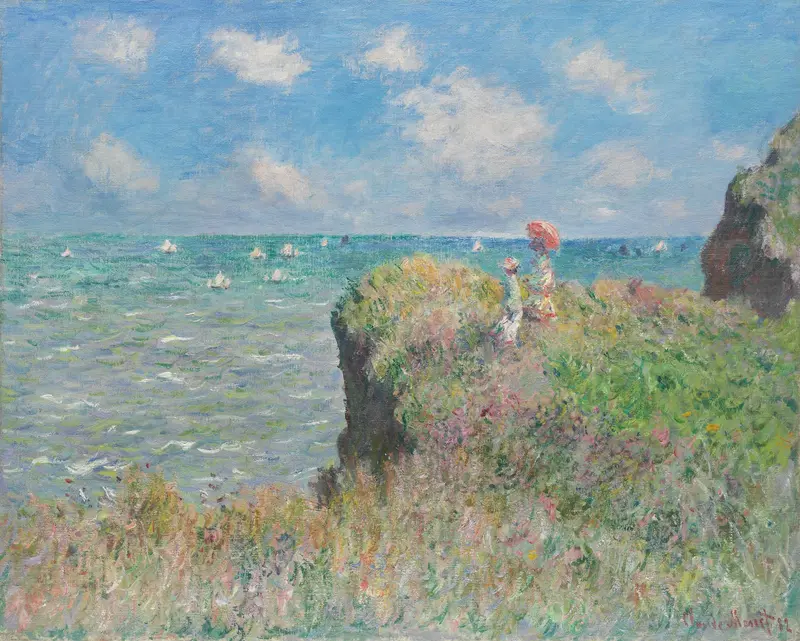
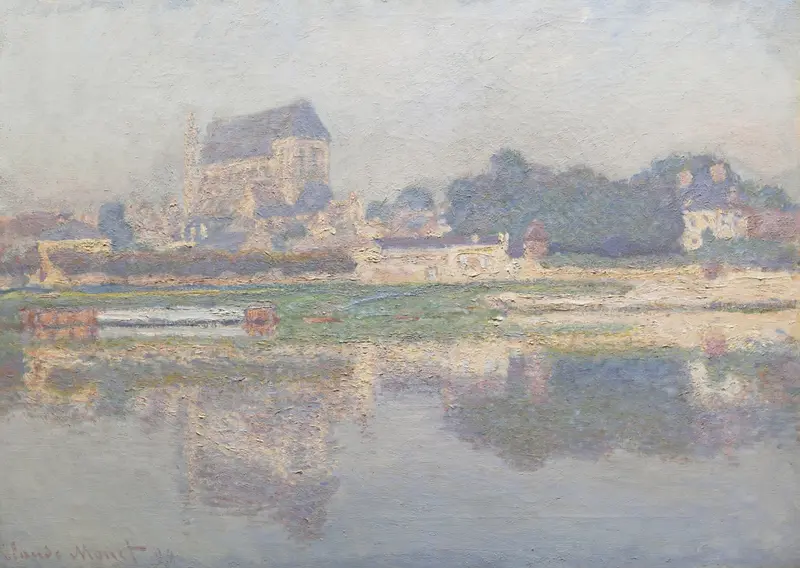
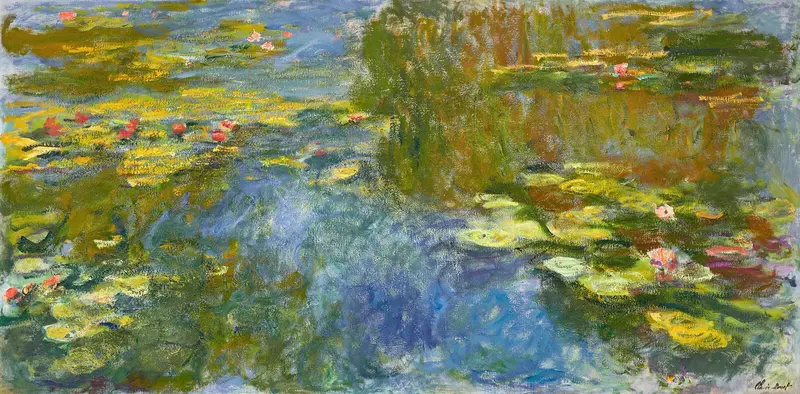
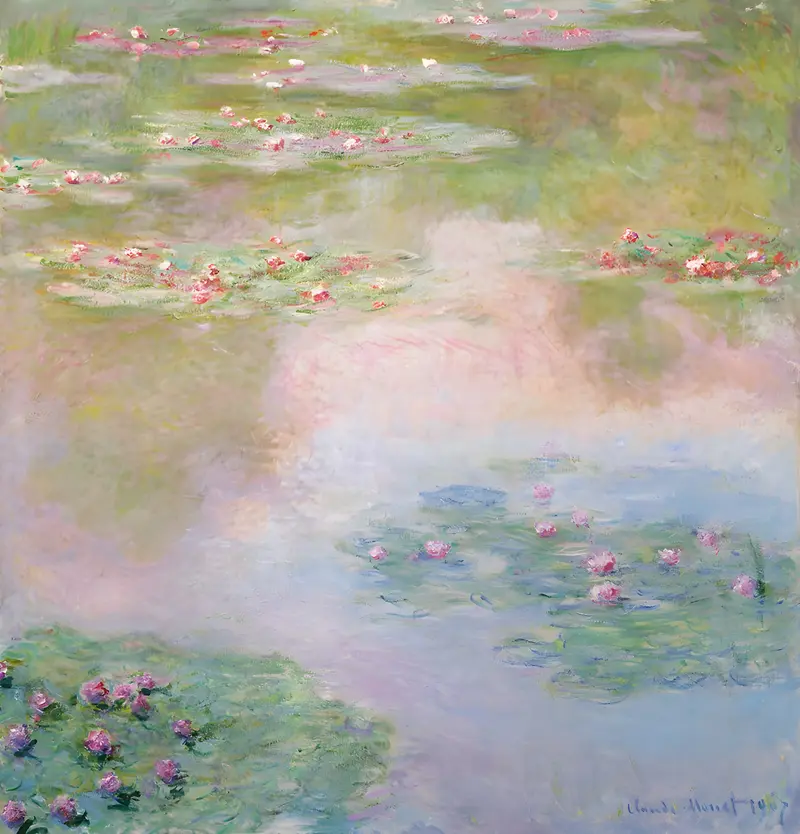
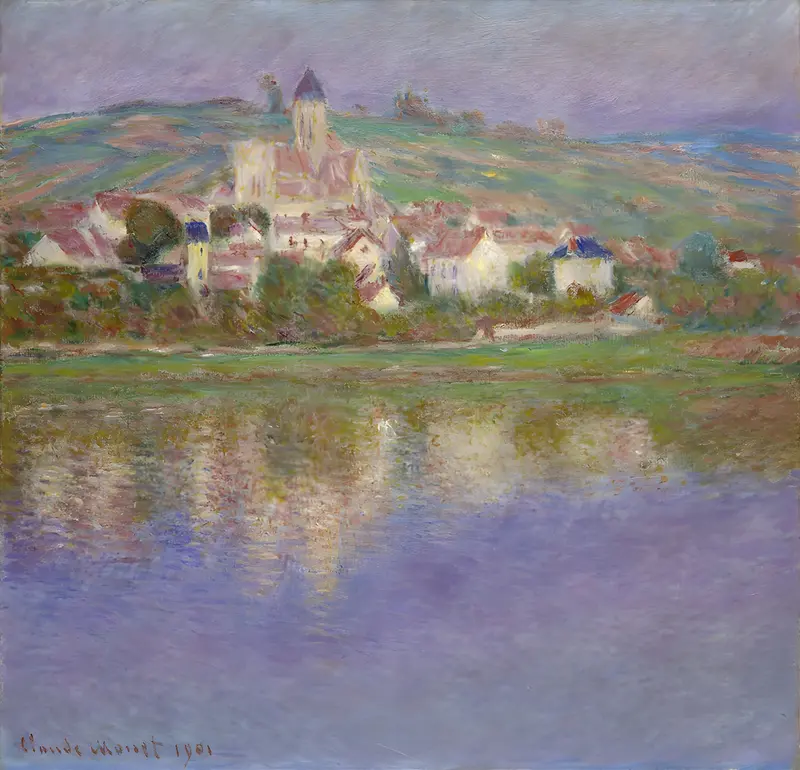
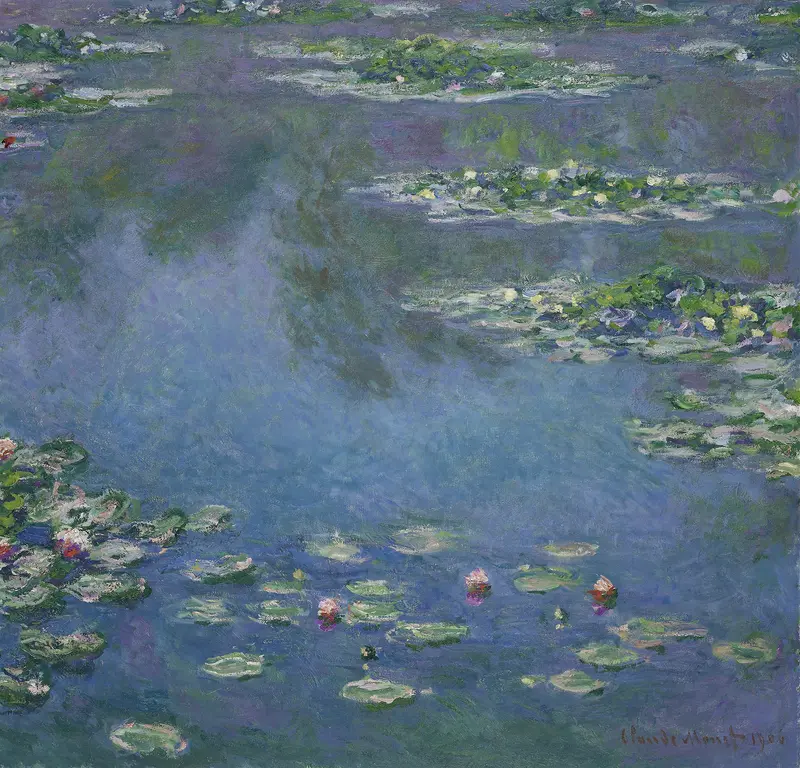
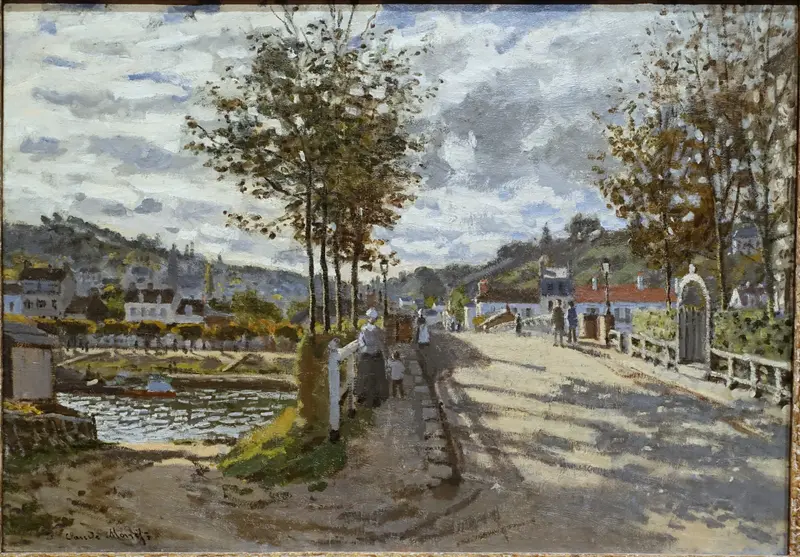
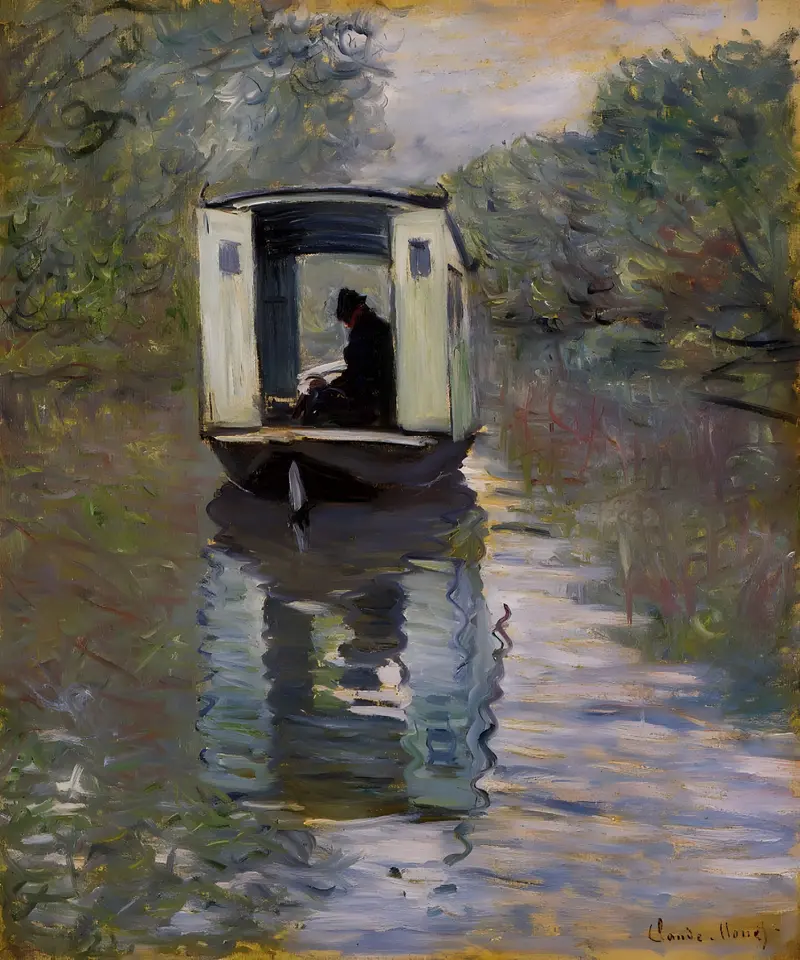
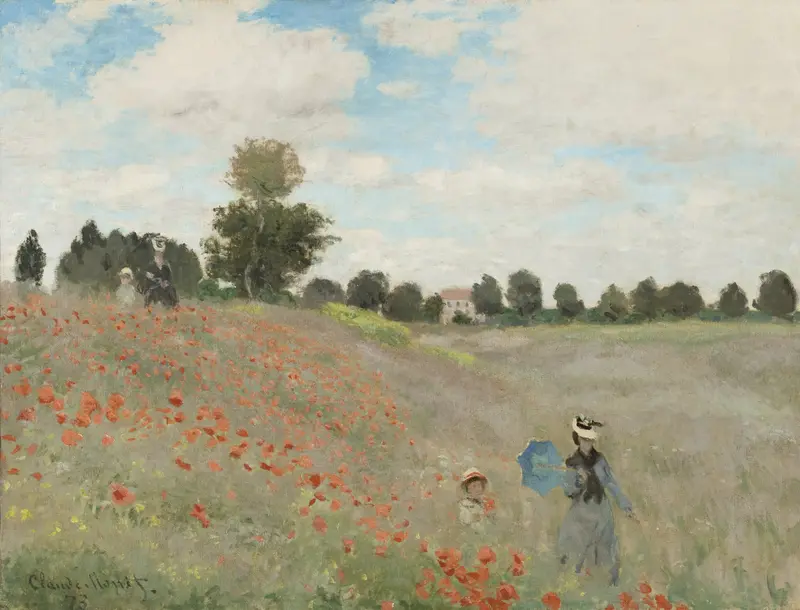
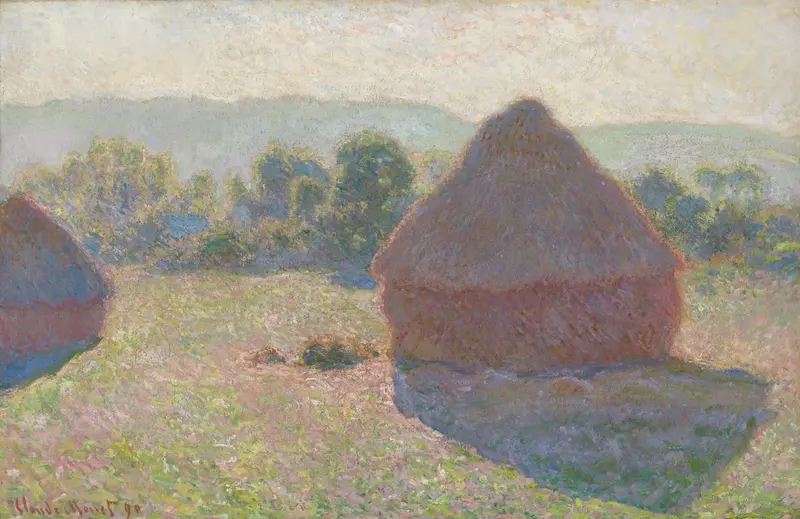
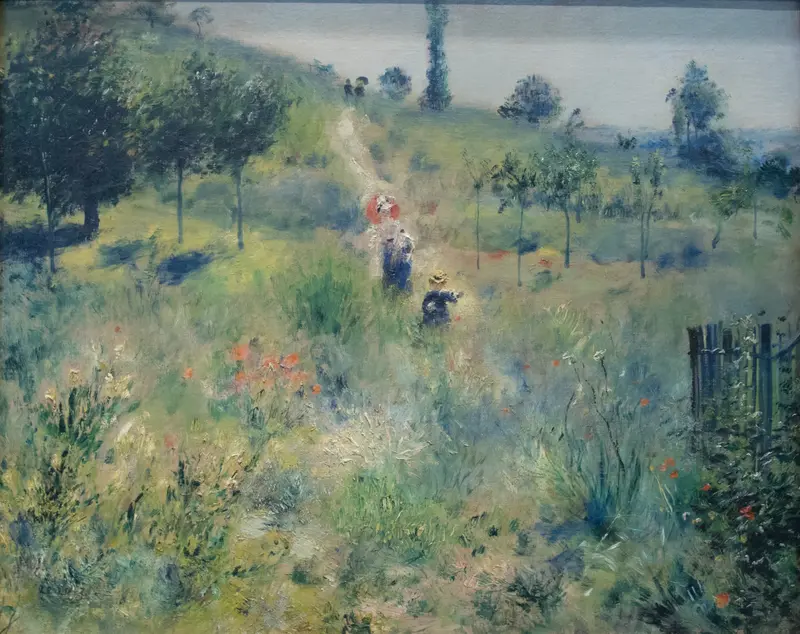
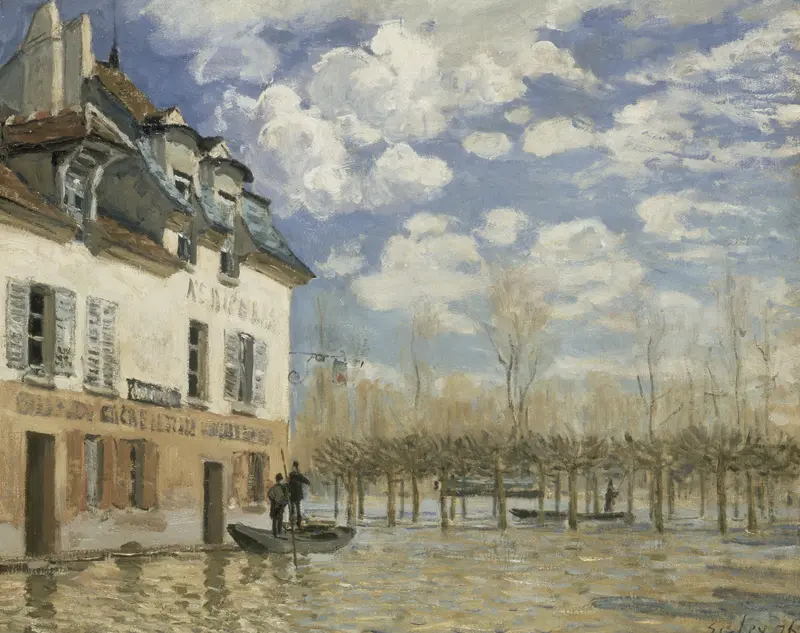
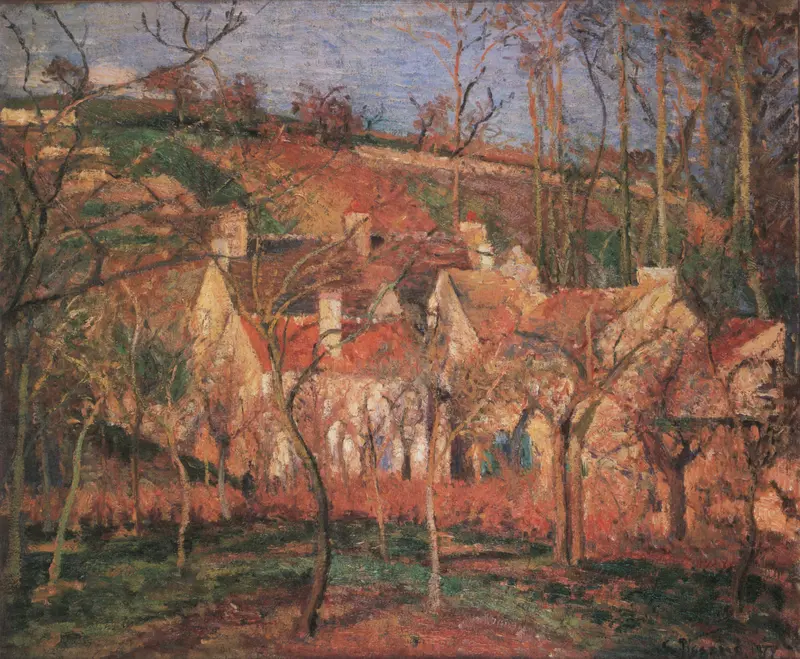
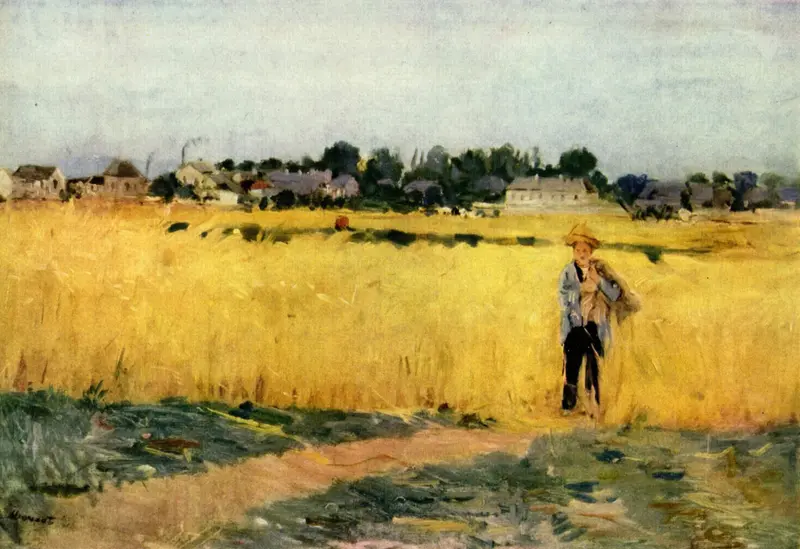
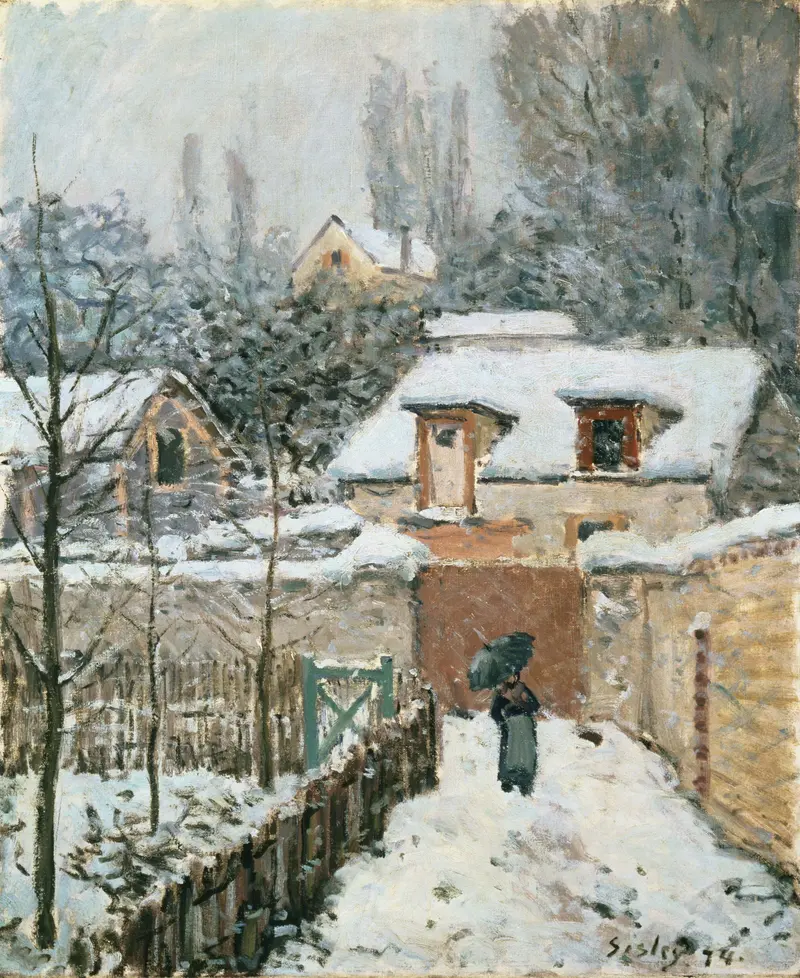
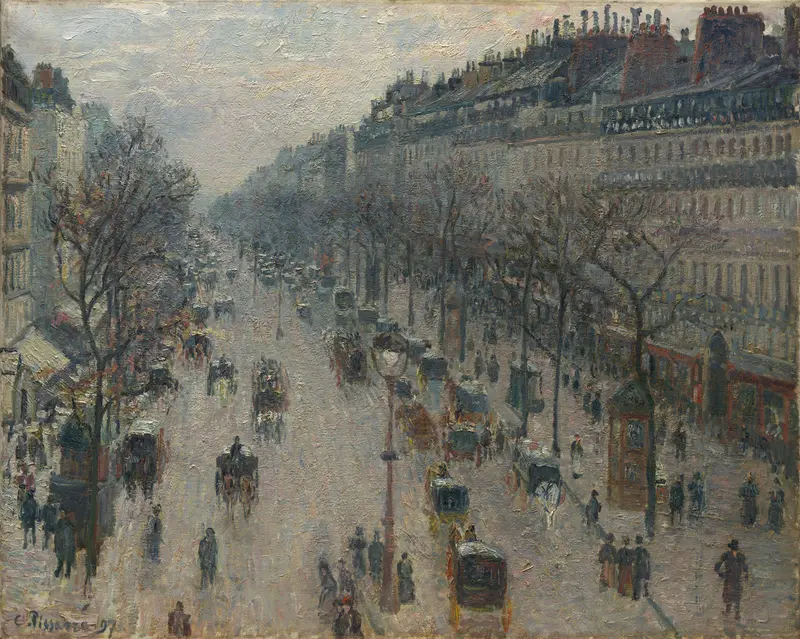
The impressionists painted outdoors to catch light and weather as they changed. These are six famous impressionist landscape paintings by Monet, Renoir, Sisley, Pissarro and Berthe Morisot.
Winter landscape paintings
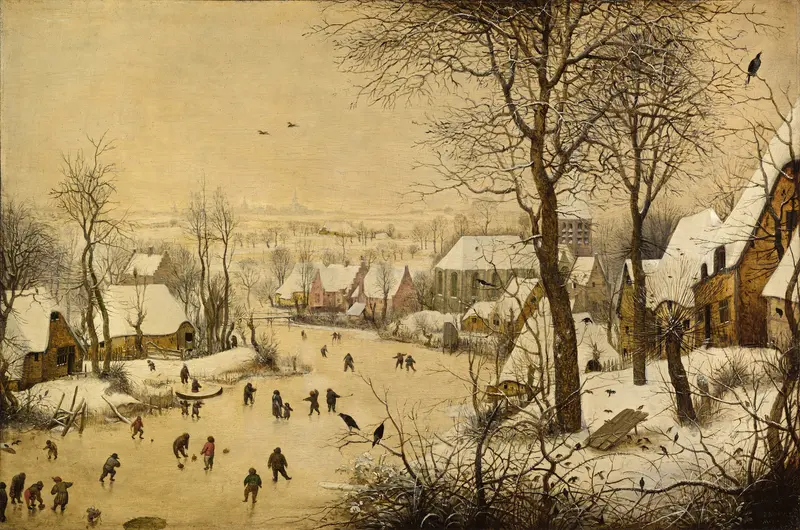
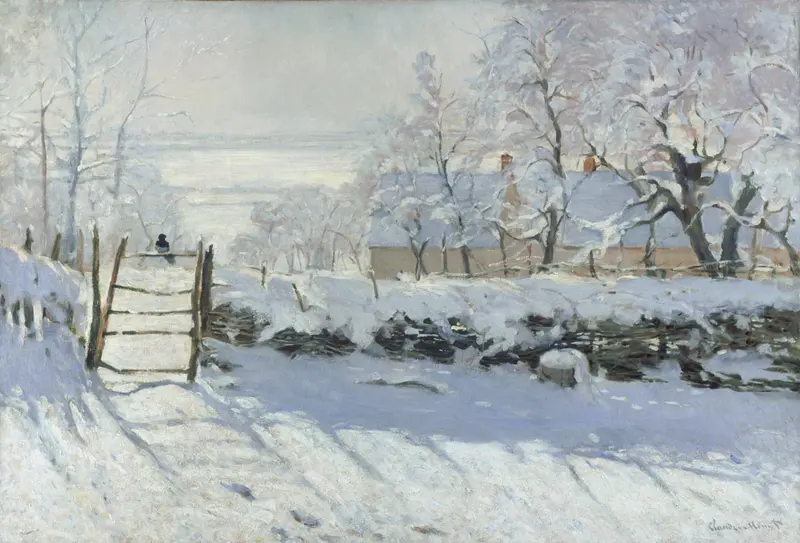
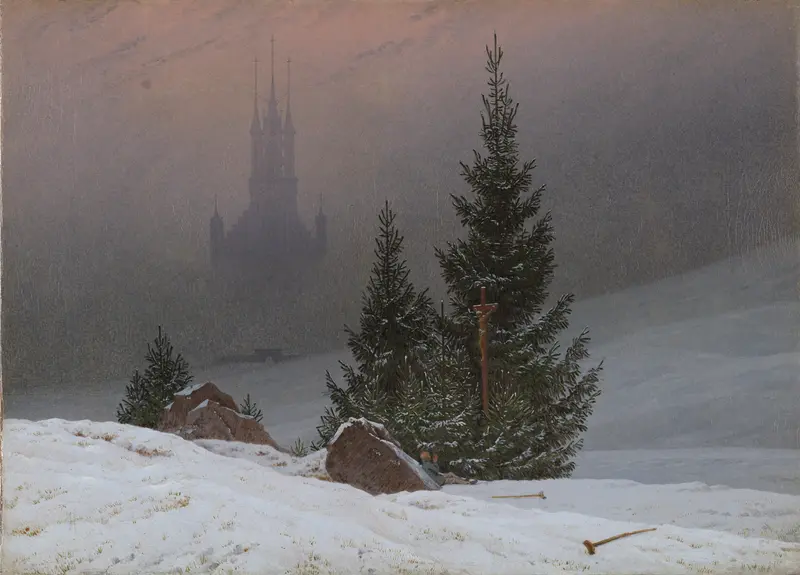
Snow, ice and low winter light, from Bruegel’s skaters to Monet’s magpie. These famous winter landscape paintings join The Hunters in the Snow and Avercamp’s skaters in the list above.

Japanese landscape paintings and prints
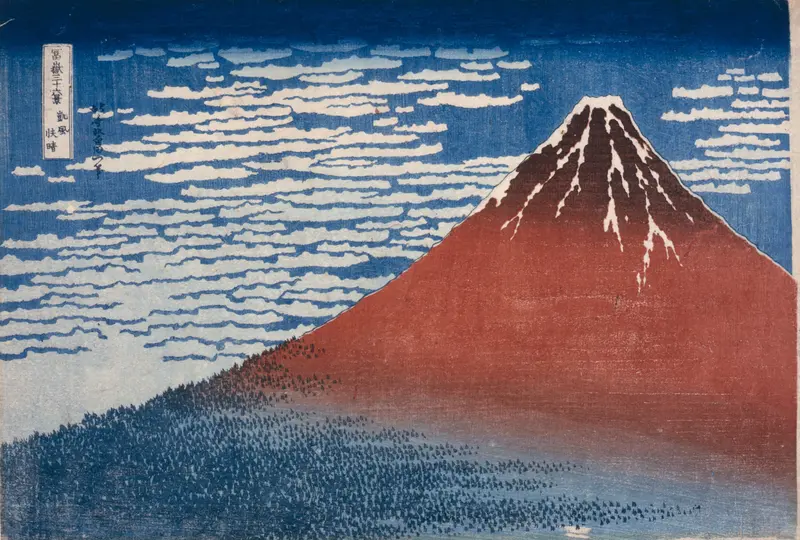
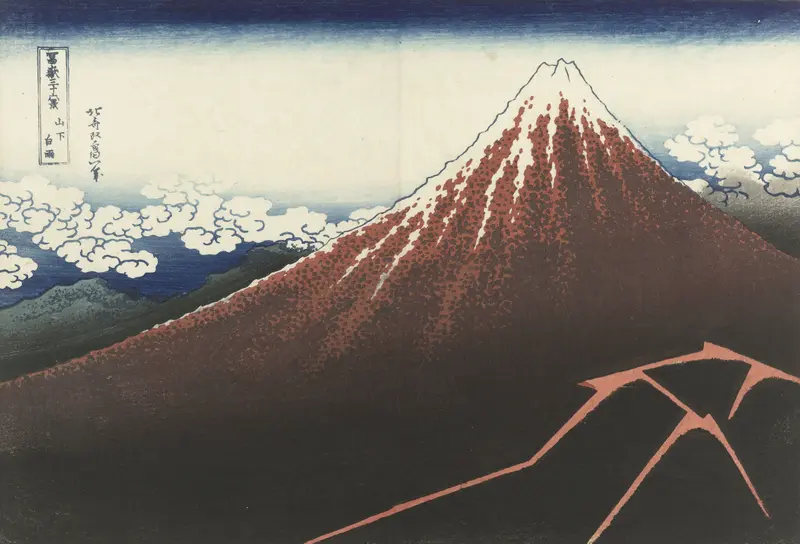
Japan’s most famous landscapes are woodblock prints, led by Hokusai’s Great Wave and Red Fuji and Hiroshige’s views of Edo, plus Hasegawa Tōhaku’s misty ink screens of pine trees.



Famous landscape artists
Landscape paintings by famous artists, from Ruisdael’s Dutch skies to Klimt’s lakeside summers. Each link opens all their paintings.
- John ConstablePainted the Suffolk countryside he grew up in, from The Hay Wain to Flatford Mill.
- J. M. W. TurnerStorms, steam and light, from Rain, Steam and Speed to The Fighting Temeraire.
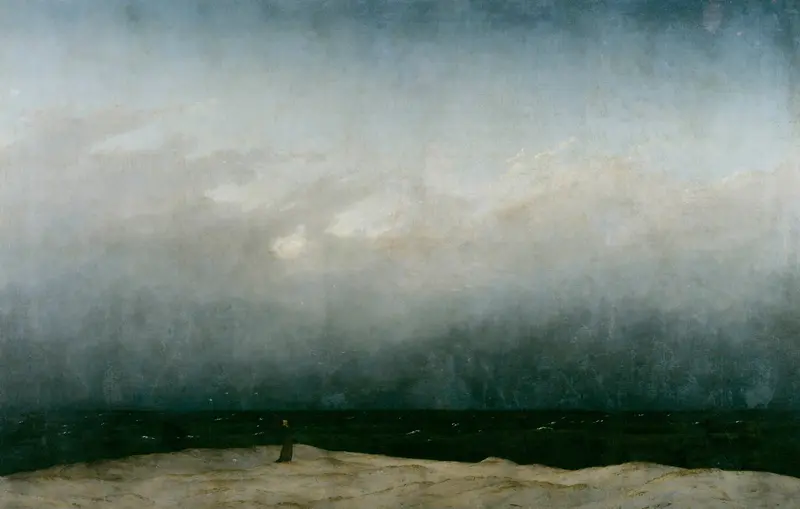 Caspar David FriedrichGerman Romantic painter of fog, ruins and lone figures facing nature.
- Claude MonetHis Impression, Sunrise gave Impressionism its name; his water lilies filled his last decades.
- Paul CézannePainted Mont Sainte-Victoire, near his hometown of Aix-en-Provence, more than 60 times.
- Thomas ColeCredited with launching the Hudson River School, America’s first landscape movement.
- Jacob van RuisdaelThe great Dutch painter of skies, woods and windmills in the 1600s.
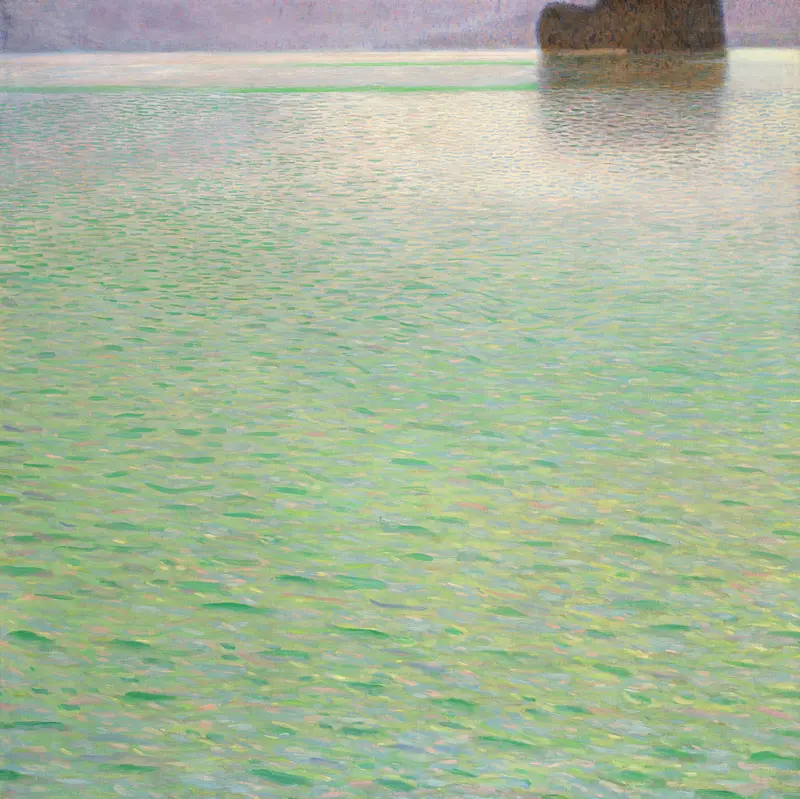 Gustav KlimtSpent his summers on Lake Attersee and painted its water and shores on square canvases.
List of famous landscape paintings and their artists
The 25 most famous landscape paintings: who painted them, the place they show, when, and where each one is today.
Show the list of 25 landscapesHide the list
| # | Painting | Place | Painted by | Year | Medium | Size | Located in | City |
|---|---|---|---|---|---|---|---|---|
| 1 | The Starry Night | Van Gogh's window view at the asylum in Saint-Rémy-de-Provence, France | Vincent van Gogh | 1889 | Oil on canvas | 73.7 × 92.1 cm (29 × 36.3 in) | Museum of Modern Art | New York |
| 2 | Impression, Sunrise | The harbor of Le Havre at dawn, France | Claude Monet | 1872 | Oil on canvas | 50 × 65 cm (19.7 × 25.6 in) | Musée Marmottan Monet | Paris |
| 3 | Wanderer above the Sea of Fog | A composite of the Elbe Sandstone Mountains in Saxon and Bohemian Switzerland | Caspar David Friedrich | c. 1817 | Oil on canvas | 94.8 × 74.8 cm (37.3 × 29.4 in) | Hamburger Kunsthalle | Hamburg |
| 4 | Wheatfield with Crows | Wheatfields at Auvers-sur-Oise, France | Vincent van Gogh | 1890 | Oil on canvas | 50.5 × 103 cm (19.9 × 40.6 in) | Van Gogh Museum | Amsterdam |
| 5 | View of Delft | Delft, seen from across the Kolk harbor, the Netherlands | Johannes Vermeer | c. 1660–1661 | Oil on canvas | 96.5 × 115.7 cm (38 × 45.6 in) | Mauritshuis | The Hague |
| 6 | The Hunters in the Snow | An invented Flemish village beneath Alpine peaks | Pieter Bruegel the Elder | 1565 | Oil on oak panel | 116.5 × 162 cm (45.9 × 63.8 in) | Kunsthistorisches Museum | Vienna |
| 7 | The Tempest | An imaginary countryside outside a walled town | Giorgione | c. 1504 | Oil on canvas | 82 × 73 cm (32.3 × 28.7 in) | Gallerie dell'Accademia | Venice |
| 8 | Water Lilies (Water Lily Pond) | Monet's water-lily pond and Japanese bridge at Giverny, France | Claude Monet | 1900 | Oil on canvas | 89.8 × 101 cm (35.4 × 39.8 in) | Art Institute of Chicago | Chicago |
| 9 | The Hay Wain | The millpond at Flatford on the River Stour, Suffolk, England | John Constable | 1821 | Oil on canvas | 130.2 × 185.4 cm (51.3 × 73 in) | National Gallery | London |
| 10 | Morning in a Pine Forest | A pine forest at sunrise; no specific place | Ivan Shishkin | 1889 | Oil on canvas | 139 × 213 cm (54.7 × 83.9 in) | Tretyakov Gallery | Moscow |
| 11 | View of Toledo | Toledo, Spain, seen from the north above the Tagus River | El Greco | c. 1599–1600 | Oil on canvas | 121.3 × 108.6 cm (47.8 × 42.8 in) | Metropolitan Museum of Art | New York |
| 12 | The Abbey in the Oakwood | An imagined graveyard around a ruin modeled on Eldena Abbey, Germany | Caspar David Friedrich | 1809–1810 | Oil on canvas | 110.4 × 171 cm (43.5 × 67.3 in) | Alte Nationalgalerie | Berlin |
| 13 | Rain, Steam and Speed – The Great Western Railway | Brunel's Maidenhead Railway Bridge over the Thames, England | J. M. W. Turner | 1844 | Oil on canvas | 91 × 121.8 cm (35.8 × 48 in) | National Gallery | London |
| 14 | The Harvesters | A summer wheat harvest in the Low Countries | Pieter Bruegel the Elder | 1565 | Oil on oak | 119 × 162 cm (46.9 × 63.8 in) | Metropolitan Museum of Art | New York |
| 15 | Mont Sainte-Victoire with Large Pine | Mont Sainte-Victoire above the Arc valley near Aix-en-Provence, France | Paul Cézanne | c. 1887 | Oil on canvas | 66.8 × 92.3 cm (26.3 × 36.3 in) | Courtauld Gallery | London |
| 16 | The Fighting Temeraire | The River Thames near London, England | J. M. W. Turner | 1839 | Oil on canvas | 90.7 × 121.6 cm (35.7 × 47.9 in) | National Gallery | London |
| 17 | Moonlit Night on the Dnieper | The Dnieper River under a full moon | Arkhip Kuindzhi | 1882 | Oil on canvas | 104 × 143 cm (40.9 × 56.3 in) | Tretyakov Gallery | Moscow |
| 18 | Heart of the Andes | An imagined Andean view with Chimborazo, Ecuador, in the distance | Frederic Edwin Church | 1859 | Oil on canvas | 168 × 302.9 cm (66.1 × 119.3 in) | Metropolitan Museum of Art | New York |
| 19 | Salisbury Cathedral from the Bishop's Grounds | Salisbury Cathedral from the bishop's grounds, England | John Constable | c. 1825 | Oil on canvas | 87.9 × 111.8 cm (34.6 × 44 in) | Metropolitan Museum of Art | New York |
| 20 | Winter Landscape with Ice Skaters | A frozen river beside a Dutch village | Hendrick Avercamp | c. 1608 | Oil on oak panel | 77.3 × 131.9 cm (30.4 × 51.9 in) | Rijksmuseum | Amsterdam |
| 21 | The Windmill at Wijk bij Duurstede | The River Lek at Wijk bij Duurstede, the Netherlands | Jacob van Ruisdael | c. 1668–1670 | Oil on canvas | 83 × 101 cm (32.7 × 39.8 in) | Rijksmuseum | Amsterdam |
| 22 | The Rooks Have Returned | The village of Molvitino near Kostroma, Russia | Alexei Savrasov | 1871 | Oil on canvas | 62 × 48.5 cm (24.4 × 19.1 in) | Tretyakov Gallery | Moscow |
| 23 | The Oxbow | The Connecticut River's oxbow from Mount Holyoke, Massachusetts | Thomas Cole | 1836 | Oil on canvas | 130.8 × 193 cm (51.5 × 76 in) | Metropolitan Museum of Art | New York |
| 24 | The Rocky Mountains, Lander's Peak | The Wind River Range of the Rocky Mountains, Wyoming | Albert Bierstadt | 1863 | Oil on canvas | 186.7 × 306.7 cm (73.5 × 120.7 in) | Metropolitan Museum of Art | New York |
| 25 | Golden Autumn | A river among autumn birches in Tver Province, Russia | Isaac Levitan | 1895 | Oil on canvas | 83.6 × 127.2 cm (32.9 × 50.1 in) | Tretyakov Gallery | Moscow |
Famous landscape paintings: questions and answers
What is the most famous landscape painting?
There's no official ranking, but Vincent van Gogh's The Starry Night (1889) has the strongest claim. It has belonged to the Museum of Modern Art in New York since 1941, and a MoMA publication calls it "an iconic image of modern culture" that draws thousands of visitors every day. Other strong contenders are Hokusai's The Great Wave and Claude Monet's Impression, Sunrise, the harbor view that gave Impressionism its name.
Sources: Museum of Modern Art, Richard Thomson, "Vincent van Gogh: The Starry Night" (PDF) · Musée Marmottan Monet, Claude Monet collection · The Metropolitan Museum of Art, collection record
Who is the most famous landscape painter?
There's no official answer, but Claude Monet is a strong candidate: the Musée Marmottan Monet calls him "the leading figure of Impressionism," a movement named after his harbor view Impression, Sunrise. In Britain, Tate names John Constable and J.M.W. Turner as the country's two outstanding contributors to 19th-century landscape painting. And Vincent van Gogh painted The Starry Night, probably the best-known landscape of all.
Sources: Musée Marmottan Monet, Claude Monet collection · Tate, Art Term: Landscape
What is a landscape painting?
A landscape painting is a picture whose main subject is outdoor scenery: land, hills, fields, trees, rivers and sky, usually with a view into the distance. People or buildings can appear, but the land stays the focus; when the sea dominates, the picture is usually called a seascape instead. Tate counts landscape among the principal genres of Western art, and Chinese painters treated it as an independent genre centuries before Europe did.
Sources: Getty Art & Architecture Thesaurus, "landscapes (visual works)" · Tate, Art Term: Landscape · The Metropolitan Museum of Art, "Landscape Painting in Chinese Art"
When did landscape painting start?
It depends where you look. In China, landscape painting had become an independent genre by the late Tang dynasty, more than a thousand years ago. In Europe, landscape long served as a backdrop to religious and historical scenes. Joachim Patinir, recorded in Antwerp from 1515, was a pioneer of specialist landscape painting, and in the 1600s artists such as Claude Lorrain and the Dutch painter Jacob van Ruisdael made it a subject in its own right.
Sources: The Metropolitan Museum of Art, "Landscape Painting in Chinese Art" · National Gallery, London, Joachim Patinir · Tate, Art Term: Landscape
What makes a good landscape painting?
There's no single formula, and tastes have shifted over time. When Constable showed The Hay Wain in 1821, a reviewer in The Examiner praised it for coming "nearer to the actual look of rural nature" than any modern landscape. The Impressionists cared more about capturing a scene's atmosphere than describing every detail. Nearly two centuries earlier, Rubens already used landscape to express mood and delight in nature. Close observation, atmosphere and mood: those are the qualities these museums praise.
Sources: National Gallery, London, The Hay Wain · Musée Marmottan Monet, Impression, Sunrise · National Gallery, London, An Autumn Landscape with a View of Het Steen
Why is The Starry Night so famous?
It's a mix of story and style. Van Gogh painted it in June 1889 while living at the asylum in Saint-Rémy, in southern France, combining the view from his window with earlier studies and his imagination. The swirling sky and dark, towering cypress are unforgettable, even though Van Gogh himself wasn't fully satisfied with the picture. Today it is one of MoMA's main draws, and its image turns up everywhere, from ties and T-shirts to book covers.
Sources: Museum of Modern Art, Richard Thomson, "Vincent van Gogh: The Starry Night" (PDF) · Museum of Modern Art, collection record (title as shown in search results)
Who painted The Hay Wain?
The English painter John Constable painted The Hay Wain in 1821. It shows a horse-drawn wagon crossing the millpond at Flatford on the River Stour in Suffolk, about a mile from his birthplace, though he painted it in his London studio from sketches. It didn't sell when first shown in London, but at the 1824 Paris Salon it caused a sensation and helped win him a gold medal from King Charles X. It hangs in the National Gallery, London.
What are the most famous Japanese landscape paintings?
The most famous are woodblock prints from Katsushika Hokusai's series Thirty-six Views of Mount Fuji, made around 1830: Under the Wave off Kanagawa, better known as The Great Wave, and Fine Wind, Clear Morning (also titled South Wind, Clear Sky), nicknamed Red Fuji. Utagawa Hiroshige's One Hundred Famous Views of Edo is another classic. Among paintings, Hasegawa Tōhaku's misty 16th-century ink screens Pine Trees are a National Treasure at the Tokyo National Museum.
Sources: The Metropolitan Museum of Art, collection record · Cleveland Museum of Art, South Wind, Clear Sky · e-Museum, National Institutes for Cultural Heritage (Tokyo National Museum)
What are the most famous impressionist landscape paintings?
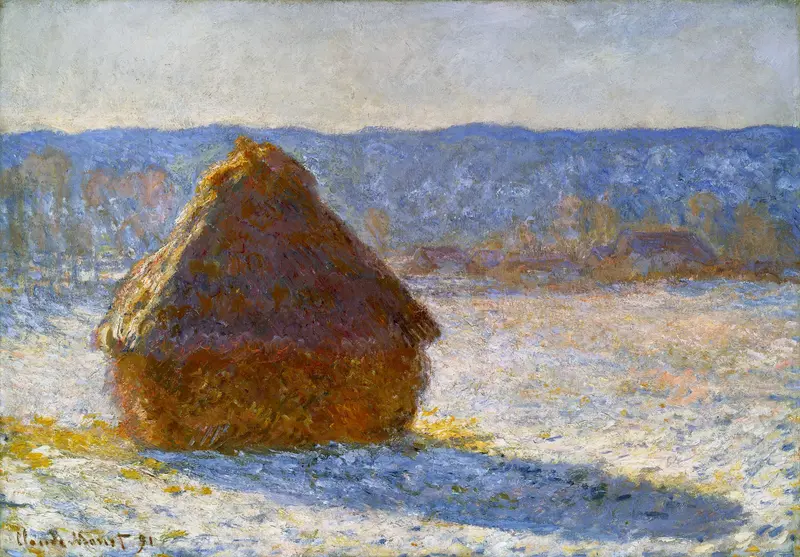
Most of the famous ones are by Claude Monet. His Impression, Sunrise (1872), a misty view of Le Havre harbor painted in just a few hours, gave Impressionism its name in 1874. His Water Lilies cycle occupied him from the late 1890s until his death in 1926, and eight huge compositions fill two elliptical rooms at the Musée de l'Orangerie in Paris. Look also for his Haystacks series and for landscapes by Renoir, Sisley, Pissarro and Caillebotte.
Sources: Musée Marmottan Monet, Impression, Sunrise · Musée de l'Orangerie, The Water Lilies by Claude Monet
Who are the most famous American landscape painters?
The best-known names come from the Hudson River School, often called the first truly American style of painting. Thomas Cole (1801–1848) is credited with launching it, and his student Frederic Edwin Church became one of its leaders; Church's Heart of the Andes (1859) sold for $10,000, then a record for a living American artist. Albert Bierstadt, an immigrant who grew rich partly through self-promotion, fed the 1860s appetite for spectacular frontier views such as Among the Sierra Nevada, California.
Sources: Thomas Cole National Historic Site · Olana State Historic Site, Church's Art · Smithsonian American Art Museum, Among the Sierra Nevada, California
What are the most famous autumn landscape paintings?
Isaac Levitan's Golden Autumn (1895), in Moscow's Tretyakov Gallery, is perhaps the most famous, with its golden-leaved trees beside a still river. Pieter Bruegel the Elder's The Return of the Herd (Autumn), painted in 1565 like his Hunters in the Snow, shows cattle being driven down from the Alpine pastures. And Peter Paul Rubens's An Autumn Landscape with a View of Het Steen (probably 1636) catches his country estate on a crisp autumn morning.
Sources: State Tretyakov Gallery, Golden Autumn (in Russian) · Kunsthistorisches Museum Vienna, The Return of the Herd (Autumn) · National Gallery, London, An Autumn Landscape with a View of Het Steen
Are famous landscape paintings in the public domain, and can I download them for free?
Yes. Every painting on this page is in the public domain, and you can download a standard-size image free for any use, including commercial. In the US, works published before 1931 are public domain, as are unpublished works by artists who died before 1956. Faithful photos of such paintings get no new US copyright: the Copyright Office won't register a "slavish copy." Other countries set their own rules, though EU law also denies copyright to faithful reproductions of public-domain art.
Sources: Cornell University Library, Copyright Term and the Public Domain in the United States · U.S. Copyright Office, Compendium (Third), ch. 900, §909.3(A) · EU Directive 2019/790, Article 14 (via legislation.gov.uk)
How we chose the most famous landscapes
We ranked the paintings by how widely each one is known around the world: the number of languages that have an encyclopedia entry about it, checked in October 2026. The more cultures write about a landscape, the higher it ranks.
A few rules keep the list useful. Every painting is in the public domain, so you can download and use it freely. No painter has more than two places. The list is for paintings where the land, the water or the sky is the subject, so famous scenes of people outdoors, such as Seurat's A Sunday on La Grande Jatte, are left out. So are Chinese handscrolls such as Along the River During the Qingming Festival, which are many meters long and can't be shown as one picture, and Japanese woodblock prints like Hokusai's Great Wave have their own section. When a painting exists in several versions, we show one and tell you which.
Places, dates, sizes and locations come from the museums' own records, and each entry links to its sources.
Spotted a mistake? Tell us and we will correct it.
Browse all 43,994 landscape paintings
Every one is public domain and free to download, most famous first: vintage and antique landscape paintings from Dutch winters to the American wilderness.