Landscape by Moonlight — History & Analysis
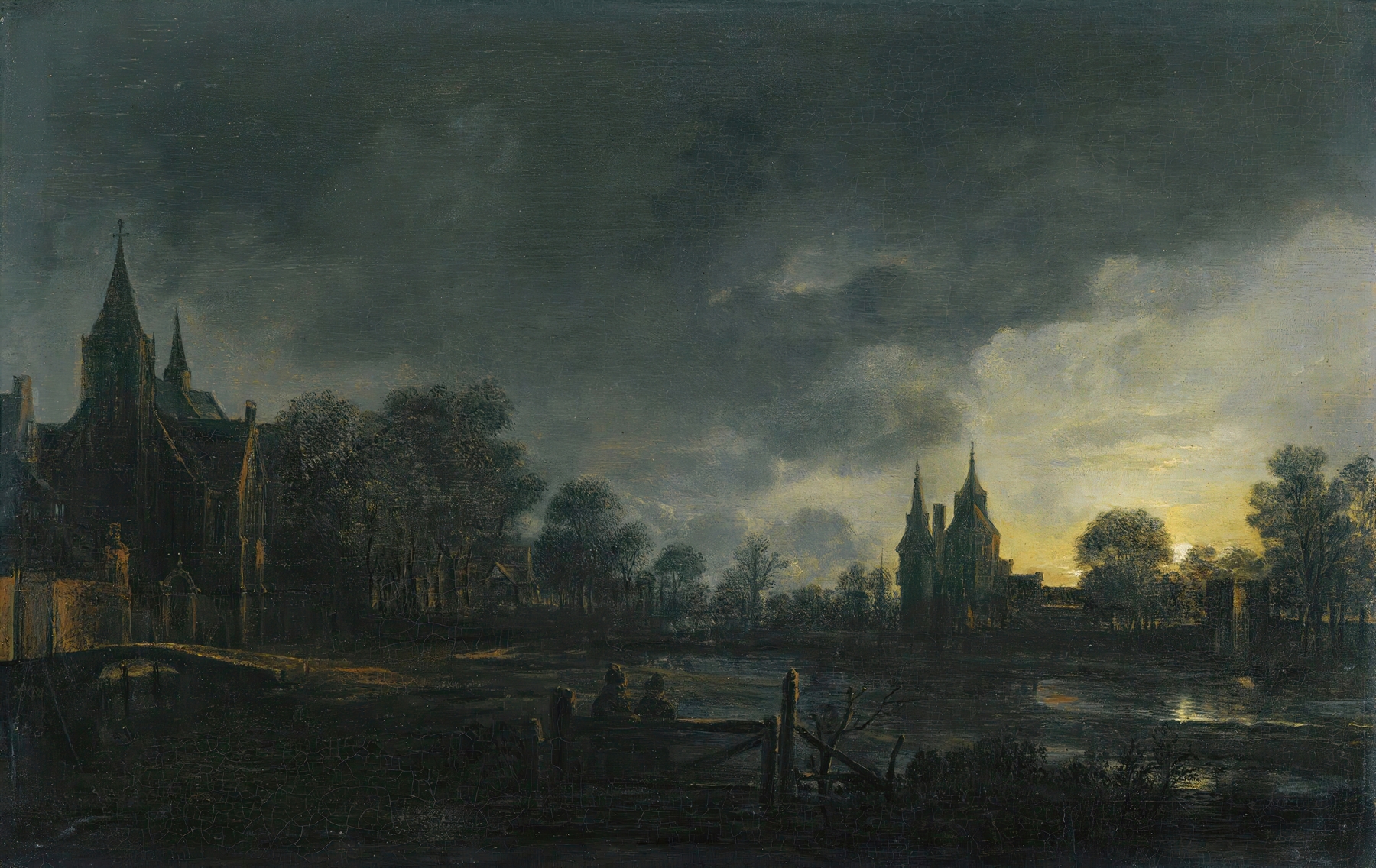
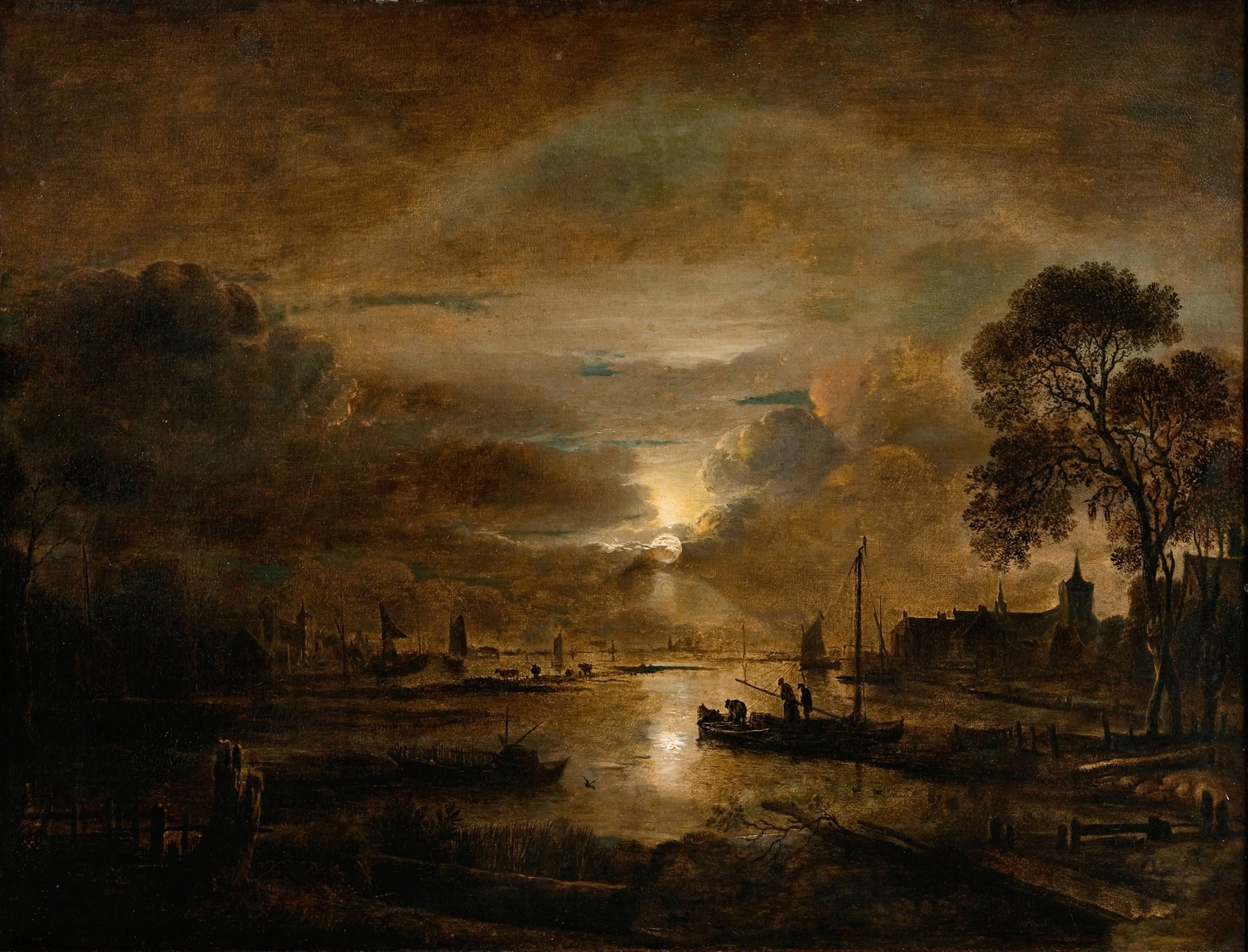
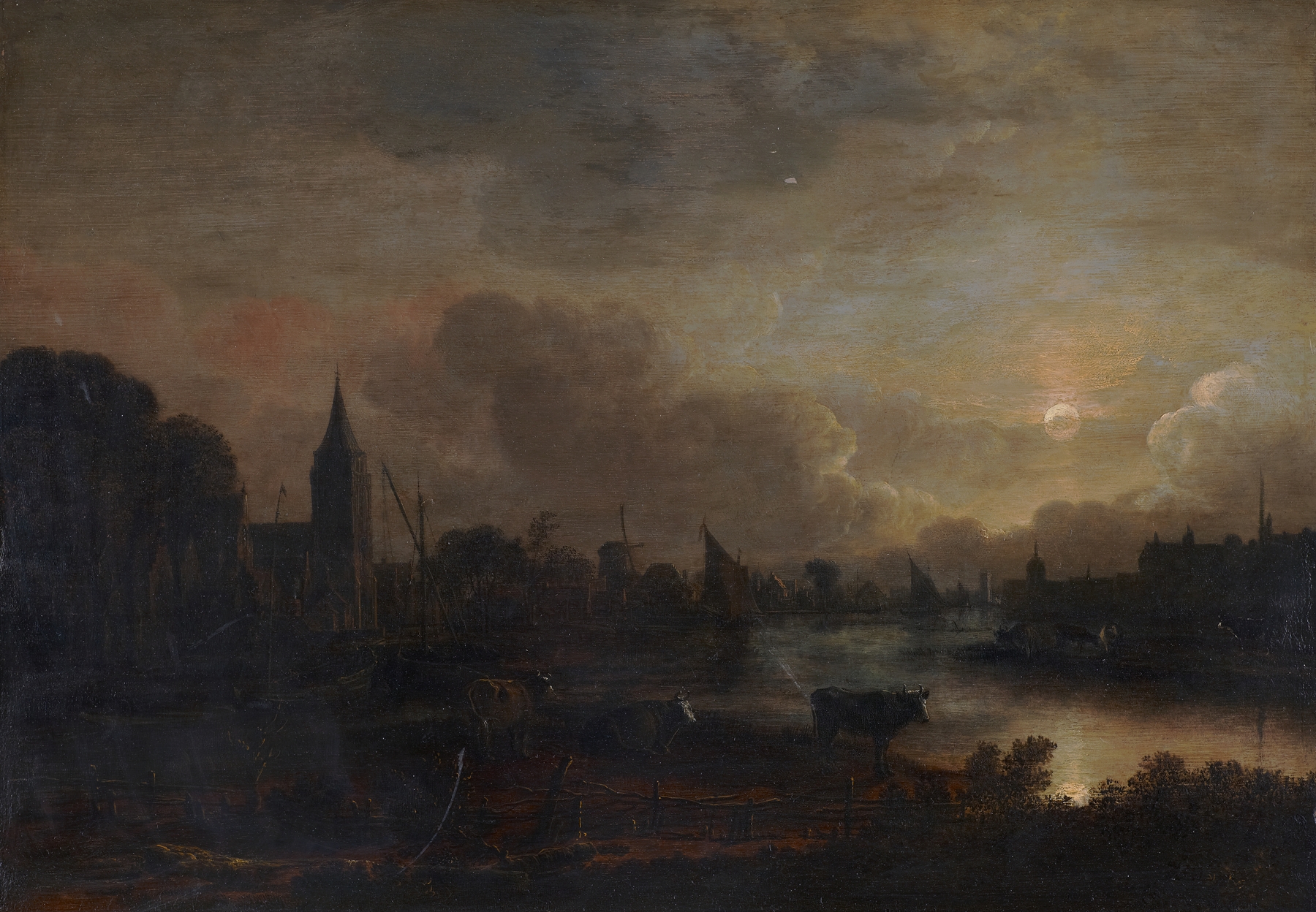
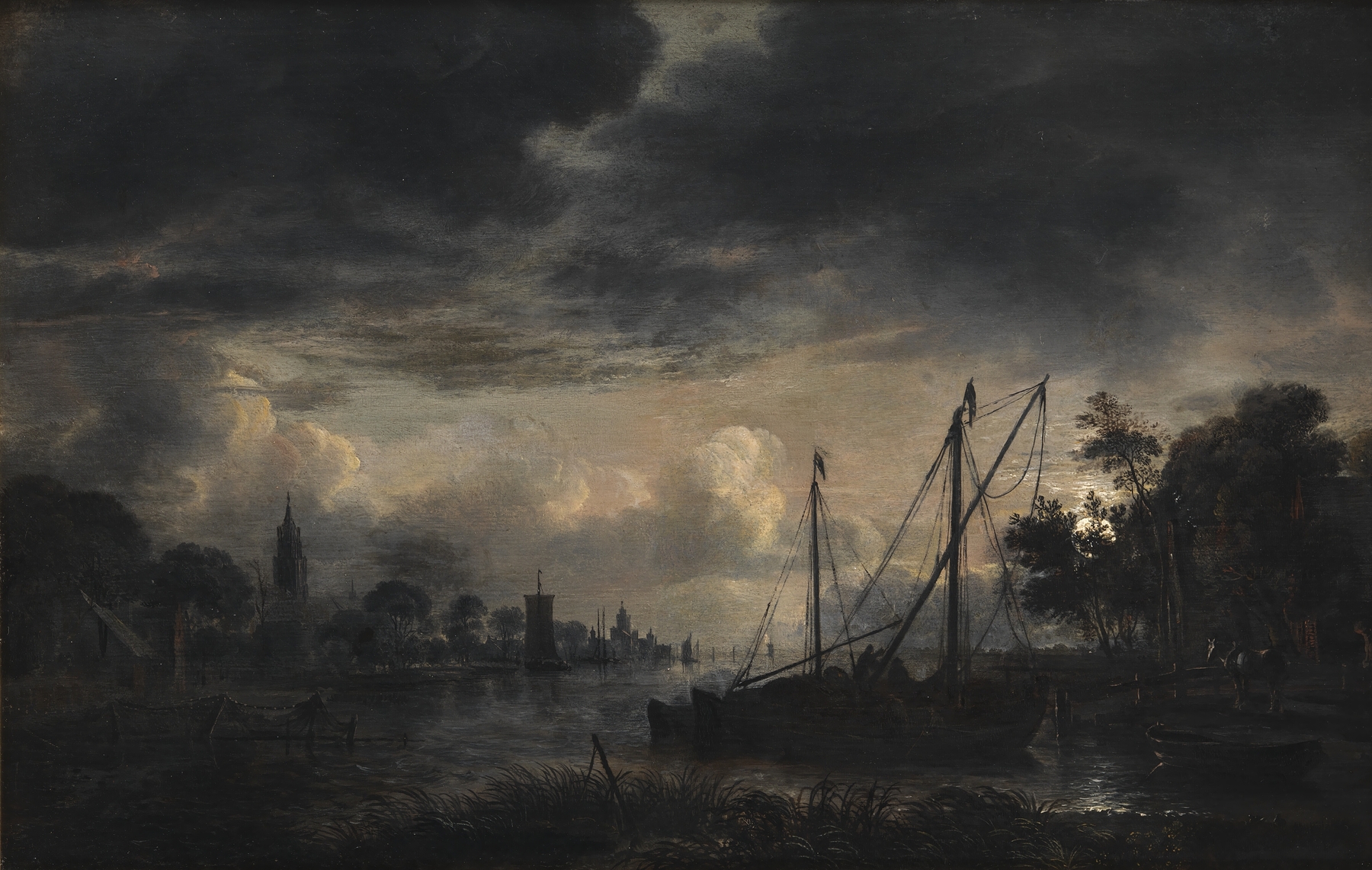
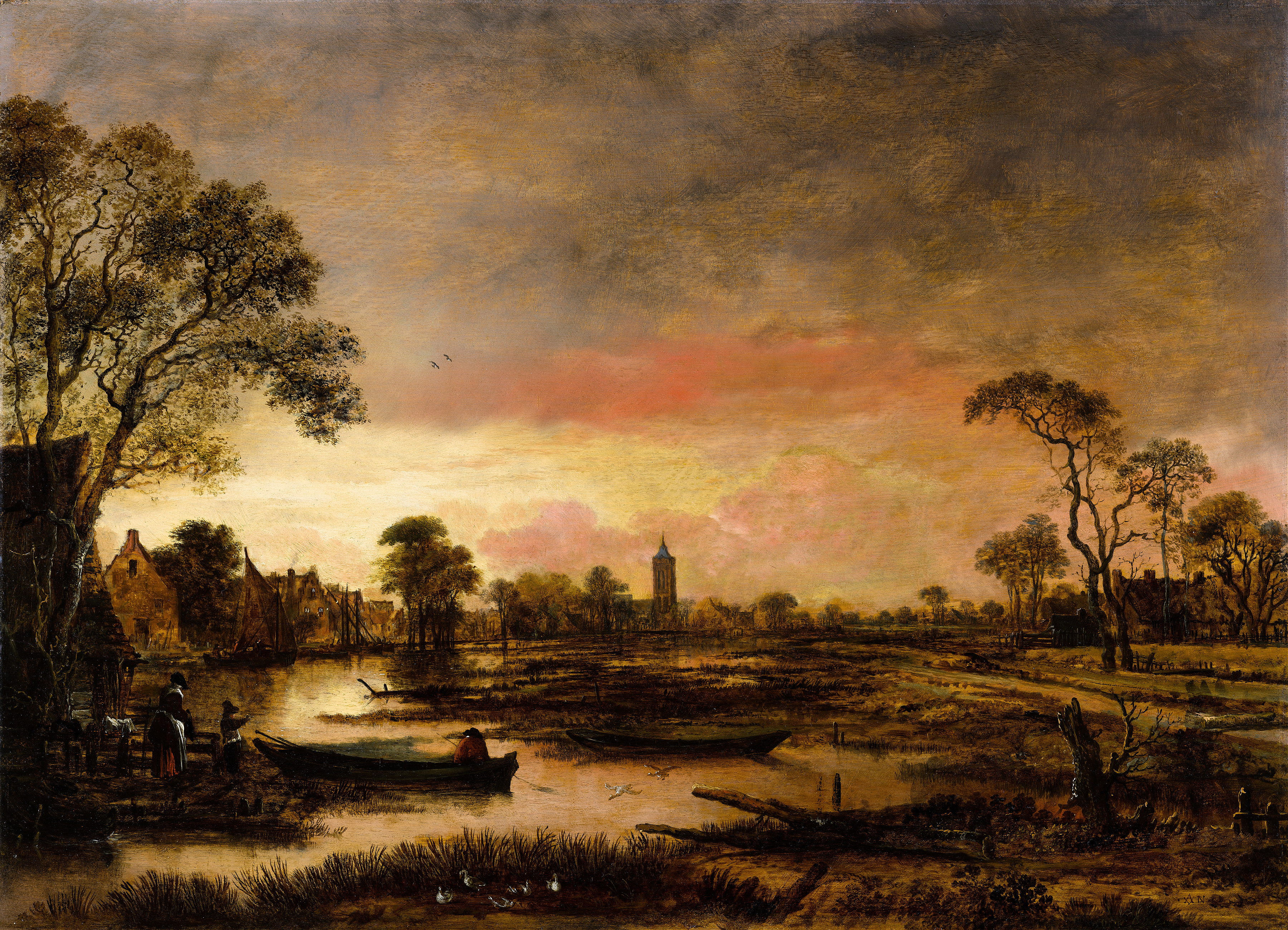
What secret hides in the quiet of the canvas? In the depths of night, illuminated by a silvery moon, lies a tranquil landscape pregnant with potential and secrets untold. Shadows dance upon the earth, whispering stories of those who tread lightly beneath the celestial sphere. Look to the center of the composition, where a gentle river flows, reflecting the moon’s glow in rippling silvers and deep blues. Notice how the light falls upon the trees, their dark silhouettes etched against the luminous sky.
The soft brushwork creates a sense of calm, while the stark contrasts between light and shadow invite contemplation. The horizon breathes life into the scene, suggesting vastness beyond the stillness. Beneath the serene surface, a tension brews between the tranquil setting and the unknown that shadows it. The contrasting elements of light and darkness symbolize the duality of peace and peril, evoking a sense of longing or perhaps nostalgia for fleeting moments.
The small figures at the water's edge, though indistinct, suggest human presence—reminders of vulnerability and connection to nature amidst the vast night, deepening the emotional resonance of the work. Aert van der Neer painted Landscape by Moonlight in the mid-17th century, a time when Dutch landscape painting flourished. Working primarily in Amsterdam, he was influenced by the burgeoning interest in atmospheric effects and the interplay of light, which reflected a broader cultural shift towards appreciating the natural world. This period saw him exploring the nocturnal scenes that would define much of his oeuvre, capturing the ethereal beauty and tranquility of nighttime landscapes.