Landschap — History & Analysis
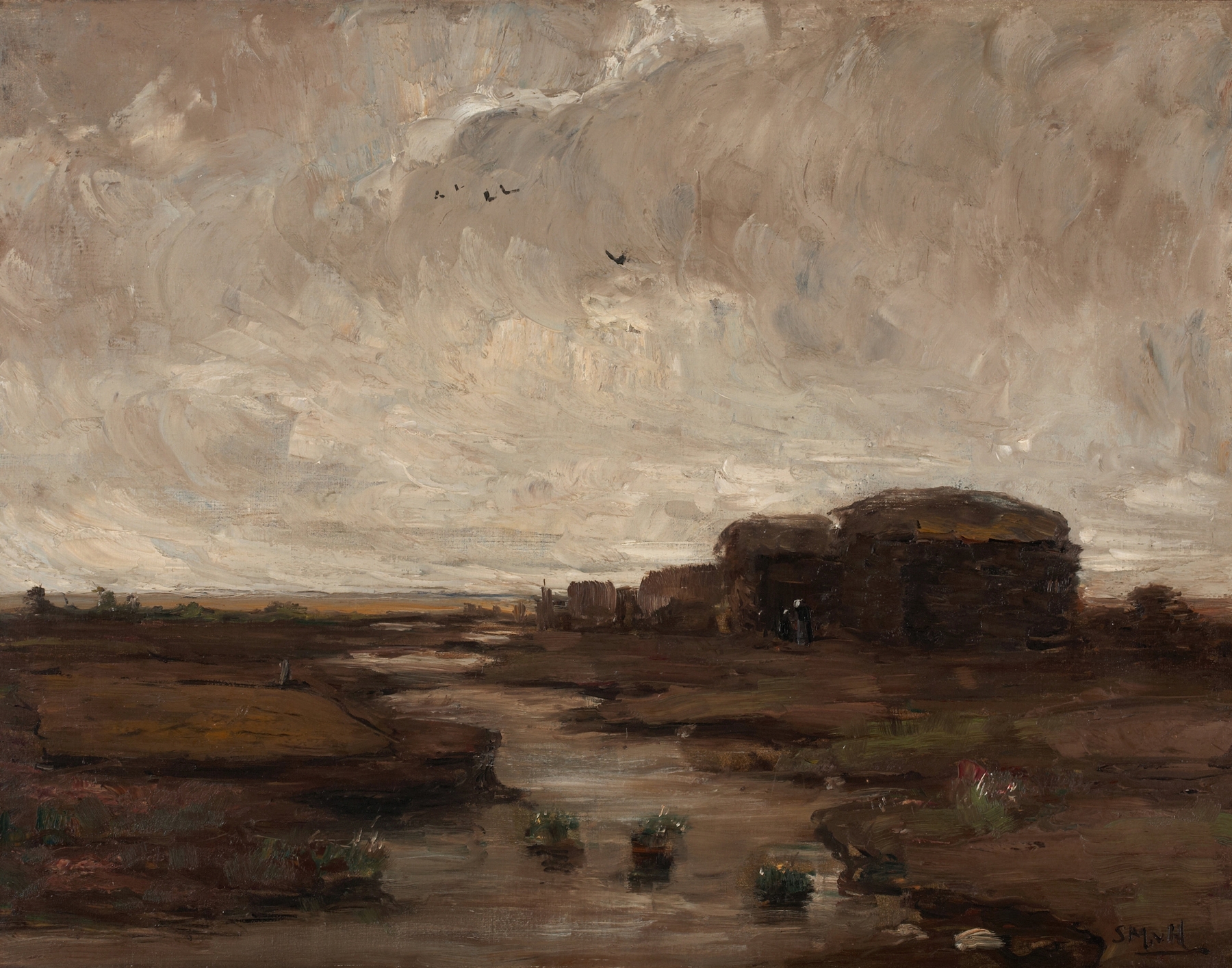
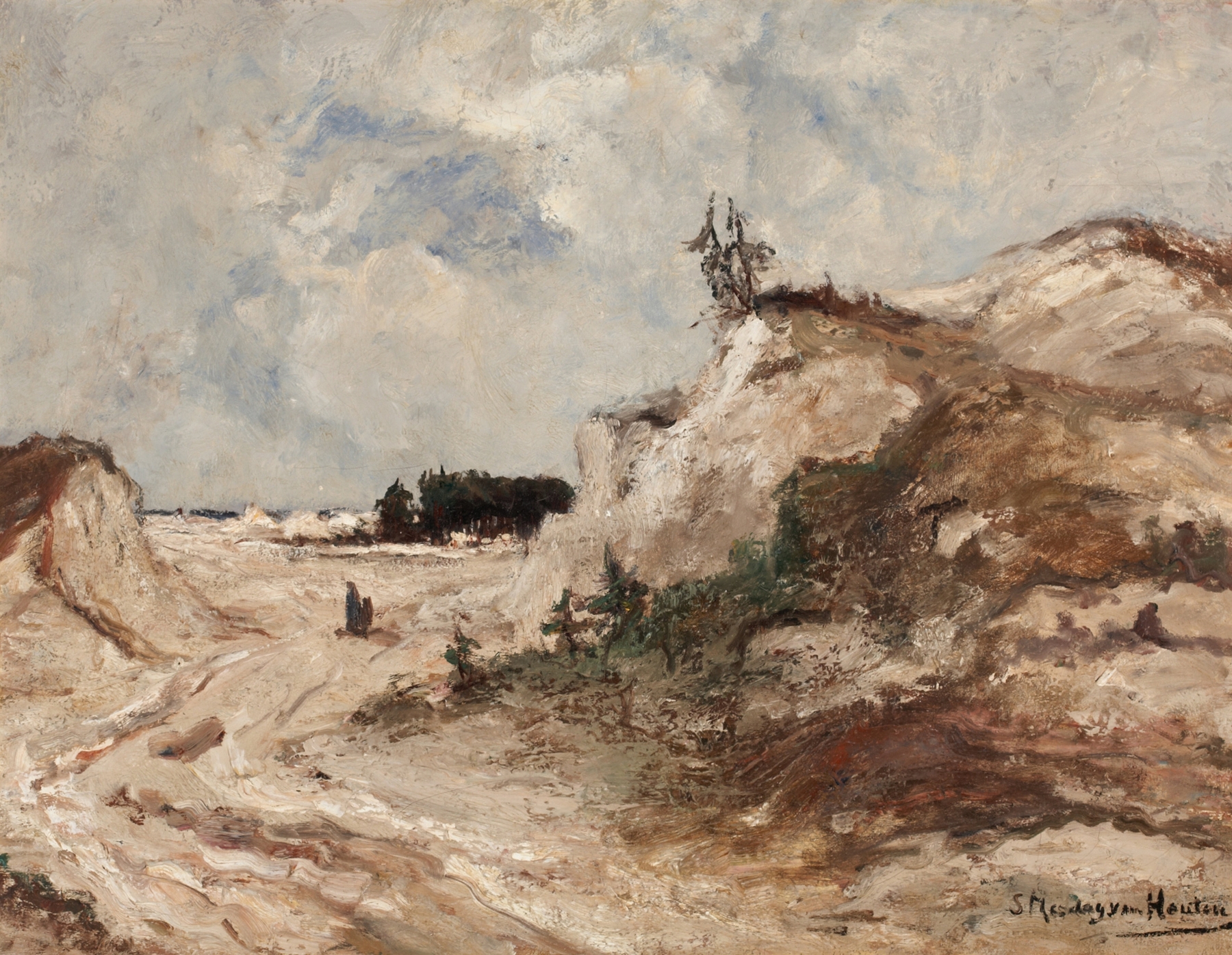
“To paint is to remember what time wants us to forget.” In Landschap, the essence of emptiness resonates profoundly, fulfilling this sentiment through its ethereal expanse. Look to the horizon, where muted earth tones blend seamlessly with the soft, overcast sky. The subtle gradations create a sense of depth, drawing the eye into an almost infinite canvas. Notice how the sparse composition emphasizes the quietude of the landscape, each brushstroke deliberate in its restraint, as if the artist sought to capture a moment of stillness before the world awakens.
Amidst this serene expanse, contrasts emerge between the vibrancy of the earth's hues and the pallid sky. This interplay speaks to the fragility of existence, mirroring the transient nature of memories and emotions. The minimal human presence suggests solitude, inviting viewers to contemplate their own feelings of isolation amid vastness, as well as the beauty that accompanies stillness.
Sientje Mesdag Van Houten created Landschap during the late 19th century, a time marked by the rise of Impressionism and exploration in landscape artistry. Living in The Hague, she was part of a vibrant community that challenged traditional techniques and embraced innovative approaches. This period saw her confront personal tragedies and societal changes, further fueling her desire to capture the haunting beauty of landscapes and the emotions tied to them.