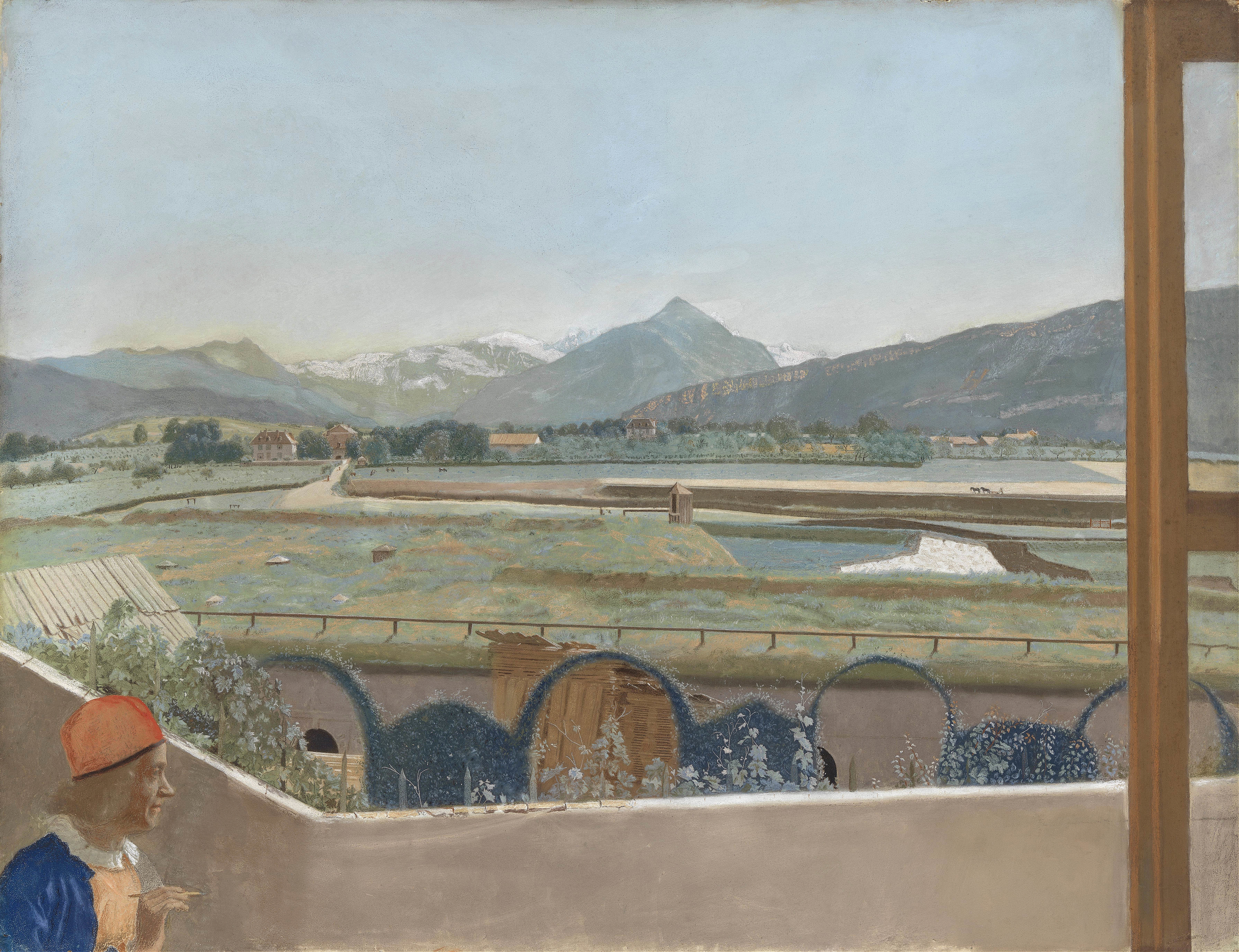
Landschap met koeien, schapen en herderin, gewijzigde kopie naar een schilderij van Paulus Potter, de herderin gekopieerd van een schilderij van Karel Dujardin (recto); onvoltooid portret van een man (verso) — History & Analysis
Can paint confess what words never could? In the delicate brushstrokes of a bygone era, the silence of the countryside speaks volumes, awakening a world both pastoral and profound. Focus first on the herderin, who stands poised amidst a tranquil landscape filled with grazing cows and sheep. Her figure is rendered with meticulous detail, capturing the flutter of her garment and the gentleness in her posture.
The soft light bathes the scene, creating a harmonious glow that wraps around the animals and the lush greenery, drawing your eye to the subtle interplay between figure and nature. As you explore further, consider the juxtaposition of the serene pastoral life against the unfinished portrait on the reverse side. This duality hints at a tension between the idealized world of rural peace and the raw, incomplete essence of human existence. The presence of the grazing animals symbolizes nourishment, while the unfinished portrait suggests the complexity of identity and the passage of time—a reminder that life is never fully resolved.
In 1761, Liotard found inspiration in the pastoral landscapes typical of the Dutch Masters, particularly the works of Paulus Potter. It was a time when the Rococo style was blossoming in Europe, yet he chose to marry these influences with his own distinct realism, exploring themes of nature and humanity. His life, marked by meticulous observation and an appreciation for detail, culminated in this piece, inviting viewers to contemplate the delicate balance between the seen and the unseen within both art and life itself.