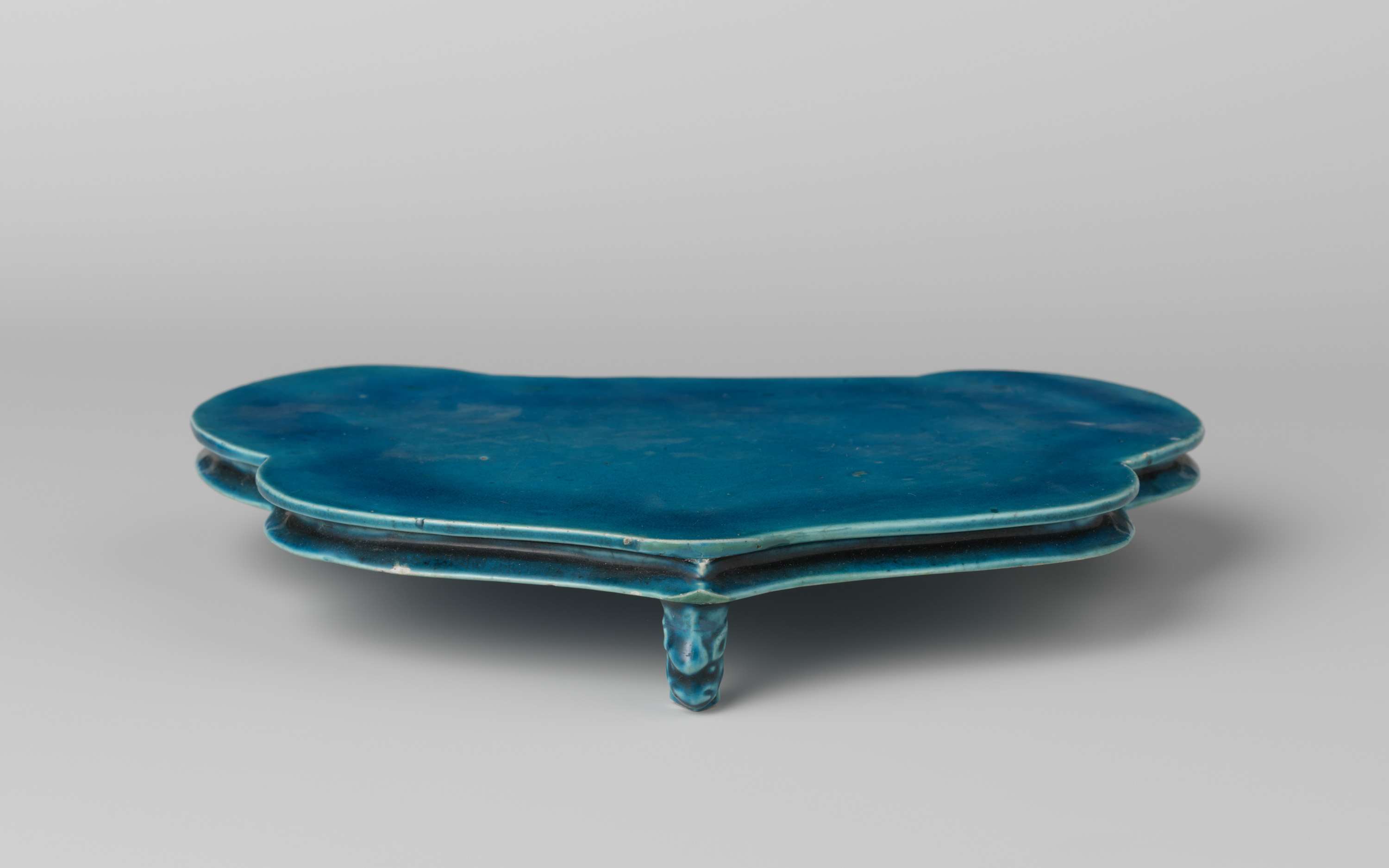
Leaf-shaped table on three legs — History & Analysis
Could beauty survive in a century of chaos? The leaf-shaped table, a delicate marvel from an era defined by upheaval, embodies an exquisite balance that speaks to the enduring human spirit. Look to the center of the table, where the elegant curves converge, creating a harmonious leaf-like form that invites admiration. The rich wood grain contrasts with the polished finish, highlighting the craftsmanship that has withstood the test of time. Notice how the three legs are meticulously positioned, their subtle asymmetry providing stability while evoking a sense of organic growth.
Each angle and curve is thoughtfully designed, drawing the eye toward a centerpiece that balances both visual appeal and functionality. Beneath its surface lies a deeper significance. The table's design symbolizes the tension between nature and artifice, a reflection of an era grappling with the rapid changes brought by the Enlightenment. The three legs can be seen as representing the balance of mind, body, and spirit, suggesting that even in tumultuous times, harmony is achievable.
Each imperfection in the wood narrates a story of resilience, reminding viewers of the fragility yet strength inherent in beauty. This exquisite piece emerged during a period when the artisan world was transitioning, and the creation of functional art began to flourish. Crafted between 1700 and 1799, it reflects a blend of traditional techniques and emerging aesthetic sensibilities. The artist, much like others of their time, was navigating the complexities of an evolving society, where art became both a refuge and a means of expression amidst the chaos that defined the century.