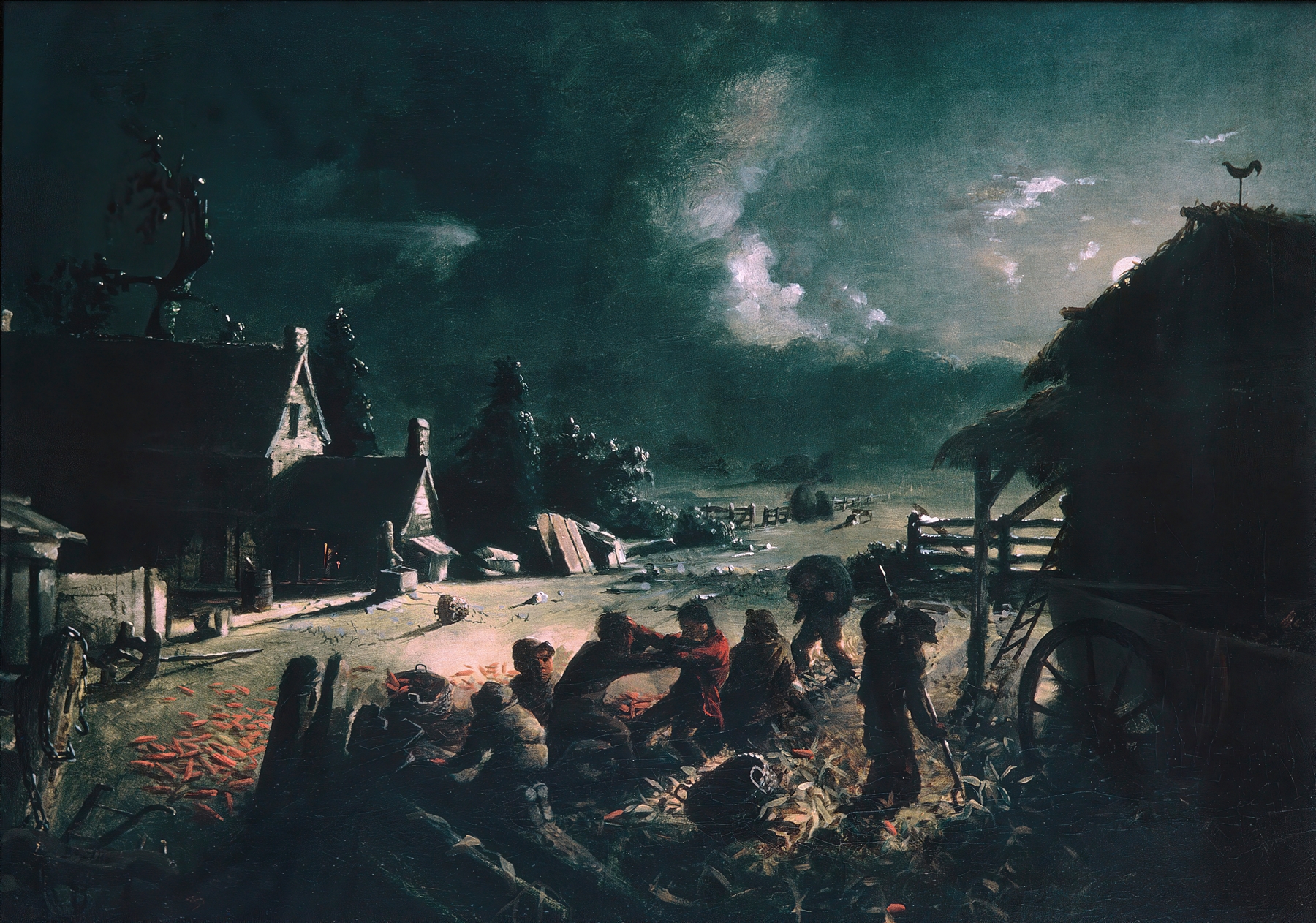
Old Virginia Home — History & Analysis
Can paint confess what words never could? In a world blurring with time, nostalgia becomes a vibrant tapestry woven with longing and memory. Look to the left at the weathered façade of the old home, its wooden boards kissed by the sun yet shrouded in shadow. The artist's deliberate brush strokes breathe life into the scene, where earthy tones of brown and green intermingle, evoking a sense of enduring warmth amid decay.
The gentle curls of smoke wafting from the chimney beckon the viewer’s gaze, guiding it upward to the cotton clouds drifting lazily in an expansive blue sky. Here, the composition evokes a harmonious balance between nature and architecture, a moment frozen yet teeming with untold stories. Beneath the surface, emotional currents swirl – the juxtaposition of the home’s sturdy structure against the encroaching wildness of nature hints at resilience and inevitable change. The lush overgrowth surrounding the house serves as a reminder of time’s passage, suggesting both comfort and isolation.
Each window, darkened and closed, speaks volumes of lives lived and forgotten, reflecting the profound melancholy of places once bustling with life now rendered silent. David Gilmour Blythe painted this piece in 1864, during a tumultuous period in American history marked by the Civil War. Living in Pennsylvania, he witnessed the shifting landscape of his country, which found its reflections in his work. At this time, art was evolving, and Blythe’s focus on realism and regionalism contributed to the broader narrative of American art, capturing the essence of his homeland while wrestling with themes of nostalgia and memory.