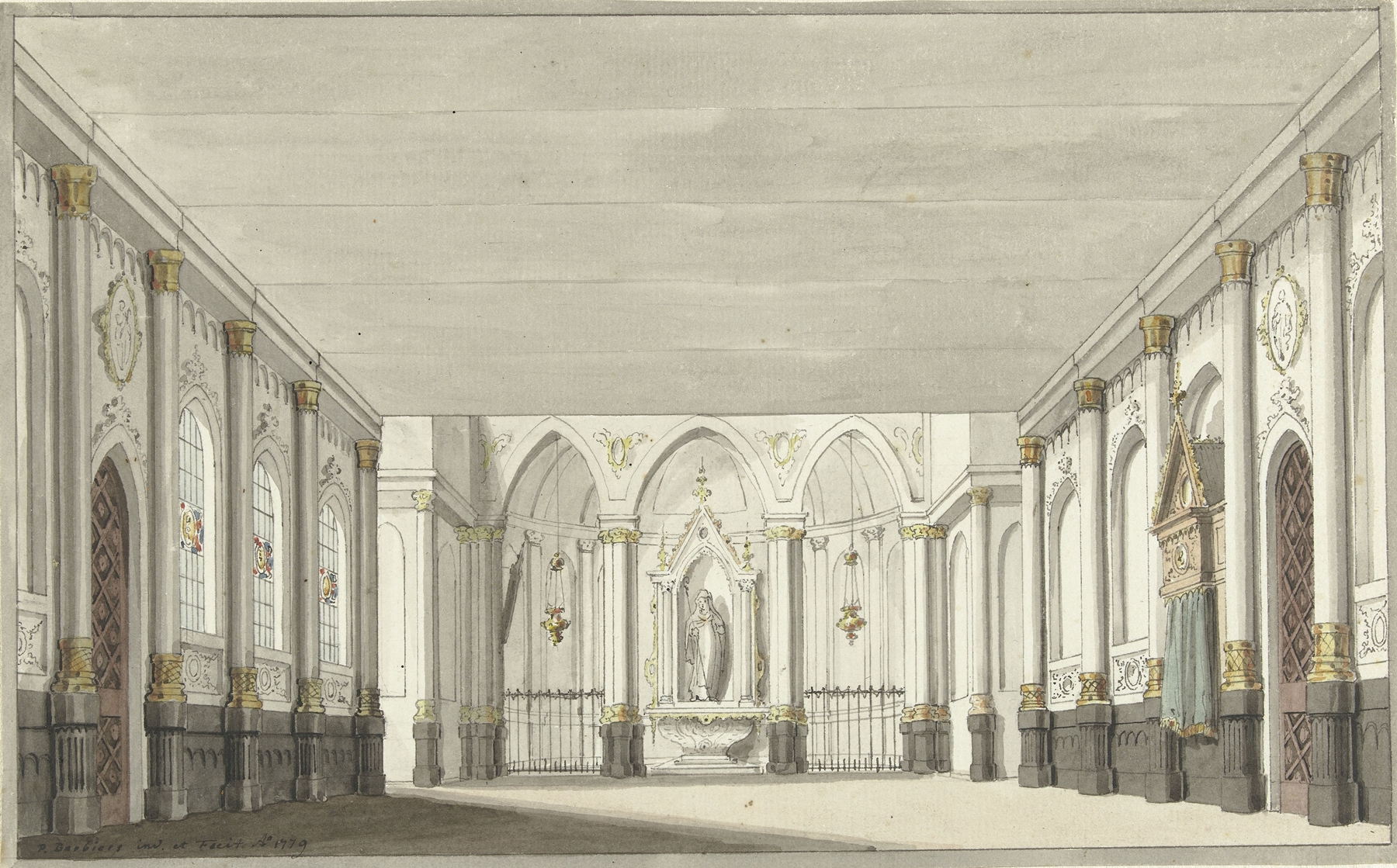
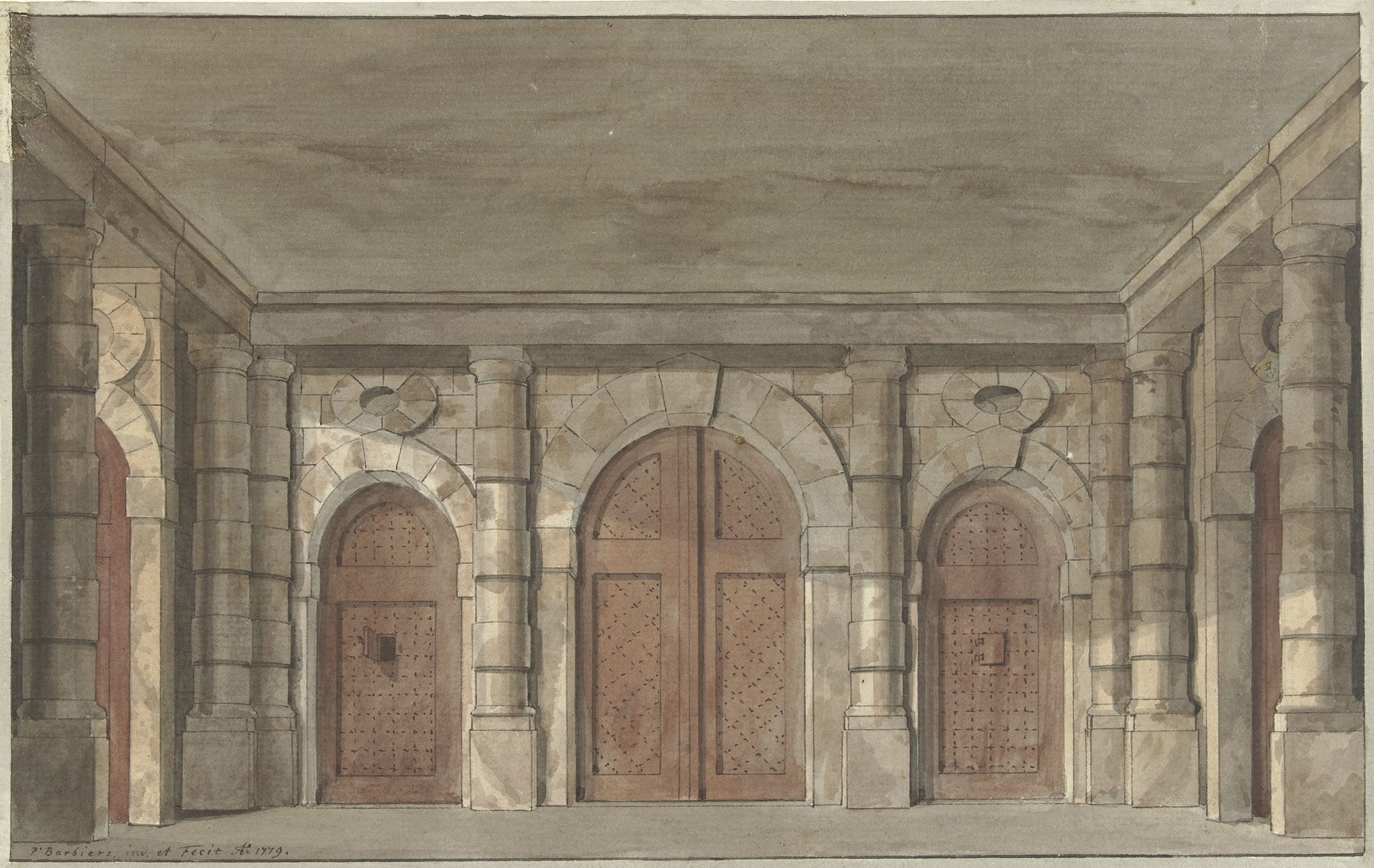
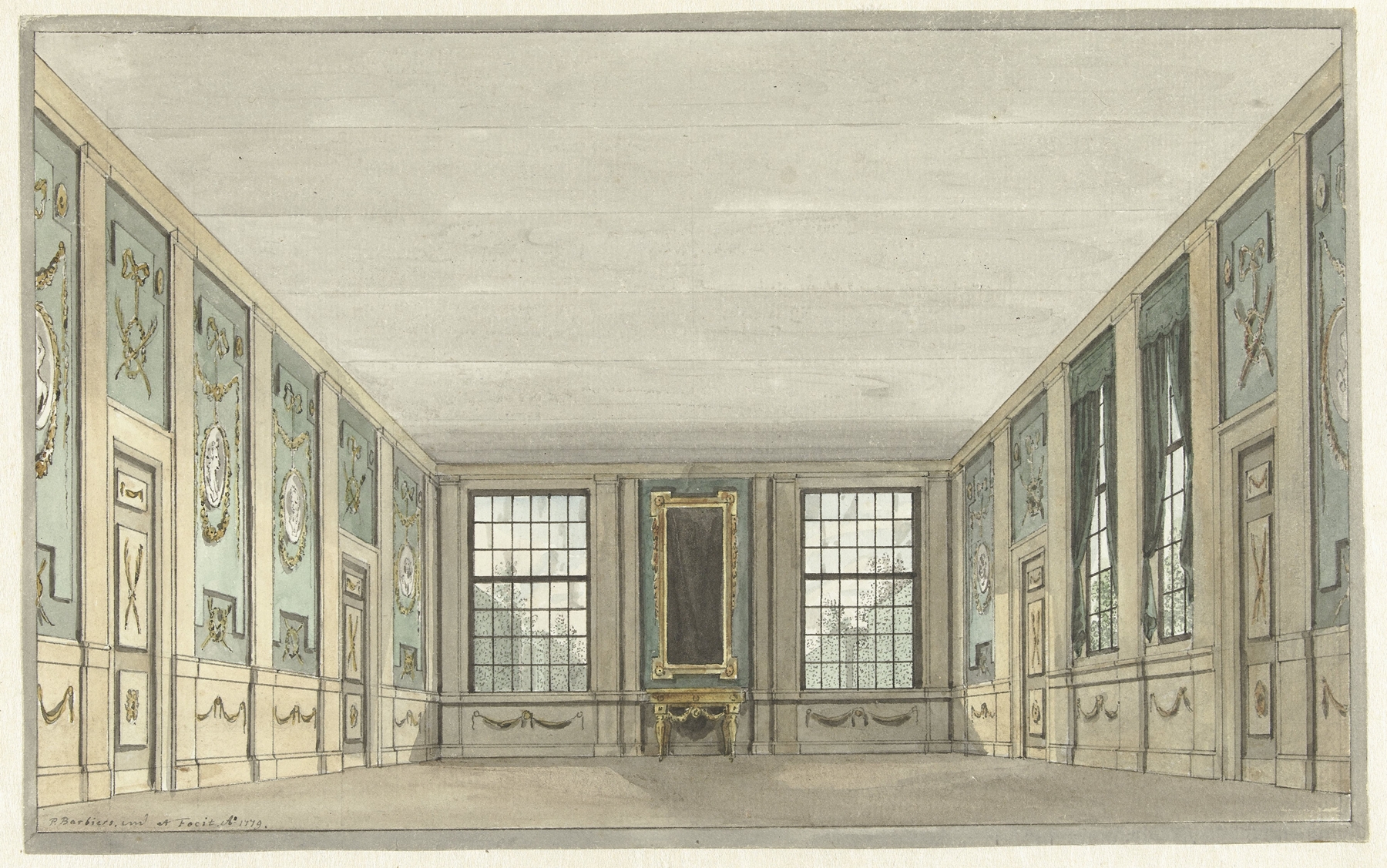
Ontwerp voor een toneeldecor van een zuilengalerij met loggia — History & Analysis
Can paint confess what words never could? In the delicate interplay of light and shadow, an echo of melancholy calls from the depths of the canvas, inviting the viewer to reflect on the stories held within its architectural lines. Look closely at the intricate columns that form a majestic gallery, their elegant proportions commanding your gaze. The soft hues of ochre and grey blend seamlessly, capturing the essence of time passing through the space.
Notice how the light filters through the loggia, casting gentle shadows that breathe life into the stillness. Each detail—the ornate carvings, the subtle textures—whispers of a bygone era, urging you to explore the emotional resonance embedded in their design. As you dwell on the piece, consider the contrasting feelings it evokes: the grandeur of the structure set against a haunting sense of absence. The loggia stands open, yet it seems to symbolize a threshold between worlds; a boundary that invites yet holds back.
This tension between invitation and isolation embodies a deeper narrative, suggesting longing and a nostalgia for connection in a world that often feels distant. In 1779, as Ontwerp voor een toneeldecor van een zuilengalerij met loggia took shape, Pieter Barbiers was immersed in the flourishing artistic culture of the Netherlands. The neoclassical movement was at its peak, and he found himself surrounded by a growing appreciation for architecture and stage design. This work reflects not only his skill and vision but also the emerging dialogue between movement and stillness that defined the era's artistic landscape.