Paysage (Brouillard) — History & Analysis
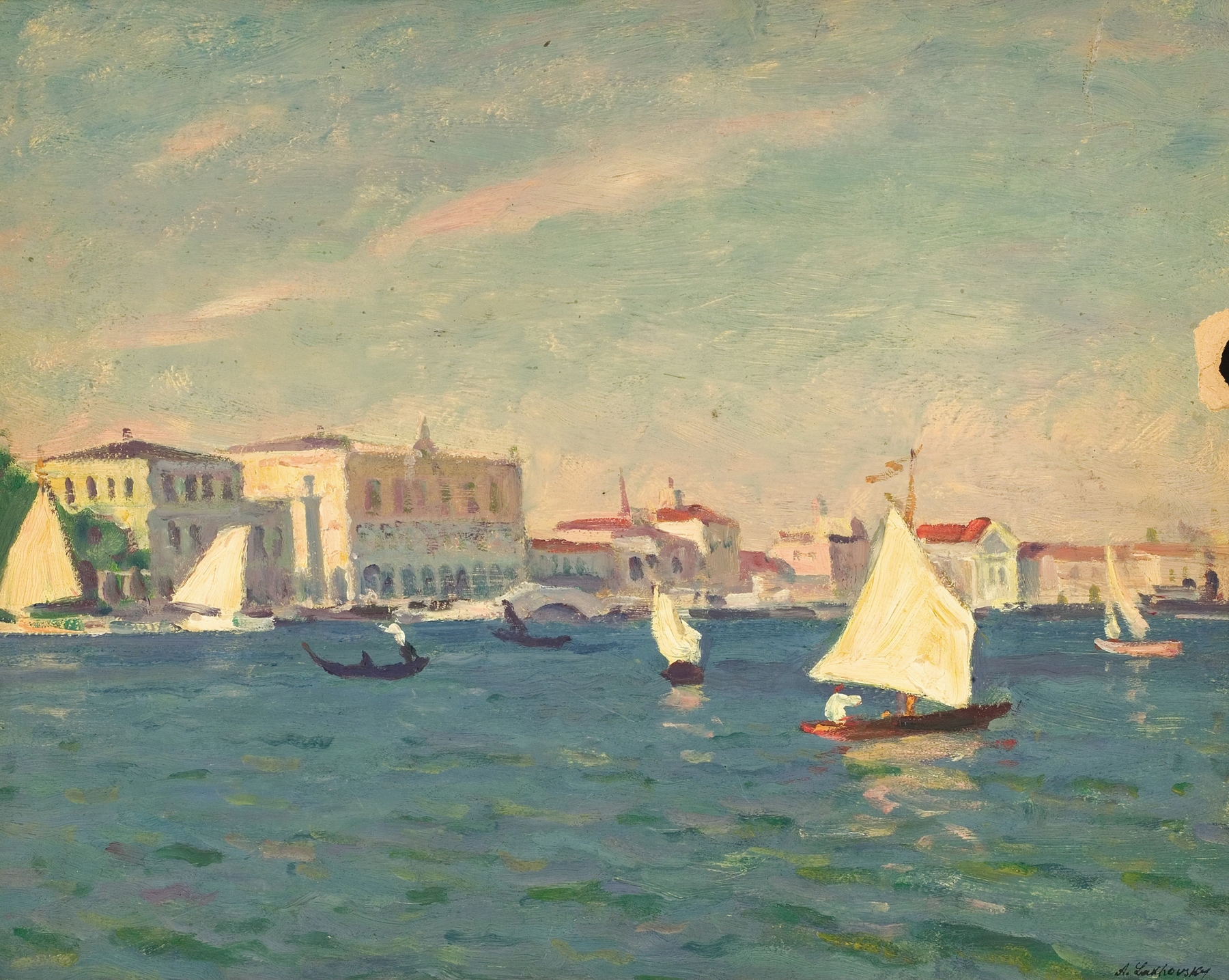
What if silence could speak through light? In Paysage (Brouillard), an ethereal hush envelops a tranquil landscape, awakening the senses to the delicate dance between nature and atmosphere. Look to the center of the canvas, where layers of soft grays and muted blues converge, creating a fog that rolls elegantly over the rolling hills. Notice how the light diffuses gently through the mist, casting an otherworldly glow on the trees that emerge from the haze like whispers of forgotten memories.
The brushwork displays a mastery of texture and depth, inviting the viewer to explore every subtle nuance of this serene yet haunting scene. Yet, the painting holds deeper layers of meaning, as the fog not only obscures but also reveals. The blurred outlines of the trees evoke a sense of mystery and introspection, inviting contemplation on the hidden aspects of self and nature. Contrasting the solidity of the land with the ephemeral quality of the mist, Lakhovsky presents a delicate balance between permanence and transience, urging one to ponder what lies beneath the surface.
In 1931, Lakhovsky created this work during a period marked by artistic experimentation and burgeoning modernism. Living in Paris, he was influenced by the dynamic movements surrounding him, yet chose to capture the quiet essence of landscapes through his unique lens. This piece reflects his ongoing exploration of light and atmosphere, establishing him as a notable figure in the realm of 20th-century landscape painting.