View of Venice — History & Analysis
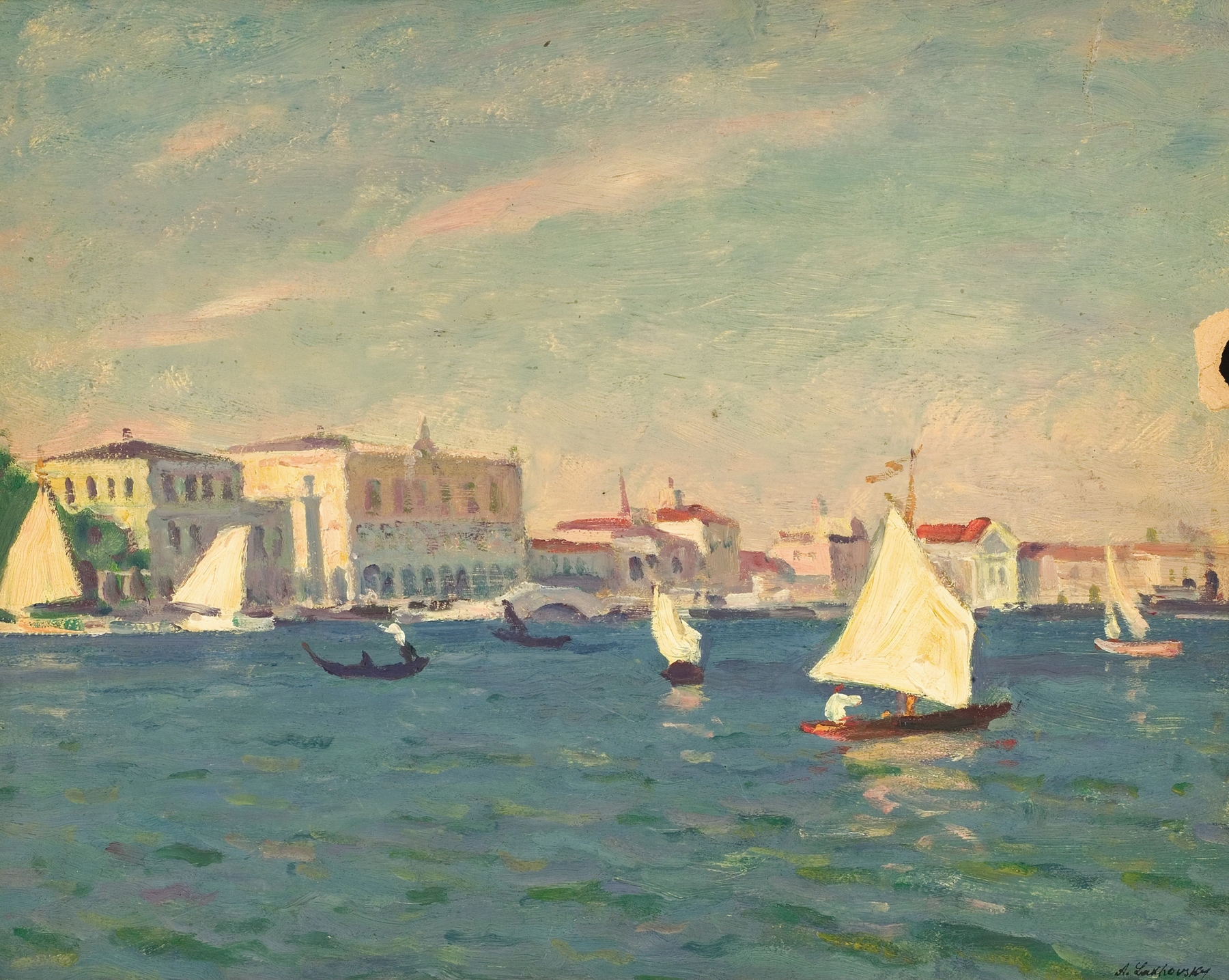
When did color learn to lie? In the depths of a vibrant palette, desire dances — a complex interplay of longing and illusion. Look to the foreground, where the serene waters of Venice shimmer under a play of light. The delicate strokes convey a sense of rippling movement, inviting the viewer to lean closer.
Notice how the hues of blue and green blend seamlessly, creating an almost ethereal quality that contrasts with the solid, warm-toned architecture in the background. The juxtaposition of fluid water against the steadfast buildings hints at a perpetual tension between the ephemeral and the enduring. Yet, deeper within this scene lies a duality of emotion. The rich blues evoke tranquility, while the soft oranges of the buildings suggest warmth and familiarity.
This juxtaposition may suggest a longing for connection amidst the serene, almost isolating beauty of the landscape. Subtle details, such as the tiny boats bobbing in the water, reflect a life that exists just beyond the frame, hinting at stories of love and loss hidden in the city's winding canals. During the time that View of Venice was created, Lakhovsky was immersed in the vibrant art scene of his era, grappling with the pursuit of color and light in his work. While the exact date remains elusive, his exploration of such themes aligns with a broader movement towards impressionism, where artists began to express emotions through their canvases, capturing not just a moment in time, but a feeling that resonates through the ages.