Piazza Navona, Rome — History & Analysis

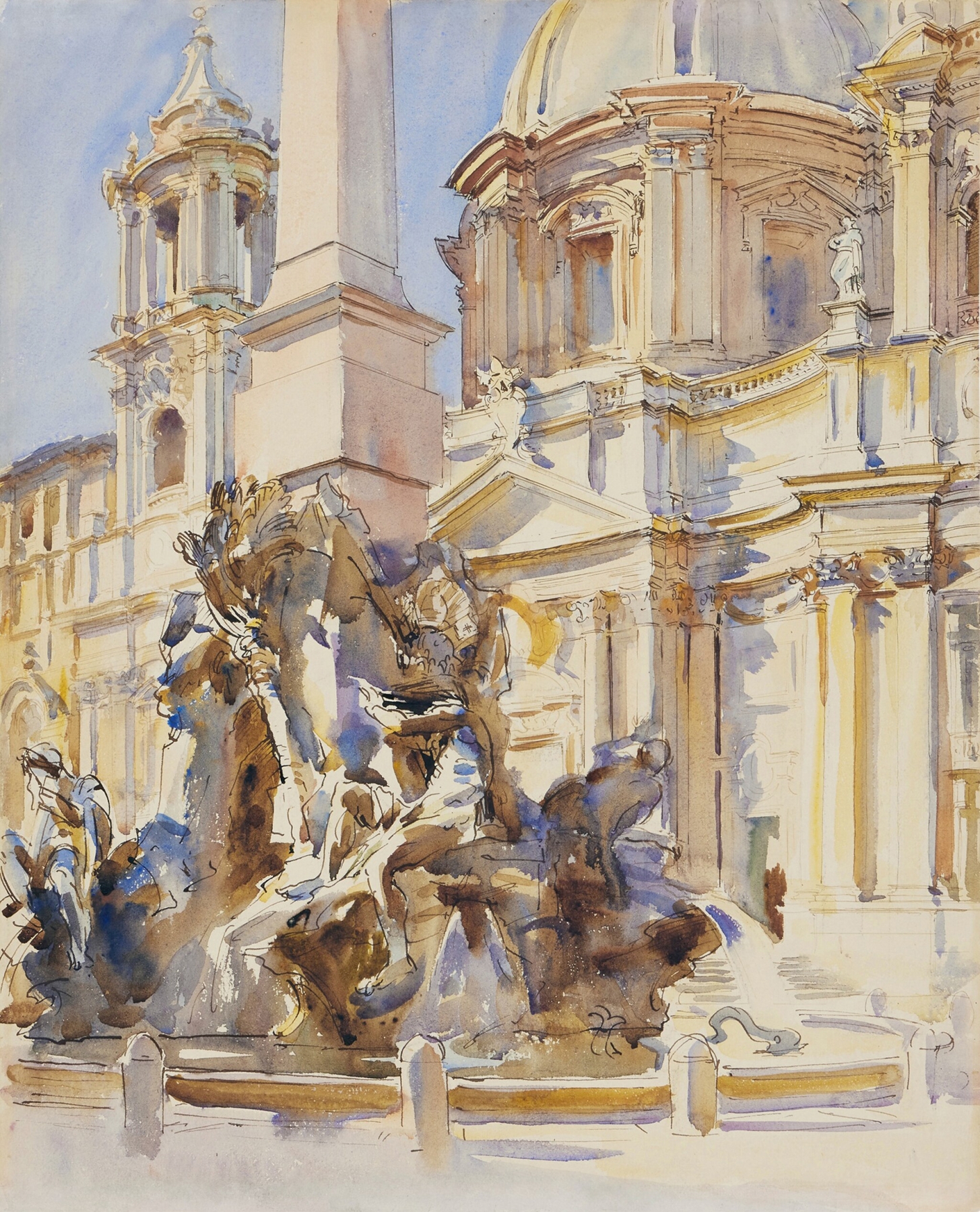
What if silence could speak through light? In John Singer Sargent’s Piazza Navona, Rome, the stillness of the square resonates, offering a poignant void that invites reflection. The scene embodies a moment frozen in time, where every shadow and ray illuminates the subtleties of life, creating an aura that is both vibrant and haunting. Look to the center, where the majestic fountain draws your gaze, adorned with figures that seem to dance in the sunlight. Notice how the warm hues of ochre and terracotta blend seamlessly into the deep azure of the sky, forming a harmonious backdrop.
The delicate brushwork captures the play of light on the cobblestones, while soft shadows hint at the ephemeral nature of the day. Sargent’s composition is masterful, guiding the eye from the fountain to the bustling cafés lining the square, each detail meticulously rendered, inviting you into this vivid tableau. Yet, beneath the surface lies a deeper narrative. The juxtaposition of the lively figures against the still architecture creates a tension between movement and repose, between the joy of the present moment and the haunting whispers of history.
The void suggested in the foreground, where fewer figures linger, evokes a sense of longing and contemplation, urging us to consider what is left unsaid in the glow of the evening light. In 1906, Sargent painted this iconic scene during a time when he was embracing his reputation as one of the foremost portraitists of his day. Settled in London but frequently traveling across Europe, he was drawn to the vibrancy of Italy, capturing the essence of its culture and landscapes. This work emerged during a period of artistic exploration, where the boundaries of impressionism and realism began to blur, marking a significant chapter in Sargent’s illustrious career.