Place de la Concorde no. II — History & Analysis
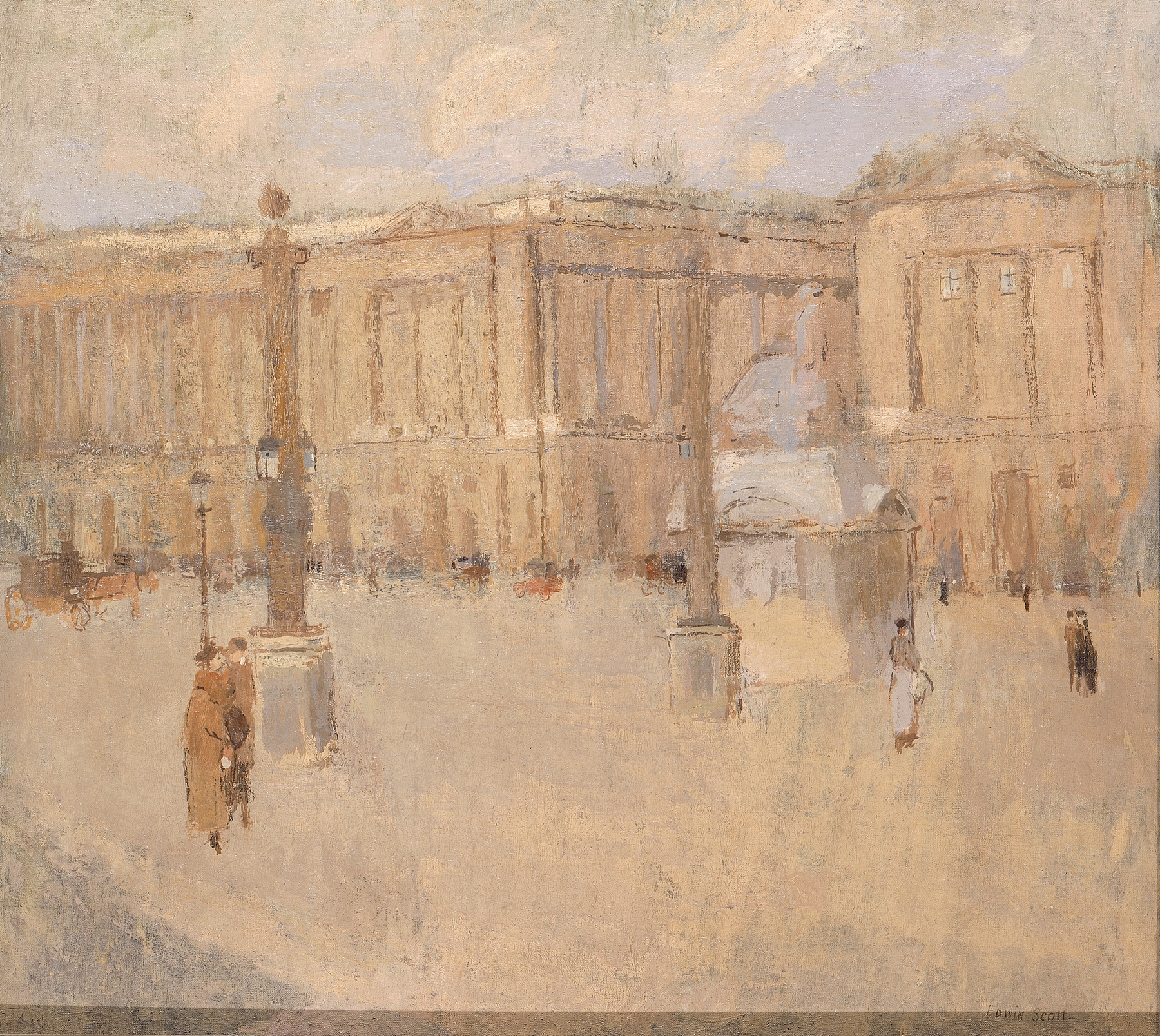
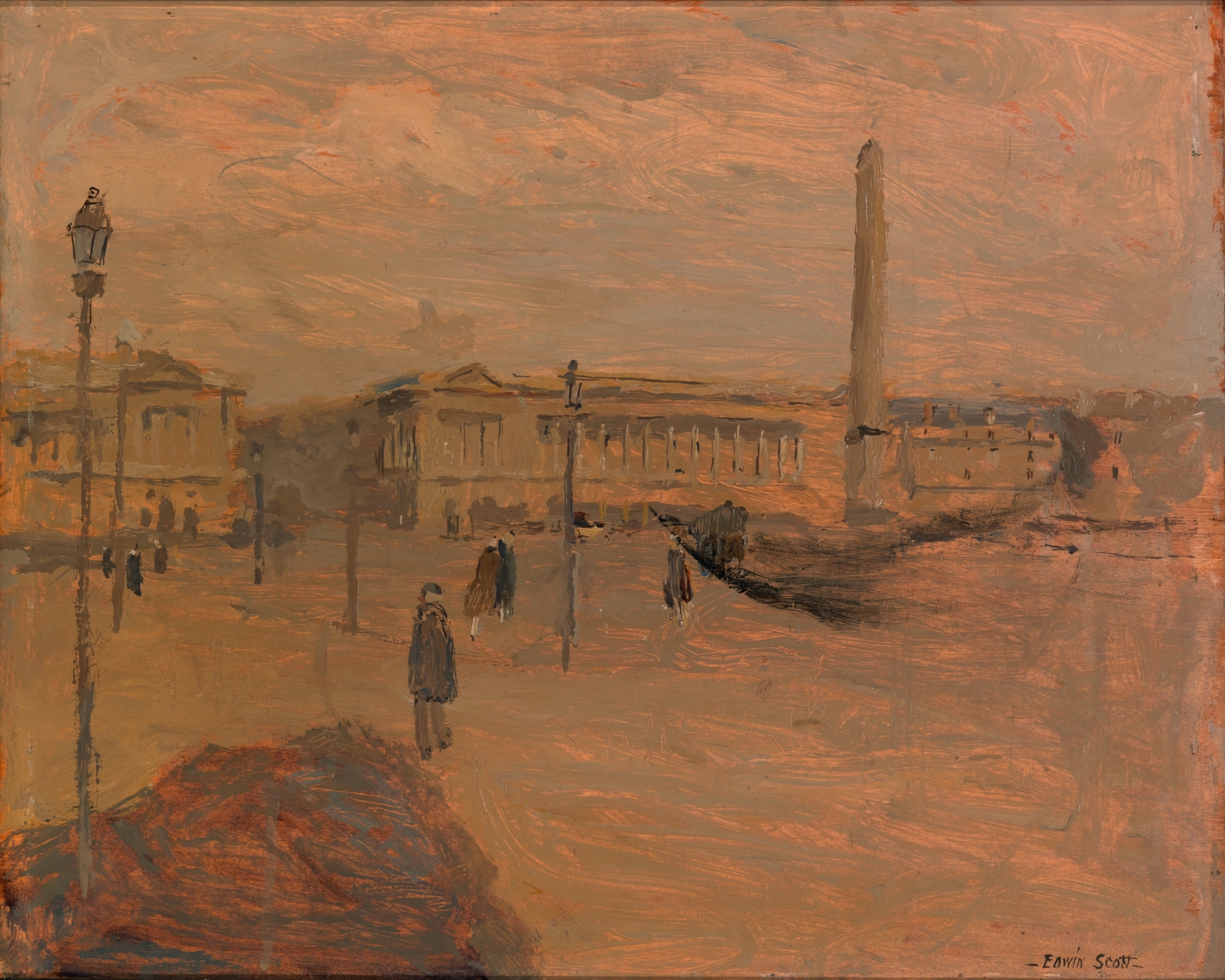
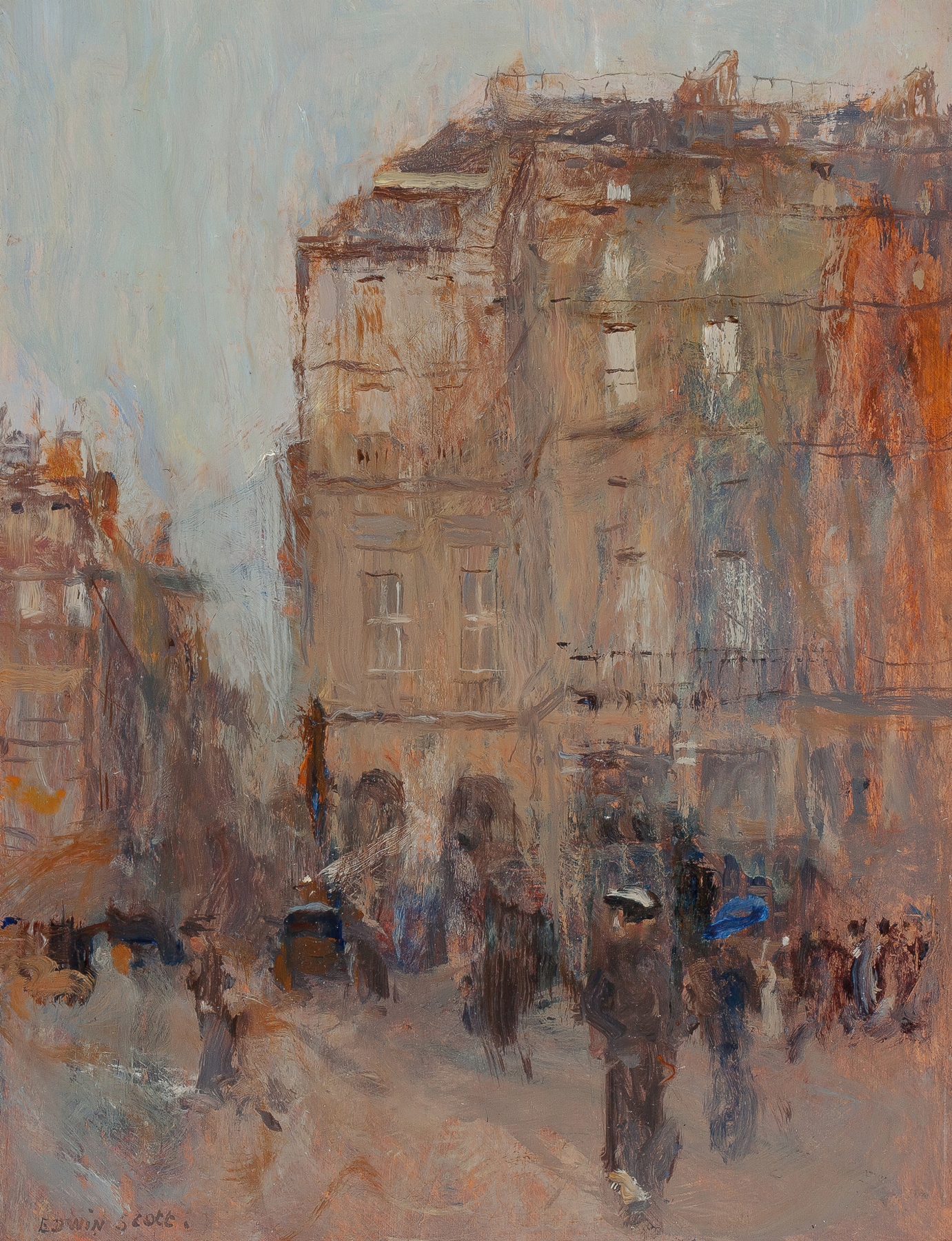
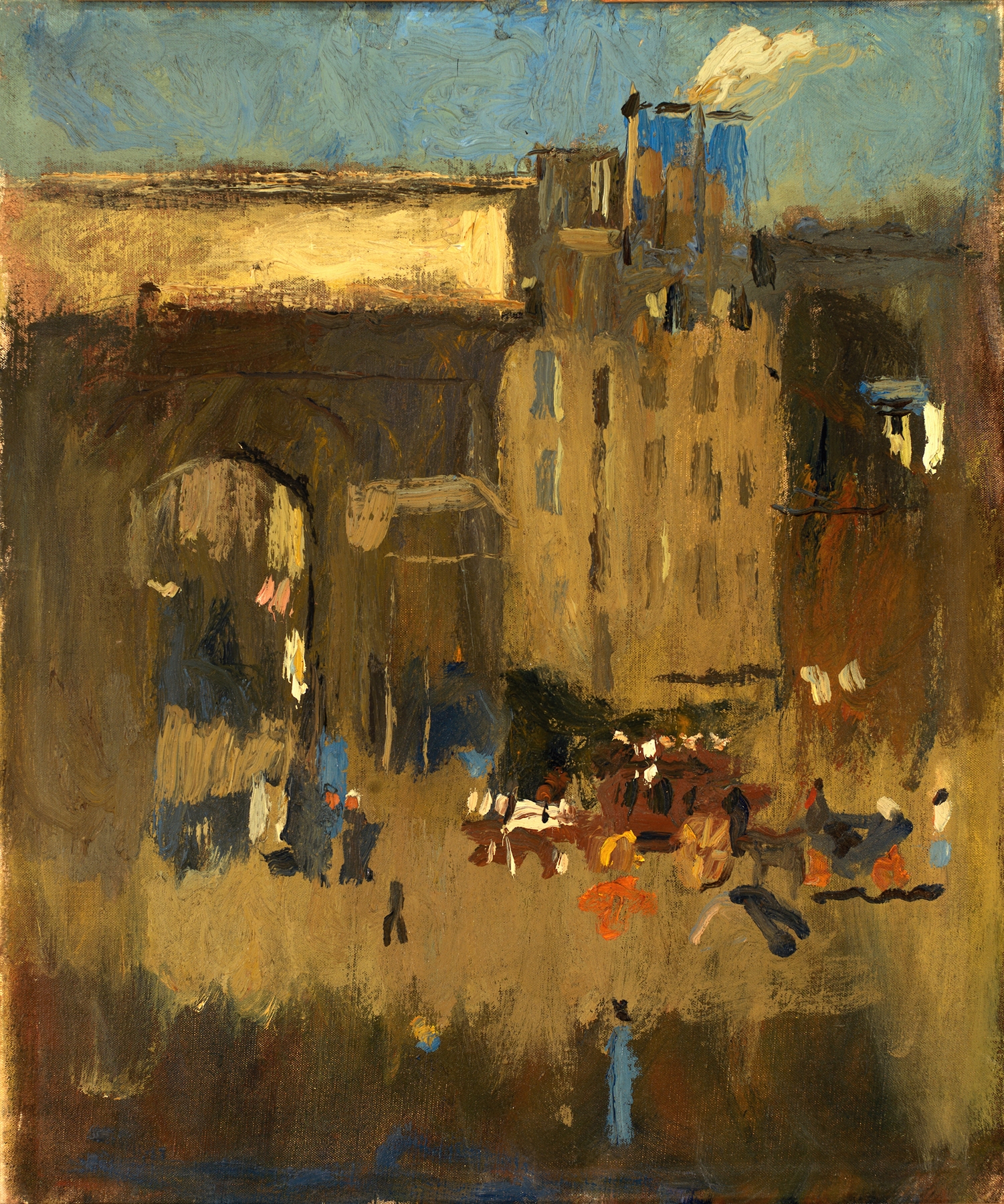
What secret hides in the quiet of the canvas? Beneath the serene surface of Place de la Concorde no. II, a whirl of madness subtly brews, inviting the viewer to peel back layers of tranquility to uncover hidden chaos. Focus first on the tranquil foreground, where cool hues of blue and green envelop the figures, creating a sense of calm.
Notice how the light gently bathes the scene, casting a soft glow on the elegant architecture that looms in the background. The delicate brushstrokes imply movement, inviting your gaze to drift through an interplay of shadows and sunlight, each stroke hinting at unseen emotions lurking just beneath the surface. Yet, there’s a tension that juxtaposes the beauty of the place. The rigid structures, while majestic, seem to tower over the small, disparate figures, suggesting a disconnect between humanity and its environment.
Look closer at the expressions of the people — a mixture of serenity and unease that reveals the underlying madness of existence. This balance of calm and chaos provokes a contemplation of how one navigates the bustling world while grappling with inner turmoil. Frank Edwin Scott painted this evocative piece in the early 20th century, a time when the art world was in flux, transitioning into modernism. Living in Paris, Scott was influenced by the Impressionist movement, yet he sought to express a deeper emotional narrative, reflecting both the beauty of the city and the complexities of the human condition as industrialization and change swept through society.