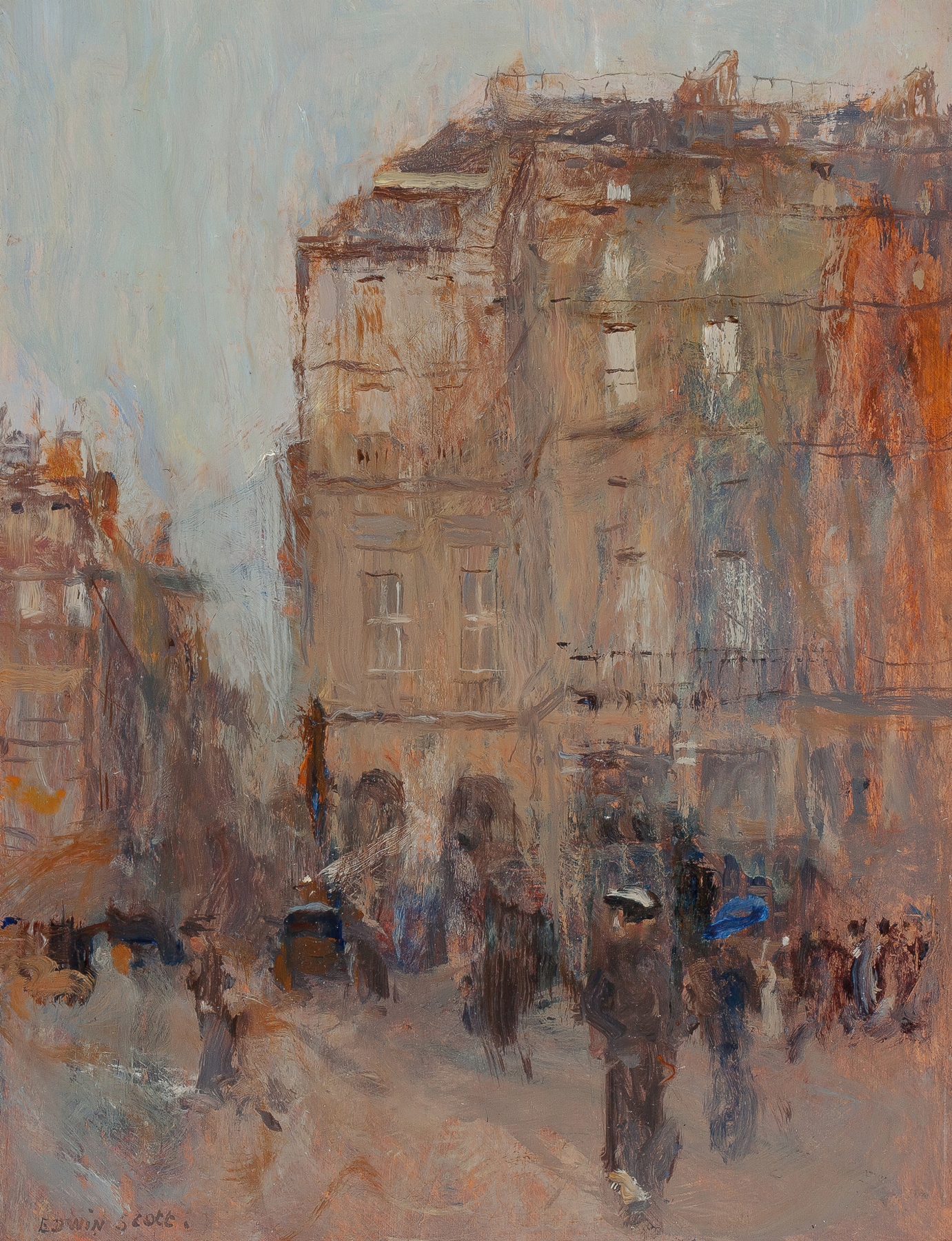
Porte St. Martin et Enterrement — History & Analysis
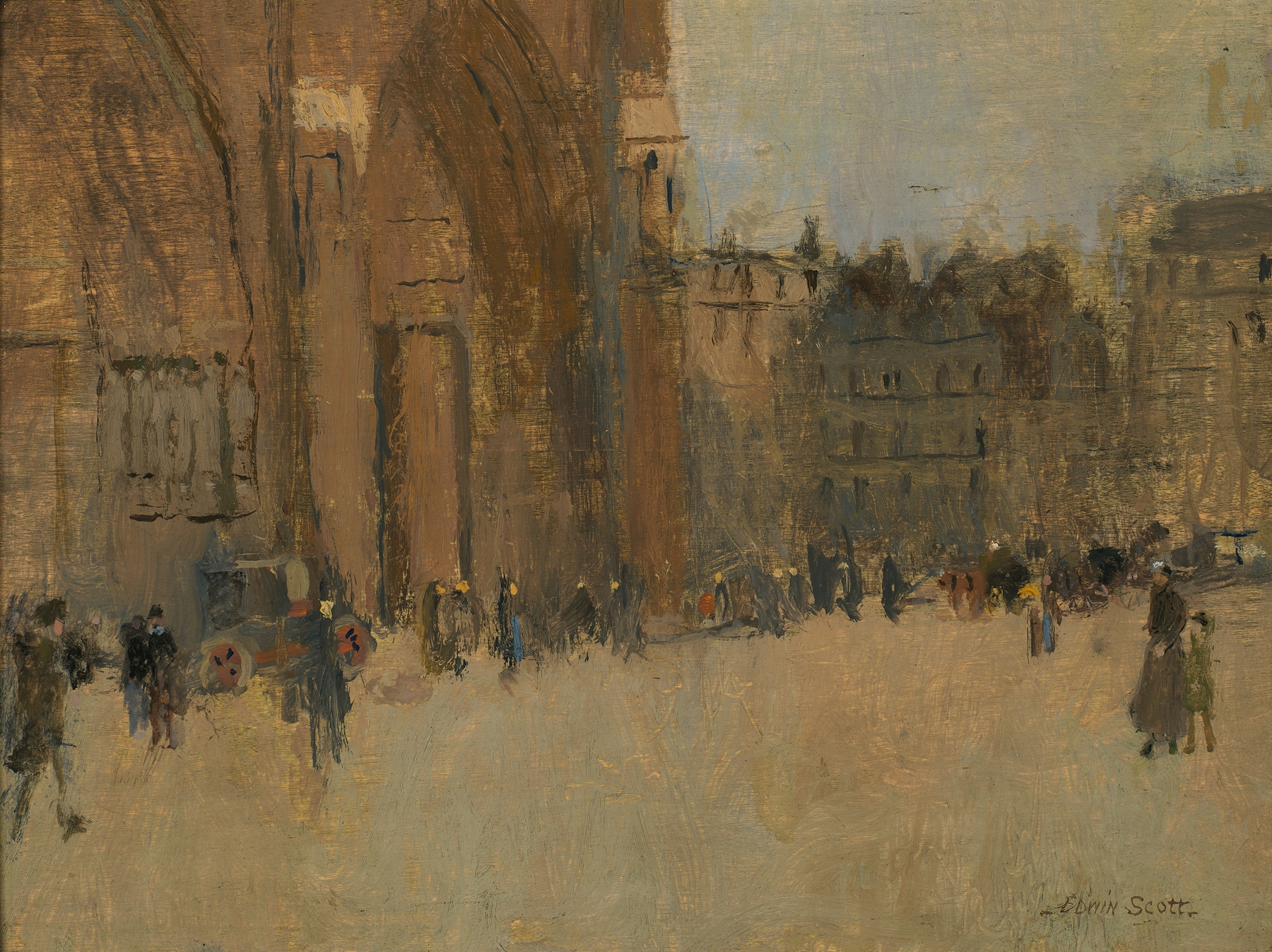
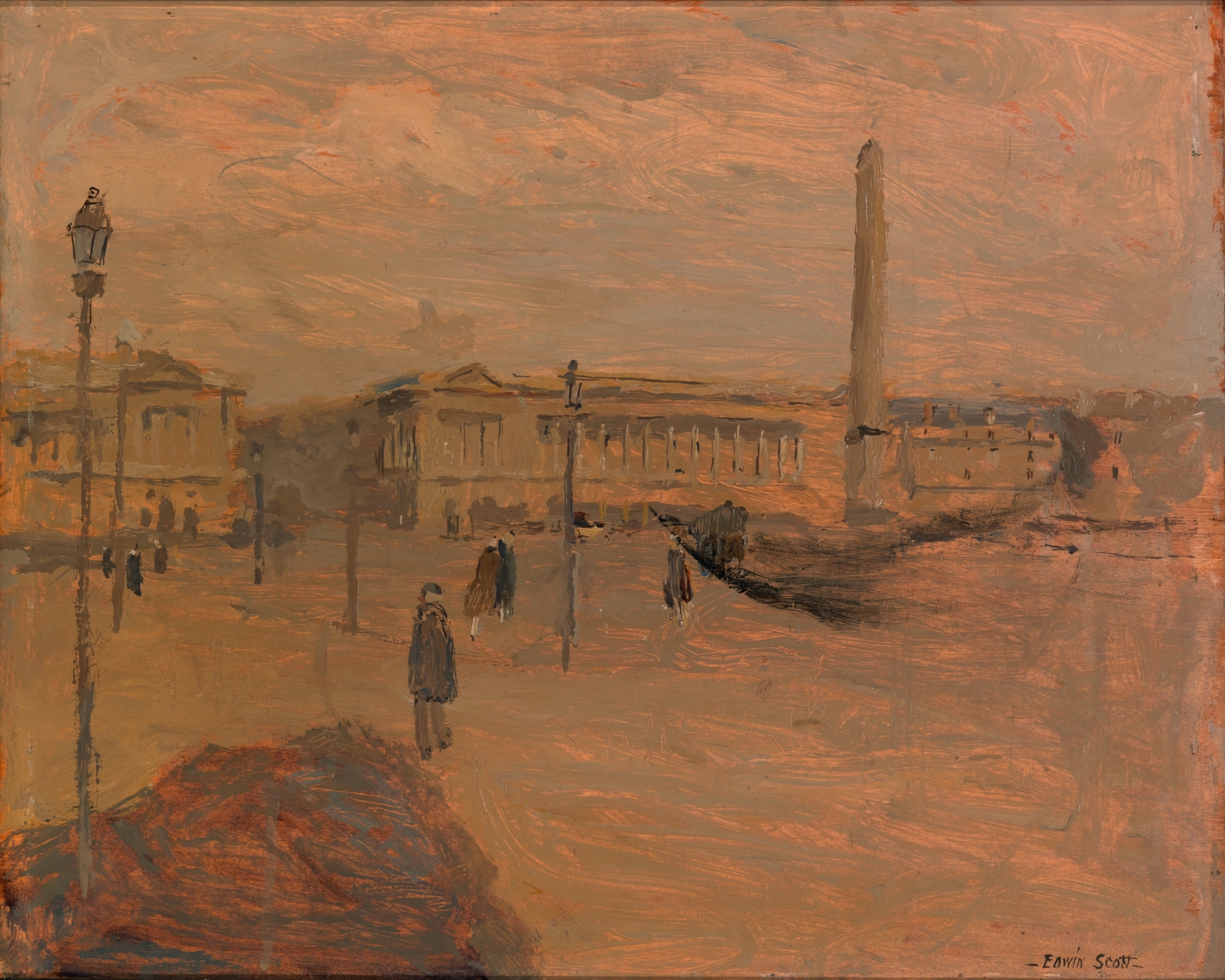
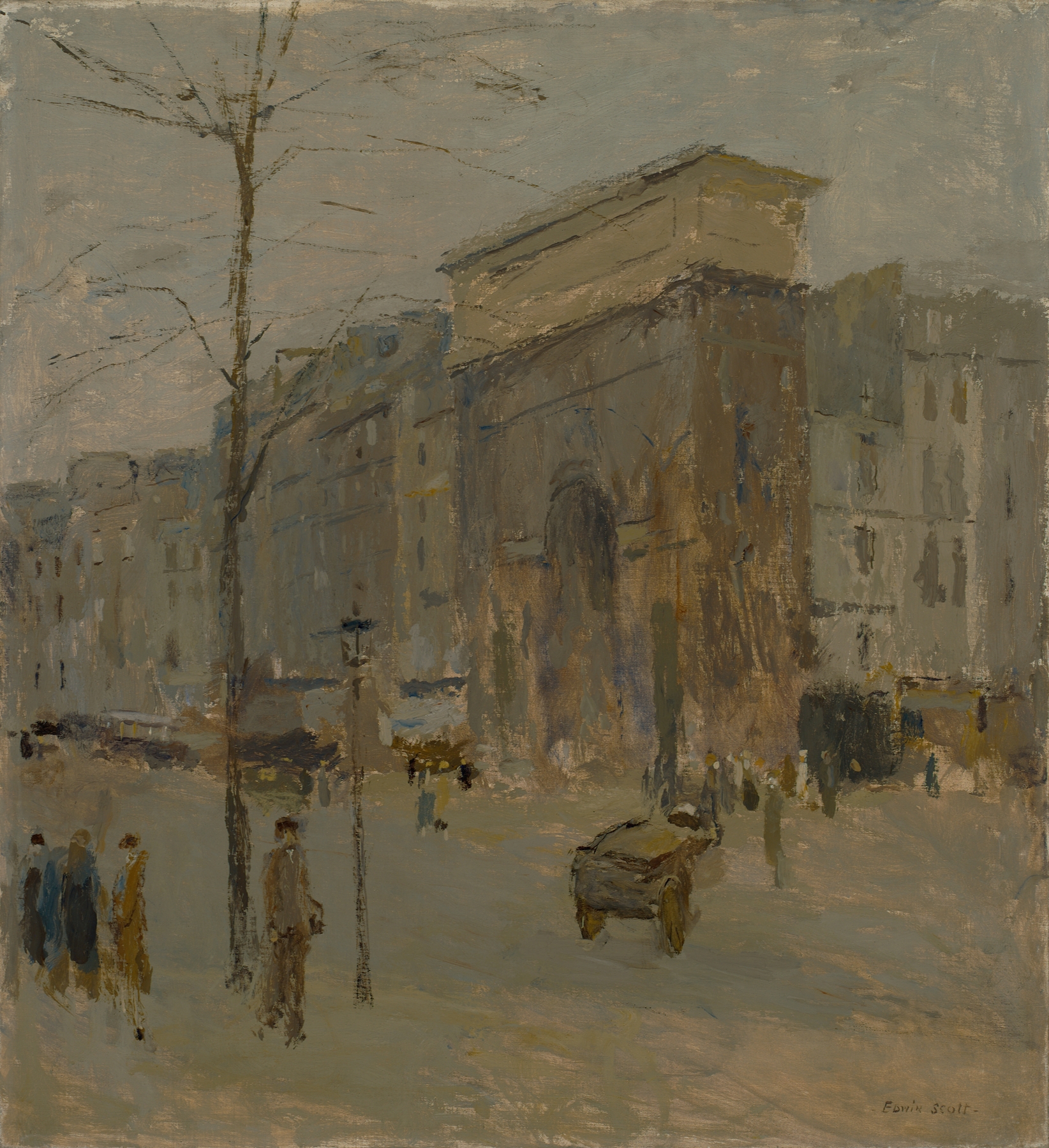
Could a single brushstroke hold eternity? In the delicate interplay of light and shadow, emotions linger like whispers of a forgotten past, inviting us to explore the depths of melancholy within the canvas. Look to the center of the work, where the grand arch of Porte St. Martin rises majestically against the muted tones of the surrounding landscape. Notice how the artist employs a subtle palette of grays and earth tones, drawing the eye upward to the solemn figures gathered below.
Their postures, a mix of reverence and sorrow, create a stark contrast with the imposing architectural structure, emphasizing the gravity of the moment. The careful brushwork captures the fleeting nature of time, as light filters through the archway, casting ethereal shadows over the mourners. As your gaze wanders, consider the intricate details—how the folds of a cloak appear heavy with grief, or how a single tear glistens on a cheek, hinting at personal loss within a collective mourning. The juxtaposition of the monumental architecture and the fragile human experience evokes a profound sense of isolation amidst the crowd.
Each figure seems suspended in a moment of reflection, their world momentarily halted under the weight of sorrow, suggesting a universal connection to loss that transcends time. Frank Edwin Scott created this evocative piece during a period when the art world was exploring themes of identity and human experience. Although the exact date remains uncertain, it reflects the artist’s engagement with the emotional landscapes of his time, marked by a post-war sensibility that grappled with both personal and collective grief. In his work, he captured fleeting moments that resonate with viewers, inviting them to confront their own emotions and experiences, even in the silence of a scene.