Portrait of a Young Boy in a Black Shirt — History & Analysis
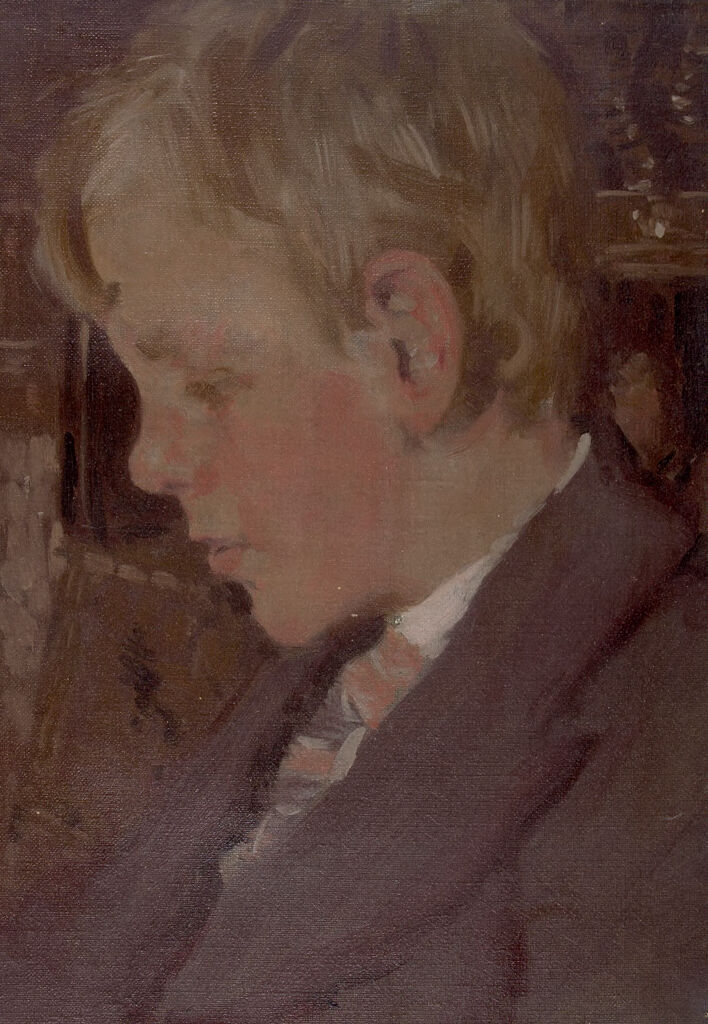
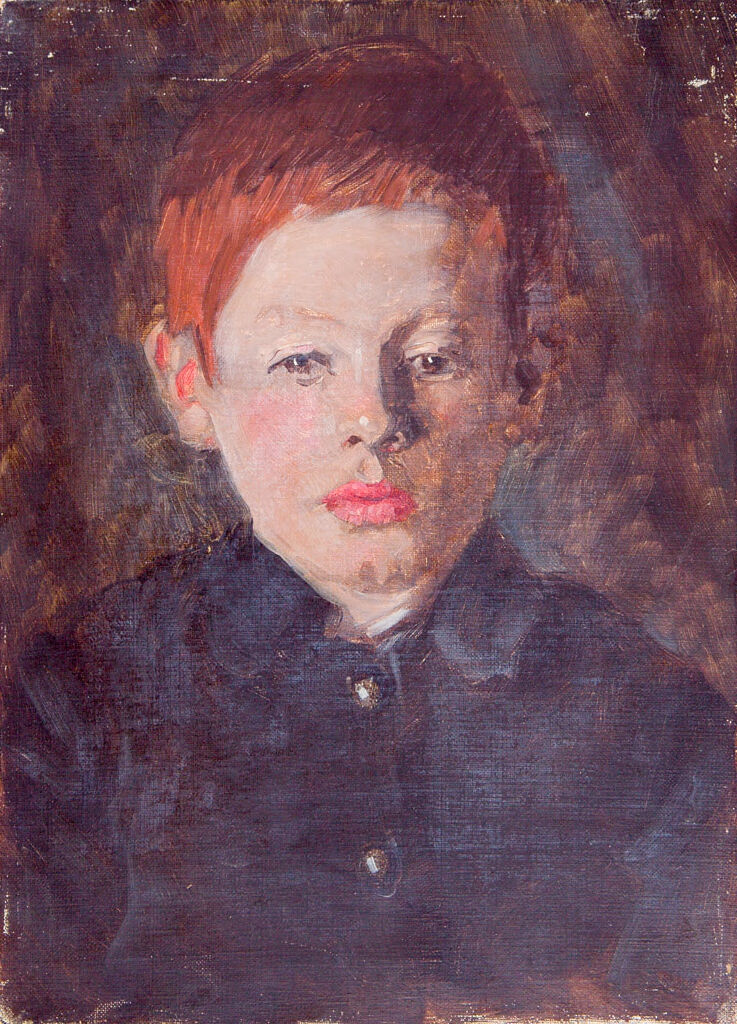
Did the painter know this moment would outlive them? In the delicate strokes of *Portrait of a Young Boy in a Black Shirt*, the quiet loneliness of childhood is captured in a way that feels both intimate and eternal. Look to the center of the canvas, where the boy, with his solemn gaze, draws the viewer into his world. The meticulous rendering of his features—soft cheeks, tousled hair, and the somber black shirt—contrasts beautifully with the muted background, allowing him to emerge as a solitary figure. Notice how the light gently caresses his face, creating a subtle play of shadows that hints at an unspoken story, a whisper of emotions that linger beneath the surface. At first glance, the painting may feel like a straightforward portrait, but deeper inspection reveals an undercurrent of isolation. The boy’s expression, a blend of curiosity and contemplation, speaks volumes; it suggests a yearning for connection in a world that feels distant. The choice of black for his shirt, often associated with mourning or introspection, heightens this sense of solitude. Furthermore, the soft, yet slightly blurred lines around him could symbolize fleeting moments of childhood innocence, slipping away into the unknown. Denman Waldo Ross created this portrait in the late 19th to early 20th century, a time when he was deeply engaged with the Arts and Crafts movement. While living in Massachusetts, he was influenced by emerging modernist trends and the shifting landscape of American art. This period marked a transition, not only for Ross but for the art world itself, as artists began to explore new ways of conveying emotion and identity, paving the way for future expression.