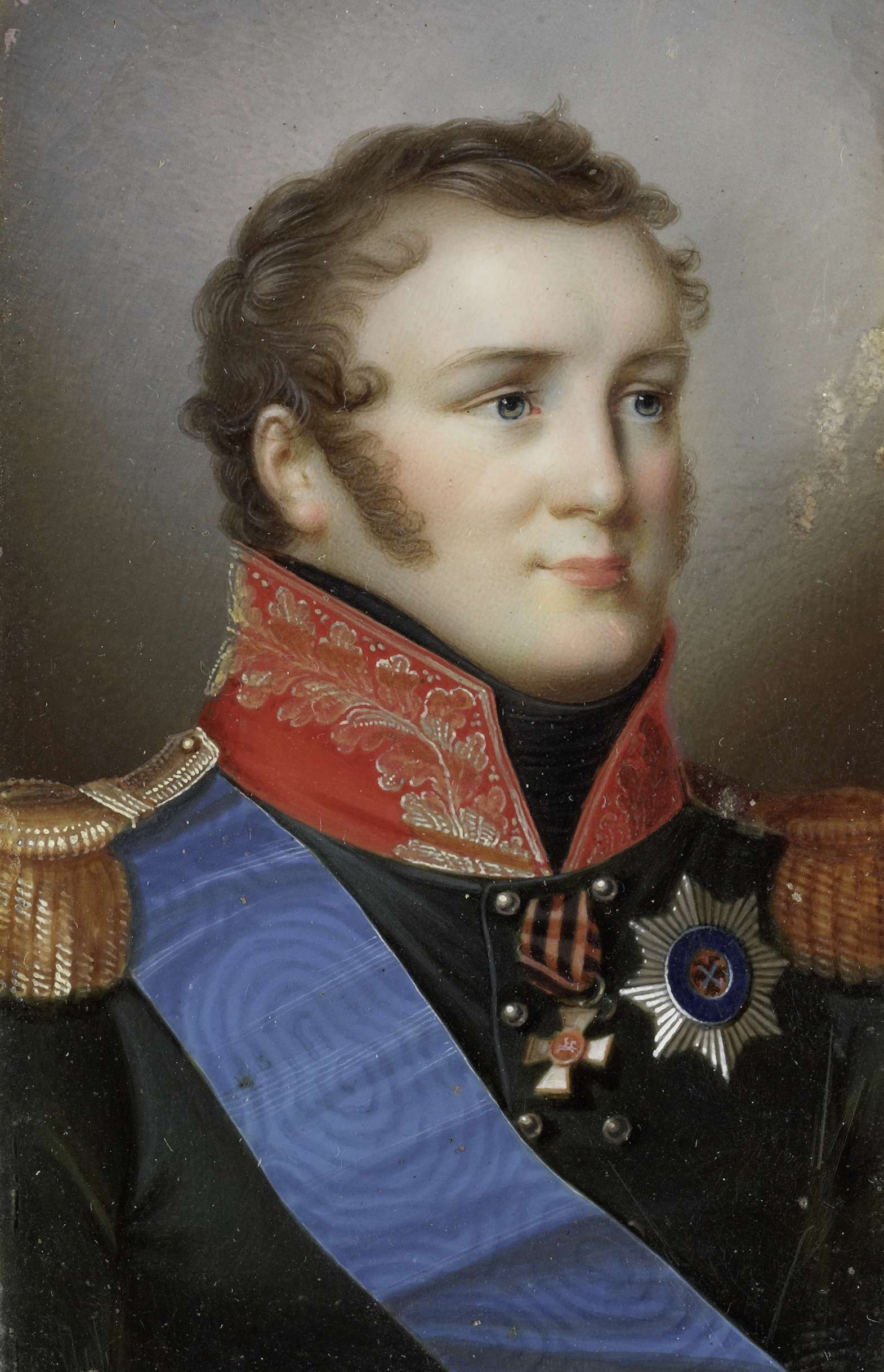
Portrait of Alexander I (1777-1825), Emperor of Russia — History & Analysis
What if beauty was never meant to be finished? In the Portrait of Alexander I, the light dances across the surface, capturing the essence of a ruler not just in his power, but in his humanity. Look to the center, where the Emperor stands poised in an elaborate uniform, his expression a blend of serenity and resolve. The warm tones of gold and deep reds dominate the canvas, evoking a sense of regality that envelops the viewer. Notice how the delicate highlights on his face accentuate the contours of his features, creating a soft luminosity that almost breathes life into the painting.
The meticulous brushwork reveals a masterful blend of realism and idealism, drawing us to the majesty of the figure while hinting at the underlying fragility of power. Delve deeper, and you’ll find layers of meaning woven into the fabric of this portrait. The slight tilt of his head can be interpreted as both a gesture of confidence and an invitation to communion, suggesting the burden of leadership he carries. The contrasting shadow along the collar hints at the weight of expectation looming over him, a reminder that even emperors contend with the darkness of their responsibilities. Such contrasts forge a profound connection, bridging the viewer to the timeless struggle of authority and vulnerability.
Domenico Bossi painted this work between 1805 and 1815, during a turbulent era for Europe. While living in St. Petersburg, he engaged with the evolving art scene that sought to capture the essence of character in portraiture. This period witnessed the rise of national identity amidst the Napoleonic Wars, and Alexander I emerged as a key figure in shaping Russia’s role on the global stage. As Bossi immortalized him, he not only crafted a portrait of a man but also a symbol of an era.