Portret van Georg Friedrich Brander — History & Analysis
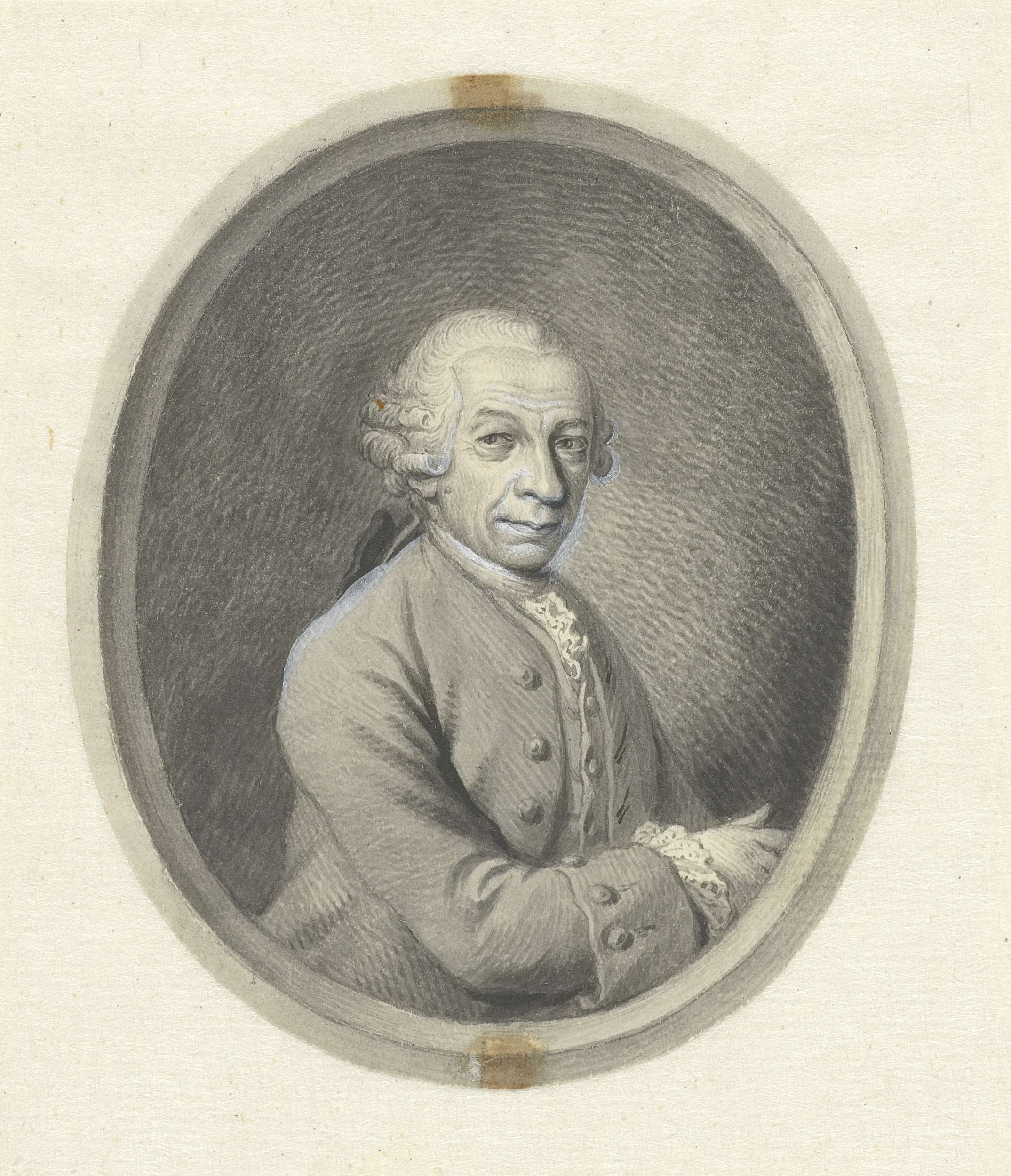
“Every brushstroke is a heartbeat remembered.” In the sanctuary of portraiture, serenity emerges as the timeless dialogue between artist and subject, beckoning us to pause and reflect. Look closely at the gentle contours of the face, where soft light caresses the subject’s brow, revealing a tranquility that transcends the canvas. The subtle play of warm earth tones envelops the figure, creating an intimate atmosphere. Notice how the elegant drapery frames the sitter, its flowing lines leading the eye to the serene expression that seems to hold a world of contemplation.
The delicate details in the lace collar and the texture of the fabric add a tactile dimension, inviting the viewer to not just see, but feel. Beneath the surface, the painting captures a profound stillness that speaks to the human experience. The gaze of Georg Friedrich Brander, poised yet reflective, suggests an inner life rich with unspoken thoughts and emotions. The contrast between the solidity of his posture and the ephemeral quality of his expression draws us into a moment that feels both private and universal.
Each element harmonizes to evoke a sense of peace, embodying a quiet resilience that lingers long after one steps away from the image. Johann Esaias Nilson created Portret van Georg Friedrich Brander between 1769 and 1774, during a period marked by the rise of Enlightenment ideals and a burgeoning interest in individualism. Living in the Netherlands at the time, Nilson was influenced by the neoclassical trends that sought to elevate portraiture as a serious art form. This work showcases his mastery of technique and his ability to capture the essence of his subjects against the backdrop of an evolving artistic landscape.