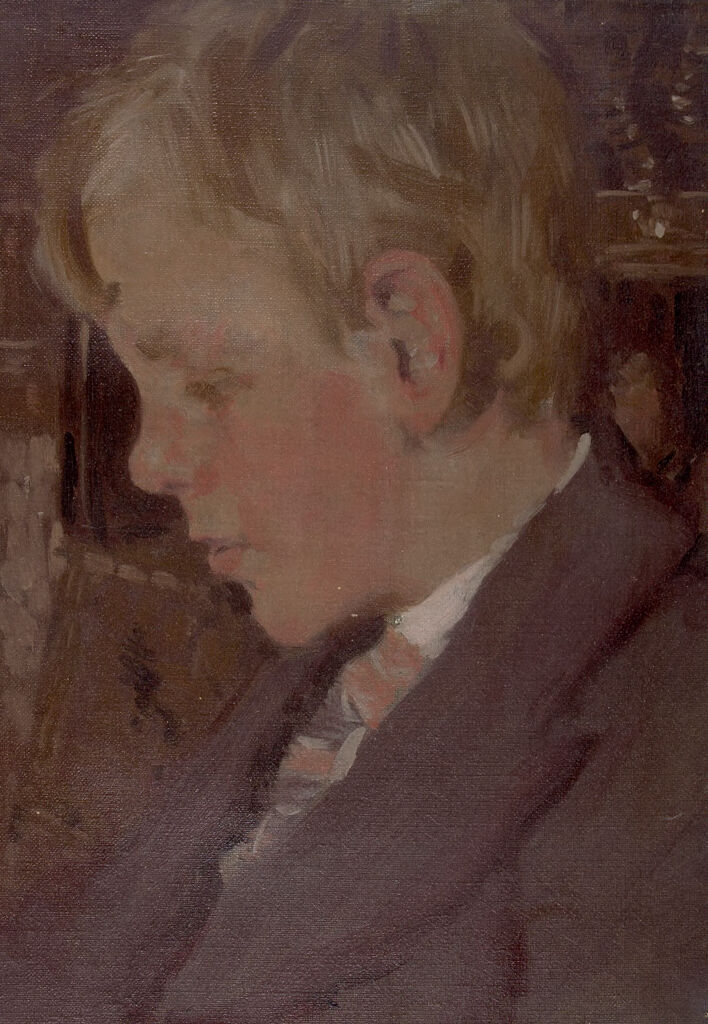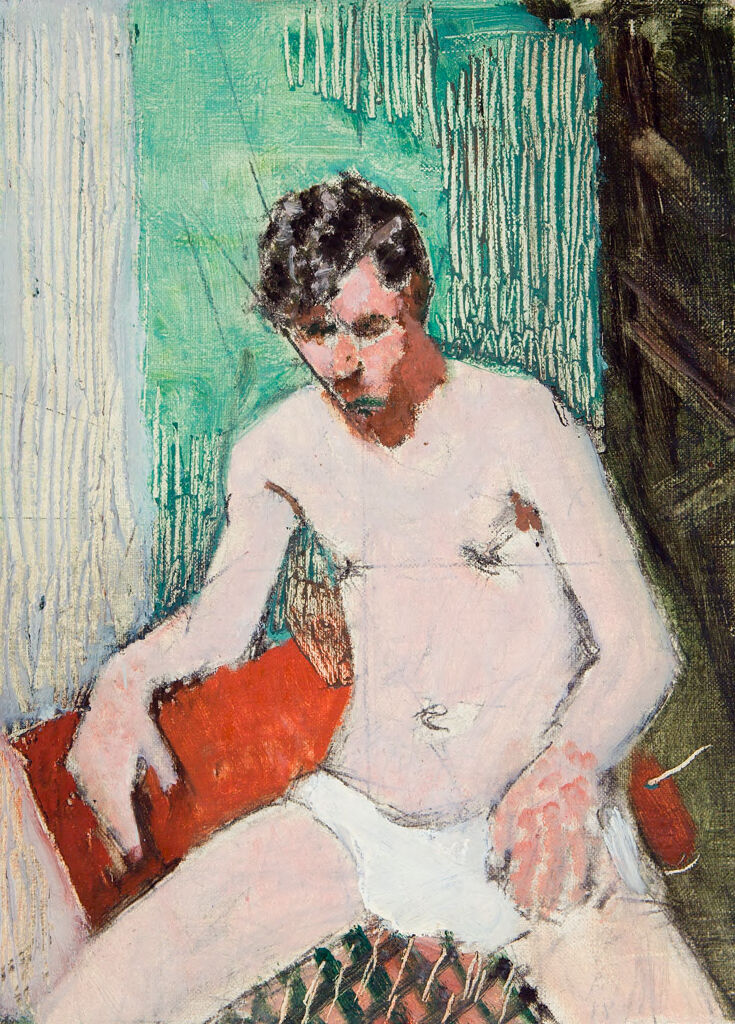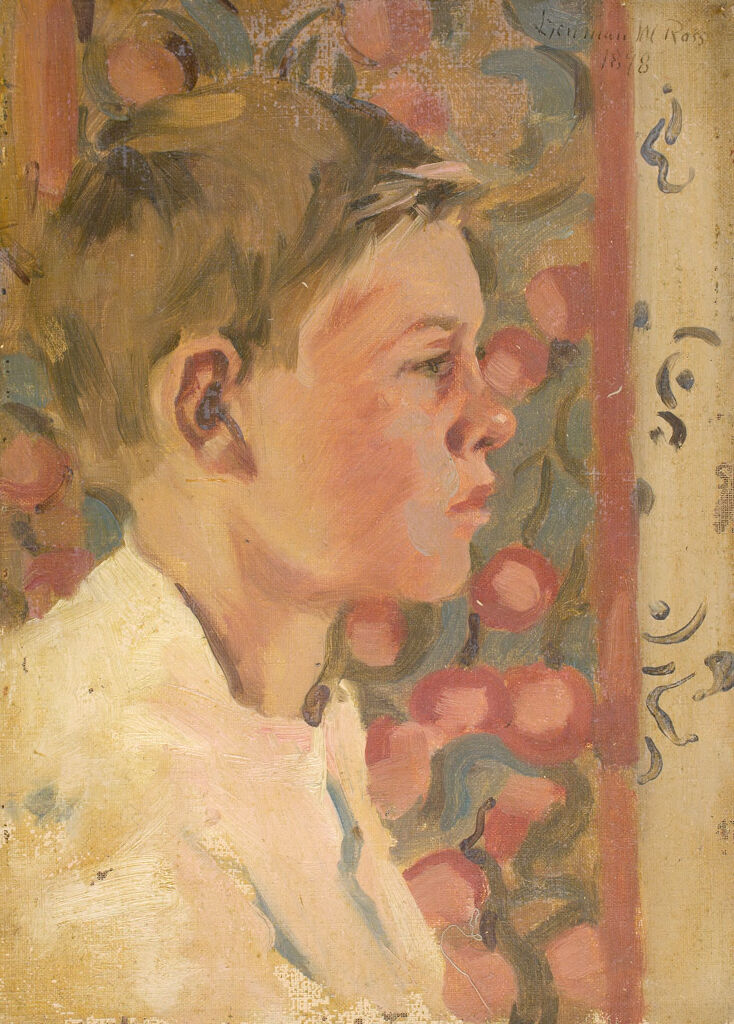
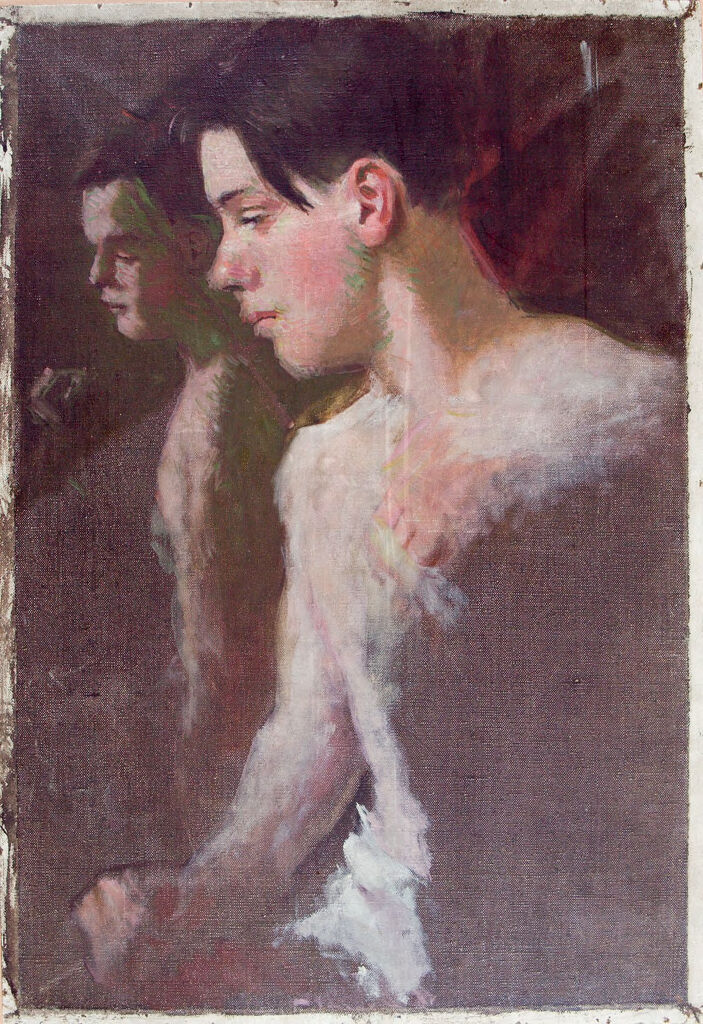
What if beauty was never meant to be finished? An unfinished gaze captures the viewer, inviting contemplation of youth and potential, echoing the revolution of artistic expression in a world constantly seeking perfection. Look to the left at the soft contours of the boy's cheek, where delicate brushstrokes suggest both warmth and vulnerability. The muted palette—browns, soft yellows, and subdued greens—creates a gentle contrast that draws attention to the intelligent sparkle in the child's eyes. Notice how the light subtly accents his features, highlighting a moment of introspection, as if the artist paused to capture an ephemeral thought, freezing it within the confines of the canvas. Beneath the surface, the portrait speaks to the tension between innocence and the uncertainty of growing up. The unfinished quality hints at the artist's internal struggle, paralleling the boy's own journey towards self-discovery. Each unrefined edge serves as a metaphor for the unpredictable paths of youth, suggesting that beauty lies not in completion, but in the continuous evolution of identity and experience. In 1898, Denman Waldo Ross was rooted in Boston, immersed in the artistic movements that sought to break away from traditional constraints. As a progressive figure within the American art scene, he was influenced by European avant-garde currents while focusing on naturalistic portrayals. This period marked a time of exploration for Ross, who sought to challenge established norms, envisioning a new world of unfettered artistic potential, as reflected in this poignant portrayal.