Ravine Near Biskra — History & Analysis
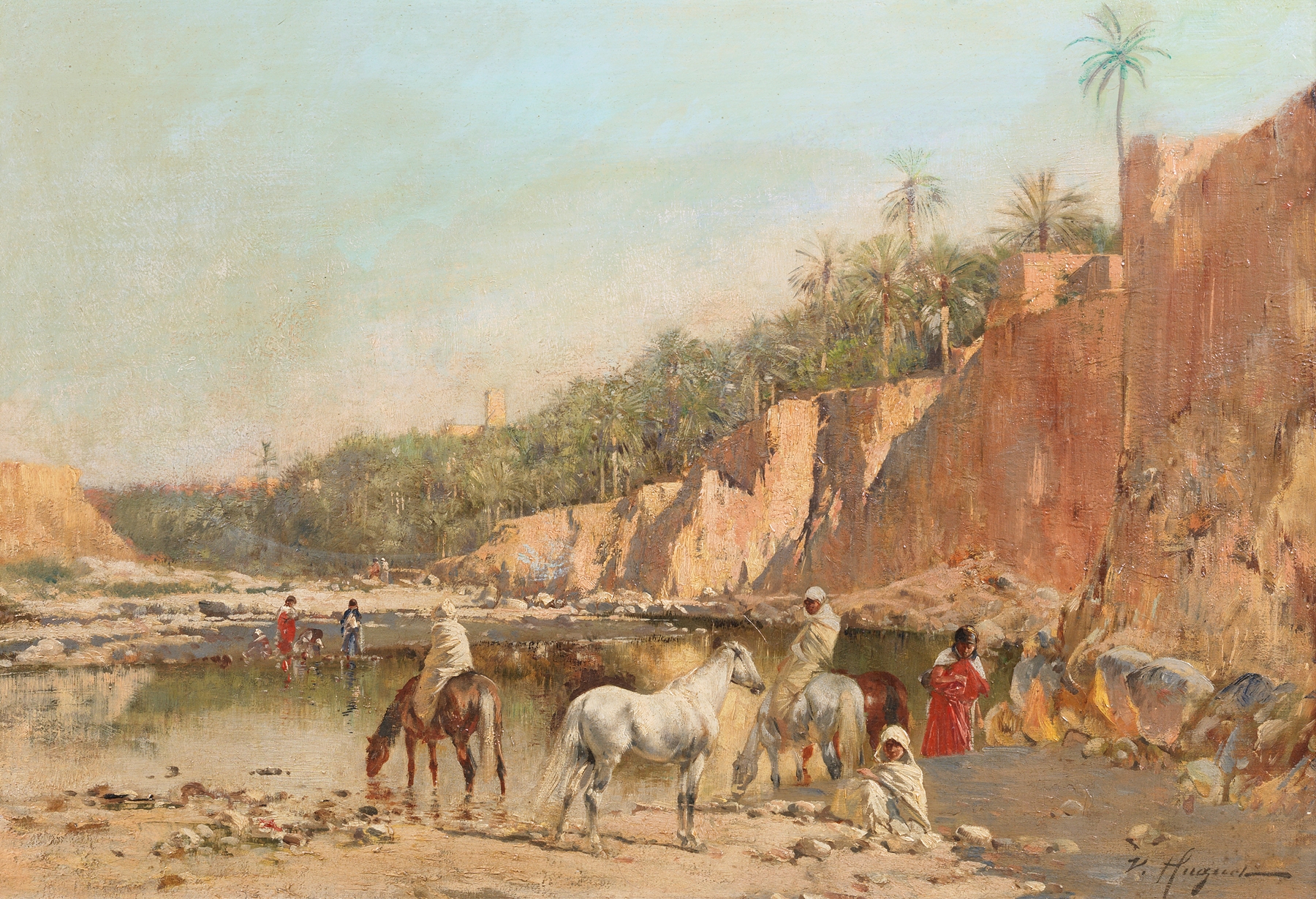
Is this a mirror — or a memory? The landscape evokes not merely a view, but the essence of rebirth nestled within the ravine, where earth and sky converse in muted tones and whispers of light. Look to the center of the canvas, where deep ochres and earthy browns cradle the gentle green of intermingling flora, forming an almost cradle-like embrace. Notice how the soft light filters through the overhanging branches, creating dappled shadows that dance along the rocky path.
This interplay of light and shadow invites your gaze deeper into the scene, drawing attention to the gentle slope that leads the eye toward a horizon that feels both distant and intimate. As you explore further, notice the juxtaposition of the rugged terrain with the flourishing life that brushes against it. The stark rocks represent endurance, while the sprouting vegetation signals hope and renewal. This contrast encapsulates the cycle of destruction and growth, inviting contemplation on nature’s resilience and the persistent spirit of life even in harsh conditions.
The quiet beauty of this ravine serves as a reminder that from the depths of despair, new beginnings can emerge. Around 1895, the artist captured this serene landscape during a time of exploration and fascination with North Africa that swept through Europe. Living in Paris, Huguet was influenced by the burgeoning interest in plein air painting, celebrating natural beauty in its unfiltered form. In this period, artists sought to express the essence of their surroundings, capturing moments that evoked emotional depth, much like the one framed in this ravine.