Rip Van Winkle — History & Analysis
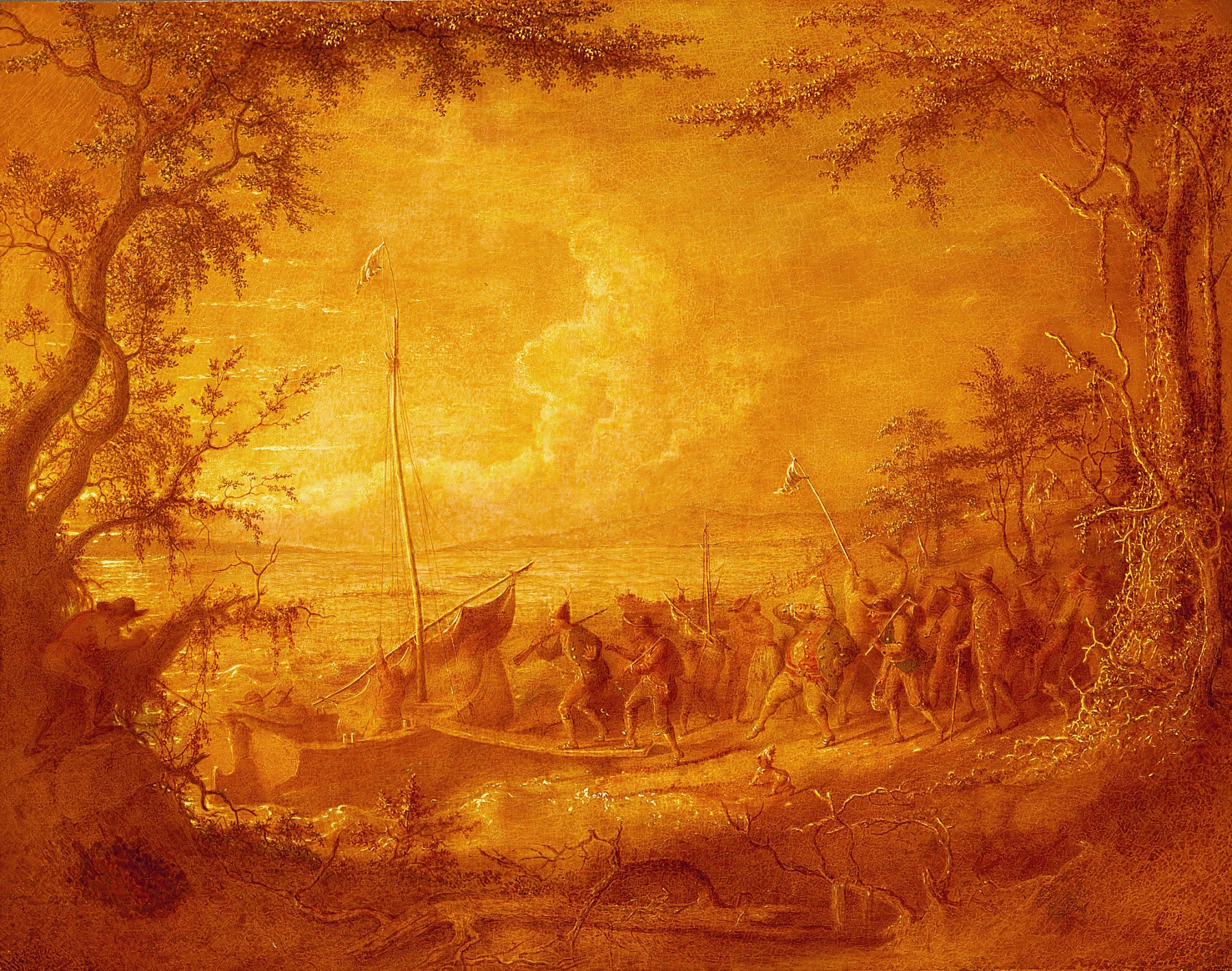
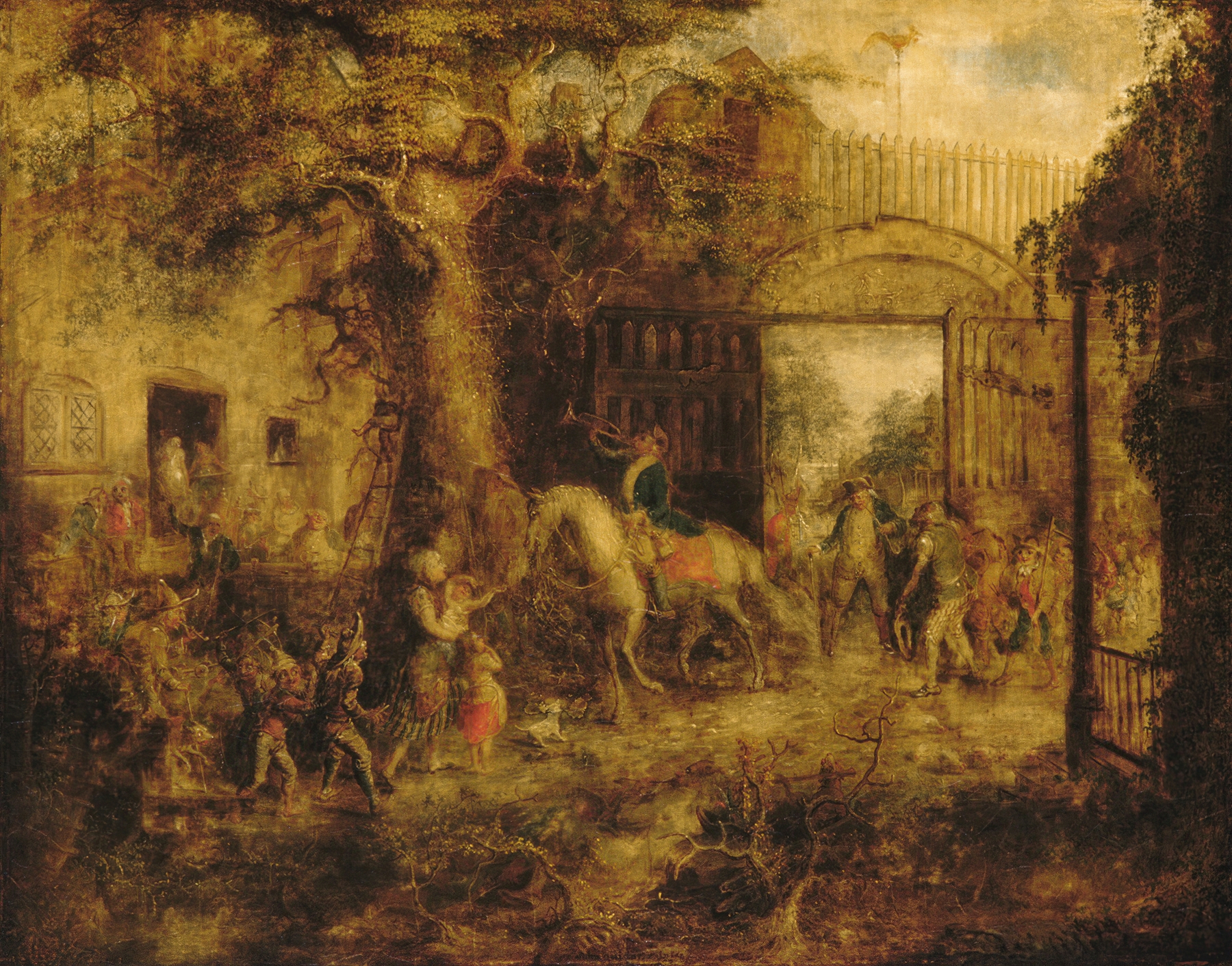
“Between color and silence, truth hides.” In a world where time bends and reality blurs, the essence of truth often lies in what remains unseen. Look to the left at the figure of Rip, slumped against a tree, his weary body a testament to the burdens of life. The artist employs a muted palette, with earthy browns and soft greens enveloping the scene, creating an atmosphere of calm yet profound melancholy. Notice how the light streams through the branches, illuminating Rip's face, capturing a moment suspended between dreams and wakefulness, while the distant mountains remind us of time's relentless passage.
The contrast between Rip's tranquility and the looming shadows of time speaks to deeper themes of escapism and societal change. The figures in the background, almost spectral in their drunken revelry, embody the fleeting nature of joy and the inevitable weight of reality. Quidor imbues the artwork with a sense of nostalgia, provoking reflections on personal and collective history, where the search for truth often requires stepping away from the noise of the world.
In 1829, the artist found himself in a burgeoning America, a nation grappling with its identity and the specter of change. Quidor painted Rip Van Winkle as part of his exploration of folk tales steeped in American mythology. This was a period of significant artistic evolution, as Romanticism began to intertwine with American narratives, and Quidor's work stands as a poignant reflection of his time, linking past and present through the lens of art.